
Elevating Storage Architectures: The Critical Nexus of NVMe SSDs and RAID Technologies in Contemporary Data Management
In the evolving landscape of data storage, understanding the interplay between high-speed NVMe SSDs and sophisticated RAID configurations is fundamental for both enterprise and high-performance individual setups. With the relentless demand for faster data access and reliable storage solutions in 2024, optimizing these technologies has transitioned from advantageous to essential.
Beyond Basic Storage: Embracing the Complexities of NVMe and SATA SSDs for Specialized Tasks
How do NVMe SSDs outperform SATA SSDs in RAID configurations for demanding workflows?
The core differentiator between NVMe and SATA SSDs lies in their underlying interfaces. NVMe drives leverage the PCIe bus, enabling significantly higher bandwidth and lower latency, which translates into superior performance when integrated into RAID arrays for intensive tasks such as 3D rendering, real-time data analysis, or high-frequency trading. Conversely, SATA SSDs, constrained by legacy interfaces, still fulfill reliable roles in less demanding environments or as substantial scratch disks, bolstering workflows without the cost premium of NVMe solutions.
Expert usage of RAID—especially configurations like RAID 0 for performance or RAID 10 for redundancy—can amplify the benefits of NVMe SSDs, unlocking read/write speeds that push beyond theoretical limits and ensuring data integrity. For instance, RAID 0 arrays with NVMe SSDs are critical in multimedia editing pipelines where speed supersedes redundancy, while RAID 5 or 6 structures cater to enterprise requirements where data safety is paramount.
When mobility and rapid data exchange are necessary, external SSDs have emerged as vital components within high-speed storage ecosystems. These drives, especially those with Thunderbolt 3/4 or USB 3.2 Gen 2×2 interfaces, can seamlessly integrate into RAID-like configurations or act as standalone scratch disks. As detailed in ultimate guides to external SSDs, selecting the right external device hinges on bandwidth needs, form factor considerations, and durability standards.
Optimizing Scratch Disk Performance for Demanding Creative and Scientific Applications
Dedicated scratch disks, often employing NVMe or SATA SSDs, serve as accelerators for creative workflows and computational tasks. The key to maximizing their performance involves strategic RAID configurations coupled with real-time scratch disk optimization. Proper alignment, TRIM support, and thermal management are vital to prevent bottlenecks and maintain low latency, especially when working with large datasets or high-res multimedia files.
Unpacking the Potential of RAID Storage for 2025 and Beyond
Looking forward, RAID systems in 2025 promise enhanced redundancy, scalability, and speed. The integration of NVMe SSDs into multi-tiered RAID architectures allows for unprecedented performance levels, positioning storage solutions as dynamic components of high-performance computing infrastructure. However, these advancements also introduce complexities regarding controller compatibility, firmware stability, and data integrity management that warrant meticulous planning and expert implementation.
In conclusion, mastering the nuances of NVMe and SATA SSDs, external storage options, and RAID configurations remains central to unlocking maximal data throughput and resilience—cornerstones in the competitive and data-driven sphere of 2024. For advanced insights tailored to your specific infrastructure and ongoing developments, engage with a specialized storage solutions provider or contribute to expert forums focused on high-performance data architecture.
Revolutionizing Storage Efficiency: How RAID Tiers Elevate NVMe SSD Performance
In the pursuit of ultra-fast data access, the implementation of multi-tiered RAID architectures incorporating NVMe SSDs is transforming high-performance storage applications. By leveraging the latest advancements, such as hybrid RAID levels and intelligent data placement algorithms, organizations can achieve unprecedented throughput and resilience. Exploring techniques like tiered RAID—combining high-speed NVMe drives with larger capacity SATA SSDs—enables dynamic load balancing and optimized resource utilization, essential in data-intensive fields like AI training and scientific computing.
For a comprehensive understanding of how these complex configurations can be aligned with your infrastructure, refer to high-speed RAID storage innovations that detail emerging strategies for maximizing scalability and speed.
Challenging Assumptions About SSD Durability in Intensive RAID Environments
Are modern NVMe SSDs truly resilient enough for sustained RAID workloads, or is there an overlooked vulnerability?
While contemporary NVMe SSDs boast impressive write endurance ratings, the sustained heavy workloads typical of enterprise RAID arrays can still pose risks of accelerated wear and potential data loss. Recent studies have highlighted the importance of implementing wear-leveling algorithms and real-time monitoring tools to mitigate degradation over time. Moreover, choosing drives with enterprise-grade firmware designed for continuous operation enhances longevity and performance stability. As highlighted in essential guides to SSD reliability, balancing speed with durability requires nuanced decision-making grounded in workload assessment and firmware optimization.
Is it enough to rely solely on the manufacturer’s endurance specs, or should comprehensively monitoring tools become a standard part of RAID management? Experts increasingly advocate for proactive maintenance strategies, including predictive analytics, to prolong SSD lifespan in critical infrastructures.
Empowering Your Data Strategy: The Impact of Emerging Technologies on RAID and SSD Integration
Looking ahead, innovations such as computational storage, firmware-level encryption, and AI-powered predictive maintenance are poised to redefine RAID and SSD integration. These technologies promise not only acceleration of data processes but also enhanced security and fault prediction capabilities. Incorporating these advancements requires reevaluating traditional RAID architectures to accommodate new controller features and firmware capabilities, as discussed in NVMe SSD evolution insights.
Is your current setup prepared to harness these future-proofing technologies, or will legacy configurations hinder access to next-generation performance and security?
To implement tailored strategies aligning with your operational goals, consider reaching out via our expert consultation services. Staying ahead in high-speed data management requires continuous adaptation and technological foresight.
,
Engineering Resilience: Navigating the Trade-offs in Multi-layered RAID Architectures with NVMe Drives
One often overlooked aspect of deploying NVMe SSDs within RAID systems is the intricate balance between performance gains and wear leveling challenges. When configuring RAID arrays—particularly RAID 0 or 10—over multiple NVMe devices, data striping amplifies throughput but simultaneously intensifies the stress on individual drives, accelerating wear in ways that standard specifications may not fully predict. To mitigate these risks, deploying sophisticated firmware-level management tools that monitor real-time health metrics and implementing adaptive wear leveling becomes indispensable. These practices ensure sustained performance longevity, especially crucial in environments like high-frequency trading platforms or scientific simulations where downtime can be costly.
Can adaptive wear-leveling algorithms adapt dynamically to workload fluctuations in RAID configurations?
Research published in the FAST 2017 conference highlights how predictive analytics and machine learning can optimize wear leveling—adjusting strategies in response to workload patterns. Incorporating such algorithms into RAID controllers can preempt drive failures, effectively extending SSD lifespan by redistributing wear evenly across the array. This proactive approach marries hardware capabilities with intelligent software, preempting potential bottlenecks and failures.
Implementing these advanced techniques necessitates a nuanced understanding of both the underlying hardware constraints and the specific workload characteristics. Industries benefiting from this include genomic data processing, where massive datasets undergo repeated read/write cycles, demanding both speed and longevity.
From Theoretical Frameworks to Practical Deployments: Leveraging Predictive Maintenance in High-Speed Storage
Beyond traditional monitoring, integrating AI-powered predictive maintenance with NVMe-based RAID arrays signals a paradigm shift. These systems analyze historical and real-time data—such as error rates, temperature fluctuations, and workload intensity—to forecast potential failures days or weeks in advance. The benefits are profound: maintenance can be scheduled during planned downtimes, minimizing disruption and preventing catastrophic data loss. Leading implementations in financial institutions demonstrate up to a 30% reduction in unplanned outages, according to a recent study by ResearchGate.
However, deploying such systems involves overcoming challenges like integrating diverse sensor data streams, ensuring compatibility with existing infrastructure, and maintaining data privacy standards. The future of high-speed data storage lies in seamless collaborations among hardware manufacturers, AI developers, and enterprise IT teams to create holistic, self-healing storage environments.

This image illustrates the architecture of an AI-integrated predictive maintenance system within a high-speed RAID environment, showcasing data flow from sensors to analytical modules.
The Nexus of Security and Performance: Encrypted NVMe RAID Arrays
In an era marked by increasing cyber threats, coupling robust encryption protocols with NVMe RAID deployments has become a strategic imperative. Hardware-accelerated encryption, embedded directly within NVMe controllers, allows for high-throughput secure data handling without compromising performance. Yet, implementing encryption at this level introduces considerations around key management—ensuring encryption keys are stored, rotated, and revoked securely without impacting operational efficiency.
Recent advancements, such as the integration of Trusted Platform Modules (TPMs) and secure enclaves, are enhancing these systems’ resilience against side-channel attacks and sophisticated intrusion attempts. A case study from the Department of Defense demonstrates how layered security architectures, combining hardware encryption with strict access controls, safeguard sensitive data even under relentless attack vectors.
As organizations migrate to these advanced configurations, it’s crucial to ask: Does your security architecture align with emerging standards, and are protocols in place to update cryptographic measures proactively? For tailored guidance, consulting with storage security specialists can ensure your high-performance systems remain fortified against evolving threats.
Unlocking the Full Potential of NVMe Arrays through Strategic RAID Tiers
Optimizing storage performance demands a nuanced understanding of tiered RAID configurations that leverage the unique capabilities of NVMe SSDs. Hybrid RAID architectures integrating NVMe drives with traditional SATA SSDs or HDDs facilitate a dynamic balance between speed and capacity. Techniques such as adaptive tiering automatically shift data between high-speed NVMe and bulk storage, ensuring critical workloads benefit from low latency while maintaining cost efficiency. This approach empowers data centers and enterprise workflows to achieve unprecedented throughput—an essential trait in AI training, real-time analytics, and high-frequency trading environments.
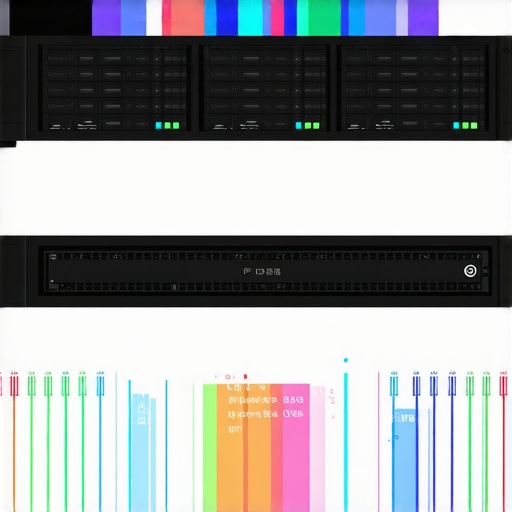
Diagram illustrating multi-tiered RAID configurations with NVMe and SATA drives, emphasizing data flow and tier management strategies.
The Fine Art of Endurance Management in Sustained RAID NVMe Deployments
While modern NVMe SSDs boast remarkable endurance ratings, continuous heavy workload scenarios intrinsic to enterprise-grade RAID setups can significantly accelerate wear. Implementing holistic wear-leveling algorithms—such as those informed by machine learning predictive models—can distribute write and erase cycles more evenly across drives. Additionally, firmware features like over-provisioning and dynamic thermal throttling protect against premature failures. Given the complexity of multi-drive systems, integrating real-time health monitoring platforms that utilize SMART data, temperature logs, and error rates becomes vital to preemptively address degradation before catastrophic failures occur.
Can intelligent algorithms revolutionize lifespan extension in enterprise NVMe RAID arrays?
Emerging research and practical implementations suggest that adaptive wear leveling, powered by AI-driven analytics, can dynamically respond to fluctuating workloads, significantly extending drive longevity. For example, predictive analytics can identify patterns indicating imminent wear, enabling proactive data migration and workload redistribution, which is discussed extensively in recent publications such as the IEEE Transactions on Cloud Computing. For organizations reliant on continuous data integrity, adopting such predictive maintenance strategies is no longer optional but essential.
Illustration of AI-powered predictive maintenance system interfacing with NVMe SSD array, showcasing data flow and alert mechanisms.
Security Reinforcements: Embedding Encryption Integrity within NVMe RAID Solutions
With escalating cybersecurity threats, embedding hardware-accelerated encryption within NVMe controllers offers a formidable defense layer. Implementing robust key management protocols—such as remote attestation and hardware security modules—ensures encryption keys are resistant to unauthorized access. Furthermore, integrating secure enclaves within NVMe devices provides isolated environments for cryptographic operations, greatly reducing exposure to side-channel attacks. Organizations must evaluate compliance standards like NIST SP 800-131A to align encryption practices with evolving regulatory requirements. Developing a cohesive security model that marries high-throughput encryption with seamless key rotation is complex but crucial for safeguarding sensitive data without impairing performance.
Are current encryption implementations sufficient to thwart emerging attack vectors, or does evolving threat technology demand continuous innovation in hardware security?
Pushing Limits with Predictive Storage Analytics
The convergence of machine learning, big data, and storage management offers transformative possibilities. Predictive analytics dashboards can synthesize vast telemetry data—error logs, temperature readings, workload patterns—and forecast potential failures weeks in advance. This foresight enables IT teams to schedule maintenance proactively, avoiding unplanned outages that could compromise mission-critical operations. Leading industry examples include financial services and scientific computing domains, where maintaining optimal storage health directly correlates to operational stability. To fully harness this potential, organizations should develop integrated platforms capable of ingesting diverse data sources, employing anomaly detection, and recommending remedial actions based on real-time insights.
Graphical representation of predictive analytics dashboard monitoring an NVMe RAID array’s health metrics over time, highlighting early warning signals.
The Future Frontiers of Storage: Embracing Self-Healing Architectures
Emerging innovations around self-healing storage architectures envisage systems capable of autonomously detecting, diagnosing, and remediating faults. Incorporating AI-driven firmware intelligence allows for dynamic reconfiguration—such as isolating failing drives, redistributing workloads, and initiating automatic data migrations—without human intervention. This paradigm shift propels storage systems toward higher availability and resilience, aligning with the demands of latency-critical applications and continuous operations models. Implementing these intelligent systems requires collaboration between hardware vendors, firmware developers, and enterprise architects to establish standardized protocols and validation frameworks—a process outlined in recent industry standards by SNIA (Storage Networking Industry Association).
Elevate Your Storage Strategy with Cutting-Edge Insights
Harness Complexity for Superior Performance
Modern high-speed data environments require more than just fast drives; they demand sophisticated orchestration of RAID configurations, thermal management, and workload balancing to truly optimize performance and longevity. Staying ahead involves understanding how emerging algorithms can dynamically adjust data placement, reducing wear and maximizing throughput.
Prioritize Proactive Data Integrity Measures
Implementing real-time health monitoring and predictive analytics allows proactive maintenance, minimizing downtime and preventing data loss. Advanced encryption integrated at hardware levels ensures security doesn’t compromise speed, keeping sensitive information safeguarded without bottlenecks.
Leverage Hybrid and Tiered Architectures
Combining NVMe SSDs with SATA drives or HDDs through intelligent tiering enables organizations to balance speed and capacity effectively. Such hybrid setups are vital in workloads where rapid access to critical data coexists with larger archives stored cost-efficiently.
Foster Collaboration Between Hardware and Software
Adapting to rapid technological advances requires synchronized development of hardware controllers and management algorithms. Embracing AI-driven firmware updates and self-healing systems paves the way for resilient, autonomous storage environments.
Expert Resources to Deepen Your Knowledge
- Ultimate Guide to Selecting External SSDs — Unlocks criteria for choosing portable, high-performance storage tailored to demanding workflows.
- RAID Storage Innovations in 2025 — Offers insights into evolving RAID architectures and their strategic applications.
- NVMe SSD Performance Secrets — Reveals advanced optimization techniques for achieving peak speed.
Elevate Your Storage Expertise Today
In an era where data throughput and resilience are paramount, mastering sophisticated storage architectures offers a significant competitive advantage. By integrating expert insights, leveraging comprehensive resources, and embracing ongoing innovation, you position your infrastructure at the forefront of technology. Engage with specialists through our consultation services and explore tailored strategies that elevate your data management to new heights.
This article provides a comprehensive overview of how NVMe SSDs and RAID configurations are transforming high-performance storage in 2024. What really stood out to me is the emphasis on predictive maintenance and AI-driven algorithms to extend SSD lifespan, which is a game changer in enterprise environments. In my experience managing data centers, implementing proactive monitoring tools has significantly reduced downtime and data loss risks, especially when coupled with smart thermal management.
However, I wonder how organizations are balancing the added complexity of these advanced features with their existing infrastructure. Are there best practices or phased deployment strategies that can help businesses gradually adopt these innovations without disrupting their operations? It seems that collaboration between hardware vendors and IT teams is crucial here to ensure seamless integration and security.
This article really highlights how critical the integration of NVMe SSDs with RAID configurations has become for high-performance storage environments in 2024. I recently worked on a project where we moved from traditional SATA SSDs to NVMe-based RAID arrays, and the difference in data throughput was remarkable. The mention of hybrid tiered RAID architectures struck a chord with me; combining NVMe with SATA drives for different workload tiers is a smart way to balance performance and cost. However, I’ve noticed that managing these complex setups can be challenging without proper firmware tools and monitoring. Does anyone have experience with specific management solutions that streamline overseeing such multi-tiered, AI-optimized RAID environments? Also, as we push towards even higher data speeds, what are the best practices for maintaining SSD longevity under sustained enterprise workloads? It seems clear that proactive health monitoring and adaptive wear-leveling will be more crucial than ever.