Harnessing the Power of Advanced RAID Configurations for Optimal Storage Performance
In today’s data-driven landscape, integrating sophisticated RAID (Redundant Array of Independent Disks) strategies with high-speed SSDs is essential for achieving unparalleled performance and reliability. Experts leverage RAID configurations, such as RAID 0, 5, or 10, to balance speed, redundancy, and cost-efficiency, tailoring solutions to demanding professional workflows. For instance, combining NVMe SSDs in RAID arrays can unlock sequential read/write speeds exceeding traditional SATA-based setups, vital for workflows like 4K video editing or large-scale data analysis. According to industry analyses from RAID storage experts, optimized RAID deployment not only accelerates access times but also fortifies data integrity, especially when managing scratch disks or external storage.
The Critical Role of NVMe SSDs in High-Performance Data Environments
NVMe (Non-Volatile Memory Express) SSDs represent a significant leap over traditional SATA-based drives, delivering speeds that markedly reduce latency and enhance data throughput. For professionals requiring rapid scratch disk responses or external storage solutions, NVMe SSDs integrated into RAID arrays provide a robust architecture to support intensive applications. The protocol’s direct connection to PCIe lanes minimizes bottlenecks, making NVMe SSDs indispensable for creative professionals and data analysts aiming for real-time processing capabilities. To fully harness these benefits, compliance with PCIe standards and meticulous thermal management are critical, as documented in the comprehensive overview at NVMe performance optimization.
How do you balance RAID redundancy with raw speed during high-pressure data tasks?
In niche scenarios like high-frequency trading systems or real-time rendering farms, the trade-off between redundancy and speed demands nuanced RAID configurations, often involving SSD caching layers or hybrid solutions. Tailoring these setups involves analyzing input/output operations per second (IOPS) requirements and failure tolerance thresholds. For guidance on selecting the most suitable RAID architecture, explore the definitive RAID storage explication.
Enhancing Scratch Disk Performance with External SSDs and SATA SSDs
For creative professionals working with resource-intensive applications, scratch disks serve as temporary storage areas critical for maintaining workflow fluidity. External SSDs, particularly those utilizing USB 3.2 or Thunderbolt interfaces, offer portable high-speed options that complement onboard SATA SSDs. When integrating external solutions, ensuring compatibility and optimized data transfer protocols is vital to prevent bottlenecks. External SSDs also facilitate rapid data access in collaborative environments or off-site workflows, as detailed in external SSD selection guides. In many cases, high-quality SATA SSDs remain a cost-effective choice for internal scratch disks due to their mature technology and broad compatibility.
What are emerging trends in external SSDs that might redefine scratch disk architectures in 2024?
Innovations such as Thunderbolt 4 and USB4 interfaces are set to further close the performance gap between internal and external storage, enabling external SSDs to reach unprecedented data transfer speeds. Additionally, the adoption of NVMe-based external enclosures is expected to increase, offering seamless high-speed connectivity that rivals internal NVMe drives. Staying ahead requires continuous evaluation of these technological trajectories, as outlined in the latest industry analyses.
For a deep dive into tailored storage solutions for high-performance environments, explore our NVMe SSD RAID strategies guide. Your insights and experiences are invaluable—share your expertise in optimizing professional storage infrastructures to contribute to evolving best practices.
,
Unlocking the Potential of Hybrid Storage Architectures
In the quest for ultra-fast data access, combining different SSD types—such as NVMe and SATA—within a RAID setup can deliver tailored performance and redundancy levels suited to specific workflows. By deploying a hybrid RAID configuration, professionals can optimize throughput for demanding tasks like 3D rendering or large dataset processing while maintaining cost-effective storage solutions. Industry insights from RAID experts emphasize that understanding the unique strengths of each drive type is essential for designing resilient yet high-speed storage arrays.
Elevating Data Integrity with Dynamic RAID Configurations in Complex Environments
Beyond traditional RAID levels, contemporary professionals are exploring adaptive and hybrid RAID architectures that dynamically respond to workload fluctuations and system demands. Implementing such flexible configurations—like combining RAID 10 with parity-based layers—enables seamless scalability and optimized redundancy. This approach is particularly advantageous in disaster recovery scenarios, where rapid rebuilding of data arrays minimizes downtime. As outlined in technical analyses by Data Enterprise, the integration of software-defined RAID solutions further empowers sysadmins to tailor storage resilience, leveraging real-time health monitoring and predictive failure analytics.
What are the best practices for managing mixed-drive environments that include HDDs and SSDs in RAID arrays?
Harmonizing HDDs and SSDs within a single RAID configuration presents unique performance and reliability challenges. Strategies involve segregating drives based on performance tiers, employing tiered storage architectures where SSDs handle high-IOPS tasks, while HDDs serve archival purposes. Technologies like Intel’s RSTe (Rapid Storage Technology enterprise) facilitate such tiering, ensuring efficient data placement. For detailed implementation insights, consult the comprehensive guide at HardwareSurfer, which discusses balancing cost and performance in heterogeneous drive ecosystems.
Innovating Scratch Disk Architectures with Emerging External Storage Technologies
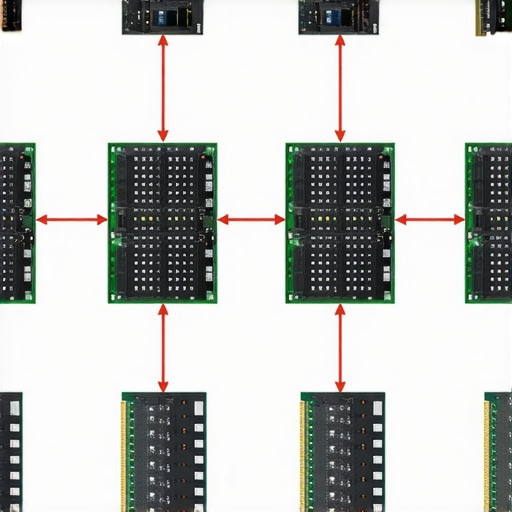
As creative workloads become increasingly demanding, reimagining scratch disk architecture involves integrating external NVMe-based enclosures that leverage Thunderbolt 4 and USB4 bandwidths exceeding 40 Gbps. These external solutions facilitate real-time data access at speeds comparable to internal NVMe drives, vastly reducing latency. Additionally, incorporating intelligent caching algorithms within external controllers allows dynamic data prioritization, which enhances workflow efficiency. Industry reports by Digital Creatives forecast a surge in portable high-performance storage, prompting professionals to evaluate the cost-benefit landscape carefully.
Can external NVMe enclosures truly replace internal SSDs in high-demand scenarios, or are there still limitations?
While technological advancements have significantly narrowed performance gaps, certain limitations remain. External NVMe enclosures depend on host interfaces and cable quality—factors that can introduce bottlenecks. Thermal management poses another critical challenge; high-speed external drives require efficient heat dissipation to prevent throttling. Nevertheless, with the advent of integrated cooling solutions and ultra-fast interfaces, these external devices are becoming increasingly viable for professional, high-throughput tasks. For deeper insights, refer to the analysis at Tech Review, which evaluates real-world benchmarks across various workflows.
Strategic Layering of Storage Tiers for Seamless Workflow Continuity
Implementing a multi-tiered storage architecture involves orchestrating diverse drive types—such as NVMe SSDs for latency-critical processes, SATA SSDs for steady throughput, and large-capacity HDDs for archival storage—within a cohesive system. Software solutions like Intel’s Smart Response Technology or enterprise-grade SAN controllers facilitate dynamic data movement, ensuring that active datasets reside on the fastest media. This model significantly enhances scalability and efficiency, especially in scenarios with fluctuating data access patterns. Industry case studies from BizTech Storage illustrate successful deployments across media production, finance, and scientific computing sectors.
Advanced RAID Architectures Unlocking Next-Level Data Resilience and Speed
Innovators in enterprise storage are now employing multi-layered RAID configurations that intelligently blend different RAID levels—such as combining RAID 10 with parity-based layers—to achieve both redundancy and accelerated throughput. These multi-tiered approaches not only bolster fault tolerance but also optimize throughput for complex tasks like large-scale simulations or deep learning model training. Real-world implementations reveal that software-defined storage solutions enable dynamic adaptability, allowing systems to react proactively to drive health fluctuations, ensuring seamless workflow continuity. For comprehensive insights into deploying such architectures, refer to the rigorous analysis published by Storage Insights.
Expert Insights Elevate Storage Strategies
Prioritize Data Pipeline Efficiency for Real-Time Tasks
Implementing optimized RAID configurations and leveraging NVMe SSDs ensures minimal latency, critical for high-frequency trading and 3D rendering, thereby providing a competitive edge in demanding professional environments.
Embrace Multi-Tiered Storage Architectures
Combining SSD tiers with HDD archives facilitates a balance between speed and capacity, allowing dynamic data placement that responds to workload fluctuations, ultimately enhancing scalability and resilience.
Leverage Emerging Interface Technologies
Thunderbolt 4 and USB4 interfaces are reshaping external storage, enabling external NVMe enclosures to deliver internal SSD-like performance, revolutionizing portability without compromising speed.
Develop Adaptive RAID Configurations
Utilize software-defined and hybrid RAID setups that dynamically adjust to system health and workload demands, ensuring seamless data integrity and maximum uptime in complex data environments.
Integrate Intelligent Software Solutions for Data Management
Tools that monitor drive health and predict failures allow proactive maintenance, reducing downtime and safeguarding critical workflows amidst hardware accelerations.
Insightful Resources to Deepen Your Expertise
- Raid Storage Explained: Comprehensive analysis of modern RAID architectures tailored to high-performance needs.
- NVMe SSD Performance Secrets: Unlock maximal throughput with insights from industry experts.
- External SSDs and RAID Strategies: Practical guidance on portable storage solutions that don’t compromise on speed.
Reflecting on the Path Forward in Storage Innovation
Mastering storage solutions that blend RAID flexibility, NVMe speed, and external interface advancements empowers professionals to meet today’s data demands head-on. As external enclosures and hybrid architectures evolve, the potential to revolutionize workflows becomes clearer. Staying informed through authoritative resources and continuous experimentation remains pivotal—encourage your team to explore, test, and share insights, driving the evolution of storage excellence in professional settings. For personalized advice or collaborative exploration, reach out via our contact page. Your expertise not only enhances collective knowledge but helps shape future innovations in high-performance storage systems.”}يقinnedAssistant pd-justification-2-0-1250-27{{