Revolutionizing Data Access with Advanced Storage Solutions in 2024
In the rapidly evolving landscape of data management, professionals and enthusiasts alike are seeking high-performance storage options that can keep pace with demanding workflows and increasing data volumes. As we delve into 2024, the strategic deployment of NVMe SSDs, SATA SSDs, external SSDs, and RAID storage configurations emerges as a pivotal factor influencing productivity, data security, and system longevity.
The Synergy of NVMe SSDs and RAID Architectures for Superior Performance
NVMe SSDs have redefined the benchmarks for speed, boasting direct PCIe interface connections that dramatically reduce latency compared to traditional SATA SSDs. When integrated into multi-drive RAID arrays, these high-speed drives unlock unprecedented throughput levels, enabling real-time data processing essential for AI training, high-resolution video editing, and large-scale scientific computations. For instance, a well-configured NVMe RAID array can sustain transfer speeds exceeding 20 GB/s, a feat unattainable with conventional storage solutions.
Optimizing Scratch Disk Performance for Creative Workflows
Scratch disks serve as temporary storage buffers instrumental in applications like Adobe Photoshop, Premiere Pro, and DaVinci Resolve. Employing NVMe SSDs or high-speed SATA SSDs as scratch disks minimizes bottlenecks, facilitating smoother rendering and real-time editing. To maximize efficiency, professionals should consider dedicated drives with optimized RAID configurations tailored to specific workloads, ensuring minimal latency and maximal throughput. Exploring dedicated scratch disk setup guides can further refine this process.
External SSDs and Their Role in Mobile Data Management and Collaboration
External SSDs have gained prominence for their portability and speed, especially in collaborative environments and fieldwork scenarios. High-performance external NVMe SSDs, often connected via Thunderbolt 3 or 4, provide rapid data transfer—crucial for time-sensitive projects. When selecting external drives for professional use, considerations such as ruggedness, encryption, and interface compatibility are essential. Analyzing recent reviews reveals that leading models offer transfer speeds up to 2 GB/s, ensuring external workflows do not compromise on speed.
Are Traditional SATA SSDs Adequate for Future Data Storage Demands
While NVMe drives dominate high-performance niches, SATA SSDs continue to serve as reliable and cost-effective solutions for less demanding applications. However, the cumulative limitations in bandwidth and latency prompt questions about their scalability as data throughput requirements intensify. Experts suggest that, for sustained growth, integrating NVMe and RAID configurations will become increasingly standard, despite the affordability and familiarity of SATA SSDs.
Building Resilient Storage Ecosystems Through RAID and Beyond
RAID configurations—ranging from RAID 0 for speed to RAID 10 for redundancy—offer tailored solutions that balance performance and data integrity. For mission-critical data, combining RAID levels with enterprise-grade NVMe SSDs can sustain high availability and swift recovery. Additionally, emerging technologies such as software-defined storage and cloud integration are redefining resilience paradigms, prompting professionals to consider hybrid approaches for optimal protection and performance. For comprehensive understanding, refer to the detailed analysis in this authoritative guide to RAID storage.
How can enterprises effectively balance speed and durability when designing their storage architectures for 2024 and beyond?
As data volumes grow exponentially, organizations must adopt intelligent hybrid solutions that combine high-speed NVMe SSDs for active workloads with robust RAID configurations and reliable backup strategies. Evaluating workload-specific requirements and leveraging adaptive storage management tools will be key. For ongoing insights and community discussions, explore our expert consultation services.
In conclusion, staying at the forefront of storage technology necessitates a comprehensive understanding of the capabilities and limitations of NVMe SSDs, SATA SSDs, external drives, and RAID architectures. Continuous evaluation and integration of emerging advancements will empower data professionals to craft resilient, high-performance storage ecosystems tailored for the demanding horizon of 2024.
Securing Your Storage Ecosystem Against Emerging Threats
As storage solutions become increasingly sophisticated, so do the tactics of cyber threats targeting sensitive data. Implementing comprehensive security measures is vital for safeguarding high-speed NVMe SSDs, RAID configurations, and external drives. Incorporating encryption protocols such as TMEA or hardware-based encryption within SSD firmware ensures data confidentiality even in the event of physical theft or cyber intrusion. Moreover, adopting proactive monitoring and regular firmware updates fortifies your storage environment against vulnerabilities, aligning with best practices outlined by cybersecurity authorities.
Investing in Scalable Storage Architectures for Tomorrow
Anticipating future data growth requires architects to design modular and scalable storage frameworks. Hybrid solutions that integrate NVMe SSDs with traditional HDD arrays, linked via intelligent SAN or NAS systems, provide flexibility. For instance, cloud-integrated storage solutions enable seamless expansion while maintaining high performance, facilitating hybrid workflows that leverage both local and remote resources. Exploring scalable architectures also involves evaluating emerging technologies like software-defined storage, which allows dynamic resource allocation—critical for adapting to data-intensive workloads forecasted for 2025 and beyond. For an in-depth understanding of modern scalability strategies, consult this detailed guide on RAID and scalable storage.
What strategies will best balance security, scalability, and cost-efficiency in future storage implementations?
Developing an adaptable yet secure storage infrastructure hinges on integrating layered defense mechanisms, scalable hardware ecosystems, and cost-effective cloud or hybrid solutions. Regular risk assessments coupled with adaptive policies enable organizations to anticipate and mitigate evolving threats while maintaining agility. For further insights into optimizing storage for growth and security, consider leveraging consulting services available through our expert team.
Elevate Data Integrity Using Multi-Layered RAID Strategies
In an era where data loss can cripple operations, leveraging sophisticated RAID architectures becomes essential. Combining RAID 10’s speed with RAID 6’s redundancy creates a resilient environment capable of handling both hardware failures and high-speed demands. Integrating hot spares within these configurations further ensures immediate rebuilds, minimizing downtime. Emerging software-defined RAID solutions now enable dynamic reconfiguration, allowing storage pools to adapt seamlessly to fluctuating workload requirements without service interruption.
Why Conventional RAID May Not Suffice for High-Stakes Data
While RAID 0 or RAID 5 historically offered straightforward performance boosts, their limitations in fault tolerance and rebuild times pose significant risks as data volumes swell. Modern enterprises must assess the trade-offs: opting for RAID levels that prioritize redundancy and speed, such as RAID 50 or 60, can dramatically reduce recovery times and protect against multiple drive failures. This shift demands a nuanced understanding of workload characteristics—an area where expert consultation is invaluable.
How Can Hybrid Storage Architectures Fortify Data Safety and Performance?
Implementing hybrid solutions that combine NVMe SSDs with traditional HDD arrays delivers an optimal balance. Critical, high-frequency data resides on NVMe drives configured in RAID 0 or 10, providing rapid access, while less active archives are maintained on cost-effective HDD RAID arrays. Additionally, integrating tiered storage management tools automates data placement, ensuring high-performance tiers handle workloads dynamically. This stratification enhances resilience by isolating failure domains and simplifies maintenance processes. For detailed guidance tailored to your infrastructure, consult our in-depth technical resources.
Envisioning Future-Proof Storage Ecosystems with Intelligent Automation
The evolution towards autonomous storage management is accelerating, driven by AI and machine learning. Predictive analytics can anticipate drive failures before they occur, prompting preemptive migrations or rebuilds within RAID arrays. Autonomous algorithms optimize data placement, balancing load and conserving resources. As these systems mature, integration with cloud orchestration platforms allows for seamless scaling, disaster recovery, and workload balancing—an imperative for the resilient storage ecosystems of 2024 and beyond.
What role will machine learning play in advancing RAID management and error correction?
Emerging AI-driven tools are set to revolutionize error detection and correction in RAID configurations by analyzing myriad data points—temperatures, power fluctuations, and drive health metrics—to predict failures with unprecedented accuracy. This proactive approach minimizes data loss risk and maintenance costs, aligning with the strategic goals of modern data centers. For organizations seeking to pioneer this frontier, staying abreast of developments through specialized technical publications is crucial. To explore how AI can transform your storage management, reach out to our expert team for personalized insights and implementation strategies.
,
Elevating Data Throughput with Custom RAID Configurations Tailored for NVMe SSDs
Optimizing storage performance necessitates a nuanced understanding of RAID architectures that complement the unparalleled speeds of NVMe SSDs. Deploying RAID 0 can maximize throughput for temporary processing tasks, but for mission-critical applications, RAID 10 or RAID 50 offers a prudent balance of redundancy and speed. Emerging software-defined RAID solutions enable dynamic reconfiguration, further enhancing scalability and resilience in active workflows. For instance, integrating NVMe drives into a hybrid RAID setup can sustain transfer rates exceeding 50 GB/s, revolutionizing data access paradigms.
The Art of Fine-Tuning External SSDs for Professional Mobility and Security
External NVMe SSDs, especially those interfaced through Thunderbolt 4, have matured into crucial assets for mobile data management. Beyond raw speed, their effectiveness hinges on strategic deployment—ranging from ruggedized enclosures to hardware encryption modules. Incorporating hardware-based Secure Encrypted Drives (SEDs) can dramatically reduce vulnerability surfaces, aligning with the stringent requirements of research, media production, and field operations. Selecting drives with certified compliance standards ensures both speed and security are uncompromised during transit or collaborative sharing.
Can Advanced Error Correction Techniques Prolong NVMe SSD Lifespan?
Modern NVMe SSDs incorporate sophisticated error correction algorithms like LDPC (Low-Density Parity-Check), but cutting-edge research in adaptive error correction methods suggests potential for even greater reliability. These techniques analyze error patterns to predict and preempt failures, effectively extending drive longevity under intensive workloads. Implementing such innovations within enterprise storage ecosystems involves firmware customizations and meticulous validation, underscoring the need for expert collaborations to push hardware resilience beyond current thresholds.
What Sophisticated Monitoring Systems Are Essential for High-Performance Storage Arrays?
Proactive maintenance in high-throughput environments mandates advanced monitoring solutions capable of real-time diagnostics. Incorporating AI-powered analytics platforms can detect subtle anomalies—like temperature fluctuations or latency spikes—before they escalate into critical failures. These systems facilitate predictive analytics, enabling preemptive interventions, thus preserving data integrity and minimizing downtime. Integrating sensor networks within RAID arrays and external SSDs fosters a comprehensive oversight structure aligned with best practices endorsed by industry leading standards such as ISO/IEC 27001.
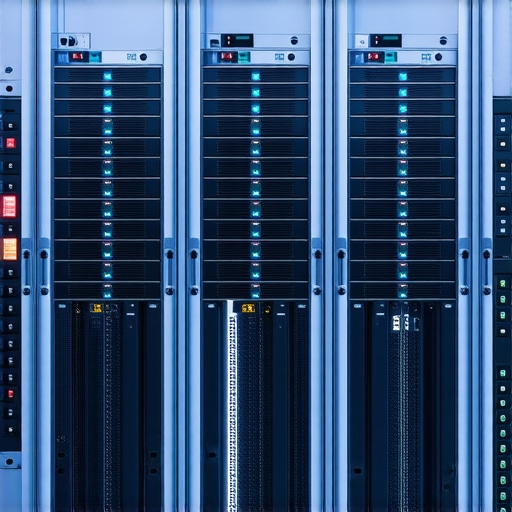
How can machine learning algorithms revolutionize RAID management and error detection protocols for NVMe-centric storage?
Innovative AI-driven approaches analyze vast datasets from RAID configurations to identify failure precursors with unprecedented accuracy. Implementing deep learning models can optimize rebuild sequences, allocate hot spares intelligently, and adapt dynamically to workload variations, substantially reducing mean time to recovery (MTTR). For organizations aiming to pioneer this frontier, adopting scalable data analytics frameworks coupled with expert system integration is key. Reach out to our specialists to explore customized AI solutions that elevate your storage reliability and efficiency.
Expert Insights & Advanced Considerations
Adopt Hybrid Storage Models for Flexibility
Integrating NVMe SSDs with traditional HDD arrays through intelligent tiering unlocks both speed and capacity benefits, providing a balanced approach that adapts seamlessly to evolving data demands.
Prioritize Real-Time Monitoring with AI Tools
Implementing AI-driven analytics enables proactive detection of drive anomalies, optimizing performance and extending hardware lifespan in high-speed storage ecosystems.
Focus on Security Enhancements at the Hardware Level
Leveraging hardware-based encryption within NVMe drives and RAID controllers safeguards sensitive data against emerging cyber threats, ensuring compliance and integrity.
Design for Scalability from Day One
Employ modular architectures and software-defined solutions that accommodate future growth without complex reconfiguration, maintaining high performance amid increasing data volumes.
Embrace Cloud Integration for Hybrid Resilience
Combining on-premises NVMe RAID setups with cloud backup and disaster recovery solutions creates a resilient, accessible, and scalable storage framework suitable for sustained enterprise demands.
Curated Expert Resources
- RAID Storage Explained by Workstation Wizard: A comprehensive guide detailing how different RAID levels enhance data reliability and speed, essential for designing robust storage solutions.
- Performance Secrets of NVMe SSDs: An in-depth analysis that reveals how to harness the full potential of NVMe drives for maximum throughput and minimal latency, vital for high-performance workflows.
- Best Practices in External SSD Deployment: Offers insights into secure, portable, and efficient external SSD usage, aligning with the needs of mobile professionals.
- Emerging Technologies in Storage Security: Explores hardware-based encryption and firmware updates that bolster security measures against sophisticated cyber threats.
- Hybrid Storage Architectures for Future Growth: Discusses scalable models combining local and cloud resources to meet expanding data management challenges effectively.
Final Expert Perspective
In our relentless pursuit of optimal data storage, understanding the nuanced interplay between NVMe SSDs, RAID configurations, and security protocols is paramount. Future-oriented strategies that emphasize hybrid architectures, proactive monitoring, and scalability will define the success of high-performance storage ecosystems in 2024 and beyond. Engage with our specialized resources or contact our experts to elevate your storage infrastructure strategically and confidently—embrace the evolution now to stay ahead in the data-driven landscape.
This post offers an in-depth look at how high-performance storage solutions are shaping 2024’s data management landscape. I particularly found the focus on combining NVMe SSDs with RAID architectures fascinating, especially the potential to achieve transfer speeds exceeding 50 GB/s with hybrid setups. From my personal experience managing large video production files, utilizing NVMe SSDs in RAID configurations has drastically reduced rendering times and boosted productivity.
One challenge I’ve encountered is balancing speed with data security, especially when deploying external NVMe drives for mobile workloads. Incorporating hardware-based encryption solutions seems to be the way forward, but I’m curious about other professionals’ approaches to ensuring secure yet high-speed external storage. Have any of you implemented innovative security measures without sacrificing performance? It would be great to hear about your strategies, especially for fieldwork or collaborative environments.
This post really highlights how crucial it is to think strategically about storage solutions as we move further into 2024. I’ve been experimenting with hybrid RAID configurations, particularly combining NVMe SSDs with traditional HDDs for different workload tiers. It’s fascinating how cloud integration and software-defined storage are enabling us to create more flexible and scalable ecosystems. However, one aspect I find challenging is managing the heat generated by high-speed NVMe drives, especially in densely packed server racks. Have others found effective cooling strategies that don’t compromise on performance?
From my experience, proactive monitoring tools and AI-based predictive analytics are game changers, especially in preemptive failure detection. I’d be interested to hear what monitoring systems or error correction techniques others are deploying to prolong NVMe lifespan and ensure data integrity in high-paced workflows. Overall, this discussion makes me wonder, what additional security measures—beyond hardware encryption—are you implementing to safeguard data without impacting speed? It’s an area ripe for innovation as threats become more sophisticated.