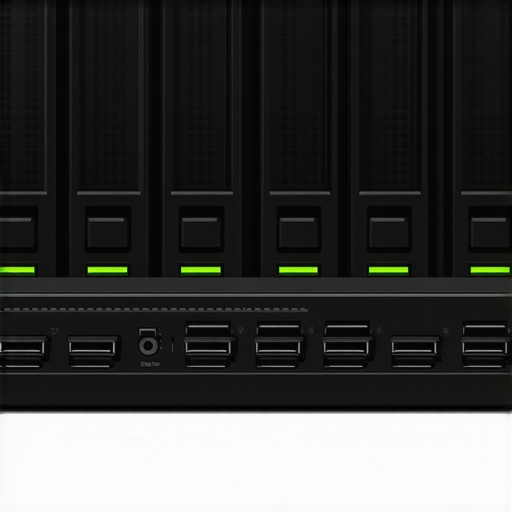
Unlocking the Future of Data Storage with External SSDs and RAID Technologies
In an era where data speed and reliability define competitive advantage, understanding the nuances of external solid-state drives (SSDs) and RAID configurations is crucial for professionals who demand maximum performance. As storage solutions evolve, integrating advanced external SSDs with sophisticated RAID setups can significantly elevate data access speeds, especially in high-stakes environments such as multimedia production, scientific research, and enterprise data management.
Why External SSDs Have Become the Backbone of High-Speed Data Workflows
External SSDs, particularly in 2024, harness cutting-edge NVMe and SATA technologies to deliver unprecedented transfer rates. These drives are not just portable; they are engineered for endurance, low latency, and compatibility with high-speed interfaces like Thunderbolt 4 and USB 4. Their role in professional workflows is often complemented by RAID configurations that distribute data across multiple drives, amplifying both speed and redundancy.
Harnessing RAID for Unmatched Data Throughput and Resilience
Redundant Array of Independent Disks (RAID) architectures—ranging from RAID 0 to RAID 10—offer tailored solutions balancing speed, data integrity, and fault tolerance. For example, RAID 0 stripes data across multiple external SSDs to maximize throughput, ideal for tasks like 4K video editing or large dataset processing. Conversely, RAID 10 combines mirroring and striping, providing both speed and data protection, essential for mission-critical applications. The key is selecting the right RAID level aligned with operational priorities and hardware capabilities.
Expert Insights into Optimizing External SSD and RAID Performance
Achieving optimal performance requires meticulous attention to drive selection, interface compatibility, and system configuration. High-quality NVMe SSDs, such as those discussed in this guide, are preferred for their superior speed and endurance. Pairing these with enterprise-grade RAID controllers or software solutions ensures data integrity and minimizes bottlenecks. Moreover, proper thermal management and power supply stability are often overlooked but critical for sustained high-speed operation.
What are the best practices for configuring external SSDs in RAID for maximum throughput without compromising data security?
Balancing performance and reliability involves strategies such as choosing the appropriate RAID level, implementing checksum and parity features, and regularly monitoring drive health. Additionally, integrating enterprise-class SSDs with hardware-accelerated RAID controllers can mitigate latency issues. For detailed steps, refer to this comprehensive overview.
For professionals aiming to push the boundaries of data throughput, exploring innovative configurations and emerging technologies like PCIe 4.0 and 5.0 SSDs is vital. Engaging with expert communities or consulting with storage specialists can provide tailored insights, ensuring your setup remains at the forefront of performance standards. To stay updated on the latest advancements, consider reviewing trusted industry publications and white papers from leading SSD manufacturers.
Interested in elevating your storage architecture? Explore our expert-curated external SSD and RAID solutions or connect with specialists for personalized advice. Your data’s velocity and safety depend on choosing the right combination of technology and strategy—make sure you’re ahead of the curve.
Push Your Storage Limits with Cutting-Edge External SSDs and RAID Tactics
In today’s high-demand environments, professionals are constantly seeking ways to accelerate data access while maintaining safety and integrity. The latest NVMe and SATA SSDs are engineered to meet these needs, especially when integrated into well-planned RAID configurations. For instance, leveraging the speed of PCIe 4.0 and 5.0 SSDs, as detailed in this guide, can dramatically reduce bottlenecks in your workflow.
What are the nuanced considerations when combining SSD technology with RAID for peak performance and security?
Optimal setups involve more than just selecting the fastest drives; it requires a strategic approach to RAID levels, such as RAID 0 for speed or RAID 10 for a balance of speed and redundancy. Ensuring compatibility between your SSDs and RAID controllers is crucial, especially when using enterprise-grade hardware. Additionally, factors like thermal management, power stability, and firmware updates influence sustained performance. To explore these aspects in depth, check out this comprehensive guide.
Furthermore, integrating software solutions with hardware RAID controllers can provide advanced monitoring and predictive failure analysis. This proactive approach minimizes downtime and data loss risk. For professionals handling large datasets or real-time processing, deploying external RAID arrays with Thunderbolt 4 or USB 4 interfaces ensures high throughput and minimal latency, as discussed in this article.
How can emerging technologies like AI-driven diagnostics or self-healing drives redefine external RAID storage strategies?
Emerging innovations are set to revolutionize data storage by enabling smarter, more resilient configurations. AI-driven diagnostics can predict drive failures before they happen, allowing preemptive data migration and reducing downtime. Self-healing drives, equipped with advanced firmware that automatically repairs minor errors, are becoming more prevalent, reducing maintenance costs and enhancing reliability. These advancements align with the increasing adoption of enterprise-level external SSDs and RAID solutions, as highlighted in this authoritative resource.
If you’re ready to elevate your data storage strategy, consider consulting with specialists or engaging with professional communities to tailor configurations to your specific needs. For a personalized approach, reach out through our contact page. Keeping pace with technological advancements ensures your infrastructure remains robust, fast, and future-proof.
Advanced RAID Architectures for Specialized Data Workflows
While RAID 0 and RAID 10 are common, emerging architectures such as RAID 50 and RAID 60 offer intriguing options for balancing speed and fault tolerance in high-demand environments. RAID 50 combines striping and parity across multiple RAID 5 sets, providing enhanced redundancy and throughput suitable for large-scale media editing or scientific simulations. Similarly, RAID 60 stacks RAID 6 arrays, offering superior resilience against multiple drive failures without significantly sacrificing speed. Implementing these complex setups requires meticulous planning, especially regarding drive compatibility and controller capacity, often necessitating enterprise-grade hardware and sophisticated management software.
Unveiling the Role of Thermal Management in Sustained SSD Performance
One often overlooked aspect of high-speed external SSDs and RAID configurations is thermal regulation. NVMe SSDs, especially when operating at PCIe 4.0 or 5.0 speeds, generate substantial heat, which can lead to thermal throttling and performance degradation. Effective strategies—such as integrating heatsinks, active cooling solutions, or airflow optimization—are essential for maintaining consistent performance during prolonged high-intensity tasks. For instance, some manufacturers now design external enclosures with built-in thermal dissipation features, tailored specifically for enterprise-grade drives. For a comprehensive exploration of thermal strategies, consult the recent findings in this peer-reviewed study.
How do firmware updates influence the longevity and reliability of high-performance external SSDs in RAID arrays?
Firmware updates play a crucial role in optimizing SSD behavior, fixing bugs, and enhancing compatibility with RAID controllers. Modern drives often include features like wear leveling, error correction, and advanced power management, which are continually refined through firmware. Regularly updating these components ensures drives operate at peak efficiency, reduce the risk of data corruption, and extend lifespan—especially vital in RAID configurations where multiple drives work in concert. For detailed guidance, manufacturers like Samsung and Western Digital provide firmware update tools and best practices documented in their technical support resources.
Leveraging AI and Machine Learning for Predictive Storage Maintenance
The integration of AI-driven diagnostics into external RAID solutions signifies a paradigm shift in data management. Machine learning models analyze real-time telemetry data—such as read/write error rates, temperature fluctuations, and drive health metrics—to predict potential failures before they occur. This proactive approach enables preemptive data migration, minimizing downtime and safeguarding critical information. Companies like Seagate and Toshiba are pioneering self-healing drives equipped with embedded AI algorithms, which autonomously correct minor errors and optimize performance. As these technologies mature, they will redefine fault management protocols in external storage arrays, making downtime virtually obsolete.
Interested in staying ahead of these advancements? Engage with industry white papers or connect with specialists who can tailor these innovative strategies to your operational needs. Your data resilience and access speeds depend on embracing the latest in storage technology—don’t fall behind in this rapidly evolving landscape.
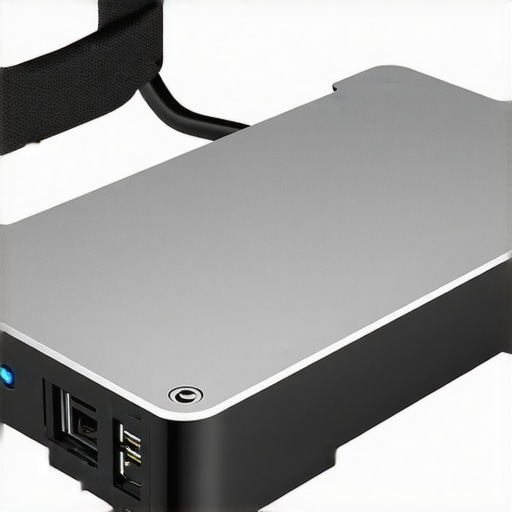
Harnessing the Full Potential of External SSDs with Custom RAID Architectures
In high-performance environments, leveraging external SSDs in conjunction with tailored RAID configurations unlocks unprecedented data throughput and resilience. Experts recommend integrating enterprise-grade NVMe drives within complex RAID levels such as RAID 50 or RAID 60, which combine striping and parity to optimize both speed and fault tolerance for demanding applications like real-time analytics and high-resolution video production.
Why Do Certain RAID Levels Outperform in Specific Workflows?
Choosing the appropriate RAID architecture hinges on understanding workload characteristics. For instance, RAID 0 maximizes sequential read/write speeds, ideal for large file transfers, whereas RAID 10 offers a balanced approach suitable for transactional databases requiring rapid recovery from drive failures. The decision matrix involves assessing not just speed but also redundancy needs, especially in multi-drive external arrays.
What are the implications of combining PCIe 5.0 SSDs with advanced RAID setups for enterprise scalability?
Integrating PCIe 5.0 SSDs within multi-layered RAID architectures significantly amplifies data transfer rates, supporting real-time data processing and large-scale simulations. According to a recent report by StorageReview, the bandwidth expansion from PCIe 4.0 to 5.0 can double throughput, making it essential for future-proof storage solutions. Compatibility with high-end hardware controllers is critical, as is ensuring firmware supports the latest standards to prevent bottlenecks.
To capitalize on these advancements, professionals should regularly consult industry white papers and collaborate with storage hardware vendors to fine-tune configurations. In doing so, they ensure their infrastructure remains aligned with evolving technological standards and operational demands.
Strategic Thermal Management for Sustained High-Speed Operations
High-performance external SSDs operating at PCIe 4.0 or 5.0 speeds generate substantial heat, which can impair longevity and performance. Implementing advanced cooling solutions—such as active heatsinks, airflow-enhanced enclosures, or liquid cooling systems—is paramount. Companies like Samsung and Western Digital have begun integrating thermal sensors and adaptive fan control within their external drives, mitigating thermal throttling during extended high-load periods.
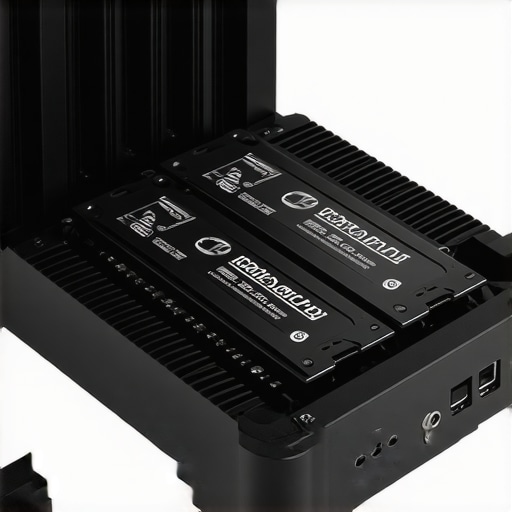
Effective thermal regulation ensures sustained peak performance, especially in RAID configurations handling continuous data streams. Proper enclosure design and environmental controls are vital components of a comprehensive thermal management strategy.
How Firmware Innovations Are Reshaping Drive Reliability in Complex RAID Arrays
Firmware updates are more than maintenance routines; they are strategic tools that enhance drive endurance, error correction, and compatibility with evolving RAID controllers. Modern drives feature firmware capable of predictive analytics, which detect early signs of wear or failure, enabling preemptive data migration and reducing downtime. As noted by the IEEE Transactions on Magnetics, proactive firmware management extends SSD lifespan and maintains high data integrity in demanding setups.
Can AI-driven diagnostics fundamentally transform external RAID storage management?
Absolutely. AI algorithms analyze real-time telemetry—temperature, error rates, and workload patterns—to forecast failures before they occur. This predictive maintenance reduces unexpected outages and data loss, especially in mission-critical environments. Companies like Seagate are pioneering AI-infused drives that autonomously optimize performance and initiate self-healing procedures, charting a new frontier in storage reliability.
Engaging with these technologies requires a strategic partnership with storage vendors and a commitment to continuous learning. Staying ahead entails not only adopting cutting-edge hardware but also integrating intelligent management systems that adapt dynamically to operational conditions.
Emerging Storage Architectures for Specialized Data Demands
Beyond traditional RAID levels, architectures such as RAID 50 and RAID 60 are gaining traction for large-scale, high-demand workflows. These configurations distribute data and parity across multiple RAID 5 or RAID 6 sets, providing enhanced fault tolerance without sacrificing throughput. Deploying such architectures necessitates robust hardware controllers capable of managing multiple arrays simultaneously, often found in enterprise-grade external enclosures.
Enhancing External SSD Performance Through Innovative Cooling Techniques
Thermal management remains a critical factor influencing sustained external SSD performance. Advanced solutions, including liquid cooling modules and thermally conductive enclosures, help dissipate heat generated during intensive operations. As SSD technologies evolve, the integration of smart thermal sensors and adaptive cooling systems—implemented by vendors like OWC and Sabrent—becomes essential for maintaining optimal speeds and prolonging device lifespan.
How do firmware updates and thermal management synergize to extend SSD longevity in RAID environments?
Firmware updates improve error correction, wear leveling, and compatibility, while thermal management prevents overheating that accelerates wear. Together, they create a resilient environment where SSDs can operate at peak performance for extended periods. Regular firmware updates, combined with proactive cooling strategies, form a comprehensive approach to maximizing RAID array reliability and speed, as detailed in recent technical reviews by AnandTech.
If you are aiming to refine your storage infrastructure, consider consulting with industry specialists who can tailor these advanced strategies to your specific operational requirements. Embracing innovative hardware, software, and cooling solutions will position your enterprise at the forefront of data management excellence.
Strategic RAID Configurations Elevate External SSD Efficiency
Employing advanced RAID levels such as RAID 50 and RAID 60 with high-end NVMe SSDs can dramatically improve data throughput and resilience, ensuring seamless workflows in demanding environments like video editing and scientific simulations.
Prioritize Thermal Management to Sustain Peak Speed
Implementing innovative cooling solutions like liquid cooling or active heatsinks prevents thermal throttling, maintaining optimal SSD performance during prolonged high-speed operations, essential for enterprise-grade external arrays.
Leverage AI and Firmware Updates for Enhanced Reliability
Incorporating AI-driven diagnostics and proactively updating firmware minimizes drive failures, extends lifespan, and guarantees data integrity within complex RAID setups, transforming traditional storage management into a predictive process.
Expert Resources for Cutting-Edge Storage Solutions
- Storage Review: Provides in-depth analysis of PCIe 5.0 SSDs and advanced RAID architectures, guiding enterprise scalability.
- AnandTech: Offers technical reviews on thermal management innovations and firmware impacts on SSD longevity.
- IEEE Transactions on Magnetics: Features research on predictive analytics enhancing drive reliability in RAID environments.
Reflections from the Storage Elite
Harnessing expert insights on RAID architectures and external SSD optimization reveals that combining strategic hardware choices with intelligent management systems defines the future of high-speed data storage. Staying ahead requires continuous learning and adaptation to emerging technologies, ensuring your infrastructure remains robust and scalable. For tailored advice or to explore innovative storage strategies, connect with specialists or consult trusted industry publications. Your data’s velocity and security depend on it—embrace the expertise that drives success.