Elevating Data Efficiency in Contemporary Storage Architectures
In the landscape of high-performance computing and data-intensive workflows, professionals constantly seek to optimize storage solutions that deliver rapid access, unwavering reliability, and scalability. The convergence of SATA SSDs, NVMe SSDs, RAID configurations, external SSD arrays, and scratch disks forms the backbone of cutting-edge data management strategies. An expert understanding of these components’ interplay enables tailored configurations that meet diverse operational demands, from multimedia production to enterprise-level data analytics.
Integrating RAID Storage for Redundant Yet Accelerated Data Access
RAID (Redundant Array of Independent Disks) systems synergize multiple drive architectures, offering both fault tolerance and enhanced throughput. As detailed by industry specialists in RAID storage methodologies, configuring RAID levels like 0 or 10 leverages the speed of SSDs while safeguarding data integrity. Particularly in environments utilizing NVMe SSDs, RAID can mitigate bottlenecks and facilitate high-bandwidth workflows essential for real-time 4K editing or scientific computations.
Choosing External SSDs for Mobile Data Maneuvering and Workflow Flexibility
External SSDs equipped with Thunderbolt 3/4 or USB 3.2 interfaces provide a portable yet high-speed data conduit. Today’s market offers models capable of sustaining data transfer rates exceeding 2,000 MB/s, a notable boon for on-the-go professionals. When integrating external SSDs, attention to enclosure quality, interface compatibility, and thermal management becomes pivotal to preserve performance consistency over prolonged operations.
Can NVMe SSDs Outperform SATA SSDs in All Scenarios?
This question probes the core of storage evolution. While NVMe SSDs utilize the PCI Express bus to deliver exceptional throughput—often surpassing 3,500 MB/s—they also pose considerations such as cost and thermal management, especially when deployed in RAID arrays or external enclosures. Conversely, SATA SSDs, though limited to around 550 MB/s, might suffice in applications with lower bandwidth demands or where budget constraints predominate.
Optimizing Scratch Disks for Accelerated Creative Workflows
Scratch disks act as dedicated fast-access storage buffers for editing, rendering, and computational tasks. Implementing NVMe SSDs as scratch disks can dramatically reduce latency, especially when paired with optimized file system settings and dedicated system resources. Resources like scratch disk optimization guides reveal best practices to maximize throughput and minimize bottlenecks.
What Advanced Configurations Best Balance Speed and Data Security in Enterprise Environments?
Implementing hybrid solutions that blend RAID configurations with external NVMe SSDs—possibly utilizing tiered storage—can yield optimal results. Such setups require meticulous planning regarding redundancy schemas, thermal design, and data backup protocols. Heightened awareness of emerging technologies like NVMe over Fabrics (NVMe-oF) can further elevate performance in distributed data centers. For insights into scalable RAID architectures, refer to professional RAID deployment strategies.
Engagement in ongoing discourse, such as participating in industry forums or consulting with storage architects, remains vital for staying at the forefront of storage innovation.
Explore more expert strategies or share your insights by visiting our contact page.
Beyond Basic RAID: Crafting Intelligent Storage Tiers for Peak Performance
Modern data environments demand more than mere redundancy; they require intelligent layering of storage to optimize speed, security, and cost-efficiency. Combining SSDs—particularly NVMe variants—with traditional drives in hybrid RAID configurations allows professionals to tailor performance pathways. As outlined in effective RAID strategies, tiered storage architectures enable rapid access to critical data while archiving less active information on economical mediums. This layered approach minimizes latency and maximizes resource utilization, serving workflows from high-frequency trading to large-scale video rendering.
Balancing Data Security and Speed in Distributed Storage Networks
The shift toward distributed storage, including cloud-integrated RAID systems and NVMe over Fabrics (NVMe-oF), emphasizes the need for security-conscious design. Ensuring data integrity across remote nodes while maintaining high throughput necessitates robust encryption, seamless synchronization, and fault-tolerant protocols. Industry experts recommend adopting end-to-end encryption alongside RAID level selections that prioritize both redundancy and performance, such as RAID 10, especially when paired with enterprise-grade NVMe SSDs. For comprehensive insights into scalable and secure RAID implementations, visit RAID and external SSD integration.
Is Your Storage Infrastructure Ready for the Data Tsunami of 2025?
As data generation accelerates exponentially, storage systems must evolve to handle increasing volumes without compromising speed or reliability. This question prompts technical strategists to evaluate current architectures against emerging demands. Will traditional RAID configurations suffice, or is there a necessity for next-generation solutions like NVMe-oF or quantum-enhanced storage? Experts suggest that proactive assessment and adoption of hybrid storage solutions—integrating NVMe, SATA, and cloud-based tiers—are crucial for future-proofing. For an in-depth analysis of upcoming storage paradigms, consult future-ready storage strategies.
Engaging with the latest industry forums, attending live webinars, and collaborating with storage architects can help organizations stay ahead of the curve. Explore opportunities to optimize your infrastructure by reaching out through our contact page.
Harnessing the Power of Intelligent Storage Tiers for Seamless Data Access
In contemporary high-throughput environments, deploying a dynamic and responsive storage infrastructure often entails creating hybrid tiered systems that intelligently allocate data across various mediums. Leveraging fast NVMe SSDs for high-priority, latency-sensitive workloads while relegating archival or less critical data to traditional SATA drives strikes an optimal balance between speed and cost-efficiency. Implementing automated tiering solutions, such as those enabled by software-defined storage platforms, ensures real-time data migration based on access patterns—reducing bottlenecks and maintaining throughput during peak demand periods.
How Can Data Access Patterns Inform Tiered Storage Design?
Understanding the temporal and spatial characteristics of data access plays a pivotal role in designing effective tiered storage architectures. Analytics derived from workload monitoring tools can reveal hot spots—datasets frequently accessed or modified—that warrant placement on NVMe SSDs. Conversely, cold data, seldom retrieved or updated, benefits from being stored on economical HDDs or cloud-based cold storage solutions. The nuanced application of machine learning algorithms to predict access trends enables predictive placement, minimizing latency and maximizing resource utilization—ushering in an era where storage adapts proactively rather than reactively.
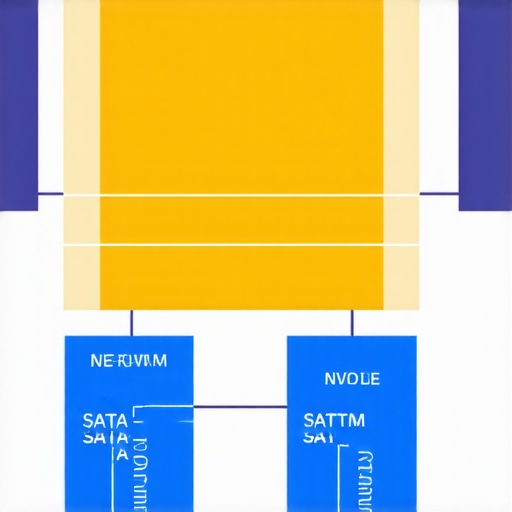
For instance, a financial trading platform handling real-time analytics might utilize an active tier of NVMe SSDs to process live data streams, with historical market data archived on traditional disks. This tiered approach ensures instant responsiveness and cost-effective storage management, crucial for competitive latency-sensitive workflows.
Emerging Protocols Elevate Storage Flexibility and Performance
Beyond hardware configurations, advancements in storage communication protocols are revolutionizing data transfer capabilities. The advent of NVMe over Fabrics (NVMe-oF) extends the high-speed benefits of NVMe SSDs across network boundaries, facilitating scalable, low-latency solutions suitable for data centers and distributed architectures. This protocol decouples storage media from physical locality, allowing remote NVMe SSD arrays to function as local drives—substantially reducing I/O bottlenecks and simplifying scaling operations.
What Are the Practical Impacts of NVMe-oF on Distributed Storage Management?
Implementing NVMe-oF requires thoughtful network fabric design—using RDMA-capable networks like RoCE or Fibre Channel—and compatible storage endpoints. When optimized, this architecture delivers throughput levels rivaling direct-attached NVMe SSDs while offering the flexibility to expand storage clusters seamlessly. For example, large-scale media production facilities or scientific research groups benefit from NVMe-oF by enabling high-speed access to massive datasets distributed across geographically dispersed sites, thus fostering collaboration and accelerated workflows.
Recent studies, such as those documented in the IEEE Transactions on Cloud Computing, demonstrate that NVMe-oF can reduce latency by up to 80% compared to traditional SAN infrastructures, translating to tangible performance gains and operational efficiencies.
Integrating Emerging Storage Protocols with Tiered Architectures for Future-Ready Solutions
The synergy of intelligent tiering with advanced protocols like NVMe-oF positions modern storage infrastructures at a strategic advantage. Such integration allows for the deployment of multi-tiered, distributed storage pools that automatically optimize data placement based on real-time demands and network conditions. Layered with robust security measures—such as end-to-end encryption and firmware integrity verification—these architectures promise both resilience and agility, essential qualities in today’s data-driven landscape.
Moreover, innovations like Zoned Namespaces (ZNS) for SSDs and namespace partitioning further enable fine-grained control over data placement, reducing write amplification and extending device lifespan. These granular controls empower storage administrators to tailor performance-critical workloads meticulously, balancing durability with speed.
Continued exploration into adaptive storage management, fueled by artificial intelligence and predictive analytics, will define the landscape for enterprise-grade solutions capable of accommodating the relentless growth of data—yet it necessitates a deep understanding of both hardware capabilities and protocol engineering.
If you’re contemplating upgrading or scaling your storage infrastructure, engaging with specialists in protocol optimization and tiered architecture design can unlock untapped performance potentials. Discover more about integrating these cutting-edge solutions through our expert consultation services.
The Hidden Art of Optimizing Drive Interactions in Modern Storage Solutions
In contemporary data ecosystems, the synergy between diverse storage media, such as SATA SSDs, NVMe drives, and external arrays, hinges on understanding the nuanced interplay of hardware interfaces and software protocols. When orchestrated skillfully, this collaboration unlocks unprecedented levels of throughput, resilience, and scalability, empowering organizations to meet relentless data demands with precision.
Beyond the Basics: How Adaptive Storage Architectures Transform Data Handling
Implementing layered storage systems that dynamically allocate workloads based on real-time performance metrics transcends traditional static configurations. Adaptive architectures harness the full potential of NVMe over Fabrics (NVMe-oF) and tiered storage solutions, enabling intelligent data placement that optimizes access latency and cost efficiency. Such strategies are especially vital for sectors like high-frequency trading and immersive content creation, where milliseconds matter.
Why is fine-grained namespace management critical for SSD longevity?
Subdividing SSDs into multiple namespaces, a feature introduced with Zoned Namespaces (ZNS), allows granular control over data placement, reducing wear and prolonging device lifespan. Integrating namespace partitioning with predictive analytics ensures that frequently updated datasets reside on high-endurance zones, while archival data inhabits the more stable regions. This approach enhances both the durability and performance of your storage fleet, a consideration that becomes even more significant as data volumes explode.
Harnessing NVMe-oF to Overcome Physical Boundaries and Scale Seamlessly
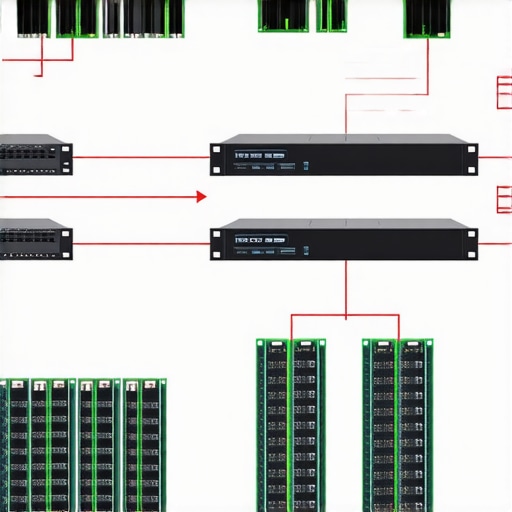
The evolution of NVMe over Fabrics extends high-speed storage capabilities beyond the confines of direct-attached devices, facilitating distributed environments where remote SSDs function as if locally connected. This paradigm shift underpins the creation of scalable, low-latency storage clusters that support enterprise-level workloads without the constraints of physical proximity. Real-world implementations, such as scientific research grids and ultra-low latency financial data centers, demonstrate NVMe-oF’s transformative power in enabling rapid, reliable data access across dispersed nodes.
Embracing Protocol Innovations for a Future-Ready Storage Ecosystem
Emerging protocols like Zoned Namespace Command Set and Physical Layer Enhancements promise to unlock new efficiency frontiers, reducing write amplification and improving energy consumption metrics. When integrated with advanced caching strategies and AI-driven predictive placement, these innovations pave the way for resilient, high-performance storage landscapes. As organizations prepare for the exponential data growth projected in the next decade, mastery of these cutting-edge protocols becomes indispensable.
Are You Strategically Positioning for Data Growth or Reacting to It?
Proactive planning, leveraging hierarchical storage tiers combined with protocol advancements, ensures your infrastructure remains agile and resilient amid the data deluge. Strategic investments in scalable NVMe-based solutions, coupled with intelligent data management, can yield significant operational savings and performance gains. To stay ahead, consider consulting with specialists who possess deep expertise in architecting future-proof storage architectures aligned with your organization’s unique needs.
Engage with industry-standard benchmarks and case studies in reputable sources such as the IEEE Transactions on Cloud Computing to inform your decision-making process and tailor solutions that push the boundaries of conventional storage performance.
Designing Resilient Storage Tiers for the Data-Intensive Era
The nuanced orchestration of high-speed NVMe drives with traditional HDDs and cloud-based repositories, guided by insights from big data analytics, forms the cornerstone of resilient, high-performance storage fabrications. Automated tiering algorithms, leveraging machine learning, predict access patterns, ensuring that latency-critical data resides on the fastest media while less active information remains on cost-effective solutions. This convergence of hardware and intelligence embodies the future of storage optimization, accommodating the relentless growth of data with agility and reliability.
What is the Role of Emerging Technologies in Security-First Storage Designs?
As storage infrastructures evolve, integrating end-to-end encryption, firmware integrity verification, and secure boot mechanisms becomes essential. The adoption of protocols like NVMe-oF, with built-in security features and support for hardware root of trust, offers a robust foundation for safeguarding sensitive data. Combining these with continuous monitoring and automated response systems creates a resilient defense against cyber threats, enabling organizations to confidently scale their storage operations without compromising security.
Future-focused strategies also involve exploring quantum-resistant encryption standards and decentralized security frameworks, ensuring your storage architecture remains impervious as threat landscapes evolve.
Elevating Data Efficiency in Contemporary Storage Architectures
In high-stakes environments where massive data flows demand instant access and unwavering reliability, leveraging an expert grasp of storage solutions can make all the difference. Integrating components like NVMe SSDs, RAID configurations, and external arrays requires strategic insight to optimize performance and security in complex workflows.
Key Insights for Next-Generation Storage
Prioritize Hybrid Tiered Storage to Balance Speed and Cost
Implementing intelligent tiering that combines high-performance NVMe drives for critical data with traditional SATA drives for archival purposes ensures rapid access where it counts without overspending. This layered approach adapts dynamically, aligning with access patterns and workload demands, essential for data-intensive tasks.
Embrace Protocol Evolution for Distributed Resilience
Protocols like NVMe over Fabrics extend high-speed storage capabilities beyond physical boundaries, offering scalable, low-latency access across geographic locations. Integrating these with secure, fault-tolerant architectures elevates enterprise resilience and flexibility.
Optimize Drive Longevity Through Fine-Grained Namespace Management
Emerging SSD features such as Zoned Namespaces (ZNS) allow meticulous control over data placement, reducing wear and extending device lifespan. Coupling this with predictive analytics enhances durability in high-write environments.
Harness External SSDs for Mobility and Scalability
High-speed external arrays equipped with Thunderbolt or USB interfaces facilitate data mobility without sacrificing performance. Selecting robust enclosures with thermal management safeguards sustained throughput, vital for mobile professionals.
Leverage Automated Tiering for Agile Data Handling
Using AI-driven software to monitor and migrate data based on real-time access trends ensures critical workloads reside on the fastest media, optimizing latency and throughput while reducing operational costs.
Curated Resources for Deepening Expertise
- RAID Storage Methodologies — Explores advanced configurations that blend redundancy with speed.
- Scratch Disk Optimization Guides — Offers practical tips to maximize performance in creative workflows.
- External SSD Selection — Assists in selecting portable drives suited for demanding data transfer.
- NVMe SSD Performance — Delves into optimization techniques to harness maximum speed.
- RAID in Practice — Guides on deploying resilient, high-performance RAID setups in enterprise contexts.
Synthesizing for the Future of Storage
As data continues to proliferate exponentially, mastery of advanced storage architectures becomes non-negotiable. Combining tiered solutions, cutting-edge protocols, and predictive management positions organizations to excel amid the data tsunami. Engaging with authoritative resources and collaborating with industry experts ensures your infrastructure not only meets today’s demands but anticipates tomorrow’s challenges. Elevate your storage strategy by exploring tailored solutions that align your technological capabilities with your strategic objectives. For more insights or a personalized consultation, connect through our contact page.
Reading through this comprehensive post really emphasizes how crucial it is to adopt a hybrid approach in modern storage architectures. I’ve personally found that leveraging tiered storage, especially combining NVMe SSDs with traditional SATA drives, has helped optimize both performance and cost-efficiency in my projects. The discussion on emerging protocols like NVMe-oF also caught my attention; implementing it in our data center has reduced latency significantly and improved scalability. However, managing the complexities of namespace management and ensuring data security across distributed environments requires meticulous planning. I’m curious about how smaller organizations can effectively implement some of these advanced strategies without overwhelming their resources. Has anyone here experimented with automated tiering or AI-driven data placement tools? What practical challenges did you encounter, and how did you overcome them?