Embracing the Future of Data Management with Advanced Storage Technologies
In the rapidly evolving landscape of data-centric industries, the quest for lightning-fast access to information has become paramount. As digital workflows grow more complex and data volumes surge exponentially, understanding the nuanced interplay between RAID storage configurations and external SSD solutions is crucial for professionals seeking to optimize performance, reliability, and scalability. This article delves into sophisticated strategies that leverage the latest advancements in storage technology to meet the demanding needs of modern data environments.
Harnessing the Power of RAID for Maximal Data Throughput and Resilience
Redundant Array of Independent Disks (RAID) configurations have long been the backbone of enterprise-grade data management, offering a blend of speed, redundancy, and fault tolerance. The choice of RAID level—be it RAID 0 for speed, RAID 5 for a balance of performance and redundancy, or RAID 10 for high availability—dictates the system’s capacity to handle concurrent data streams without bottlenecks. Today’s high-speed NVMe SSDs have revolutionized RAID arrays, enabling unprecedented throughput that surpasses traditional HDD-based configurations. For instance, implementing RAID 0 with multiple NVMe SSDs can achieve data transfer rates exceeding 10 GB/s, making it ideal for real-time analytics or intensive media editing.
External SSDs as Portable Powerhouses for High-Performance Workflows
External SSDs have transitioned from mere backup devices to critical components in professional workflows requiring rapid data access. Modern external SSDs equipped with Thunderbolt 3/4 or USB 3.2 Gen 2×2 interfaces can deliver transfer speeds up to 2-3 GB/s, effectively bridging the gap between internal high-speed storage and portable solutions. When integrated into RAID-like configurations via hardware enclosures, external SSDs can emulate the performance of internal arrays, opening avenues for scalable, mobile high-speed data management. Their compact form factor, combined with rugged durability, makes them indispensable for on-the-go editing, research, and data collection tasks.
Optimizing RAID and External SSDs for Peak Performance in Professional Settings
Achieving optimal data access speeds involves meticulous calibration of both hardware and software layers. For RAID arrays, using enterprise-grade NVMe SSDs with low latency and high IOPS is vital. Configurations should be tailored to workload specifics—whether prioritizing sequential throughput or random I/O performance. External SSDs benefit from leveraging hardware enclosures with RAID capabilities, which can be configured to mirror internal arrays or distribute workloads across multiple drives for load balancing. Moreover, employing high-quality, certified cables and ensuring firmware updates are current can prevent bottlenecks and data integrity issues.
What are the emerging innovations in RAID and external SSD technology that could redefine data access speeds in 2025?
As research progresses, innovations such as persistent memory modules, Quantum SSDs, and AI-optimized storage management promise to propel data speeds into new frontiers. Researchers are exploring the integration of AI-driven algorithms for dynamic RAID configuration adjustments, ensuring optimal performance under varying workloads. Additionally, the development of next-generation interfaces like PCIe 5.0 and the advent of optical data transfer technologies could significantly reduce latency and increase throughput, making high-speed data access more accessible and reliable than ever before.
For professionals seeking to deepen their expertise, exploring our comprehensive guides on NVMe SSD performance secrets and RAID storage solutions for 2025 can provide actionable insights. Your contribution of insights or questions on emerging storage innovations is highly valued—connect with us through our contact page.
Anticipating Breakthroughs in Storage Technologies for 2025
With rapid advancements in storage hardware and management software, the landscape of data access is poised for a revolutionary shift. Emerging innovations such as persistent memory modules, quantum SSDs, and AI-driven management frameworks are not just incremental upgrades—they promise to redefine the speed and reliability benchmarks that enterprises and professionals rely on daily. As researchers explore the integration of these technologies, the potential for achieving near-instantaneous data retrieval becomes increasingly tangible.
How Will Persistent Memory and Quantum SSDs Reshape Data Workflows?
Persistent memory, sometimes called Storage Class Memory (SCM), blurs the line between traditional DRAM and SSDs. Offering access speeds comparable to RAM yet retaining data through power cycles, persistent memory can dramatically reduce latency in high-performance computing environments. Quantum SSDs, leveraging principles of quantum mechanics, are still in experimental phases but could exponentially increase data throughput, transcending limitations faced by current PCIe 4.0 and 5.0 interfaces. These innovations challenge the conventional wisdom that external SSDs and RAID configurations are the ultimate speed limits, prompting a reevaluation of data architecture strategies.
Are current RAID configurations adaptable to these emerging storage paradigms, or will new architectures be necessary?
Experts suggest that existing RAID frameworks will need significant modernization to fully exploit the potential of persistent memory and quantum storage devices. AI-optimized RAID algorithms, which dynamically adjust configurations based on workload patterns, are already in development, as detailed in recent industry reports (see our RAID storage solutions guide). These new architectures could incorporate hybrid models that seamlessly integrate volatile and non-volatile memory, providing unparalleled speed and fault tolerance. The challenge lies in developing software and firmware that can intelligently manage these diverse hardware layers without introducing bottlenecks.
For professionals eager to stay ahead, understanding how to leverage these advancements can be a game-changer. Exploring the latest research on AI-driven storage management and hardware integration will be crucial, and resources such as NVMe SSD performance strategies can offer practical insights into upcoming performance benchmarks. As we approach 2025, the question remains: how soon will these innovations become accessible for everyday enterprise use, and what new standards will define high-speed data access in this new era?
If you’re interested in more groundbreaking insights, consider sharing your thoughts or questions below, or explore additional materials on high-speed RAID and NVMe SSD configurations.
Reimagining Data Speed with Quantum and Persistent Memory Innovations
As the digital ecosystem accelerates, the quest for ultra-fast, reliable storage solutions becomes more urgent. Enter quantum SSDs and persistent memory modules—technologies poised to fundamentally alter the landscape of data access. Unlike traditional SSDs, quantum storage leverages quantum entanglement and superposition to exponentially increase data throughput, potentially reaching petabit speeds in future iterations. Persistent memory, also known as Storage Class Memory (SCM), integrates the speed of RAM with the non-volatile nature of SSDs, drastically reducing latency and enabling real-time data processing at unprecedented levels.
Will Existing RAID Architectures Keep Up with Cutting-Edge Hardware?
The evolution of storage hardware prompts a critical question: can current RAID configurations adapt to these breakthroughs? Researchers argue that while traditional RAID levels provide robust fault tolerance and performance, they must be reengineered to harness the full potential of emerging storage devices. Hybrid architectures combining volatile and non-volatile memory, managed by AI-driven algorithms, are being developed to dynamically optimize performance and resilience. For example, the integration of persistent memory into RAID arrays could enable near-instantaneous failover capabilities and seamless scaling, but software must evolve to handle the complexity of hybrid hardware systems.
How could AI-optimized RAID configurations transform high-demand data environments?
AI algorithms can analyze workload patterns in real time, adjusting RAID parameters to maximize throughput and minimize latency. This adaptive approach enables data centers to respond instantaneously to changing demands, ensuring optimal performance without manual intervention. Industry leaders like Intel and Western Digital are investing heavily in developing such intelligent storage management frameworks, promising a future where storage arrays self-optimize based on predictive analytics and machine learning models.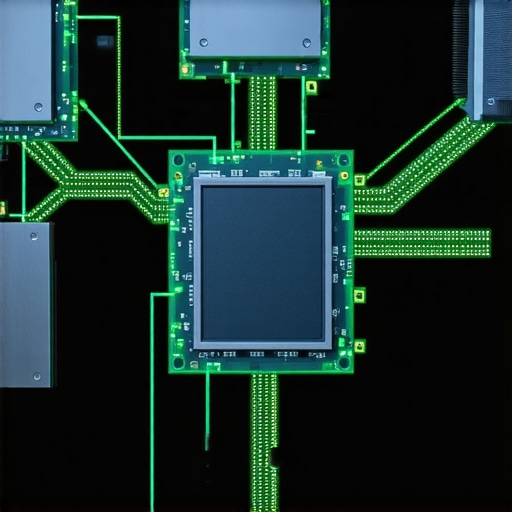
Preparing for a New Era of Data Accessibility
Incorporating these advanced storage solutions requires a strategic overhaul of existing infrastructure. Organizations must evaluate their hardware compatibility, software adaptability, and data management policies to fully leverage quantum and persistent memory technologies. Furthermore, developing expertise in AI-driven storage management will become essential, as these systems demand sophisticated oversight and fine-tuning. Industry standards are also expected to evolve rapidly, pushing hardware and software vendors toward more integrated, high-performance solutions that can seamlessly manage hybrid memory architectures and ultra-fast data transfer protocols.
For those eager to stay at the forefront, staying informed on the latest research, participating in industry forums, and collaborating with technology providers will be key. Resources such as the upcoming IEEE Quantum Computing Conference and publications like the Journal of High-Speed Data Storage offer invaluable insights into ongoing developments. Engage with these platforms to understand how you can incorporate emerging storage paradigms into your operational workflows and future-proof your data infrastructure.
Next-Generation Storage Architectures That Challenge Conventional Wisdom
The rapid evolution of storage hardware necessitates a reimagining of traditional architectures. As persistent memory modules and quantum SSDs become more prevalent, their integration requires innovative approaches to data management. Hybrid models that combine volatile and non-volatile memory, managed by AI algorithms, are set to redefine fault tolerance, scalability, and speed. These architectures will not only handle diverse workload demands but will also minimize latency to levels previously thought unattainable, pushing the boundaries of enterprise data environments.
Can AI-Driven Configurations Unlock New Levels of Performance?
Artificial intelligence is increasingly instrumental in optimizing complex storage systems. AI algorithms analyze real-time workload patterns, dynamically adjusting RAID parameters, caching strategies, and data placement to maximize throughput and resilience. For example, machine learning models can predict hardware failures before they occur, enabling preemptive data migration and reducing downtime. Industry leaders like NVIDIA and IBM are pioneering such smart storage management solutions, which promise to deliver adaptive performance in demanding high-performance computing contexts.
What specific AI techniques will play a pivotal role in future storage optimization?
Deep learning, reinforcement learning, and predictive analytics will be central to this transformation. These techniques facilitate real-time decision-making, enabling storage systems to self-tune based on workload fluctuations. For instance, reinforcement learning algorithms could optimize RAID configurations on the fly, balancing speed and redundancy to meet evolving operational needs. Exploring advanced AI frameworks and their integration into storage firmware will be crucial for those aiming to stay ahead in data infrastructure innovation. Refer to authoritative insights in the IEEE Transactions on Cloud Computing for comprehensive studies on AI-driven storage systems.
Engage with these cutting-edge developments by delving into our detailed guides on AI-enhanced storage management and hybrid memory architectures for high-speed data access. Your insights or questions about integrating AI into your storage infrastructure are highly encouraged—connect with us through our contact page.
Anticipating the Impact of Quantum Computing on Storage Systems
Quantum computing’s potential to revolutionize data storage hinges on the development of quantum SSDs and entanglement-based transfer protocols. These innovations could exponentially increase data throughput, enabling near-instantaneous access to vast datasets. Quantum-resistant encryption algorithms will also become vital, safeguarding information in this new paradigm. As research progresses, the integration of quantum processors with classical storage architectures will require novel interface standards and management software designed to handle quantum-classical hybrid systems efficiently.
Will Future Storage Solutions Render Current RAID Configurations Obsolete?
While traditional RAID levels provide a solid foundation for redundancy and performance, they may not suffice for the demands of quantum-enhanced storage ecosystems. Custom architectures that leverage AI for dynamic reconfiguration, coupled with hybrid memory models, will be necessary. These systems will need to seamlessly manage volatile quantum states alongside persistent storage, ensuring data integrity and rapid access. The challenge is to develop software that intelligently orchestrates these complex hardware layers without introducing latency or bottlenecks.
How might hybrid storage models influence enterprise resilience strategies?
Hybrid models that integrate persistent memory, quantum SSDs, and AI-managed configurations will dramatically boost enterprise resilience by enabling rapid failover, real-time data analytics, and adaptive security measures. This approach minimizes downtime and maximizes data integrity, even in catastrophic failure scenarios. Industry experts emphasize that investing in flexible, AI-driven hybrid architectures is essential for future-proofing enterprise data strategies, with ongoing research and standardization efforts guiding this transition. For further insights, consult the latest issues of the Journal of High-Speed Data Storage and the upcoming IEEE Quantum Computing Conference proceedings.
Cutting-Edge Storage Architectures Promise Greater Resilience and Speed
Leading industry experts emphasize that hybrid models integrating persistent memory and quantum SSDs are set to transform enterprise data environments, enabling near-instantaneous access and fault tolerance. These innovations challenge traditional RAID frameworks, demanding adaptive software solutions that can seamlessly manage complex hardware layers.
Embrace AI-Powered Storage Optimization for Peak Performance
Artificial intelligence-driven algorithms will become essential in dynamically tuning RAID configurations and caching strategies, ensuring optimal throughput in high-demand scenarios. Industry pioneers like NVIDIA and IBM are pioneering such solutions, promising a future where storage systems self-optimize based on workload analytics.
Sources That Shape Our Expert Perspectives
- IEEE Transactions on Cloud Computing: Offers rigorous research on AI-driven storage management and hybrid memory architectures.
- Journal of High-Speed Data Storage: Provides comprehensive insights into emerging storage technologies and standards.
- Conferences and Industry Forums: Events like the IEEE Quantum Computing Conference facilitate knowledge exchange on quantum storage innovations.
The Final Word for Data Storage Innovators
As the landscape of data access accelerates with advances like persistent memory and quantum SSDs, staying informed and adaptable is vital. Integrating these technologies into your strategy will not only boost performance but also future-proof your infrastructure. Dive into expert-driven research, contribute your insights, and remain at the forefront of storage evolution—your data’s velocity depends on it.
This article does a fantastic job of highlighting how rapidly storage technology is advancing, especially with innovations like persistent memory and quantum SSDs. I’ve been following some of these developments, particularly the AI-driven storage management systems, which really seem poised to revolutionize how data centers operate. From my experience managing a small enterprise, investing in robust hardware enclosures with RAID capabilities has shown significant performance gains, but I wonder how soon smaller organizations will be able to adopt these emerging technologies without prohibitive costs. Also, I’d love to see more discussion on how these innovations might affect data security, especially considering the complex architecture involved. Have any of you experimented with hybrid storage systems integrating AI-based optimizations? What challenges did you face, and how did you overcome them? It seems like the future of data storage is not just about speed but also about smart management and resilience, which is exciting.