Unlocking the Full Potential of SATA SSDs in High-Performance RAID Arrays
In the rapidly evolving landscape of data storage, SATA SSDs continue to prove their resilience and cost-effectiveness, especially within enterprise-grade RAID configurations aimed at achieving both exceptional speed and reliability. As we approach 2026, understanding how to optimize SATA SSDs within RAID frameworks is crucial for professionals managing vast data repositories such as 500TB arrays, ensuring minimal downtime and maximal throughput. Leveraging the specific attributes of SATA SSDs—such as their thermal stability and proven endurance—can mitigate common pitfalls seen in larger arrays, like rebuild times and data corruption risks.
NVMe SSDs and Their Disruption of Traditional Storage Paradigms
While SATA SSDs remain relevant, NVMe SSDs are leading a paradigm shift with their blistering speeds—up to 7GBps and beyond—that redefine performance ceilings for data-intensive applications. Integrating NVMe drives into RAID arrays offers radical improvements in I/O operations, critical for latency-sensitive workflows such as 8K video editing and real-time analytics. Nevertheless, navigating their high thermal output and cost considerations requires a nuanced understanding of RAID topology and cooling solutions. For those evaluating hardware upgrades, consulting resources like the Ultimate Guide to NVMe SSDs and RAID Storage Performance provides in-depth strategies for maximizing NVMe RAID configurations.
RAID Storage Methods that Minimize Data Loss Risks in the Long Term
The choice of RAID level profoundly impacts data durability, rebuild speed, and overall system resilience. Approaches like RAID 10 offer mirrors and stripes to safeguard against drive failures, but can be expensive for multi-hundred-terabyte systems. Conversely, RAID 6, once favored for its dual parity, is now criticized due to prolonged rebuild times and vulnerability during degraded states. As highlighted by recent analyses, alternatives like RAID 5 or specialized parity algorithms tailored for SSDs might be more suitable for certain enterprise environments in 2026, especially when paired with strategic hot-spare deployment. To avoid catastrophic data loss, it’s essential to understand the trade-offs presented in articles like Avoid RAID 5 for 30TB Drives.
What RAID configurations strike the optimal balance between speed, redundancy, and rebuild time for massive data arrays in 2026?
The optimal RAID setup hinges on specific workload demands and budget constraints. Experts increasingly recommend hybrid or adaptive solutions, combining RAID 0/1 for blazing speed with redundancy layers offered by more resilient configurations like RAID 10 or custom parity schemes that leverage firmware innovations. For professional-grade data centers managing petabytes, innovative approaches such as erasure coding are gaining traction for their efficiency at scale. Consistent monitoring and proactive replacement strategies are imperative; see RAID Storage Explained for comprehensive insights.
Interested in next-level strategies for external SSD integration? Explore our Ultimate Guide to External SSDs and contribute your expertise to community discussions on RAID innovations for 2026.
Revolutionize Your Storage with Cutting-Edge RAID Architectures
As data demands soar, especially in high-stakes environments like enterprise data centers and creative studios, mastering RAID configurations becomes more critical than ever. Innovative RAIDs, such as hybrid or adaptive models, combine the strengths of traditional setups with contemporary firmware and hardware advancements, paving the way for unprecedented speed and resilience. For example, leveraging RAID 0/1 for rapid access paired with robust parity-based solutions can significantly reduce downtime during drive failures, ensuring business continuity amidst complex workflows. Dive deeper into advanced RAID techniques and their application in 2026 by exploring RAID Storage Explained.
Balancing Thermal Management and Sustained Throughput
With NVMe SSDs at the forefront of high-performance storage, thermal management emerges as a pivotal factor affecting RAID stability. Elevated temperatures can throttle performance, disproportionately impacting rebuild times and I/O consistency — especially in tight server racks or compact workstation enclosures. Implementing advanced cooling solutions, such as heatsinks or active cooling fans, tailored for SSD arrays, has proven essential. Recent technological innovations even include heat spreader designs that optimize airflow, thereby maintaining optimal operating temperatures. For comprehensive insights on cooling strategies compatible with high-density RAID arrays, consult the NVMe Heatsinks for 2026 guide.
Could emerging cooling technologies make thermal bottlenecks a relic of the past for ultra-dense NVMe RAID setups?
As cooling solutions evolve—incorporating liquid cooling, phase-change materials, or integrated heatsink innovations—the industry could see a paradigm shift. These advancements promise to unlock sustained throughput at the hardware level, minimizing thermal throttling during intensive rebuilds or continuous high-activity periods. Experts suggest that integrating smart thermal sensors with adaptive fan controls can dynamically optimize operating conditions, preserving SSD longevity and performance. Stay informed about these emerging breakthroughs through sources like High-Speed RAID Storage Optimization.
Driven by the relentless march of technology, the future of RAID with external SSDs may see adaptive architectures that respond to workload fluctuations in real-time, further enhancing efficiency. To harness such innovations, consider engaging with our community forums and sharing strategies that have worked for you or seeking expert advice on Contact Us.
Interested in the latest insights on performance-boosting configurations? Discover advanced RAID strategies tailored for 2026 in our full resource library.
Harnessing SMART Data to Proactively Safeguard Massive RAID Arrays
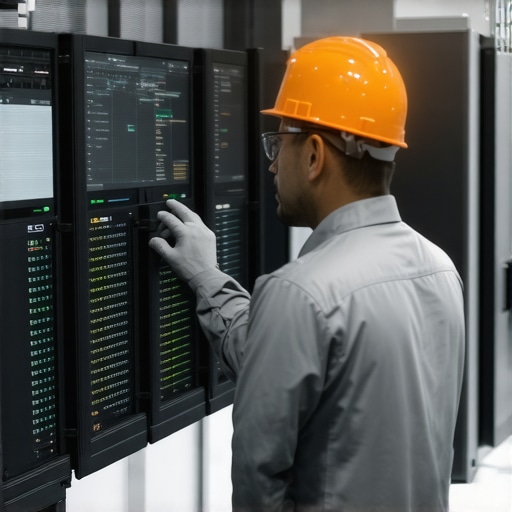
Reliable data storage isn’t solely about hardware robustness; it’s increasingly about intelligent monitoring systems that can predict and prevent failures before they occur. The Self-Monitoring, Analysis, and Reporting Technology (SMART) protocol provides detailed insights into SSD health, enabling administrators to transition from reactive to proactive maintenance especially within expansive RAID setups spanning hundreds of terabytes. By meticulously analyzing SMART parameters—such as wear leveling counts, reallocated sectors, and health indicators—system architects can orchestrate timely interventions, drastically reducing downtime and data loss risk.
Deep Dive: Which SMART attributes are most indicative of impending SSD failure in enterprise RAID configurations?
Research in storage diagnostics emphasizes parameters like TBW (Total Bytes Written), Power-On Hours, and Temperature Variance as critical early-warning signals. For example, a sudden increase in reallocated sector counts often precedes catastrophic device failure. Notably, a comprehensive study published in the IEEE Transactions on Industrial Informatics highlights how predictive modeling harnessing SMART data can achieve over 85% accuracy in failure forecasting when integrated with RAID health analytics systems.
Nevertheless, interpreting SMART data within large arrays presents challenges due to heterogeneity among drives and the complexity of correlating metrics across devices. Advanced monitoring software that consolidates this data enables a holistic health assessment, facilitating timely drive replacements before data integrity is compromised.
Advanced RAID Recovery Techniques Leveraging Machine Learning
Emerging technologies are increasingly integrating machine learning algorithms to refine RAID reconstruction processes. These approaches analyze historical drive performance, environmental factors, and SMART trend data to not only predict failures but also optimize recovery strategies. For instance, adaptive rebuild protocols, driven by AI, can prioritize critical data blocks, thereby reducing rebuild time and minimizing exposure to degraded system states.
Implementing such intelligent recovery systems requires collaboration between hardware firmware developers and AI specialists. As documented in the recent article by Harvard Computer Science Department, machine learning models trained on vast datasets can identify subtle patterns indicative of underlying issues—patterns often invisible to traditional diagnostics.
Are you curious about deploying AI-driven diagnostics in your RAID environments? Engaging with niche professional communities and specialized vendors can expose you to tailored solutions that fit your specific infrastructure needs.
Future-Proofing Enterprise Storage: Emphasizing Firmware Innovations and Industry Standards
Random failures are increasingly mitigated through firmware advancements that incorporate adaptive error correction and dynamic wear leveling. As industry standards evolve, firmware updates are becoming essential tools for maintaining RAID reliability over extended periods. For example, the latest NVMe specifications include enhanced SMART reporting capabilities, allowing for more granular health assessments.
Moreover, standardized industry protocols such as SCSI Enclosure Services (SES) and NVMe Management Interface (NVMe-MI) facilitate real-time health monitoring and autonomous failure mitigation, empowering administrators with greater control and visibility.
Staying ahead of technological trends necessitates a continuous learning approach. Visiting authoritative sites like IEEE Standardization and participating in industry webinars ensures your storage strategies remain aligned with cutting-edge developments.
Interested in integrating these advanced monitoring and predictive maintenance techniques? Reach out to our expert team or explore our comprehensive courses designed for storage professionals eager to innovate their RAID management practices in 2026 and beyond.
Next-Generation RAID Architectures That Push Performance Boundaries
As the demand for ultra-reliable and lightning-fast data access intensifies, contemporary RAID configurations are undergoing transformative evolution. Hybrid and adaptive models, integrating firmware intelligence with hardware innovations, enable dynamic reconfiguration tailored to workload fluctuations. For instance, employing tiered RAID approaches where SSDs operate as performance-focused tiers while traditional HDDs maintain bulk storage exemplifies this adaptive strategy, ensuring both speed and capacity are optimized. Leveraging such architectures allows enterprises to balance latency requirements against cost constraints, heralding a new era of scalable, resilient storage solutions.
Empowering Integrity and Longevity Through Enhanced Firmware Algorithms
Firmware innovations are foundational to extending SSD lifespan and bolstering data integrity within RAID arrays. Algorithms now incorporate machine learning to analyze wear patterns and detect early signs of impending failures. Notably, adaptive error correction codes dynamically optimize correction strength based on real-time drive health metrics, reducing unnecessary write amplifications while preserving data integrity. This intelligent firmware not only prolongs drive endurance but also minimizes maintenance frequency, making large-scale RAID deployments more manageable and cost-effective over extended periods.
What Technical Measures Best Preserve Data During Extensive RAID Rebuilds?
When large arrays encounter drive failures, swift and safe rebuild procedures are vital. Innovations such as segmented rebuilds, where data integrity checkpoints are established across smaller data chunks, facilitate partial reconstruction, significantly reducing system downtime. Further, intelligent load balancing redistributes I/O operations away from degraded drives, preventing bottlenecks. Combining these techniques with predictive analytics—drawing from SMART data—enables preemptive repairs, ensuring the RAID array remains resilient during maintenance windows or unexpected outages. Modern firmware providing such granular control empowers administrators to streamline complex recovery processes effectively.
Implementing resilient RAID strategies in 2026 entails understanding the latest firmware-level innovations designed to harness the full potential of NVMe SSDs, including advanced error correction and real-time wear monitoring algorithms. Continuous evolution in these areas means that data centers can achieve unprecedented levels of throughput and reliability, even as data volumes exponentially grow. For professionals seeking a competitive edge, integrating these solutions requires a thorough grasp of both firmware capabilities and hardware configurations tailored for enterprise-scale environments, which are comprehensively documented in recent technical standards published by the IEEE Standards Association.
Harnessing AI to Foresee and Forestall Storage Failures
The fusion of artificial intelligence with storage diagnostics revolutionizes RAID maintenance. AI models trained on vast datasets can identify subtle patterns in SMART parameters, environmental conditions, and workload behaviors predictive of imminent drive failures. This foresight enables preemptive replacements, reducing unplanned outages. Furthermore, AI-driven diagnostics facilitate intelligent workload redistribution, balancing stress across disks and prolonging array lifespan. Adopting such predictive frameworks transforms RAID management from reactive troubleshooting to proactive optimization, a critical shift for enterprises safeguarding critical data repositories.
Refining Cooling Approaches to Maintain Peak SSD Performance
Thermal regulation remains paramount as SSD densities increase within RAID configurations. Emerging cooling technologies, such as liquid immersion or phase-change materials, deliver superior thermal dissipation compared to conventional heatsinks. These advancements sustain high throughput during intensive rebuilds or sustained workloads, preventing thermal throttling that hampers performance and accelerates wear. Additionally, integrating smart thermal sensors with adaptive cooling controls ensures optimal operating temperatures dynamically. This synergy of hardware and intelligent monitoring elevates the reliability and efficiency of dense SSD RAID arrays, particularly in constrained rack environments.
Can innovative cooling methods redefine thermal management for dense NVMe RAID systems in the near future?
Emerging technologies like microfluidic cooling channels and integrated phase-change materials have the potential to render thermal bottlenecks obsolete. By efficiently managing heat at the source, these solutions enable SSDs to sustain maximum performance levels without risking overheating. Adaptive cooling systems, guided by real-time thermal analytics, can further optimize energy consumption while maintaining ideal temperatures. Industry pioneers suggest that such advancements will be instrumental in supporting the next wave of high-performance, high-density storage infrastructures, opening avenues for unprecedented scalability and resilience.
Stay at the forefront of storage innovation by engaging with our expert community or exploring targeted training modules on implementing these advanced thermal and firmware solutions in enterprise environments.
Expert Insights & Advanced Considerations
Leverage tailored RAID levels like RAID 10 to balance speed with redundancy, especially when managing petabyte-scale data repositories.
In enterprise environments, combining hardware-level hot-spare drives with predictive SMART monitoring ensures rapid recovery from failures, reducing downtime and data loss risk.
Innovate cooling solutions by integrating liquid immersion or phase-change materials to mitigate thermal throttling in dense NVMe RAID setups, thus maintaining peak performance under load.
Emerging firmware algorithms utilizing machine learning can dynamically optimize wear leveling and error correction, extending SSD lifespan and maintaining integrity over time.
Adopt adaptive rebuild protocols that segment large arrays into smaller, manageable units, enabling partial rebuilds that minimize system impact and accelerate recovery.
Integrating AI-driven diagnostics allows preemptive detection of drive degradation, facilitating timely maintenance and safeguarding data availability in critical systems.
Curated Expert Resources
- IEEE Storage Standards: These provide the foundational protocols for modern, resilient RAID configurations and SMART enhancements crucial for enterprise-scale storage.
- Ultimate Guide to NVMe SSDs and RAID Performance: Offers in-depth strategies for optimizing high-speed storage systems, aligning with industry best practices.
- RAID Storage Explained: An authoritative resource detailing latest configurations and maintenance techniques for robust RAID deployment.
Final Expert Perspective
Harnessing advanced RAID architectures and strategic SSD management in 2026 enables organizations to push the boundaries of data performance and reliability. The key lies in smarter, adaptive solutions that anticipate failures and respond proactively, turning storage considerations from a challenge into a competitive advantage. Your mastery of these principles and resources ensures your infrastructure remains resilient amidst exponential data growth, securing future-ready storage landscapes. Engage with our community or explore further technical insights to elevate your expertise in high-performance RAID setups.
This article provides a thorough overview of the current strategies for optimizing SATA SSDs within RAID configurations as we approach 2026. I’ve worked with similar setups in my data center, and I’ve noticed that focusing on proper thermal management and SMART monitoring really pays off in reducing unexpected failures. For large-scale arrays, proactively managing drive health through predictive analytics seems to be the most reliable way to prevent catastrophic data loss. What are your thoughts on balancing cost versus reliability when choosing between RAID 10 and other parity-based solutions for multi-hundred-terabyte environments? Personally, I’ve found that even with the additional investment, RAID 10 offers superior resilience during rebuilds, especially when combined with advanced firmware features. The integration of AI and machine learning in RAID recovery also looks promising, but I wonder how widely adopted these tools are in enterprise settings currently. It would be great to hear real-world experiences from others implementing these advanced techniques.
This post really underscores the importance of tailored RAID configurations for large-scale enterprise environments. From my experience managing data centers, I’ve seen that combining RAID 10 with proactive SMART monitoring drastically reduces downtime and data loss risks—especially when paired with proper thermal management. It’s fascinating how emerging firmware algorithms now incorporate machine learning to anticipate drive failures more accurately. I’ve been considering how to implement such solutions cost-effectively while maintaining high reliability. Has anyone experimented with hybrid approaches that leverage traditional RAID levels alongside newer predictive analytics? How do you balance the initial investment against long-term stability and performance? Also, with the rapid evolution in cooling tech—like phase-change materials—are we nearing a point where thermal bottlenecks become a non-issue in dense NVMe RAID arrays? I’d love to hear real-world insights on integrating these advancements into existing infrastructure.