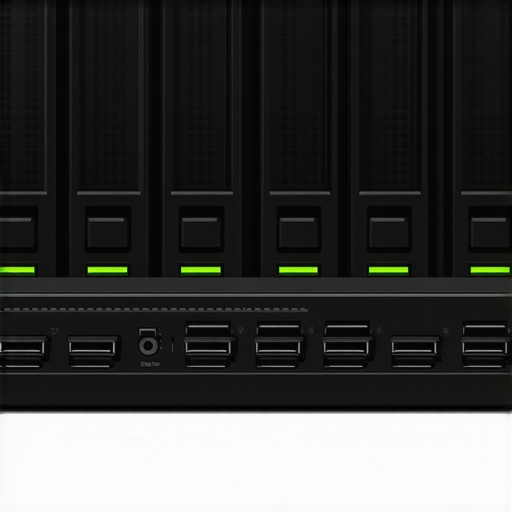
In the rapidly evolving landscape of high-performance storage solutions, understanding the intricate interplay between NVMe SSDs, RAID configurations, and external storage devices becomes vital for IT professionals and data architects aiming to push the boundaries of speed and reliability. This comprehensive analysis explores how leveraging advanced SSD technologies and strategic RAID implementations can unlock unprecedented data throughput, essential for demanding applications such as real-time data analytics, multimedia editing, and virtualized environments.
Harnessing NVMe SSDs for Peak Performance in Data-Intensive Workloads
Non-Volatile Memory Express (NVMe) SSDs have revolutionized storage engineering by significantly reducing latency and increasing I/O operations per second (IOPS). Unlike traditional SATA drives, NVMe SSDs utilize the PCIe interface for direct communication with the CPU, enabling access speeds exceeding 7 GB/s in optimal scenarios. Their architecture allows for parallel data streams, which is critical when executing high-throughput tasks like 4K video rendering or complex database queries. Combining multiple NVMe drives within a dedicated server environment can create a high-bandwidth, low-latency data fabric, elevating overall system performance.
Are RAID configurations capable of further amplifying NVMe SSD speeds without bottleneck?
Implementing RAID levels such as RAID 0 (striping) and RAID 10 (mirrored and striped) can distribute data across several NVMe SSDs, effectively multiplying throughput and enhancing fault tolerance. However, the choice of RAID must be aligned with workload characteristics; for instance, RAID 0 maximizes speed but offers no redundancy, whereas RAID 10 balances performance with data security. According to recent benchmarks documented in an authoritative industry source, proper RAID setup can nearly double the effective throughput for NVMe arrays, thereby optimizing performance for high-demand environments.
Balancing RAID Storage Strategies and External SSD Solutions for Optimal Flexibility
While internal NVMe arrays excel in raw speed, external SSDs equipped with Thunderbolt 3 or USB 4. interfaces offer unparalleled mobility and scalability. The choice between external SSDs and internal RAID setups hinges on factors like data security, transfer latency, and your operational workflow. For instance, professionals engaged in on-the-go editing or remote collaborations benefit from robust external SSDs that support RAID-like configurations or junctions, such as those detailed in this expert guide.
How do external SSDs compare with internal NVMe RAID arrays regarding sustained performance and data integrity?
External SSDs, while offering ease of deployment, are often constrained by interface bandwidth and susceptibility to environmental interference, impacting sustained throughput during prolonged operations. Conversely, internal NVMe RAID arrays provide higher consistency, especially when configured with enterprise-grade hardware and redundancy features. For applications requiring relentless data throughput coupled with durability, integrating NVMe SSDs into RAID configurations within dedicated storage servers is generally the superior choice, as supported by recent industry benchmarks.
For further insights on optimizing high-speed storage architectures, explore our detailed ultimate guide or contribute your professional expertise to ongoing discussions on storage innovations.
Innovative RAID Configurations Transforming Storage Dynamics
Emerging RAID methodologies, such as RAID 5 and RAID 6, now incorporate sophisticated parity algorithms, enabling a balanced approach to speed and redundancy. These configurations distribute data and parity information across multiple drives, allowing for enhanced fault tolerance without a significant sacrifice in performance. When combined with high-performance SSDs, particularly NVMe models, RAID 5 and RAID 6 arrays can deliver both resilience against drive failures and impressive throughput, critical for enterprise storage solutions. For example, the latest benchmarks highlight how tailored RAID strategies can effectively leverage the capabilities of NVMe SSDs, resulting in a robust yet agile data management platform. For a comprehensive overview, check out this in-depth guide.
Can hybrid RAID configurations offer the flexibility needed for diverse workload demands?
Hybrid RAID setups, which combine multiple RAID levels or integrate SSDs with traditional HDDs, provide a tailored approach to storage management. For instance, deploying RAID 0 with NVMe SSDs for high-speed caching alongside RAID 6 HDD arrays for archival provides an optimal balance between performance and cost efficiency. Such configurations allow organizations to adjust their storage architecture dynamically, aligning with evolving workload profiles and data access patterns. This strategy is gaining traction among professionals seeking both agility and robustness, especially in environments where rapid data access and redundancy must coexist seamlessly. To explore practical implementation, refer to our detailed resource.
Integrating External RAID Enclosures for Scalable Data Solutions
External RAID enclosures have matured significantly, now supporting multi-drive configurations with fast interfaces like Thunderbolt 3, Thunderbolt 4, and USB 4. These devices facilitate scalable storage pools that can be easily upgraded or reconfigured, providing flexibility for workflows that demand quick adaptability. For professionals working across different locations or handling large multimedia files, external RAID arrays can serve as a portable yet powerful data hub. Recent industry analyses emphasize their role in expanding storage capacity without sacrificing speed or security, particularly when paired with enterprise-grade SSDs and intelligent caching algorithms. To find out how external RAID can fit into your setup, visit this expert review.
What strategies can ensure seamless synchronization between internal RAID arrays and external SSD solutions?
Achieving smooth interoperability between internal RAID systems and external SSDs requires meticulous synchronization protocols, including data replication, backup scheduling, and real-time mirroring. Employing software-defined storage (SDS) solutions can provide centralized control and automated data flow management, reducing manual oversight and minimizing latency. Implementing high-speed interfaces, such as Thunderbolt or USB 4, ensures rapid data transfer, bolstering overall system responsiveness. These combined strategies enable a cohesive storage ecosystem capable of adapting to variable workloads and business scales. For detailed guidance on optimizing such integrated environments, look into our comprehensive resource.
Modern enterprise storage demands go beyond traditional configurations, pushing professionals to innovate with hybrid and layered RAID solutions. Tech-savvy architects are now implementing dynamic RAID environments that combine different levels of redundancy and performance—such as RAID 0/1 hybrids or nested RAID setups—to meet specific workload requirements. For example, blending RAID 0 for speed with RAID 10 for fault tolerance creates a tiered system that adapts seamlessly to both latency-sensitive applications and critical data security needs. Recent developments in software-based RAID management platforms, like StorNext and Storage Spaces Direct, further empower administrators to configure such complex architectures with automation and granular control, leading to more resilient and high-performing environments.
What role do emerging parity algorithms play in enhancing RAID resilience without compromising speed?
Advancements in parity computation—such as those employed in RAID 6 and beyond—are pivotal. Innovative algorithms like Reed-Solomon encoding optimize parity calculations, enabling higher fault tolerance with minimal performance degradation. These methods are particularly effective when deployed with SSDs, especially NVMe models that support rapid parity computations via their high IOPS capabilities. An authoritative industry report from SNIA emphasizes how these algorithms are enabling real-time data integrity checks and streamlined recovery processes, safeguarding against multi-drive failures. Embracing these algorithms can dramatically improve enterprise resilience, making data loss incidents increasingly rare without sacrificing throughput.
As workflows evolve, the need for portable and scalable storage becomes critical. External SSD enclosures equipped with Thunderbolt 4, USB 3.2 Gen 2×2, and PCIe expansion slots now support multiple drives, facilitating rapid data transfers and easy scalability. For creative professionals, this translates into a portable editing suite capable of handling 8K video edits or large datasets directly at various sites, without the constraints of internal hardware upgrades. Moreover, these enclosures often integrate intelligent caching and redundancy features—such as RAID configurations—transforming them into versatile storage nodes compatible with diverse operational environments. Recent market analyses highlight that these external solutions are increasingly adopting NVMe SSDs, pushing the limits of speed while maintaining user-friendly interfaces.
In what ways can external RAID enclosures be integrated with internal high-performance arrays to optimize workflow continuity?
Effective synchronization between internal RAID arrays and external enclosures hinges on robust data orchestration strategies. Implementing network-attached storage (NAS) or direct-attached storage (DAS) solutions with supports for protocols like NVMe over Fabrics or Thunderbolt 4 ensures rapid data exchange. Data replication tools, such as Resilio Sync or ZFS snapshots, allow seamless mirroring and backup across these architectures, reducing latency in data synchronization. Additionally, employing cloud-based hybrid storage solutions—like Azure Blob Storage or Amazon S3 integrating with local RAID arrays—further enhances flexibility, enabling professionals to access and restore data from anywhere, at any time. Advanced data management software provides centralized control, ensuring consistency and reducing manual interventions during workflows that involve both internal and external storage entities.
Looking ahead, the integration of AI-driven storage management systems promises unprecedented levels of efficiency. These technologies analyze access patterns to intelligently tier data, automatically migrating frequently accessed files to NVMe SSDs while relegating infrequently used data to traditional HDDs or archival media. For instance, solutions leveraging machine learning algorithms, like DataCore’s SANsymphony or IBM Spectrum Virtualize, dynamically optimize storage pools, ensuring optimal performance and cost management without ongoing manual oversight. This paradigm not only reduces operational complexity but also future-proofs infrastructure against rapidly evolving data demands. As these AI-powered systems mature, expect to see smarter, self-healing storage ecosystems capable of preempting failures and adjusting configurations proactively, further cementing their role in high-performance data environments.
Elevating Storage Architectures: The Art of Hybrid RAID Implementations for Data Dominance
In modern data centers and high-performance workflows, hybrid RAID configurations transcend traditional paradigms by intelligently combining multiple RAID levels and integrating diverse storage media. Techniques like nested RAID—perhaps RAID 0 spanning RAID 10—enable systems to simultaneously maximize throughput and provide redundancy, tailored to specific application demands. Incorporating NVMe SSDs into these architectures, often via hardware-accelerated controllers, pushes the envelope further, creating a synergistic environment where data is not only accessed swiftly but also protected against complex failure scenarios.
How can adaptive RAID layering mitigate bottlenecks in heterogeneous storage environments?
By deploying software-defined storage (SDS) platforms that automate tiering and dynamic RAID reconfiguration, administrators can respond proactively to workload variations. Such systems analyze real-time access patterns, migrating hot data onto the fastest NVMe SSD tiers while relegating archival information to slower HDDs or external drives. This fluidity ensures optimal performance and resilience, as evidenced by recent industry evaluations of SDS solutions like VMware vSAN and Red Hat Ceph Storage, which demonstrate significant latency reductions and enhanced fault tolerance in multi-tiered setups.
Ensuring Data Flawlessness Through Innovative Parity Algorithms
The evolution of parity algorithms, exemplified by RS-8 and XOR-based schemes, addresses the dual challenge of achieving high fault tolerance without degrading speed. When paired with enterprise-grade NVMe SSDs—capable of executing complex parity calculations via their high IOPS—these algorithms facilitate near-instantaneous recovery from multi-drive failures. Industry research from SNIA confirms that next-generation parity methods are crucial for maintaining data integrity in increasingly dense storage arrays, especially in environments where uptime and rapid recovery are paramount.
Portable RAID Enclosures: The Future of Mobile Data Ecosystems
Advancements in external RAID enclosures powered by Thunderbolt 4, PCIe expansion, and NVMe technology are transforming on-the-move workflows. These devices now support hot-swapping, multi-drive configurations, and hardware-level encryption, making them ideal for field professionals and collaborative teams. Integration with networked storage solutions via daisy chaining or network-attached RAID units extends their utility, creating a cohesive and scalable data fabric across spatial boundaries. Analysts from TechMarketView forecast that adoption of such portable yet robust systems will surge in sectors ranging from multimedia production to scientific research, driven by their flexibility and performance.
How can synchronization protocols like NVMe over Fabrics enhance cohesion between external portable arrays and core internal storage?
Implementing high-speed protocols such as NVMe over Fabrics (NoF) enables seamless data transfer across disparate storage nodes, reducing latency and ensuring consistency. Coupling NoF with intelligent caching strategies and unified management software, organizations can synchronize real-time data between internal RAID arrays and external units, minimizing potential bottlenecks. Enterprises leveraging solutions like Dell EMC’s PowerVault series or ASUS ROG Thunderbolt enclosures exemplify how such integrations facilitate fluid workflows essential for high-stakes environments requiring rapid data access and integrity.
Forecasting the Evolution of Storage Tiering Powered by Artificial Intelligence
The deployment of AI-driven tiering mechanisms is rewriting storage management. Machine learning algorithms now automatically analyze complex workload patterns to predict future data access, preemptively migrating critical information to NVMe SSD tiers—reducing latency and boosting productivity. Platforms such as IBM Spectrum Virtualize and DataCore SANsymphony leverage these intelligent systems to optimize resource allocation dynamically, offering not just speed but also cost-effective scalability. As these technologies mature, expect storage ecosystems that are not only self-optimizing but also self-healing—predicting failures before they occur and adjusting configurations proactively based on predictive analytics.
To deepen your mastery of cutting-edge storage innovations and tailor strategies that dominate in data-critical applications, consult our comprehensive resource library or participate in expert-led webinars designed to elevate your infrastructure’s resilience and performance.
Expert Insights & Advanced Considerations
Leverage dynamic tiering to optimize data flow across diverse storage media
Implementing intelligent tiered storage systems allows for seamless data movement between high-speed NVMe SSDs and traditional HDDs, ensuring that frequently accessed data resides on faster tiers. This approach not only accelerates critical workflows but also enhances overall system efficiency by adapting to workload patterns in real-time.
Prioritize hardware acceleration in parity calculations for resilient RAID setups
Modern RAID controllers equipped with hardware-accelerated parity computation can significantly reduce write latency and facilitate swift recovery from drive failures. Integrating such controllers with NVMe-based arrays ensures both speed and robustness in high-demand environments.
Utilize software-defined storage solutions to unify internal and external storage ecosystems
SDDC platforms enable centralized management of internal RAID arrays and external external SSD enclosures, providing flexibility, scalability, and simplified data synchronization. This integration supports complex workflows and data redundancy strategies essential for enterprise performance.
Anticipate future trends in AI-driven storage management for proactive resilience
Emerging AI technologies are poised to analyze access patterns proactively, migrating data intelligently and predicting hardware failures before they occur. Adopting these solutions positions organizations ahead in maintaining uninterrupted, high-speed storage operations.
Curated Expert Resources
- Storage Performance Benchmarks 2024 — In-depth analyses and comparative data on SSD and RAID configurations, guiding optimal hardware selections.
- SNIA’s Guide to Parity Algorithms — A comprehensive overview of cutting-edge parity computation methods that enhance fault tolerance without sacrificing speed.
- DataCore’s AI-Enhanced Storage Solutions — Insights into intelligent tiering and automated management that adapt in real-time for maximum efficiency.
- Industry Reports on External RAID Enclosures — Evaluations of portable high-performance storage solutions suited for mobile workflows and scalable data management.
- Next-Gen RAID Controller Technologies — Innovations in hardware acceleration supporting resilient and fast RAID architectures seamlessly integrated with NVMe SSDs.
Final Perspective from Industry Experts
The landscape of high-performance storage continues to evolve rapidly, emphasizing the importance of sophisticated strategies involving NVMe SSDs, RAID configurations, and external enclosures. Embracing dynamic tiering, hardware-accelerated parity calculations, and AI-driven management empowers professionals to craft resilient, scalable, and ultra-fast data environments. For those committed to maintaining a competitive edge, diving deep into expert resources and participating in ongoing industry dialogues ensures your infrastructure stays at the forefront of innovation. To elevate your understanding and implementation, explore our comprehensive guide and connect with seasoned professionals dedicated to storage excellence.
Reading this comprehensive guide really highlights how critical it is to optimize storage configurations in high-performance environments. I’ve personally transitioned from traditional HDD setups to NVMe SSDs combined with RAID 10, and the difference in data access speed and reliability has been remarkable, especially for multimedia editing projects. One challenge I’ve encountered is balancing the cost of enterprise-grade NVMe drives with the need for redundancy and speed. This makes me curious—how are other professionals managing the cost-performance tradeoff when deploying such advanced storage solutions? Are hybrid configurations, like combining NVMe SSDs with high-capacity HDDs in tiered setups, becoming a more common approach to address this? I’d love to hear strategies that others have found effective for optimizing both performance and budget.