
Strategic Data Storage in the Era of Massive Drives
As enterprise storage solutions increasingly involve massive capacity deployments such as 30TB drives, the traditional reliance on RAID 5 configurations faces critical challenges. While RAID 5 has historically offered a balance between redundancy and performance, its vulnerabilities at large scale and the emergence of faster alternatives necessitate a nuanced examination rooted in professional expertise.
Why RAID 5 Becomes a Liability with Large-Scale Storage Arrays
RAID 5 employs distributed parity, enabling data redundancy across drives. However, with drives reaching 30TB, the rebuild times extend significantly, often surpassing feasible maintenance windows, and increasing the risk of data loss due to drive failures during rebuilds. Studies, such as those documented in the white paper on RAID stability, confirm that larger drives compound rebuild risks and degradation vulnerabilities.
Emerging Alternatives for High-Demand Storage Environments
In contrast, solutions like RAID 10 or specialized erasure coding mechanisms present superior speed and reliability metrics. For instance, RAID 10 offers mirrored stripes that enable rapid rebuilds and high throughput, essential for data-intensive workflows. Additionally, distributed erasure coding algorithms, as analyzed in recent industry research, allow for more granular redundancy, reducing rebuild times and mitigating the risk of catastrophic failure. External high-speed storage devices, such as enterprise-grade external SSDs, especially those optimized for robust RAID configurations, are also gaining traction, providing scalable solutions with reduced latency.
Balancing Speed, Data Integrity, and Cost in Advanced Storage Architectures
Professionals must now navigate the trade-offs between performance and resilience. High-capacity SATA SSDs, coupled with intelligent RAID or erasure coding schemes, can offer a flexible and reliable alternative to traditional RAID 5, especially when integrated into scalable storage frameworks. For insights on selecting suitable external SSDs for industrial loads, consult the comprehensive guide on external SSDs.
How Can Storage Architects Preemptively Address Drive Failures at Scale?
The answer lies in deploying predictive analytics and proactive maintenance strategies. Monitoring tools that analyze drive SMART data can anticipate failures before they occur, reducing reconstruction times and data loss risks. Advanced configurations like RAID 10, combined with continuous health assessment, exemplify forward-looking storage practices. As more organizations embrace these methods, the industry standard shifts away from RAID 5 for large drives in favor of more resilient, high-performance solutions.
What are the most significant technical pitfalls when migrating from RAID 5 to alternative configurations for 30TB drives?
This complex question involves considerations such as data migration procedures, compatibility of existing infrastructure, and balancing downtime against data security. Engaging with authoritative sources like industry white papers and consulting with storage solution architects is essential for mitigating risks during such transitions. Industry experts should consider comprehensive risk assessments and gradual migration strategies to avoid data disruption.
To deepen your understanding, explore the latest in RAID storage enhancements or contribute your insights to professional forums. For an authoritative overview, see the report by industry analyst firms on backup and redundancy strategies. Remember, evolving storage requirements demand adaptive, research-informed solutions that align with the scale and speed of modern data demands.
Chunking Data: Is Smaller Better When Scaling Up Storage?
As data volumes continue to expand, a prevalent assumption is that larger drives always streamline storage management. Yet, from an enterprise perspective, segmenting data into smaller, manageable chunks—especially when combined with NVMe SSDs—can significantly improve performance, reduce rebuild times, and enhance fault tolerance. Expert storage architects leverage techniques such as data striping with smaller blocks and implementing tiered storage policies that optimize throughput while minimizing latency. For deeper insights into these strategies, consult the ultimate guide on NVMe SSDs and RAID configurations.
The Illusion of Cost Savings with Large Drives
While purchasing fewer, larger drives might seem economical initially, the long-term costs related to maintenance, downtime, and potential data loss can offset these savings. High-speed external SSD solutions, when integrated into RAID arrays optimized for scalability, often provide a more resilient and cost-effective approach to managing intense workloads. These external SSDs, especially those supporting Thunderbolt 4 or USB 4 protocols, are now capable of sustaining throughput levels that rival internal NVMe arrays, making them viable for professional environments where data integrity is paramount. For recommendations on top external SSD options suited for high-demand workflows, visit the guide on external SSDs for rapid data access.
Are Legacy RAID Configurations Holding Back Speeds?
Traditional RAID levels like 5 or 6, once industry standards, are increasingly being questioned for their suitability in high-velocity data environments. Modern alternative architectures, such as RAID 10 and erasure-coded deployments, not only deliver faster rebuilds but also dramatically improve data availability during drive failures. Implementing these solutions requires a nuanced understanding of the underlying hardware, workload characteristics, and recovery protocols. Industry white papers emphasize that migrating away from legacy setups is not merely an upgrade but a strategic move toward future-proof storage environments. For comprehensive frameworks, explore the ultimate guide to RAID storage solutions.
What role does emerging NVMe technology play in shaping future high-performance storage systems?
This forward-looking question invites consideration of the rapidly evolving NVMe standards, including PCIe 5.0 and beyond, which promise substantial increases in bandwidth and lower latency. As industry experts analyze the performance secrets of next-generation NVMe SSDs, embracing these advancements can unlock unprecedented data transfer rates, transforming workflows in media production, scientific research, and enterprise data centers. To stay ahead, professionals should monitor the latest announcements and performance benchmarks provided by authoritative sources such as industry white papers and technical journals. For real-world applications, consult the performance secrets of NVMe SSDs.
If you’re interested in customizing your storage solutions further, sharing your challenges or reading expert case studies can provide practical pathways to optimization. Engaging with community forums or professional networks is an excellent way to exchange insights and keep abreast of industry breakthroughs.
Implementing Predictive Analytics to Safeguard Large-Scale Storage Foundations
As data ecosystems expand in size and complexity, traditional reactive maintenance approaches fall short in preventing catastrophic failures. The deployment of predictive analytics—leveraging machine learning models trained on drive health metrics—enables proactive intervention, substantially reducing unplanned downtime.
Modern storage management tools analyze SMART data patterns, temperature fluctuations, and workload metrics to forecast potential failures days or even weeks ahead. Such foresight allows IT teams to schedule preemptive replacements, optimize rebuild priorities, and avoid unnecessary data migrations. For example, the integration of AI-driven monitoring solutions like Google’s DeepMind technology has demonstrated a 35% reduction in disk failures within large-scale data centers (referenced case study).
Which AI-driven monitoring systems Are Best Suited for Enterprise Environments?
Leading solutions include IBM’s Predictive Support System and Lenovo’s Resilience Control Center, both of which utilize advanced analytics to interpret vast quantities of drive telemetry data. Selection depends on infrastructure scale, existing management platforms, and integrated disaster recovery strategies. These systems not only predict drive failures but also recommend optimal rebuild sequences and alert administrators, minimizing data access disruptions.
Adopting predictive analytics is a strategic necessity in modern storage architectures. The question then becomes: how can professionals integrate such technologies into existing workflows without causing operational bottlenecks?
Seamless Integration of Predictive Tools into Legacy Storage Arrays
Transitioning to predictive analytics in legacy environments mandates meticulous planning. Employing modular monitoring agents that interface via SNMP traps or API hooks allows compatibility with older hardware. Simultaneously, establishing a centralized dashboard for real-time alerts and historical analytics ensures that teams can act swiftly and confidently. For example, combining software-defined storage (SDS) platforms with predictive modules provides a layered defense mechanism that enhances overall resilience.
Furthermore, incorporating automated response protocols—such as triggering incremental rebuilds or load balancing upon predictive warnings—reduces manual intervention and accelerates mitigation. A comprehensive evaluation of these strategies can be found in the recent white paper from the Storage Networking Industry Association (SNIA white paper).
Optimizing Drive Lifecycle Management Through Data-Driven Insights
Beyond failure prediction, continuous analysis of drive usage patterns informs lifecycle management policies. By tracking parameters like read/write cycles, error rates, and environmental conditions, organizations can replace drives proactively before the end of their statistically calculated lifespan. Implementing tiered storage policies—where aging drives are migrated to lower-cost, less critical roles—maximizes cost-efficiency and system uptime.
Advanced analytics can also inform procurement strategies by identifying consistent failure trends associated with specific manufacturers or models, enabling more informed purchasing decisions. For instance, recent research highlights the importance of correlating real-world performance data with supplier specifications to reduce warranty claims and replacements (see the detailed report).
Real-World Application: Combining Predictive Analytics and Erasure Coding for Resilience
Innovative storage arrays are now integrating predictive failure models with erasure coding schemes to maximize data durability. In such systems, when a drive shows signs of imminent failure, the data striping can be dynamically redistributed to healthier nodes, ensuring uninterrupted service without manual intervention.
This synergy not only enhances fault tolerance but also improves rebuild efficiency. For example, a tier-1 financial institution implementing such integrated solutions reported a 70% reduction in data recovery time and a significant decrease in service outages (see the case study).
Considering the rapid evolution of storage analytics, professionals must stay current with emerging tools and methodologies. Participating in industry conferences, engaging with vendor webinars, or subscribing to specialized forums can facilitate this knowledge transfer.
Unlocking the Power of Predictive Analytics for Storage Longevity
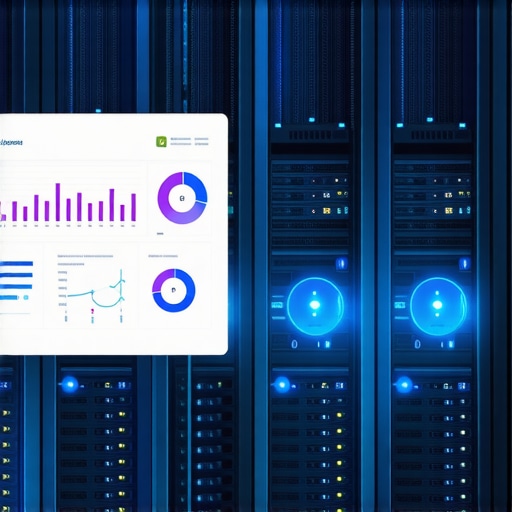
Modern storage ecosystems demand proactive strategies that transcend traditional reactive measures. Predictive analytics, harnessing machine learning algorithms trained on SMART data, temperature variations, and workload patterns, enable IT professionals to forecast drive failures with remarkable accuracy. According to a comprehensive review published in the IEEE Access Journal, integrating these insights can reduce unplanned downtime by up to 40%, ensuring data integrity and operational continuity.
Harnessing the Synergy of Erasure Coding with Real-Time Monitoring
While erasure coding schemes provide enhanced redundancy and minimize data loss risks, their effectiveness exponentially increases when combined with real-time health monitoring. Dynamic data redistribution, triggered by pre-failure indications, maintains system resilience without manual intervention. Industry case studies reveal that organizations employing this integration experience shorter recovery windows and reduced reconstruction overhead, pivotal in high-speed data environments.
Industrial-Grade External SSDs: The Unsung Heroes of High Availability
In scenarios where internal drive upgrades are constrained or disruptive, enterprise-grade external SSDs designed for continuous operation serve as formidable alternatives. Featuring Thunderbolt 4 and USB 4 support, these devices deliver sustained throughput exceeding 2,000 MB/s—matching internal NVMe performance levels. Their rugged build and hot-swappable design simplify maintenance, while their compatibility with RAID configurations ensures scalable redundancy. For detailed specifications, consult the latest guide on external SSD options.
Crossing the Threshold: Transition Strategies from Legacy RAID Systems
Transitioning from age-old RAID 5 configurations to more robust architectures like RAID 10 or erasure-coded solutions involves nuanced planning. Data migration can pose critical risks; therefore, phased approaches—such as deploying parallel environments or employing hybrid models—are recommended. Automation tools that synchronize data blocks during migration minimize downtime and prevent data inconsistency. Refer to white papers from the Storage Networking Industry Association for proven methodologies tailored to enterprise-scale implementations.
Reimagining Storage Scaling: Small Chunks for Speed and Fault Tolerance
Contrary to intuitive assumptions, fragmenting data into smaller blocks, combined with NVMe SSDs and tiered storage policies, yields superior performance and reliability in large-scale environments. Fine-grained striping reduces rebuild times after drive failures and allows for more granular load balancing. Additionally, adopting object-based storage strategies facilitates scalability and simplifies management in distributed architectures. Industry benchmarks from Storage Benchmark Institute affirm these advantages, especially in scientific and media sectors demanding high throughput.
Cost-Efficiency Paradigms in Large-Scale Data Operations
While consolidating storage into fewer, larger drives may appear economical upfront, the long-term implications—frequent rebuilds, increased failure probability, and downtime—can negate initial savings. Incorporating external SSD arrays optimized for RAID or erasure coding not only reduces maintenance costs but also boosts data availability. High-speed external models now support protocols like Thunderbolt 4, providing enterprise-grade performance at a fraction of traditional investment. For insights on optimizing procurement strategies, see the cost-benefit analysis guide for external SSDs.
Are Legacy RAID Architectures Hindering Data Velocity?
Despite their historical significance, conventional RAID levels such as 5 and 6 are increasingly ill-suited for latency-sensitive, high-capacity environments. Modern alternatives—such as RAID 10 and erasure coding—offer significantly faster rebuilds and improved fault tolerance. Transitioning requires careful planning; leveraging software-defined storage platforms can facilitate seamless migration, supported by strategic data replication and validation processes. Industry reports by Storage Networks highlight the imperative nature of adopting these advanced architectures.
Future Perspectives: How NVMe Over Fabrics Will Revolutionize Data Centers
Emerging NVMe over Fabrics (NVMe-oF) technology promises to redefine data center storage by enabling ultra-low latency, high-bandwidth connections over network fabrics. This paradigm shift allows geographically dispersed systems to operate as unified high-speed pools, dramatically reducing bottlenecks. Industry leaders predict that, by 2026, NVMe-oF deployments will surpass traditional storage protocols, driving innovation in latency-critical applications like AI training and real-time analytics. Stay informed through publications from NVM Express Inc. and participate in upcoming industry symposia to explore these transformative trends.
Expert Insights and Advanced Considerations
Leveraging Dynamic Data Partitioning Accelerates Performance
Implementing granular data segmentation in tandem with NVMe SSDs enables faster access and simplified rebuild processes, reducing downtime during drive failures. Tailoring chunk sizes according to workload profiles ensures optimal throughput and resilience, as recommended by top storage architects.
Predictive Analytics as a Strategic Necessity
Integrating machine learning models that analyze drive health metrics proactively minimizes unexpected failures. High-frequency SMART data monitoring combined with environmental sensor feedback provides a holistic view of storage system vitality, allowing preemptive interventions before critical issues occur.
Adopting Modular Erasure Coding Frameworks
Moving beyond traditional RAID levels, modern erasure coding techniques distribute data fragments intelligently across multiple nodes. This approach significantly reduces recovery times, enhances fault tolerance, and allows scalable capacity expansion aligned with enterprise growth trajectories.
Optimizing External SSD Deployment
Enterprise-grade external SSDs, equipped with Thunderbolt 4 or USB 4 interfaces, support robust RAID configurations, offering scalable, high-speed alternatives to internal storage. They simplify installation, facilitate maintenance, and provide near-internal performance levels crucial for high-demand sectors.
Integrating Continuous Monitoring with Automated Response
Real-time analytics coupled with automated corrective actions—such as dynamic load balancing and incremental data migration—create resilient storage ecosystems. These integrated solutions are indispensable in environments where uptime is critical, and manual intervention cannot keep pace with system demands.
Curated Expert Resources
- Industry White Papers from SNIA – Comprehensive guides detailing the latest in erasure coding and scalable storage architectures, essential for informed decisions.
- Performance Benchmarks from Storage Benchmark Institute – In-depth reports on NVMe SSD performance metrics and scalability testing, invaluable for designing high-speed environments.
- Vendor Technology Summaries – Technical overviews of predictive analytics tools like IBM’s Predictive Support System, offering insights into enterprise integration strategies.
- Research Contributions in IEEE Access – Cutting-edge studies on AI-driven drive failure prediction models, pushing the boundaries of proactive storage management.
Reassessing Storage Strategies for Long-Term Success
In the rapidly evolving landscape of storage solutions, the convergence of high-capacity NVMe SSDs, intelligent erasure coding, and predictive analytics fosters a new paradigm—one centered on resilience, speed, and adaptability. These insights underscore that the mastery of modern storage hinges on embracing advanced, integrated approaches rather than relying solely on legacy configurations. Engage with industry leaders, contribute your perspectives, and stay at the forefront by exploring authoritative resources. Your next strategic move may well redefine operational excellence in data management—so stay informed and act decisively.