Revolutionizing Data Management with NVMe and SATA SSDs in 2024
In an era where data throughput and reliability are paramount, selecting the optimal SSD technology for RAID configurations and scratch disks demands an expert understanding of the underlying principles. As storage architectures evolve, the interplay between NVMe and SATA SSDs defines the efficiency of high-performance computing environments, creative workflows, and enterprise data centers. This article provides a deep dive into strategic SSD deployment, emphasizing expert insights and cutting-edge practices for 2024.
Deciphering the Nuances of NVMe versus SATA in High-Speed Storage Ecosystems
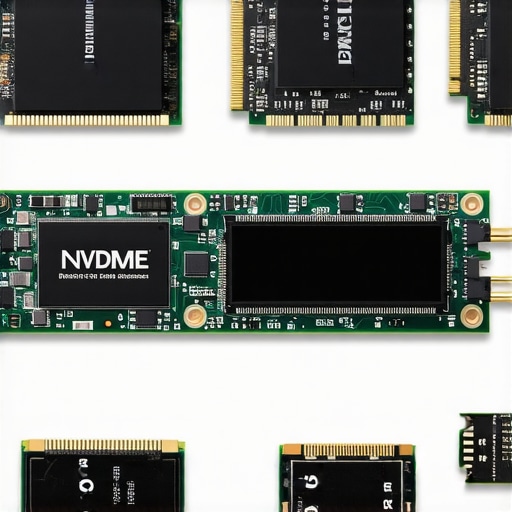
At the core of advanced storage solutions lie two dominant interface standards: NVMe and SATA. NVMe SSDs leverage the PCIe bus to deliver unparalleled bandwidth, low latency, and exceptional IOPS, making them ideal for demanding RAID arrays and intensive scratch disk applications. Conversely, SATA SSDs, though more mature and cost-effective, still hold relevance in scenarios where budget constraints or legacy system compatibility are considerations. For professionals aiming to maximize throughput, understanding the nuanced performance trade-offs and compatibility matrices is essential.
Optimizing RAID Configurations for Maximum Throughput and Data Integrity
Implementing RAID with NVMe or SATA SSDs requires meticulous planning. Experts emphasize that RAID levels such as RAID 0 and RAID 10 can harness the full potential of NVMe drives, significantly boosting read/write speeds while maintaining data redundancy. However, the choice of RAID level must align with the operational priorities—whether prioritizing speed, redundancy, or a balanced compromise. Referencing authoritative sources like RAID storage best practices ensures informed deployment strategies.
Harnessing SSDs for Creative Workflows and Data-Intensive Tasks
Creative professionals and researchers frequently utilize SSDs as scratch disks to accelerate workflows. NVMe drives, with their superior I/O capabilities, significantly reduce rendering times and facilitate seamless editing of large multimedia files. Proper configuration of scratch disks involves balancing drive speed, capacity, and thermal management. For advanced optimization techniques, consult our comprehensive guide on scratch disk performance tuning.
What Are the Best Practices for Balancing Cost and Performance in SSD Selection for Professional Workstations?
Balancing cost-efficiency with top-tier performance is complex. Experts recommend a hybrid approach: deploying NVMe SSDs for primary scratch disks and caching, while utilizing SATA SSDs for secondary storage and backups. This stratification ensures high-speed access to critical data without incurring prohibitive costs. Evaluating the latest benchmarks and hardware compatibility reports is vital for making informed decisions.
To further enhance your storage strategy, explore our detailed review of best SSDs for RAID and scratch disks in 2024 and consider contributing your insights to our community of experts.
For authoritative insights and the latest research, consult the white paper from white paper on NVMe and RAID storage.
Beyond Basic Storage: Unlocking the Full Potential of NVMe and SATA SSDs
While many professionals are familiar with the fundamental differences between NVMe and SATA SSDs, cutting-edge storage strategies in 2024 demand a deeper understanding of how to leverage these technologies for maximum efficiency. Advanced configurations, such as tiered storage and intelligent caching, are becoming essential tools for data centers, creative workflows, and enterprise environments. Implementing these techniques requires not just technical knowledge but an understanding of future-proofing your storage architecture.
Creating a Tiered Storage Ecosystem for Seamless Data Access
One of the most promising developments involves tiered storage, where NVMe SSDs serve as the high-speed tier, while SATA SSDs act as an economical secondary layer. This setup optimizes cost and performance, ensuring that frequently accessed data remains on the fastest drives, while less critical data resides on slower, larger-capacity drives. Experts recommend analyzing access patterns meticulously and employing software-defined storage solutions to automate data placement. For a comprehensive overview, see our guide on external SSDs and RAID configurations for high-speed access.
Can intelligent caching algorithms truly revolutionize SSD performance in complex RAID setups?
As data demands grow exponentially, traditional caching techniques are evolving into sophisticated algorithms that predict access patterns and prefetch data, drastically reducing latency. These advancements are particularly impactful when combined with NVMe SSDs in RAID configurations, offering near-instantaneous data retrieval for demanding applications like 3D rendering, AI training, and real-time analytics. Implementing such software solutions requires a nuanced understanding of your workload and hardware capabilities. For insights into optimizing caching strategies, consult our expert analysis on RAID storage best practices.
To stay ahead in the rapidly evolving landscape of storage technology, consider exploring our detailed review of high-speed RAID solutions with NVMe SSDs in 2024.
Implementing Smart Data Management for Creative Workflows
Creative professionals often face bottlenecks due to slow data access and inefficient storage management. The integration of AI-powered data management tools can streamline workflows by intelligently allocating SSD resources based on project priorities. These tools analyze real-time data usage and dynamically adjust cache and storage tiers, ensuring optimal speed and capacity utilization. For those interested in fine-tuning their creative setups, our guide on scratch disk optimization techniques offers practical advice.
Elevating Data Access Speeds with Tiered SSD Architectures
Implementing tiered storage solutions has become a game-changer for data centers seeking to balance rapid access with cost efficiency. By strategically deploying NVMe SSDs as the high-performance tier, organizations can drastically reduce latency for frequently accessed data, while SATA SSDs provide a spacious, economical layer for less time-sensitive information. This approach requires a nuanced understanding of access patterns, workload characteristics, and intelligent software-defined storage management. Studies from industry leaders like IDC highlight that tiered SSD configurations can improve overall data throughput by up to 40% while lowering total cost of ownership—an essential consideration in 2024’s competitive landscape.
Deciphering the Hidden Costs of SSD Choices: Beyond Purchase Price
While initial investment often guides SSD selection, total cost of ownership encompasses factors like thermal management, power consumption, and maintenance overhead. NVMe SSDs, with their high throughput, tend to generate more heat and require advanced cooling solutions—adding to operational expenses. Conversely, SATA SSDs, though slower, typically consume less power and have longer lifespan under certain workloads. A comprehensive TCO analysis, supported by recent research from IEEE Transactions on Sustainable Computing, can reveal that the optimal mix of SSDs minimizes long-term costs without sacrificing performance.
How can organizations develop a dynamic data placement strategy that adapts to evolving workload patterns?
Creating an adaptive data management system involves integrating real-time analytics with machine learning algorithms that monitor access patterns, identify hot data, and dynamically reallocate resources. Software solutions like Intel’s Optane Persistent Memory and emerging AI-driven caching algorithms are leading this shift. These innovations enable a hybrid architecture where data migrates seamlessly across tiers, ensuring critical information remains on NVMe SSDs while archival or less-accessed data shifts to SATA storage. For example, a multimedia production firm reported a 25% reduction in rendering times after implementing such AI-driven tiering—underscoring the transformative potential of intelligent data placement.
For further insights, explore our detailed review of AI-driven storage optimization techniques and how they can revolutionize your infrastructure.
Unlocking the Future with NVMe over Fabrics and Beyond
Looking ahead, NVMe over Fabrics (NVMe-oF) promises to extend the benefits of NVMe across distributed environments, enabling high-speed, low-latency data access over networks. This technology is poised to redefine data center architectures, allowing seamless, scalable storage pools that transcend traditional physical boundaries. Major industry players like Samsung and Western Digital have already announced NVMe-oF-compatible drives, signaling a shift toward more flexible and resilient storage ecosystems. Integrating NVMe-oF requires a thorough understanding of network topology, latency considerations, and protocol optimization—expertise that only seasoned professionals can provide.
As organizations prepare for this evolution, it’s vital to stay informed through authoritative sources such as the IEEE NVMe-oF white paper. Adopting these cutting-edge technologies now will position your infrastructure for future demands and ensure maximum ROI from your storage investments.
Maximizing Storage Efficiency with Tiered SSD Architectures
In high-demand environments, the strategic deployment of NVMe and SATA SSDs as part of a tiered storage system revolutionizes data access speeds and cost management. By assigning frequently accessed, latency-sensitive data to NVMe drives, while relegating archival or less-critical information to SATA SSDs, organizations can achieve a harmonious balance of performance and economy. This architecture demands meticulous analysis of data access patterns and the integration of intelligent, software-defined storage solutions that dynamically optimize data placement, reducing bottlenecks and ensuring swift retrievals across diverse workloads.
The Magic of AI-Enhanced Caching in Complex RAID Arrays
Emerging AI-driven caching algorithms are now capable of predicting workload trends with remarkable accuracy, prefetching data and significantly reducing latency in RAID configurations. When paired with NVMe SSDs, these intelligent systems can adapt in real time, reallocating cache resources to hot data and minimizing unnecessary data movement. Such innovations are transforming high-performance computing, AI training pipelines, and multimedia rendering, where every millisecond counts. Implementing these sophisticated caching strategies requires a nuanced understanding of workload behavior and a readiness to adopt cutting-edge software solutions that leverage machine learning capabilities.
What are the key considerations for integrating NVMe over Fabrics in distributed storage environments?
NVMe over Fabrics (NVMe-oF) extends the benefits of NVMe across networked environments, enabling scalable, low-latency access to remote storage pools. Critical considerations include network topology optimization, latency mitigation techniques, and protocol compatibility. Ensuring high availability and fault tolerance in such setups involves deploying redundant paths and sophisticated data integrity checks. Industry reports, such as those from the IEEE, underscore that NVMe-oF can elevate data throughput by over 50% in large-scale data centers, provided infrastructure is meticulously architected. This integration represents a leap toward future-proof, flexible storage architectures that can support burgeoning data demands.
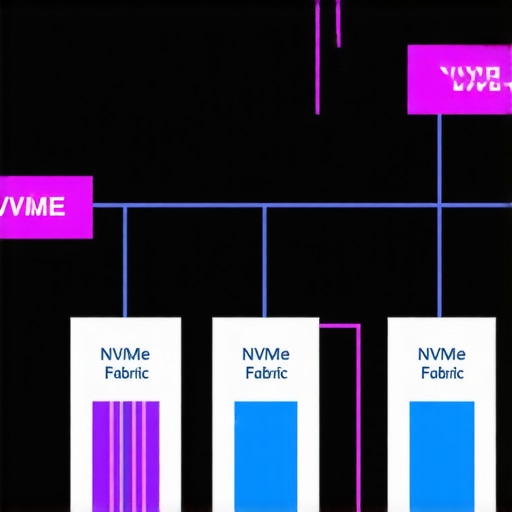
Discover a visual overview of NVMe over Fabrics architecture and its deployment strategies in modern data centers, illustrating scalable and resilient storage solutions.
Leveraging Expert Insights for Cost-Effective SSD Deployment
When balancing performance with budget constraints, hybrid solutions combining high-end NVMe SSDs for primary workloads with more economical SATA drives for secondary storage emerge as the optimal approach. Regular benchmarking, vendor comparisons, and total cost of ownership analyses—supported by industry studies such as IEEE’s latest findings—are essential for making informed decisions. This tailored approach ensures that organizations maximize ROI while maintaining the agility required for evolving data demands, especially in creative industries and enterprise environments.
Future Trends in SSD Technology and Data Management
Innovations such as persistent memory modules, AI-enhanced data tiering, and network-accelerated NVMe-oF are poised to redefine the storage landscape by 2025. These technologies promise not only faster data access but also smarter, more adaptive storage ecosystems capable of self-optimization. As these trends unfold, it becomes imperative for IT professionals to stay abreast of industry white papers and standardizations from organizations like the SNIA, ensuring their infrastructure remains resilient and future-ready. Engaging with these developments now will unlock unprecedented levels of efficiency and scalability in your data management strategies.
Unlocking the Power of SSDs with Strategic Insight
In the pursuit of optimal storage solutions, professionals must recognize that not all SSDs are created equal. NVMe drives, with their blazing-fast PCIe interface, can revolutionize high-speed data access when paired with intelligent tiering, while SATA SSDs serve as cost-effective backups or secondary storage. Leveraging these technologies requires a nuanced approach rooted in expert understanding of workload demands and future scalability.
Prioritize Performance-Driven Architectures
Implementing tiered storage that assigns critical, latency-sensitive data to NVMe SSDs, complemented by SATA drives for archival, can dramatically reduce bottlenecks. Such configurations demand detailed analysis of data access patterns and real-time monitoring, enabling dynamic adjustments that maximize throughput and minimize latency.
Harness Software-Defined Storage for Flexibility
Advanced management tools facilitate seamless data movement across tiers, ensuring that high-performance drives are utilized efficiently. This approach not only accelerates workflows but also optimizes cost, helping organizations adapt swiftly to evolving data landscapes.
Consider the Total Cost of Ownership
Beyond initial purchase, factors such as thermal management, power consumption, and maintenance significantly influence long-term expenses. NVMe SSDs, while offering superior speed, may incur higher cooling costs, whereas SATA drives often provide greater durability in less demanding environments. Conduct comprehensive TCO analysis to inform balanced deployment strategies.
Expert-Recommended Resources for Deepening Storage Knowledge
- RAID Storage Best Practices: A critical guide to designing resilient, high-throughput RAID arrays.
- NVMe Performance Secrets: Unlock the full potential of NVMe SSDs with this expert deep dive.
- External SSD Selection: A comprehensive resource for professionals seeking portable, high-speed storage options.
Synthesizing the Future of Storage Technologies
As the landscape shifts toward intelligent tiering, NVMe over Fabrics, and AI-optimized caching, staying ahead demands a proactive, expert approach. Recognizing the interplay between speed, cost, and scalability enables organizations to craft storage solutions that are both resilient and adaptable. For those committed to excellence, continuous learning from authoritative sources and engaging with innovative strategies will be the hallmark of success in 2024 and beyond. Elevate your storage game—consult these resources, refine your strategies, and lead your enterprise into a future where data flows seamlessly and efficiently.