Safeguarding Massive Data Arrays in the Era of High-Performance Storage
As enterprise-level storage solutions evolve, managing and recovering data in multi-terabyte RAID configurations demands an expert understanding of complex risks. The emergence of NVMe SSDs, SATA SSDs, and external SSDs has revolutionized data throughput, but these advancements introduce nuanced pitfalls that, if neglected, threaten the integrity of petabyte-scale storage arrays by the approaching year 2026. This discussion explores critical RAID recovery mistakes that could spell disaster for such large-scale arrays, emphasizing the importance of strategic foresight and technical mastery.
Overlooking the Significance of Cross-Technology Compatibility in RAID Architectures
Edge-case configurations often integrate NVMe SSDs with SATA SSDs and external SSDs within the same RAID array, seeking to optimize cost-efficiency alongside performance. However, neglecting the intricate compatibility issues between different interface standards and data transfer protocols can lead to severe RAID rebuild failures. For example, mismatched I/O queue depths or unsupported command sets might cause corruption or prolonged rebuild times, risking data loss at scales exceeding 300TB. Technical professionals must consult comprehensive resources like RAID Storage Explained to design resilient multi-technology arrays.
Neglecting Dynamic Hot-Spare Allocation Strategies During Array Degradation
Proactive hot-spare management is vital to maintain data resilience, especially when handling large RAID arrays. A common mistake involves static spare assignments that do not adapt to fluctuating workloads or drive performance variations. As drives age or are replaced, failure patterns may shift, rendering predefined hot-spares ineffective and prolonging array reconstruction. Experts recommend dynamic, intelligent hot-spare policies informed by real-time health diagnostics, ensuring swift recovery and minimizing exposure to catastrophic data loss.
Is the Adoption of Proprietary RAID Solutions a Double-Edged Sword for Data Longevity?
Many organizations prefer proprietary RAID implementations from hardware vendors, assuming they offer streamlined management. Yet, proprietary solutions often obscure underlying failure modes and complicate recovery efforts, making them susceptible to vendor lock-in and abrupt obsolescence. For maintaining the integrity of petabyte-scale arrays, open-standard RAID configurations supported by robust data recovery tools are increasingly favored among data engineers seeking transparency and control. For insights into best practices, review the Ultimate Guide to RAID External SSDs.
Failing to Integrate Advanced Monitoring for External SSD and Scratch Disk Reliability
External SSDs and scratch disks serve as critical components in high-demand workflows but are often overlooked in comprehensive storage health monitoring. Neglecting continuous I/O performance analysis and temperature management can lead to undetected degradation, causing silent data corruption or sudden failure during crucial operations. Implementing real-time monitoring systems that analyze throughput, latency, and thermal parameters ensures early detection of anomalies, preserving data integrity across sprawling 300TB arrays.
What Are the Most Surprising Factors Contributing to Raid Array Catastrophes in 2026?
Emerging issues such as firmware incompatibilities, thermal throttling in PCIe 6.0 and 7.0 NVMe drives, or unexpected interactions between external SSDs and high-speed networking could unexpectedly compromise RAID stability. Staying ahead requires diligent testing, firmware updates, and leveraging expert insights to anticipate failure points. For detailed analysis, consult Why Your 200TB RAID Rebuild is Failing.
How can storage professionals leverage emerging diagnostic tools to prevent these costly mistakes?
Exploring advancements in predictive analytics, machine learning-driven health assessments, and firmware telemetry can significantly mitigate risks. Collaborative forums and professional communities offer invaluable insights into real-world failure modes and countermeasures, emphasizing ongoing education and adaptation in an evolving technological landscape. Encourage the sharing of expertise to fortify data resilience strategies, especially considering the exponential growth of data assets projected for 2026.
For further insights into expert data management strategies, visit our Contact Page.
,
Enhancing Data Recovery with Intelligent Predictive Maintenance
As RAID configurations grow increasingly complex, relying solely on traditional monitoring tools becomes insufficient. Incorporating advanced predictive analytics, powered by machine learning algorithms, enables storage professionals to foresee potential failures before they occur. These systems analyze patterns in drive behavior, temperature fluctuations, and I/O performance metrics to flag latent issues, significantly reducing the risk of catastrophic data losses in petabyte-scale arrays. Organizations investing in such proactive measures stand a better chance of maintaining data integrity amidst rapid technological evolution.
Automating RAID Rebuilds with Adaptive Algorithms for Superior Resilience
Manual intervention during array rebuilds can be time-consuming and prone to errors, especially in massive storage arrays. Implementing adaptive algorithms that automatically adjust rebuild priorities based on workload criticality, drive health status, and thermal conditions can optimize recovery times and minimize system downtime. These intelligent systems dynamically allocate resources, preventing bottlenecks and ensuring that high-priority data remains accessible during maintenance activities. To explore incorporating such automation, professional resources like NVMe SSD RAID Storage Guides offer valuable insights.
Are External SSDs Poised to Redefine High-Speed Data Access in 2026?
Emerging advancements suggest that external SSDs could soon rival internal storage solutions in both speed and reliability, transforming data management paradigms. With innovations like Thunderbolt 5 and USB 4.2 promising multi-gigabit transfer rates, external drives are no longer secondary options but primary components in high-performance workflows. Integrating these external solutions with RAID architectures demands careful planning, ensuring compatibility and optimal thermal management to prevent overheating and performance throttling. For detailed strategies on external SSD integration, visit our External SSD Best Practices.
What are the key considerations for designing external SSD arrays that can withstand the demands of future data workloads? Sharing your experiences and questions in the comments can foster valuable peer-to-peer learning, helping to shape more resilient storage infrastructures for 2026 and beyond.
For expert guidance and tailored solutions, connect with our team through the Contact Page.
Implementing Multi-Layered Error Correction to Safeguard Petabyte Arrays
Data corruption risks escalate exponentially as storage arrays grow in scale and complexity. To mitigate silent data corruption and uncorrectable errors, integrating multi-layered error correction codes such as Reed–Solomon combined with Low-Density Parity-Check (LDPC) algorithms offers a formidable defense. These advanced codes not only detect and correct multiple simultaneous errors but also adapt dynamically to the evolving error landscape within high-density NVMe and SATA SSDs. Implementing such systems requires careful calibration and testing, emphasizing the importance of specialized firmware and hardware support.IEEE Error Correction Coding Standards for Storage.
What role does machine learning play in predictive error management within RAID arrays?
Machine learning models analyze massive datasets of drive telemetry, identifying subtle precursors to hardware failure such as abnormal temperature trends, I/O anomalies, or correlating error logs. By training on historical failure data, these models forecast potential issues with a high degree of accuracy, enabling preemptive replacement or reconfiguration. The integration of AI-driven diagnostics into RAID management systems enhances resilience, yet it necessitates substantial data infrastructure, skilled personnel, and continuous model updates to remain effective.
Nuances of Cross-Platform Compatibility in Diverse Storage Environments
With enterprises increasingly deploying heterogeneous storage architectures, ensuring seamless interoperability among NVMe SSDs, SATA drives, external disks, and cloud-based solutions is paramount. Divergent firmware standards, command sets, and I/O protocols can cause bottlenecks, incompatibilities, or even catastrophic failures during large-scale array rebuilds. Employing standard-compliant interface controllers and rigorous testing protocols ensures uniform behavior under various workloads. Moreover, leveraging evolving standards like the NVM Express (NVMe) over Fabrics specification allows for unified management across multiple platforms, reducing complexity and increasing reliability.
How can storage administrators leverage firmware telemetry to optimize RAID array health?
Firmware telemetry provides granular insight into drive lifecycle metrics, including wear leveling, error counts, and thermal profiles. By integrating telemetry data into centralized monitoring dashboards, administrators can identify early warning signs of impending failure, prioritize maintenance tasks, and automate alerts. Advanced analytics can correlate telemetry across drives, detecting systemic issues such as power instability or environmental factors affecting multiple units simultaneously. This proactive approach reduces downtime and safeguards data integrity in petabyte-scale storage solutions.
The Impact of Thermal Management on High-Density Storage Longevity
As SSD densities increase and external storage units become more compact, thermal management becomes critical. Elevated temperatures accelerate wear mechanisms and can induce data errors. Implementing intelligent cooling strategies—such as active airflow management, liquid cooling in server environments, and thermal-aware workload distribution—extends drive lifespan and maintains optimal performance. Real-time thermal monitoring coupled with adaptive airflow controls ensures temperature thresholds remain within safe margins, particularly in densely packed data centers supporting multi-terabyte RAID configurations.
Can innovative materials in enclosure design revolutionize external SSD durability?
Emerging nanomaterials and phase-change materials promise significant advancements in thermal conductivity and shock absorption. Incorporating these materials into external SSD enclosures could drastically improve resistance to environmental stressors, including heat, vibration, and mechanical shocks. Such innovations not only protect valuable data during transport and frequent handling but also enable higher sustained performance in demanding environments. Researchers are actively exploring these materials’ integration at the manufacturing level, with promising prototypes demonstrating enhanced resilience and longevity.
Continuing to deepen your understanding of these advanced techniques and innovations can substantially fortify your storage infrastructure. Engage with our expert community through webinars, whitepapers, and tailored consultations designed to address your unique data resilience challenges—because in the world of enterprise storage, mastering the intricacies makes all the difference.
Harnessing Cutting-Edge Error Correction to Secure Petabyte-Scale Arrays
As data repositories expand exponentially, the vulnerability to silent data corruption necessitates sophisticated error mitigation techniques. Implementing multilayered error correction schemes—such as combining Reed–Solomon with Low-Density Parity-Check (LDPC) codes—offers a robust safeguard against the increasing incidence of uncorrectable errors in high-density SSD configurations. These approaches not only detect multiple concurrent faults but also dynamically adapt to evolving error patterns, ensuring data longevity amidst relentless technological progression.
How does machine learning revolutionize predictive error management in large RAID environments?
Machine learning algorithms analyze vast telemetry datasets—from temperature trends to I/O anomalies—predicting hardware failures with unprecedented precision. By training on fault histories, these models forecast potential issues, allowing preemptive replacements and reducing downtime. Integrating AI-driven diagnostics into RAID management systems elevates resilience, although it demands substantial data infrastructure and continual model refinement to stay ahead of failure modes.
Optimizing External SSD Integration Through Thermal and Compatibility Innovations
The role of external SSDs in high-performance storage architectures is rapidly transforming, driven by advances like Thunderbolt 5 and USB 4.2. Ensuring these external drives withstand demanding workloads involves meticulous thermal management—leveraging materials with enhanced heat dissipation—and compatibility standardization across diverse platforms. Such measures prevent overheating, mitigate throttling, and sustain peak performance, vital for maintaining data integrity during extensive RAID rebuilds or high-throughput operations.
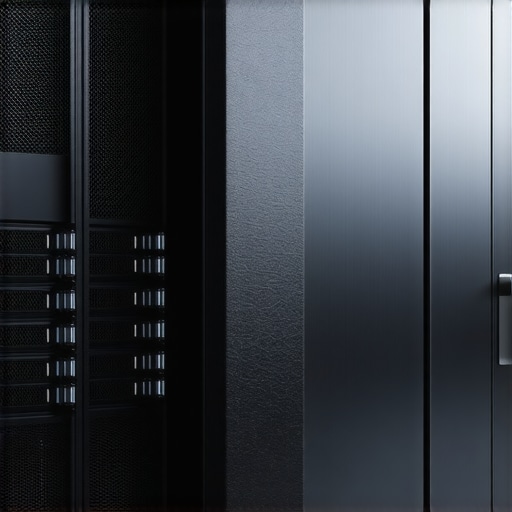
High-speed external SSD array in a controlled environment, emphasizing thermal management and connectivity features.
Beyond Compatibility: Innovating with Adaptive Storage Architectures
Traditional RAID setups often falter amid heterogeneous environments featuring NVMe, SATA, and cloud-based storage. Emerging adaptive architectures employ dynamic resource allocation, real-time workload balancing, and firmware-level telemetry to optimize performance and reliability. These systems transcend mere compatibility, proactively adjusting configurations in response to operational metrics, effectively future-proofing expansive data ecosystems against evolving demands.
What emerging materials could redefine the durability of external SSD enclosures?
Quantum-dot composites and phase-change materials are at the forefront, promising superior thermal conductivity and shock absorption. Their integration into external SSD design could significantly enhance resistance to environmental stressors, extending operational lifespan in mobile or harsh settings. Research and development efforts are intensifying, aiming to produce enclosures that combine resilience with minimal thermal resistance, thus supporting sustained high-performance data access.
Deepening your mastery of these advanced methodologies empowers your organization to engineer storage solutions resilient enough for the data-driven challenges of 2026 and beyond. Stay ahead by engaging with our expert community through our tailored consultation services, continuous education programs, and strategic partnerships—because excelling in storage resilience demands perpetual innovation.
Expert Insights to Elevate Storage Resilience
Embrace Adaptive Error Correction
Implement multilayered error correction algorithms that dynamically adjust based on real-time diagnostics, thereby safeguarding large-scale RAID environments against silent data corruption and uncorrectable errors.
Leverage AI-Driven Predictive Analytics
Utilize machine learning models trained on extensive telemetry datasets—from temperature fluctuations to I/O anomalies—to anticipate failures before they compromise data integrity, enabling preemptive maintenance and reducing downtime.
Prioritize Cross-Platform Compatibility
Design storage architectures that support standard-compliant interfaces and emerging protocols like NVMe over Fabrics, ensuring seamless interoperability across heterogeneous drives and preventing bottlenecks during large-scale rebuilds.
Integrate Advanced Thermal Management
Adopt innovative cooling solutions and thermal-aware workload distribution to mitigate heat-related drive degradation, extending lifespan and maintaining optimal performance in high-density storage arrays.
Adopt Dynamic Hot-Spare Strategies
Implement intelligent hot-spare allocation systems that adapt in real-time to changing workload patterns and drive health metrics, ensuring rapid recovery and minimizing risks during degraded states.
Key Resources for Deepening Expertise
- IEEE Error Correction Standards: Offers comprehensive guidelines on advanced coding techniques suitable for petabyte storage arrays.
- Raid Storage Explained: In-depth insights into resilient configurations for large-scale systems.
- NVMe SSD Performance Secrets: Techniques for maximizing throughput and reliability.
- Ultimate Guide to NVMe SSDs: Best practices for deploying high-speed storage solutions.
Reflections on the Future of Storage Resilience
The convergence of sophisticated error correction, predictive analytics, and thermal management is redefining the boundaries of data integrity in petabyte-scale RAID arrays. As enterprise demands escalate, embracing these cutting-edge strategies becomes imperative. For professionals committed to leading in this arena, continuous learning and proactive adaptation remain essential. Share your insights or inquire about tailored solutions through our Contact Page. Staying ahead in storage resilience isn’t just a necessity—it’s the benchmark of excellence in data management for 2026 and beyond.