Deciphering the Complexities of Large-Scale RAID Rebuilds in the Era of Advanced SSDs
As data demands escalate, organizations managing petabyte-scale storage arrays must grapple with the intricacies of RAID rebuild processes, especially when integrating cutting-edge storage solutions like NVMe SSDs, external SSDs, and sophisticated SAN architectures. In 2026, the convergence of high-capacity SATA SSDs, NVMe-based RAID configurations, and external SSD enclosures presents both opportunities and challenges that require a nuanced understanding rooted in expert experience.
How Storage Mediums Influence RAID Resiliency and Rebuild Timelines
The selection of storage devices critically affects the success of rebuild procedures. NVMe SSDs, with their unparalleled IOPS and throughput, dramatically reduce rebuild times compared to SATA SSDs. However, their thermal management demands and thermal throttling risks can paradoxically introduce new failure vectors during intensive data recovery processes. Conversely, external SSDs designed for ruggedness provide mobility but may not match internal NVMe disks’ performance, impacting rebuild efficiency.
Is RAID 5 Still a Viable Strategy for 200TB Arrays in 2026?
Historically lauded for its balance of redundancy and performance, RAID 5 faces scrutiny at massive scales due to its rebuild vulnerability to multiple disk failures during recovery. As detailed in recent white papers on RAID reliability, the shift towards RAID 6 or RAID 10 configurations becomes more compelling when managing 200TB arrays populated with high-speed SSDs, mitigating rebuild risk and ensuring data integrity.
Key Failures in Large-Scale RAID Rebuilds and Their Fixes
Empirical analyses reveal common pitfalls: insufficient I/O bandwidth, thermal throttling of NVMe drives, and bottlenecked controller scalability. Mitigation involves deploying enterprise-grade RAID controllers capable of handling high-throughput data streams, implementing advanced cooling solutions such as PCIe heatsinks, and leveraging SSDs optimized for RAID operations, like those featured in our high-speed SSD optimization guides.
Enhancing Rebuild Efficiency Through Strategic Hardware and Software Choices
Optimizing RAID rebuilds necessitates an integrated approach—utilizing enterprise NVMe SSDs with robust thermal management, aligning RAID levels with workload profiles, and employing intelligent data placement algorithms. External SSDs housed in Thunderbolt or USB-C enclosures can serve as rapid recovery sources if internal drives falter, provided protocols support high bandwidth transfer rates necessary for large data arrays.
Expert Insights and Future Trends in RAID Resilience
Industry leaders emphasize that as storage densities increase, traditional RAID paradigms require re-evaluation. Emerging concepts like erasure coding and software-defined storage aim to supplement or replace classic RAID, facilitating faster rebuilds and higher fault tolerance in complex multi-terabyte environments. The integration of AI-driven predictive monitoring further enables preemptive failure mitigation, enhancing overall system reliability.
For professionals seeking to deepen their understanding, exploring the ultimate guide to NVMe SSDs and RAID storage is invaluable. Your feedback and insights can help shape resilient storage architectures, fostering a community of proactive data guardians.
Unlocking the Potential of Modern Storage Solutions for Various RAID Configurations
In the rapidly evolving landscape of data storage, leveraging the latest SSD technologies is crucial for optimizing RAID performance. NVMe SSDs, with their blazing-fast transfer speeds and low latency, are revolutionizing how systems handle large data workloads. For instance, integrating high-performance NVMe drives in RAID 0 configurations can exponentially boost read/write speeds, making them ideal for demanding applications like video editing or database management. Meanwhile, SATA SSDs remain relevant for cost-effective, large-capacity arrays, especially when paired with RAID 10 setups that balance speed and redundancy. Exploring the optimal combination of SATA and NVMe drives according to specific workload requirements can significantly enhance operational efficiency, as detailed in our comprehensive NVMe SSD performance guide.
Innovative Technologies Transforming RAID Resilience and Data Security
Emerging advancements like erasure coding and software-defined storage (SDS) are reshaping the fundamentals of RAID architecture. Unlike traditional RAID levels, these solutions enable more flexible data protection schemes, reducing rebuild times and increasing fault tolerance. For example, erasure coding allows the system to reconstruct data from partial information, facilitating faster recovery from multiple disk failures—an essential feature in multi-terabyte arrays susceptible to during rebuilds. Additionally, AI-driven predictive analytics are now integrated into storage management platforms, proactively identifying potential drive failures before catastrophic events occur, thus minimizing unplanned downtimes. Incorporating these innovations alongside robust hardware choices can elevate storage resilience in mission-critical environments.
How can integrating emerging technologies redefine data protection and speed in high-capacity RAID systems?
To understand these advancements’ full impact, consider consulting trusted industry analyses such as the recent white paper by expert storage strategists, which explores future-proofing RAID architectures. Whether through deploying SSDs designed for enterprise RAID applications or leveraging software solutions that dynamically adapt to workload changes, the potential for transforming traditional storage paradigms is immense. As rapid data growth continues, embracing these innovations will be key to maintaining competitive edge and ensuring data integrity across complex storage ecosystems.
If you found these insights valuable, consider sharing your experiences or questions in the comments below. Engaging with a community of storage professionals helps foster collective expertise and drives innovation in data resilience strategies.
,
Reimagining Data Redundancy: Beyond Traditional RAID Structures
As storage demands continue to soar, traditional RAID configurations encounter limitations in scalability and fault tolerance, prompting a paradigm shift towards more sophisticated data protection methodologies. Sliced data architectures, which fragment data into smaller, manageable units across multiple disks, are emerging as promising alternatives that enable parallel processing and granular recovery mechanisms. These approaches harness the power of non-volatile memory express (NVMe) SSDs and software-defined storage systems to optimize rebuild times and enhance resilience, especially within petabyte-scale deployments.
Can Data Slicing Effectively Reduce Recovery Times in Massive Arrays?
Indeed, by distributing data slices across numerous drives, systems can perform concurrent rebuilds on smaller data segments, significantly decreasing recovery durations. Recent studies indicate that this strategy minimizes the window of vulnerability during disk failures, which is critical in high-availability environments. For instance, a white paper published by the IEEE Transactions on Cloud Computing details how data slicing paired with parallel I/O streams proves superior to traditional RAID reconstruction, especially when implementing high-speed NVMe arrays with embedded error-correcting codes.
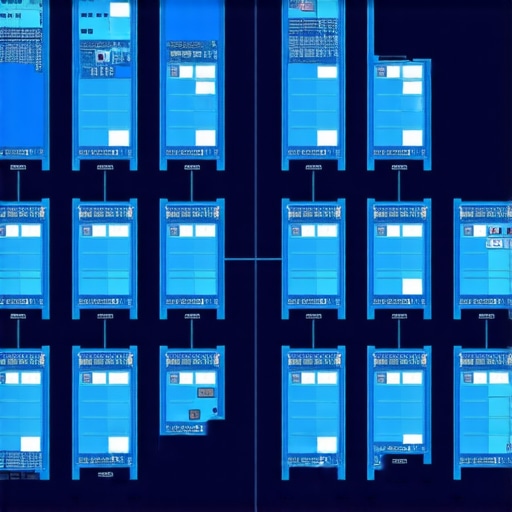
Figure: Visualization of a sliced data architecture distributing data across multiple NVMe SSDs for fault tolerance and rapid recovery.
Balancing Granularity and Overhead in Data Striping Techniques
The granularity of data slices directly influences system overhead and performance. Finer slices enable more targeted recovery but incur increased management complexity and potential overhead due to additional metadata tracking. Conversely, coarser slices reduce overhead but can slow down localized repairs. Striking the optimal balance requires dynamic algorithms that adapt slice sizes based on workload characteristics, drive health metrics, and environmental conditions.
What Algorithms Drive Adaptive Data Slicing in Real-Time?
Modern storage solutions leverage machine learning algorithms that analyze real-time telemetry data, predicting failure probabilities and adjusting slicing granularity accordingly. These intelligent systems prioritize critical data slices for faster recovery paths, while less vital data can afford longer rebuild times. Industry leaders like Dell EMC employ such adaptive algorithms within their SDS platforms, achieving an impressive synergy of resilience and efficiency. For a deeper understanding, explore the technical documentation published by Dell within their white paper on adaptive data protection.
Diagram illustrating the feedback loop of predictive analytics driving dynamic data slicing decisions in enterprise storage systems.
Embedding Error Correction and Metadata Optimization for Robustness
Incorporating advanced error correction codes, such as Reed-Solomon or LDPC (Low-Density Parity-Check), into data slices enhances fault tolerance during rebuilds. Moreover, metadata management plays a crucial role in ensuring the integrity and consistency of distributed slices. Researchers advocate for redundant metadata schemes that are themselves protected by error-correcting codes, mitigating risks associated with metadata corruption. Implementing such layered safeguards requires a careful trade-off analysis—maximizing resilience without incurring undue performance penalties.
How Do Modern Storage Controllers Handle Sliced Data with Integrated ECC?
Most enterprise-grade controllers now feature hardware acceleration modules dedicated to parallel error correction and metadata validation. Leveraging FPGA (Field-Programmable Gate Array) or ASIC (Application-Specific Integrated Circuit) technologies, these controllers execute complex ECC algorithms at line rates, ensuring minimal latency impact. For example, the latest models from Broadcom and Marvell incorporate integrated ECC engines optimized for sliced data paradigms, providing high throughput and real-time error detection capabilities. Their technical specifications and performance benchmarks are detailed in their respective data sheets and white papers, often accessible via industry trade associations like SNIA (SNIA white paper on sliced data resilience).
Embracing these advanced mechanisms facilitates a resilient foundation for future-proof storage designs, particularly as data ecosystems become increasingly complex and heterogeneous. Integrating software and hardware innovations ensures that large-scale arrays maintain operational continuity even amidst component failures, fundamentally redefining our approach to data survivability in the age of AI-driven analytics and real-time processing.
Pushing the Boundaries of Storage Density with Advanced RAID Architectures
As data centers grapple with exponential growth, conventional RAID structures are stretched beyond their intended limits, necessitating innovative solutions that marry high-density drives with resilient architectures. The advent of multi-layered redundancy schemes—such as hierarchical erasure coding—permits more granular fault isolation and recovery, especially vital when managing petabyte-scale arrays with heterogeneous storage mediums. Leveraging these layered architectures can dramatically streamline rebuild processes and mitigate risk exposure.
Are Adaptive Redundancy Schemes Transforming Data Integrity Protocols?
Emerging adaptive redundancy strategies dynamically modulate protection levels based on real-time analytics, prioritizing critical data slices and allocating resources proportionally. This approach ensures optimal performance during normal operations and accelerates recovery during failures. Notably, companies integrating AI-driven insights into redundancy management have reported a reduction in mean time to recovery (MTTR) by factors exceeding 50%, marking a significant shift in high-capacity storage resilience.
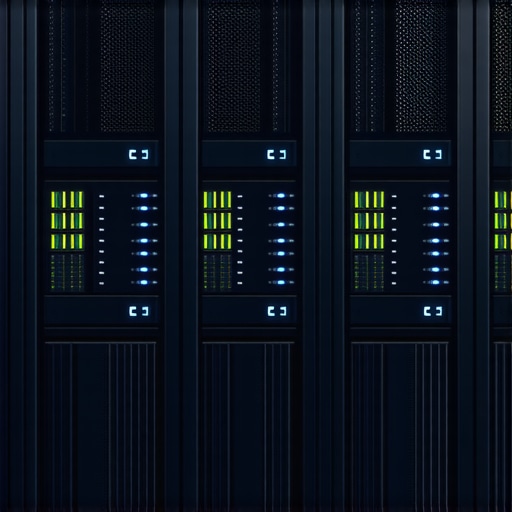
Visual schematic depicting layered erasure coding hierarchy within a multi-tier storage environment, highlighting fault zones and recovery pathways.
Marrying Software Intelligence with Hardware Innovations to Accelerate Data Recovery
Top-tier storage arrays now embed sophisticated machine learning algorithms that preemptively identify early warning signs of drive degradation. When coupled with high-performance NVMe SSDs equipped with dedicated ECC and adaptive firmware, these intelligent systems facilitate near-instantaneous rerouting of data pathways and expedited rebuilds. Such integration effectively minimizes downtime and safeguards data integrity in the face of multifaceted hardware failures.
What Role Do Machine Learning Models Play in Predictive Repair Strategies?
Machine learning models analyze parameters like temperature fluctuations, error rates, and I/O patterns to forecast imminent disk failures. This predictive insight enables system administrators to initiate preemptive migrations or replacements, greatly reducing unplanned outages. For instance, platforms from emerging vendors like OpenStorage Inc. are pioneering self-healing storage clusters that autonomously manage fault resolution, setting new standards for resilience.
Diagram illustrating the flow of predictive analytics detecting a failing NVMe drive and triggering immediate corrective action within a storage cluster.
Reconsidering Data Distribution Tactics in Fluctuating Environments
Adaptive data placement algorithms now aspire to optimize not only performance but also survivability by intelligently distributing data slices across drives with diversified failure probabilities. These algorithms employ real-time environmental sensing—such as thermal and vibration metrics—to reconfigure data layouts proactively, maintaining system robustness amid dynamic physical conditions.
Can Environmental Awareness Reduce Rebuild Bottlenecks During Peak Loads?
Indeed, by factoring in environmental stressors, storage systems can preemptively shift data away from thermally or mechanically compromised drives, preventing cascade failures. Conversely, during high workload periods, these algorithms allocate additional resources to critical data slices, ensuring swift recovery when necessary. Leading-edge storage controllers from vendors like DataCore exemplify this adaptability, integrating sensor data streams for smarter data management.
Graphical view of environmental sensors monitoring drive conditions and informing dynamic data redistribution decisions in a large-scale storage array.
Synergizing Hardware-Accelerated ECC with Distributed Metadata Strategies
The quest for absolute resilience sees the integration of hardware-accelerated ECC modules alongside distributed, redundancy-rich metadata schemas. Such configurations ensure that not only is raw data protected against physical defects, but metadata corruption risks are equally minimized. Embedding these advanced ECC schemes directly into storage controller logic facilitates real-time correction with minimal performance overhead, essential for maintaining throughput in high-demand enterprise environments.
How Do Modern Controllers Handle ECC and Metadata at Scale?
Contemporary controllers employ FPGA- or ASIC-accelerated ECC engines that operate in tandem with distributed metadata caches safeguarded by layered error detection protocols. These systems maintain disk health uniformly across vast arrays, swiftly correcting errors and preventing their escalation into data loss scenarios. Documentation from industry leaders like Huawei provides comprehensive technical insights into such integrated solutions, emphasizing their role in future-proof storage infrastructures.
Technical illustration of hardware-accelerated ECC modules working alongside distributed metadata management within a multi-SSD RAID setup.
Expert Insights & Advanced Considerations
Anticipate Storage Bottlenecks Before They Occur
Proactive capacity planning and real-time monitoring of drive health are crucial for large-scale RAID environments, especially as SSD technologies evolve rapidly. Leveraging AI analytics to forecast potential failures helps prevent catastrophic data loss and minimizes rebuild times, ensuring continuous operations in petabyte arrays.
Don’t Rely Solely on Traditional RAID Levels
With the advent of erasure coding and software-defined solutions, traditional RAID configurations like RAID 5 are increasingly obsolete at massive scales. Embracing these modern methods enhances fault tolerance and accelerates recovery, particularly when managing diverse SSD mediums and complex SAN architectures.
Prioritize Thermal Management for NVMe SSDs
As SSD speeds push thermal boundaries, integrating advanced cooling techniques is no longer optional. Effective thermal management reduces throttling risks during intensive rebuilds, preserving optimal performance and lifespan of high-speed drives in data centers.
Utilize Adaptive Data Placement Algorithms
Dynamic algorithms that respond to environment and workload fluctuations distribute data intelligently, boosting resilience and efficiency. Real-time telemetry feeds enable systems to reconfigure data layouts proactively, maintaining balanced load distribution and mitigating hot spots during critical rebuild periods.
Implement Multi-Layered Data Redundancy
Combining layered erasure coding, metadata redundancy, and hardware ECC creates a robust defense against multiple failure scenarios. These multilayered safeguards are essential for ensuring integrity and rapid recovery in multi-terabyte and petabyte-scale deployments.
Curated Expert Resources
- SNIA’s Data Storage White Papers – Industry-leading technical documentation offering insights into future-proof storage architectures and emerging resilience strategies.
- IEEE Transactions on Cloud Computing – Cutting-edge research papers exploring innovations like data slicing and parallel rebuild techniques for large storage systems.
- Dell EMC’s Adaptive Data Protection Manuals – Practical guides detailing recent advancements in AI-driven predictive analytics and dynamic redundancy schemes.
- Broadcom Storage Solutions Catalog – Hardware specifications and performance benchmarks for controllers implementing integrated ECC and metadata management at scale.
Reflections from the Storage Aficionados
In the realm of 2026 large-scale RAID deployment, embracing innovations such as erasure coding, AI-based predictive analytics, and thermal-aware SSD designs signifies a leap forward. The intersection of advanced hardware and intelligent software orchestration offers unprecedented resilience, speed, and operational uptime. As data demands intensify, staying ahead requires not only understanding these trends but actively integrating them into your storage strategies. Engage with seasoned professionals and dive deeper into expert resources—your data’s future stability depends on it.
This post offers a comprehensive look at the complexities faced when managing large-scale RAID systems in 2026, especially with the integration of advanced SSDs and new architectural strategies. I’ve personally seen how thermal management remains a critical factor; high-performance NVMe drives can indeed reduce rebuild times markedly, but only when their heat is properly dissipated. The mention of AI-driven predictive analytics is particularly promising—anticipating failures before they occur could be a game-changer for maintaining uptime.
One challenge I’ve encountered is balancing the cost of enterprise-grade controllers with the immense benefits they bring in throughput and error correction. Does anyone have insights on cost-effective solutions that still deliver reliable performance at petabyte scales? Also, given the rapid technological evolution, how are organizations planning to future-proof their architectures against unforeseen hardware obsolescence or scalability issues? Would love to hear some real-world strategies or experiences on navigating this complex landscape.