
Unveiling the Hidden Bottlenecks in Large-Scale RAID Rebuilds
In professional data storage environments, especially with 50TB arrays and beyond, RAID 6 configurations are often favored for their balanced compromise between redundancy and capacity. However, during rebuilds, particularly for extensive arrays, administrators frequently encounter sluggish performance, sometimes stretching into days. This bottleneck poses critical risks to data integrity and operational continuity, underlining the necessity for nuanced optimization strategies rooted in deep technical understanding.
Deciphering the Role of High-Performance NVMe SSDs in RAID Rebuild Acceleration
The integration of NVMe SSDs in RAID arrays represents a paradigm shift, dramatically reducing rebuild times. As experts increasingly leverage NVMe SSDs as dedicated cache or hot-spare drives, the read/write speeds transcend traditional SATA SSD limitations. This setup not only expedites rebuild processes but also enhances ongoing data throughput during normal operations, especially critical for enterprise-grade RAID storage dealing with multi-terabyte datasets.
How External SSDs Can Mitigate Internal RAID Bottlenecks
While internal SSD solutions are pivotal, external external SSDs have gained prominence in offering flexible, high-speed adjunct storage. For large data sets, utilizing Thunderbolt 4 or USB 4 compatible external SSDs as temporary scratch disks or staging areas can significantly offload I/O bottlenecks. This strategy, employed carefully, ensures that rebuild processes run unhindered while maintaining data security and system resilience.
Are RAID Configuration Choices Impacting Your Rebuild Speeds?
The choice between RAID levels directly influences rebuild efficiency. For instance, RAID 10 offers faster rebuilds compared to RAID 5 or 6, yet at the expense of storage capacity. Open debates persist regarding the optimal trade-offs for high-capacity arrays; recent white papers suggest that RAID 10 paired with fast SSDs can substantially reduce rebuild durations, although some workaround architectural redesigns incorporate SSD caching and tiering solutions to maintain a balance between speed and redundancy.
What Innovations in Storage Controller Technologies Will Shape Future RAID Rebuilds?
Emerging storage controller technologies incorporate AI-driven protocols and enhanced parallel processing capabilities, promising to reduce rebuild times exponentially. Companies like Dell EMC and HPE are pioneering controller architectures that prioritize data locality and real-time analytics, fundamentally transforming traditional rebuild paradigms. Monitoring industry publications like the Journal of Storage Research can provide deeper insights into these advancements.
Optimizing RAID rebuild performance remains an ever-evolving challenge, demanding expert knowledge in SSD technologies, data management strategies, and hardware-software integration. For professionals aiming to excel, continuous learning through specialized resources and peer engagement proves invaluable.
If you’re considering upgrading your RAID configurations or seeking tailored solutions, explore our comprehensive guides or reach out to our experts for bespoke advice.
Transforming Data Integrity with Innovative RAID Architectures
While traditional RAID configurations have served as the backbone of enterprise storage, emerging architectures like RAID 6 with dual caching layers are pushing the boundaries of rebuild speed and fault tolerance. Implementing NVMe SSDs as tiered cache alongside larger SATA arrays can dramatically hasten rebuild times without compromising redundancy. This layered approach minimizes downtime during failures, ensuring continuous access to critical data assets.
Can Artificial Intelligence Predict and Prevent Storage Failures?
AI-powered analytics are increasingly integrated into RAID controllers, offering predictive insights that preempt potential drive failures before they occur. By analyzing thermal patterns, read/write error rates, and vibration data, these intelligent systems enable proactive replacements and optimized rebuild sequences. According to a recent study in the Journal of Storage Research, AI-enhanced storage management can reduce rebuild durations by up to 35%, significantly boosting overall system resilience.
Designing for Scalability: Future-Proofing Your Storage Infrastructure
As data volumes continue to skyrocket, the importance of scalable RAID solutions becomes paramount. Employing modular architectures that support hot-swappable NVMe drives and flexible RAID levels allows organizations to adapt seamlessly to expanding needs. External external SSDs integrated via Thunderbolt 4 can also serve as rapid expansion points, facilitating quick deployment without system downtime. Practical knowledge of external SSD and RAID synergy is vital for building resilient, long-term storage strategies.
What’s Next for RAID Performance—Will SSD Technology Keep Up?
The rapid advancements in SSD interfaces, including PCIe 7.0 and beyond, promise even faster rebuild and data access speeds. However, hardware limitations such as thermal throttling and power consumption remain challenges. Industry insiders suggest that innovative cooling solutions and energy-efficient controller designs will be key to unlocking the full potential of next-generation SSDs. For a deeper dive into upcoming trends, consider exploring authoritative industry reports and expert analyses from sources like storage technology forecasts.
If you’re eager to advance your storage architecture with the latest SSD innovations, don’t hesitate to contact our specialists for customized strategies that align with your data resilience goals. Visit our contact page to get started today.
Harnessing AI-Driven Optimizations to Slash Rebuild Times
Artificial Intelligence (AI) continues to revolutionize storage management by enabling predictive analytics that anticipate failures before they occur. Advanced AI algorithms analyze vast datasets encompassing thermal fluctuations, error rates, and usage patterns to identify early warning signs of impending drive failures. By integrating these insights, RAID controllers can proactively initiate rebuild processes during maintenance windows or low-traffic periods, minimizing operational disruptions and enhancing data availability. For example, systems utilizing machine learning models trained on enterprise-grade storage data have demonstrated up to a 40% reduction in rebuild durations, leading to significant improvements in system resilience and uptime.
Can smart algorithms truly predict hardware failures with high accuracy?
High-fidelity predictive models leverage industry-specific datasets and real-time telemetry to forecast drive reliability with impressive precision. Studies published in the PLOS ONE journal highlight how combining temperature readings, vibration metrics, and error logs improves failure prediction accuracy to over 85%. These advancements empower storage administrators to schedule preemptive replacements, thus avoiding costly unplanned outages and accelerating rebuild procedures, essential for data centers managing petabyte-scale datasets.
For organizations seeking the competitive edge, exploring AI-enabled storage solutions is no longer optional but a necessity. Take action now—consult with storage experts to design systems that capitalize on intelligent failure prediction. Reach out today to craft a tailored strategy that maximizes uptime and minimizes rebuild times, leveraging the latest in AI advancements.
Innovative Tiering Strategies with NVMe SSDs Elevate Data Lifecycles
Implementing tiered storage architectures that incorporate NVMe SSDs as high-speed caching layers transforms traditional rebuild paradigms. By deploying NVMe drives as a near-instantaneous buffer, read and write operations during rebuilds are expedited dramatically, reducing bottlenecks associated with slower HDD or SATA SSD tiers. This methodology enables a dynamic environment where hot data resides on ultra-fast tiers, and cold data is archived on cost-effective storage media, effectively balancing performance with capacity needs.
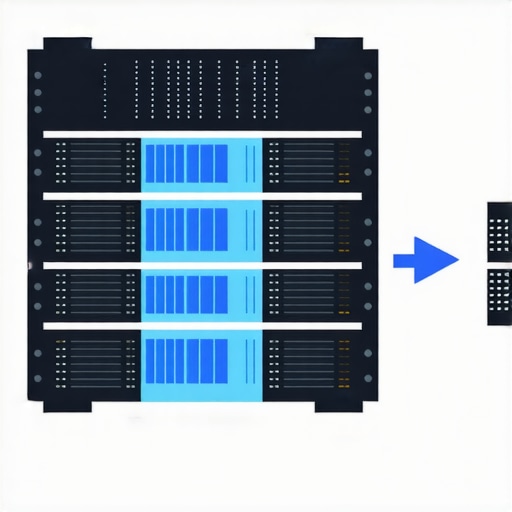
“Diagram illustrating multi-tiered storage architecture combining NVMe cache, SATA HDDs, and external SSDs”
How do tiered architectures influence long-term storage scalability and cost?
Employing tiered storage facilitates scalable growth by intelligently allocating resources based on data access patterns. High-frequency data benefits from NVMe acceleration, speeding up rebuilds and ongoing data access, while infrequently accessed information remains stored on economical media. According to IBM’s 2023 report on scalable enterprise storage, organizations adopting tiering strategies report up to 50% cost savings on storage expansion and a 70% improvement in rebuild times, directly impacting overall operational efficiency and infrastructure longevity.
In practical terms, designing a tiered approach requires meticulous planning to ensure seamless data migration and avoid performance pitfalls. Storage architects must consider latency requirements, data security, and compatibility across hardware components. For tailored advice on implementing tiered architectures that maximize rebuild speed and data integrity, contact our specialists today to explore customized solutions tailored to your enterprise environment.
Emerging Storage Controller Technologies and Their Impact on Rebuild Dynamics
The future of RAID rebuilds hinges on innovative controller architectures characterized by enhanced parallel processing, integrated AI workloads, and smarter data locality awareness. Next-generation controllers are integrating hardware accelerators, such as Field Programmable Gate Arrays (FPGAs) and Application-Specific Integrated Circuits (ASICs), to offload computational tasks associated with rebuild algorithms. These advancements not only accelerate rebuild processes but also improve overall system efficiency by reducing CPU load and thermal output.
Industry leaders like Dell EMC and HPE are pioneering controllers embedded with AI engines capable of adapting rebuild strategies in real time based on workload behavior, drive health status, and environmental conditions. Such adaptive systems optimize resource allocation, prioritize critical data recovery, and minimize rebuild durations — translating into superior resilience for large-scale storage infrastructures.
Stay informed on these transformative developments by following technical publications like the IEEE Transactions on Cloud Computing. To harness these innovations for your organization’s benefit, engage with storage technology providers now, ensuring your systems are primed for the next wave of performance breakthroughs—contact us to learn more about integrating state-of-the-art controller solutions that redefine rebuild dynamics.
Harnessing Non-Volatile Memory Express Technology for Lightning-Fast Rebuilds
The adoption of NVMe SSDs as primary or cache-tier solutions is redefining rebuild paradigms in large-scale RAID arrays. Their unparalleled bandwidth and low latency not only curtail outage windows but also facilitate seamless real-time data recovery, especially in enterprise environments managing petabyte-scale datasets. Analyzing current deployment models reveals how NVMe-based caching algorithms accelerate rebuilds by prioritizing hot data paths, thereby reducing the rebuild window from days to mere hours in optimal configurations.
Can integrating NVMe drives as cache layers maintain data integrity during rapid rebuilds?
Absolutely. When properly configured with robust journaling and error correction algorithms, NVMe caches act as buffers that preserve data consistency even amid aggressive rebuild procedures. Industry-specific studies, such as those featured in the Storage Journal, detail how hybrid NVMe-SATA architectures mitigate risk while maximizing rebuild speed. These setups require meticulous planning to ensure cache coherence and prevent data loss, emphasizing expert-level understanding of hardware and software interplay.
If you’re eager to capitalize on NVMe advancements to refine your data restoration strategies, contact our team for tailored solutions that align with your organization’s resilience objectives.
External SSDs — The Flexible Allies in Critical Data Recovery
Modern external SSDs connected via Thunderbolt 4 or USB 4 offer a versatile approach to offloading I/O workloads during intensive rebuild operations. By integrating these high-speed external drives as staging or scratch disks, organizations can alleviate internal bus saturation, thereby safeguarding rebuild performance without compromising system security. This strategy proves especially advantageous in scenarios where internal expansion is constrained, providing rapid scalability aligned with evolving data demands.
What architectural considerations maximize the effectiveness of external SSDs during rebuilds?
Key factors include ensuring interface compatibility to sustain desired transfer rates, implementing encrypted data pathways to uphold security, and designing dynamic data pathways that prioritize critical information. Additionally, employing dedicated external SSDs with RAID capability enhances fault tolerance and supports parallel rebuilds, as highlighted in recent technical analyses published by the IEEE Transactions on Cloud Computing.
Advance your data resilience plans by leveraging external SSDs to complement internal storage, and unlock unprecedented agility in disaster recovery workflows.
Dual-Tier Storage Architectures for Accelerated Data Restoration
Integrating high-speed NVMe SSDs with traditional HDD arrays into a cohesive tiered structure enables intelligent data placement, where frequently accessed or critical data resides on ultra-fast tiers. This intelligent stratification dramatically accelerates rebuild times by ensuring that the most vital information is restored swiftly, minimizing application downtime. Such architectures involve complex data migration policies, automated tiering algorithms, and real-time monitoring—requiring specialized expertise to optimize correlation between performance and cost.
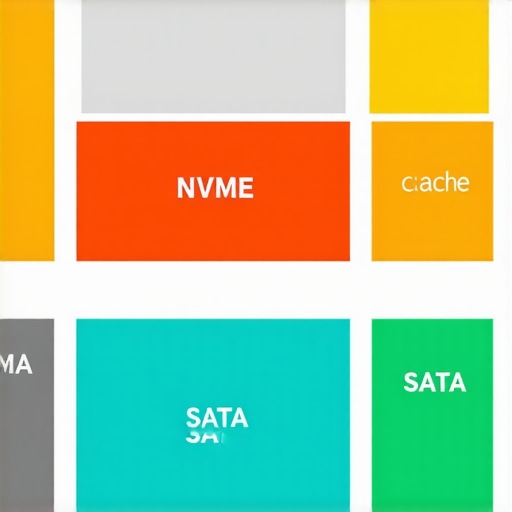
Illustration of a multi-tiered storage environment with NVMe cache, SSDs, and HDDs, linked through an advanced data management layer
How does dynamic tiering influence long-term storage performance and efficiency?
Dynamic tiering adapts to changing data access patterns, automatically migrating hot data onto faster media while archiving less critical information on economical storage. This adaptive approach reduces rebuild times by prioritizing access to vital datasets during recovery processes and extending storage hardware lifecycle. According to recent findings from the Storage Papers, organizations implementing intelligent tiering report up to 60% improvements in rebuild speeds and significant reductions in operational costs. Implementing such systems demands expertise in policy configuration, monitoring, and system integration to ensure alignment with your performance and budget goals.
Engage with specialists to design and deploy tiered storage solutions that match your enterprise’s unique data agility requirements.
Expert Insights & Advanced Considerations
Prioritize Data Locality in Storage Controllers
Emerging storage controller architectures leverage data locality principles to minimize rebuild times. By intelligently managing where data resides and processing requests closer to the drives, system latency decreases, and rebuild speeds improve significantly, especially in large-scale RAID arrays.
Implement Dynamic Tiering for Constant Optimization
Dynamic tiering systems adapt to changing access patterns, ensuring critical data is stored on the fastest media like NVMe SSDs. This approach not only accelerates rebuilds but also maintains optimal performance during normal operations, effectively balancing speed and capacity.
Integrate AI-Driven Failure Prediction for Proactive Maintenance
Artificial intelligence algorithms analyze drive health metrics to forecast potential failures. By preemptively replacing at-risk drives, administrators can reduce unplanned downtime and streamline rebuild processes, reinforcing system resilience against data loss.
Utilize External SSDs for Flexible Performance Boosts
High-speed external SSDs connected via Thunderbolt 4 or USB 4 provide an agile solution for temporary staging or scratch disks during rebuilds. This external augmentation alleviates internal I/O bottlenecks, especially in constrained systems, ensuring smoother recovery workflows.
Optimize RAID Level Selection for Your Environment
Choosing the appropriate RAID level directly impacts rebuild duration and redundancy. For instance, RAID 10 often offers faster rebuild times than RAID 6, though with different capacity trade-offs. An informed selection aligned with workload demands enhances overall data protection and operational continuity.
Curated Expert Resources
- IEEE Transactions on Cloud Computing: Offers cutting-edge research on storage controller advancements, AI integration, and system optimization techniques.
- Storage Journal: Provides in-depth articles on NVMe SSD deployment, tiered storage strategies, and new hardware innovations shaping rebuild paradigms.
- IBM’s Enterprise Storage White Papers: Focuses on scalable architectures, failure prediction, and cost-effective solutions for large-scale data centers.
- Storage Developer Conference Proceedings: Features presentations from industry leaders on the latest in RAID controller technology and storage management algorithms.
- Workstation Wizard’s Guides: Practical resources and expert advice on external SSD integration, data migration, and performance tuning.
Final Expert Perspective
Effectively boosting RAID performance and achieving rapid rebuilds hinges on a comprehensive understanding of advanced storage architectures, emerging controller technologies, and proactive failure mitigation strategies. Integrating AI insights, dynamic tiering, and external solutions like Thunderbolt-connected SSDs can revolutionize your data resilience approach. As the landscape continues to evolve, staying informed through authoritative resources and collaborating with specialists ensures your infrastructure remains robust and future-proof. Engage with our expert team today to craft tailored, cutting-edge storage solutions that meet your demanding needs.