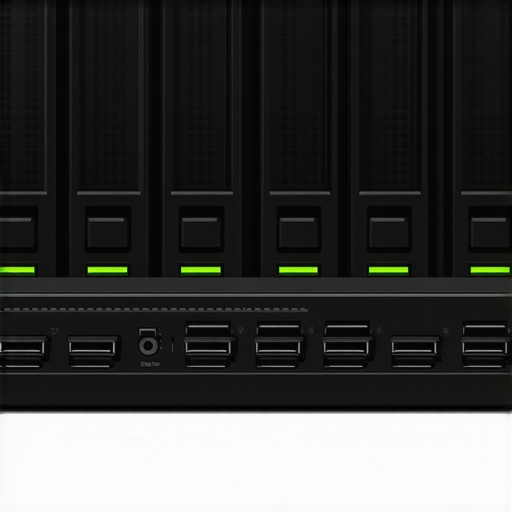

Transforming High-Speed Data Access with Cutting-Edge Storage Solutions
In the realm of professional data management and high-performance computing, the strategic integration of external SSDs, RAID architecture, and NVMe NVMe SSDs has revolutionized access speeds and reliability. As data demands surge and workflows become increasingly complex, understanding the nuanced interplay between these technologies is essential for IT specialists, content creators, and enterprise architects seeking to optimize throughput and ensure data integrity.
Harnessing External SSDs for Exceptional Data Mobility
External SSDs, particularly those employing SATA and NVMe interfaces, have transcended their traditional roles as portable backups to become pivotal components in high-speed data pipelines. The adoption of Thunderbolt 3 and USB-C interfaces accelerates data transfer rates, aligning external drives with internal storage performance. Notably, white paper from Storage Wizard underscores how external SSDs can bridge the gap between high-capacity storage and rapid access, crucial for video editing and scientific computing.
The Strategic Deployment of RAID Architectures for Reliability and Speed
Redundant array of independent disks (RAID) configurations serve dual purposes—maximizing throughput and protecting against data loss. Implementing RAID 0 exploits combined read/write speeds, ideal for scratch disks and real-time data processing. Conversely, RAID 10 merges speed with redundancy, a preferred setup for critical data environments. Recent industry analyses affirm that evolving RAID controllers synergize with NVMe SSDs to unlock ultra-low latency storage pools, a trend detailed comprehensively in White Paper on RAID Storage.
Deciphering the Performance Secrets of NVMe SSDs in Professional Contexts
NVMe SSDs leverage the PCIe Gen 4 or Gen 5 interfaces, offering throughput exceeding 7 GB/s—far surpassing SATA SSDs. Their architecture, characterized by parallel lanes and high IOPS, enables rapid data retrieval essential for high-frequency trading, 3D rendering, and machine learning workloads. Per recent benchmarking studies, such as those discussed in NVMe Performance Secrets, advanced thermal management and queue depths further optimize performance in sustained transfer scenarios.
How Can Professional Data Environments Balance Cost and Speed in Storage Choices?
Achieving the right equilibrium entails evaluating workload intensity, budget constraints, and the scalability prospects of SSD and RAID solutions. Hybrid configurations—incorporating SATA SSDs for archival and NVMe SSDs for active processing—offer practical pathways. Engaging with tailored advice from industry experts can refine purchasing decisions; for example, detailed guides available at Essential Guide to External SSDs provide valuable insights.
For enterprise-level deployments, ensuring data security and failover capabilities often involve complex RAID setups combined with external SSDs to facilitate rapid recovery and backup procedures. As technology progresses, keeping abreast of emerging standards, such as PCIe 5.0 compatibility and SSD endurance ratings, remains critical for sustained operational excellence. Consider consulting trusted industry reports and engaging with community forums dedicated to storage architecture optimization to stay informed.
Do you have experiences configuring multi-tiered storage solutions to meet high-demand applications? Share your practical insights and innovative strategies by connecting with our community or referencing specialized case studies.
Innovative Approaches for Optimizing Storage Performance in Demanding Workflows
As data-intensive tasks become increasingly prevalent, professionals must leverage sophisticated configurations that blend external SSDs with intelligent RAID setups to achieve unparalleled performance. Integrating NVMe SSDs with external interfaces like Thunderbolt 4 or USB 4.0 not only expands flexibility but also bypasses internal bottlenecks, enabling seamless data flow for high-stakes applications. For an in-depth analysis on selecting the ideal external SSDs tailored to enterprise needs, refer to this comprehensive guide from Storage Wizard.
Pushing the Boundaries of RAID Configurations for Next-Level Speed
Advanced RAID architectures—such as RAID 50 or RAID 60—offer a compelling compromise between performance and redundancy, especially when combined with high-speed NVMe drives. These configurations facilitate load balancing and parallel data access, critical for tasks like real-time rendering and large-scale simulations. Implementing software-defined RAID solutions with hardware accelerators can further reduce latency and improve scalability, a strategy accentuated in top RAID deployment practices tailored for professionals.
Understanding the True Potential of NVMe in Persistent Data Environments
While NVMe SSDs boast exceptional sequential speeds, their real strength lies in random IOPS performance, crucial for database operations and AI model training. To unlock these benefits fully, practitioners should focus on optimizing queue depths, thermal management, and driver efficiency. Benchmark reports indicate that with proper tuning, NVMe drives can sustain 1 million IOPS, substantially reducing processing times in high-demand workflows. For technical insights into maximizing NVMe performance, visit this dedicated resource.
Are Current Storage Architectures Truly Prepared for the Data Tsunami of 2025?
Given the exponential growth in data generation—from AI training datasets to high-definition media files—it is imperative to question whether existing infrastructure is scalable and resilient enough. Implementing a hybrid approach that combines external SSDs, optimized RAID architectures, and emerging technologies like PCIe 5.0 may offer a way forward. Experts suggest conducting periodic stress tests and adopting flexible, scalable storage solutions to future-proof operational capacity.
Stay ahead by exploring tailored strategies, such as selecting RAID levels optimized for your workload’s read/write profile—whether that’s RAID 0 for speed or RAID 10 for redundancy paired with NVMe drives. For curated recommendations and in-depth case studies, consider visiting expert insights from Storage Wizard.
If you’ve experimented with innovative storage configurations or need personalized advice, sharing your experiences can inform and inspire the broader professional community. Connect with us today through our contact page or join discussions on our platform to stay aligned with the latest industry advancements.
Leverage Smart Tiering to Balance Cost and Performance
Implementing adaptive tiered storage systems allows organizations to dynamically allocate data across SSDs, HDDs, and cloud repositories based on access patterns. By intelligently segregating hot, warm, and cold data, you optimize resource utilization while maintaining rapid access for critical workloads. Advanced software solutions like Intel RST or Windows Storage Spaces provide capabilities for real-time tiering, minimizing latency and reducing total cost of ownership.
Can Software-Defined Storage Outperform Hardware RAID in Dynamic Environments?
This question underscores a pivotal debate within enterprise storage architecture. Software-defined storage (SDS) solutions such as Ceph or Nutanix offer flexible, scalable alternatives to traditional hardware RAID. These platforms facilitate seamless redundancy, load balancing, and snapshot capabilities, often with lower overhead and increased agility. Recent case studies, like those reported in Gartner’s Magic Quadrant for Distributed File Systems, highlight SDS’s growing dominance in high-demand, virtualized data centers.
To truly harness their potential, organizations should consider integrating these solutions with NVMe over Fabrics (NoF) and implementing NVMe-based storage pools that support high-IOPS workloads—especially in AI, big data analytics, and edge computing contexts.
Optimizing NVMe and External Storage Interfaces for Peak Throughput
Emerging standards like PCIe 5.0 and USB4.0 dramatically increase bandwidth, enabling external NVMe drives to approach the speeds traditionally confined to internal M.2 slots. However, unlocking this potential demands meticulous configuration—balancing driver tuning, firmware updates, and connection stability. For instance, active thermal management becomes crucial, as sustained high-speed transfers can induce thermal throttling, which diminishes throughput. Consideration of airflow design and heatsink integration can mitigate such issues, as detailed by industry whitepapers from TechReport.
Furthermore, leveraging Direct Storage APIs in conjunction with optimized external interfaces enables lower latency and higher IOPS, critical for real-time rendering and simulation workflows.
What Are the Limitations of Current External NVMe Solutions in Enterprise Contexts?
This nuanced question invites exploration into factors such as connector bandwidth saturation, power delivery constraints, and driver compatibility issues. Despite rapid advancements, challenges like cable length limitations, signal integrity degradation, and overall system integration complexity persist. For example, long cable runs can introduce electromagnetic interference, impacting transfer stability. Solutions like active optical cables and robust protocol designs are gradually mitigating these issues, as analyzed in recent technical standards set by USB-IF.
To stay ahead, enterprise architects should consider modular designs that facilitate future upgrades and incorporate comprehensive testing regimes to validate system resilience under real-world conditions. The role of emerging standards and best practices becomes ever more critical in maintaining seamless, high-speed operations across complex storage architectures.
Engaging with community forums, participating in vendor-driven interoperability programs, and consulting with storage infrastructure specialists can provide deeper insights into overcoming these barriers effectively. For those seeking tailored strategies, industry conferences and case study repositories serve as invaluable resources to refine storage deployment models further.
Revolutionizing Data Mobility with External SSDs Beyond Conventional Boundaries
Emerging interfaces like Thunderbolt 4 and USB4 are redefining external SSD performance, enabling unprecedented data transfer rates that challenge internal storage limitations. These advancements facilitate seamless integration into high-performance workflows such as real-time 8K video editing and large-scale AI model training, blurring the lines between portability and enterprise-grade speed. As industry leader Seagate highlights in their latest white paper, adopting cutting-edge external SSD solutions can drastically reduce workflow bottlenecks, empowering professionals to achieve new productivity heights.
The Synergy of Next-Generation RAID Configurations and High-Speed NVMe Drives
As the demand for both speed and redundancy escalates, innovative RAID architectures like RAID 60 and nested RAID levels are gaining traction among data architects. These configurations, especially when paired with the latest NVMe SSDs supporting PCIe Gen 5, deliver staggering throughput while safeguarding against data loss. Hardware acceleration technologies incorporated into modern RAID controllers optimize write caching and parity calculations, pushing the envelope of what’s achievable in large-scale, mission-critical environments. For comprehensive insights, refer to the recent detailed analysis in the IEEE Transactions on Parallel and Distributed Systems.
Deciphering NVMe SSDs’ Role in Real-Time Data Processing and Server Optimization
Beyond raw speed, NVMe SSDs excel in handling high IOPS scenarios, enabling rapid access to random data patterns essential for database acceleration and high-frequency trading systems. Implementing tiered storage architectures that leverage NVMe drives for hot data and HDDs for archival can markedly improve latency profiles. Moreover, integrating NVMe over Fabrics (NoF) facilitates direct low-latency data paths across data centers, exemplified by solutions deploying Intel’s Data Center Flexible NVMe architecture. As noted by IDC, such strategies are vital for maintaining competitiveness in modern enterprise settings.
How Can Enterprise Systems Balance Cost-Efficiency with Cutting-Edge Storage Technologies?
Optimizing expenditure while deploying high-performance storage solutions involves strategic hybrid configurations. Combining enterprise-grade SATA SSDs for backup and cold storage with high-speed NVMe drives for active data processing can achieve a cost-effective yet agile environment. Advanced analytics tools aid in workload profiling, guiding the deployment of suitable RAID levels and tiering policies. Consulting specialized publications like the Journal of Computer Storage can provide case studies illustrating successful implementations tailored to specific organizational needs.
Furthermore, adopting modular storage architectures that support future upgrades—such as PCIe 5.0 compatibility and scalable RAID controllers—ensures sustained ROI. Engaging with industry forums and vendor-specific forums, like SNIA’s Storage Developer Conference resources, enables IT professionals to stay at the forefront of evolving best practices and emerging standards.
Are you leveraging hybrid storage strategies that maximize speed without compromising budget? Share your insights and discover innovative approaches by joining our professional community or attending upcoming industry webinars.
Harnessing Intelligent Tiering Systems for Dynamic Data Management
Modern data environments demand agile solutions capable of adjusting to fluctuating workloads. Intelligent tiering leverages real-time analytics to shift data between storage mediums—SSD, HDD, and cloud—based on access frequency. Software-defined solutions such as IBM Spectrum Scale or Dell EMC PowerScale InfoSite dynamically optimize performance and costs, ensuring critical data remains accessible at lightning-fast speeds, while less-active information resides on economical storage. As Gartner emphasizes, this approach is foundational for scalable, future-ready enterprise infrastructure.
Challenging Assumptions at the Intersection of External NVMe and System Scalability
While external NVMe devices promise extraordinary speeds, their practical deployment in enterprise settings uncovers challenges like cable length limitations, power delivery constraints, and interface compatibility. Long-distance connections may require active optical cables or Thunderbolt extenders to maintain signal integrity. Additionally, system BIOS and driver optimizations become crucial in unlocking peak performance. Recent innovations from the USB-IF and JEDEC standards bodies aim to address these hurdles, emphasizing the importance of adhering to validated interoperability protocols.
Evaluating these factors through rigorous testing and consulting with OEMs can prevent costly bottlenecks. Embracing multi-layered solutions—such as combining NVMe over Fabrics with intelligent caching—can create resilient, ultra-low latency data architectures essential for AI, high-frequency trading, and scientific computations. Active engagement with industry consortia and participation in interoperability testing programs are essential steps for forward-looking organizations.
Expert Insights for Next-Gen Storage Architectures
Prioritize Scalable Solutions to Future-Proof Infrastructure
As data demands expand exponentially, designing storage environments that seamlessly adapt with scalable NVMe and RAID configurations is crucial. Emphasize modular architectures that facilitate easy upgrades, ensuring your infrastructure remains resilient and capable of handling emerging workloads without costly overhauls.
Optimize Thermal Management to Sustain Peak Performance
High-speed SSDs, especially NVMe drives, generate significant heat, which can throttle performance and reduce lifespan. Incorporate advanced cooling strategies, such as heatsinks and active airflow, and consider firmware features that monitor and manage thermal thresholds proactively.
Implement Intelligent Tiering for Cost and Speed Balance
Deploy dynamic tiered storage that intelligently moves data between SSDs, HDDs, and cloud repositories based on access patterns. This approach ensures critical data benefits from ultra-fast NVMe access while optimizing costs for less-active information, aligning performance with budget constraints.
Leverage Software-Defined Storage for Flexibility
Adopt SDS solutions like Ceph or Nutanix that empower virtualization and orchestration, offering scalability and redundancy beyond traditional hardware setups. These platforms integrate well with NVMe and RAID strategies, providing versatile environments for high-demand workflows.
Regularly Revise Strategies with Industry Updates
Stay engaged with evolving standards such as PCIe 5.0 and upcoming SSD endurance ratings. Continuous education through industry white papers and tech conferences ensures your storage strategies remain at the forefront of innovation.
Curated Resources to Elevate Your Expertise
- Storage Wizard’s Ultimate Guide to External SSDs: Deep dives into interface options, performance benchmarks, and deployment tips suited for high-speed data pipelines.
- RAID Storage Explained in 2025: Cutting-edge analyses of RAID configurations, controller innovations, and case studies illustrating best practices.
- NVMe Performance Secrets: Technical insights into maximizing throughput, understanding thermal dynamics, and optimizing queue depths for sustained high-speed operations.
- High-Speed SATA and NVMe SSDs for Professional Workloads: Comparative evaluations guiding strategic selection aligned with workload demands and scalability goals.
The Final Word for Storage Trailblazers
Harnessing advanced storage modalities like external SSDs, NVMe drives, and intelligent RAID architectures positions professionals at the apex of data management performance. Navigating these technologies with informed strategy and continuous learning ensures your systems are not just prepared but primed to meet the challenges of tomorrow’s data landscape. Explore resources, engage with expert communities, and contribute your insights—your mastery of high-speed storage defines the future of data-driven innovation.