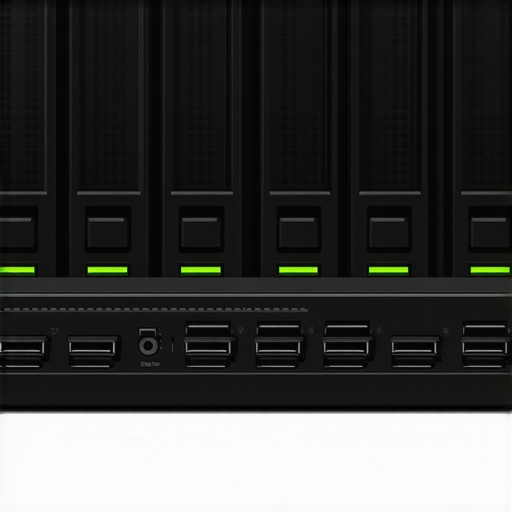

Harnessing Advanced Storage Technologies for Peak Data Performance
In the rapidly evolving landscape of data management and storage, professionals are continuously seeking innovative solutions to elevate speed, reliability, and efficiency. The integration of high-performance NVMe SSDs with sophisticated RAID configurations represents a pivotal leap forward, enabling enterprises and power users to unlock unprecedented data throughput and resilience. This guide explores the intricacies of leveraging NVMe SSDs, SATA SSDs, external SSDs, and RAID storage systems to optimize workflows in 2024.
Why NVMe SSDs Dominate High-Speed Storage Solutions
NVMe SSDs have revolutionized storage by harnessing the PCIe interface, which offers significantly higher bandwidth and lower latency compared to traditional SATA SSDs. Their ability to deliver read/write speeds exceeding 7 GB/s makes them ideal for demanding applications such as video editing, 3D rendering, and large-scale data analysis. In professional environments, deploying NVMe SSDs as scratch disks or primary storage can dramatically reduce processing times, facilitating real-time data manipulation and faster project turnaround.
Strategic Deployment of SATA SSDs and External Drives for Scalability
While NVMe SSDs excel in performance, SATA SSDs provide a cost-effective alternative for bulk storage and archival purposes. External SSDs, especially those utilizing Thunderbolt or USB-C interfaces, enable seamless portability and rapid data access across multiple workstations. For teams requiring flexible storage expansion without compromising speed, external SSD solutions offer an elegant balance of portability and performance, particularly when integrated into a well-structured RAID system.
Unlocking Resilience with RAID Storage in Data-Intensive Workflows
RAID (Redundant Array of Independent Disks) configurations serve as the backbone for ensuring data integrity and enhancing performance. RAID levels such as 0, 5, and 10 are particularly popular in high-speed data environments. For instance, RAID 0 maximizes throughput by striping data across multiple drives, while RAID 5 and 10 balance speed with redundancy, safeguarding against drive failures. Modern RAID controllers now support NVMe SSDs, offering the potential for blazing-fast, fault-tolerant storage arrays.
How can RAID configurations be optimized for NVMe SSDs to balance speed and data security?
Expert insights suggest combining RAID 0 for raw speed with additional backup strategies or employing RAID 10 to ensure redundancy without sacrificing significant performance. Furthermore, aligning RAID configurations with workload specifics and using enterprise-grade controllers enhances reliability. For critical applications, integrating hardware RAID with battery-backed cache and SSD optimization algorithms ensures maximum uptime and data integrity.
For a comprehensive understanding of RAID deployment strategies, consult resources such as this expert guide on RAID storage.
Enhancing Creative and Data Workflows with Scratch Disks and External Solutions
Creative professionals benefit immensely from dedicated scratch disks, which temporarily store project files and cache data to accelerate rendering and editing workflows. Optimizing NVMe SSDs as scratch disks can drastically reduce lag and improve responsiveness. External SSDs configured within RAID arrays further extend these benefits, offering portable high-speed storage solutions that are essential for on-the-go editing or collaborative projects.
To maximize efficiency, users should consider the specific demands of their creative software, such as Adobe Premiere or DaVinci Resolve, and choose SSDs with proven IOPS performance and low latency. Guided by expert recommendations, integrating external RAID setups ensures high availability and swift data access, even under heavy workloads.
Discover more about optimizing your storage architecture in this comprehensive RAID and external SSD guide.
As data volumes and speed requirements escalate, the synergy of NVMe SSDs, SATA SSDs, external drives, and RAID configurations will define the future of high-performance storage. Whether for professional video editing, scientific computing, or enterprise data centers, mastering these technologies will be essential for maintaining a competitive edge in 2024 and beyond.
Overcoming Data Loss Risks with Advanced RAID Strategies
While RAID configurations significantly bolster data security, many users overlook the importance of tailored setups that match their specific workload demands. For instance, RAID 5 offers a good balance between redundancy and storage efficiency, but its write performance can suffer under intense workloads. Conversely, RAID 10 provides superior speed and fault tolerance, making it ideal for high-stakes environments where downtime is unacceptable. Experts recommend integrating hardware RAID controllers with enterprise-grade cache management to optimize performance and resilience. Such setups not only safeguard critical data but also ensure that high-speed NVMe SSDs operate at their maximum potential, minimizing latency and maximizing throughput.
Are NVMe SSDs Ready to Replace Traditional Storage in All Scenarios?
This question has sparked debate among storage professionals. While NVMe SSDs unquestionably deliver faster access times and higher IOPS, their cost and thermal management challenges mean they are not a one-size-fits-all solution. For archival storage or infrequently accessed data, SATA SSDs still provide a cost-effective alternative with acceptable performance levels. However, for real-time data processing, AI workloads, and intensive creative work, NVMe SSDs are increasingly becoming the default choice. According to recent industry analyses, the trend suggests a rapid shift toward NVMe dominance, especially as technological advancements reduce costs and improve thermal solutions (see this expert guide).
How can businesses tailor their storage architecture to maximize NVMe SSD benefits while managing costs?
Implementing tiered storage strategies—where critical, high-speed data is stored on NVMe SSDs within a well-structured RAID array, and less critical data resides on SATA SSDs or HDDs—can optimize performance and budget. Additionally, leveraging external SSDs in RAID configurations, especially for mobile workflows, enhances flexibility and speed. For detailed insights on creating balanced storage solutions, consult this comprehensive external SSD RAID guide.
To further enhance your setup, consider the importance of maintaining firmware updates and monitoring drive health, which are crucial for ensuring long-term data integrity. Sharing your experiences with RAID configurations or asking for expert advice in dedicated forums can also lead to more tailored, effective solutions.
Elevating Data Throughput Through Intelligent RAID Design
In the realm of high-speed data operations, the way RAID arrays are configured can make or break performance. Beyond the basic RAID levels, integrating NVMe SSDs into tailored RAID configurations unlocks new levels of efficiency and resilience. For example, combining RAID 0 and RAID 10 in a hybrid setup allows organizations to harness raw speed while maintaining fault tolerance, essential for real-time analytics and creative workflows. Experts recommend leveraging enterprise-grade RAID controllers with features like cache management and hot-swapping capabilities, which maximize the potential of NVMe drives and ensure minimal downtime during failures.
Harnessing the Power of External RAID Enclosures for Mobile Workflows
External SSDs are revolutionizing on-the-go data management, especially when configured within RAID arrays. Thunderbolt 3 or 4 enclosures supporting multiple NVMe SSDs are now capable of delivering bandwidths exceeding 40 Gbps, enabling seamless editing, rendering, and data transfers outside the traditional data center confines. Such setups are invaluable for professionals in film production or scientific research who require rapid access to large datasets in various locations. Proper cooling solutions and robust power management are critical to maintaining optimal performance in these external enclosures, preventing thermal throttling that can impair throughput.
How Do Modern RAID Controllers Optimize NVMe SSD Performance in Enterprise Settings?
Contemporary RAID controllers incorporate advanced features like non-volatile memory express (NVMe) optimization algorithms, adaptive caching, and power-loss protection. These enhancements allow for high IOPS, reduced latency, and consistent throughput even under heavy workloads. For instance, hardware with PCIe Gen4 support can leverage the full bandwidth of the latest NVMe SSDs, facilitating near-instantaneous data access essential for AI training or high-frequency trading systems. According to industry research by Gartner, the integration of AI-driven management within RAID controllers is expected to further enhance drive longevity and performance predictability, marking a significant evolution in storage technology (Gartner Report on Storage Controllers).
What Strategic Approaches Make Tiered Storage Systems Most Effective?
Implementing a tiered storage architecture involves assigning data to different media types based on access frequency and criticality. High-performance NVMe SSDs serve as the fastest tier, handling active datasets and real-time processing tasks. Meanwhile, SATA SSDs and traditional HDDs form secondary and tertiary tiers, storing less frequently accessed data and backups. Intelligent data management software dynamically moves data between tiers, ensuring the most critical information benefits from NVMe’s speed without incurring excessive costs. This strategy is particularly effective in large enterprise environments where balancing performance and budget is paramount.
What are the key considerations when designing a tiered storage system for mixed workloads?
Critical factors include workload analysis, I/O pattern recognition, and scalability planning. For example, workloads with unpredictable access patterns require flexible tier management and real-time monitoring. Incorporating software-defined storage solutions that support automated tiering and predictive analytics can significantly enhance efficiency. Additionally, ensuring compatibility between different drive types and controllers avoids bottlenecks and data inconsistency issues. For deeper insights, consult the research in “Advanced Storage Architectures for Data Center Optimization” by IEEE, which offers comprehensive frameworks for designing such systems.
Interested in crafting a storage solution that perfectly balances speed, resilience, and cost? Engage with industry forums or reach out to storage solution providers to tailor configurations that match your specific workload profile and future growth plans.
Revolutionizing Storage Architecture for High-Performance Demands
As technological innovation accelerates, the sophistication of storage solutions must keep pace. Advanced configurations integrating NVMe SSDs with intelligent RAID setups have become essential for enterprises seeking extraordinary throughput, fault tolerance, and scalability. The nuanced orchestration of these components not only elevates data handling but also anticipates future trends such as AI-driven management and tiered storage systems.
Why NVMe SSDs Are Redefining High-Speed Data Access
NVMe SSDs utilize PCIe 4.0 and 5.0 interfaces to deliver unprecedented read/write speeds exceeding 10 GB/s, outpacing SATA SSDs by orders of magnitude. This leap enables real-time processing for AI workloads, immersive VR rendering, and high-frequency trading. The integration of these drives into enterprise-grade servers necessitates meticulous thermal management and firmware optimization to sustain performance under load, as highlighted by industry analyst reports from IDC.
Hybrid Storage Designs: Balancing Cost and Performance
Implementing tiered storage architectures strategically places frequent-access data on NVMe drives, while archival and less critical information resides on SATA SSDs or HDDs. This approach optimizes resource utilization, reduces costs, and maintains swift access speeds. External SSDs, particularly those with Thunderbolt 4 interfaces, provide flexibility for mobile workflows, enabling professionals to access high-performance storage on the go without compromising speed or reliability.
Advanced RAID Strategies for Data Resilience and Speed
Enthusiasts and professionals leverage complex RAID configurations like RAID 0+1 or RAID 50, combining striping and parity for an ideal mix of performance and redundancy. Hardware controllers equipped with NVMe support, cache management, and hot-swapping capabilities are critical for maintaining system uptime. These configurations are pivotal in scenarios demanding continuous operation, such as scientific simulations or live content creation.
How can enterprise-level RAID configurations be tailored to maximize NVMe SSD potential while ensuring data security?
Experts recommend deploying RAID 10 for optimal fault tolerance and speed, coupled with enterprise-grade controllers featuring battery-backed cache and predictive analytics for drive health. Additionally, employing software-defined storage solutions enables dynamic tiering and automated failover, ensuring resilience amidst hardware failures. Consultations with vendors like Dell EMC or HPE can facilitate customized solutions tailored to specific workload profiles.
Explore comprehensive strategies and best practices for RAID deployment in industry-specific scenarios through authoritative sources such as Storage Journal’s expert articles.
Creating Portable High-Performance Storage for Creative Fields
Professionals in media production and scientific research increasingly rely on external RAID enclosures equipped with multiple NVMe drives. These units, supported by Thunderbolt 4 and USB4 interfaces, facilitate rapid data transfers, rendering, and editing directly from portable setups. Effective thermal management within these enclosures prevents throttling, while robust power supplies ensure stability during intensive tasks.
Choosing drives with high IOPS and low latency, coupled with optimized firmware, maximizes efficiency. Integrating these external arrays into workflows via dedicated software solutions automates data tiering and health monitoring, thereby reducing downtime and safeguarding assets.
Gain in-depth insights into designing external RAID systems in this expert guide from Storage Insights.
Innovations in Storage Management Driven by AI and Machine Learning
The future of high-speed storage hinges on AI-enhanced management systems capable of predictive analytics, real-time monitoring, and automated optimization. These intelligent controllers can dynamically adjust cache allocations, predict drive failures before they occur, and optimize data placement across tiers, significantly reducing latency and increasing longevity. Industry leaders like Western Digital and Seagate are pioneering such integrated solutions, which promise to redefine reliability and performance standards.
How to Design a Scalable, Cost-Effective Storage Ecosystem for Future Growth
Implementing a modular, tiered architecture that combines NVMe SSDs for critical tasks with SATA SSDs and HDDs for bulk storage provides flexibility and scalability. Employing software-defined solutions ensures seamless migration and expansion, aligning storage capacity with evolving demands. Regular firmware updates, health monitoring, and vendor support are essential to maintain long-term system integrity, especially as data volumes grow exponentially.
Engage with industry forums or consult storage solution providers to craft bespoke architectures that balance performance, resilience, and budget constraints. Stay ahead by continuously integrating emerging technologies into your storage ecosystem.
Winning Strategies for Cutting-Edge Storage Technologies
In the realm of high-performance data management, staying ahead requires more than just hardware; it demands a strategic understanding of the latest innovations. Experts recommend combining NVMe SSDs with tailored RAID configurations to achieve an optimal mix of speed and resilience. For instance, deploying RAID 10 with enterprise-grade NVMe drives can dramatically improve throughput while safeguarding critical data. Additionally, integrating external SSD arrays via Thunderbolt 4 enables ultimate portability without sacrificing speed, crucial for mobile professionals and collaborative teams.
Insights That Drive Data Performance Forward
Leverage Tiered Storage to Balance Cost and Speed
Implementing tiered storage architectures allows organizations to prioritize speed for active datasets on NVMe SSDs, while archiving less frequently accessed data on SATA SSDs or HDDs. This strategy not only optimizes budget but also maintains high responsiveness for demanding workloads, including AI training and video rendering.
Optimize RAID for NVMe SSDs to Maximize Reliability
Experts advise using RAID 5 or RAID 10 with NVMe SSDs where data integrity is paramount. Hardware controllers with advanced cache management and hot-swapping capabilities further enhance system uptime. Regular firmware updates and drive health monitoring are non-negotiable for sustaining peak performance and avoiding data loss.
Enhance Portability with External RAID Enclosures
External RAID enclosures equipped with multiple NVMe drives supported by Thunderbolt 4 can deliver bandwidths exceeding 40 Gbps, facilitating rapid data transfers on the move. Proper thermal management within these enclosures prevents throttling, ensuring consistent performance during intensive tasks such as video editing or scientific simulations.
Future-Proof Storage with AI-Driven Management
Emerging AI-enhanced controllers offer predictive analytics for drive health and dynamic cache optimization, pushing storage efficiency to new heights. Embracing these innovations enables organizations to proactively manage their storage environment, reducing downtime and extending equipment lifespan.
Key Resources to Deepen Your Expertise
- Gartner Reports on Storage Innovation: Providing industry-leading insights into enterprise storage trends and future directions.
- IEEE Research on Tiered Storage Architectures: Deep dives into scalable, efficient storage designs for large data centers.
- Storage Journal’s Best Practices Articles: Practical advice from industry veterans on RAID configurations and drive management.
- Manufacturer Whitepapers from Western Digital and Seagate: Cutting-edge technical details on AI-driven controllers and enterprise NVMe solutions.
- Technical Guides on External RAID Enclosures: Step-by-step tutorials for building portable, high-speed storage arrays.
The Final Word from the Storage Authority
In 2024, mastering high-speed storage involves a nuanced blend of advanced NVMe SSD deployments, intelligently configured RAIDs, and portable external solutions. These elements, guided by expert insights and cutting-edge resources, empower professionals to harness maximum data throughput and resilience. As storage technology continues to evolve, engaging with authoritative sources and continuously refining your architecture will be key to maintaining a competitive edge. For those ready to elevate their data infrastructure, now is the time to act—reach out to industry specialists and explore tailored solutions that match your unique workload demands.
This guide provides excellent insight into the future of high-performance storage solutions. I’ve recently been experimenting with RAID 10 configurations using NVMe drives for a video editing workstation, and the speed improvements are remarkable. It’s clear that as RAID controllers support more advanced features and better thermal management, the potential for enterprise-level SSD arrays will only grow. I’m curious—how do others here approach balancing cost and performance when designing tiered storage systems with NVMe and SATA SSDs? Are there specific software tools for automating data migration between tiers to optimize workflows? I’d love to hear different strategies.
The post’s detailed breakdown of integrating NVMe SSDs with RAID configurations really resonates with my experience. I recently upgraded my creative workstation by deploying NVMe drives in RAID 0 for my scratch disk, which resulted in noticeable improvements in rendering times. Balancing cost and performance remains a challenge, especially when aiming for enterprise-level redundancy and speed. I’ve found that software solutions like stable tier management tools or automated data migration features in enterprise storage software can significantly streamline the process of moving data between high-speed NVMe tiers and more economical SATA SSDs. Has anyone here experimented with specific software or scripts that simplify this tiered data movement? Additionally, I’m interested in how others are optimizing cooling solutions to manage the thermal zones created by dense NVMe arrays—since thermals greatly impact sustained performance. Would love to hear your insights or recommendations on scalable cooling setups or software automation for managing tier transitions effectively.
This article really opened my eyes to how far NVMe SSDs have come in terms of performance and integration. I’ve been experimenting with setting up a high-speed storage array for video editing, and the speed gains from combining NVMe drives with RAID 10 are incredible, especially for real-time rendering. That said, thermal management continues to be a significant hurdle, as densely packed NVMe drives tend to heat up quickly, which can throttle performance over time. Has anyone here found effective cooling solutions that scale well for dense NVMe arrays? Also, I’m curious about the software tools you’ve used for automating data tiering—especially in mixed environments with SATA SSDs and HDDs. It seems like intelligent tiered storage is the future, but getting the balance right still feels tricky. Would love to hear your experiences on managing costs while pushing performance to the max, especially in an enterprise context.
This article offers a comprehensive look at how combining NVMe SSDs with RAID configurations can significantly boost data throughput for demanding workflows. I’ve been experimenting with RAID 10 setups using NVMe drives for high-frequency trading algorithms, and the performance gains are quite noticeable, especially in reducing latency. However, I’ve encountered thermal management as a persistent challenge—densely packed NVMe drives tend to heat up quickly, which may throttle performance unless you have an effective cooling solution. In your experience, what are the most scalable and quiet cooling approaches when building larger NVMe arrays? Additionally, I’m curious if anyone has success with automation software for seamless tier management, especially in mixed storage environments. Balancing cost with high performance is tricky, but tiered storage strategies seem to be the way forward for many businesses looking to optimize both. Would love to hear your suggestions or experiences on achieving this balance effectively.
It’s interesting to see the emphasis on NVMe SSDs and RAID configurations for achieving maximum data throughput in 2024. I recently had a chance to experiment with RAID 10 using NVMe drives for a media production setup, and the performance boost was remarkable. However, thermal management remains one of the biggest hurdles, especially in dense configurations. I’ve been exploring different cooling solutions like integrating high-velocity blower fans and heatsink designs that are more scalable and quiet. Has anyone tested liquid cooling options for NVMe arrays, and if so, what are your experiences regarding noise levels and thermal efficiency?
Also, I believe that software for automated tier management plays a crucial role. I’ve tried some scripts with varying success, but a dedicated enterprise solution that intelligently moves data based on access patterns could really streamline workflows. Do others use specific tools or platforms for this purpose?
Overall, balancing cost, performance, and thermal solutions is complex but essential. It’s exciting to see such advancements—what has been your go-to method for optimizing these systems for both speed and reliability?
Reading through this detailed guide, I realize how critical proper thermal management and enterprise-grade RAID controllers are when using multiple NVMe drives for high-stakes applications. I’ve experimented with some high-performance setups myself for scientific computations. One challenge I faced was thermal throttling in densely packed NVMe arrays, which I managed to mitigate by integrating custom liquid cooling loops. The efficiency and quiet operation of these systems really stood out, especially for continuous operation environments. Has anyone else found that using liquid cooling significantly extends drive lifespan and maintains consistent performance? Also, I’m curious about the latest automation tools or software solutions that help dynamically manage data tiers in mixed NVMe/SATA environments. Do you see a trend toward AI-driven storage management becoming standard in enterprise deployments? It definitely seems like a promising development to maximize both efficiency and security.