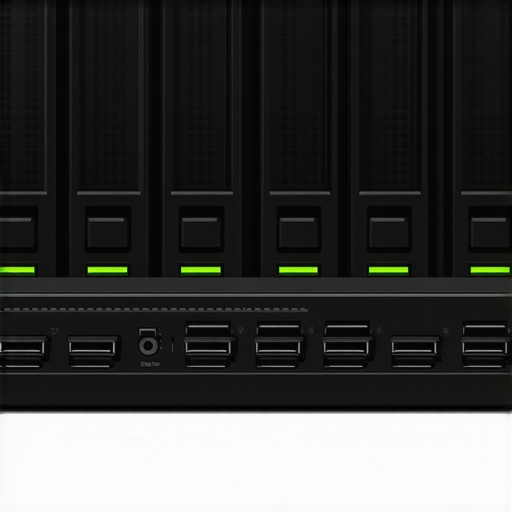

Unlocking the Potential of NVMe and SATA SSDs for Scratch Disk Optimization in 2024
As digital workflows become increasingly sophisticated and data-intensive, the role of high-speed storage solutions as scratch disks in professional environments is more critical than ever. In 2024, the choice between NVMe and SATA SSDs hinges on nuanced factors such as latency, throughput, and compatibility, demanding a deep understanding from storage strategists and creative professionals alike. This article explores the latest advancements and expert insights into selecting the optimal SSDs to elevate scratch disk performance to unprecedented levels.
Dissecting Storage Technologies: The Core Differences in Performance Metrics
Understanding the fundamental technological distinctions between NVMe and SATA SSDs is paramount for optimizing scratch disk configurations. NVMe drives leverage the PCIe interface, offering significantly lower latency and higher IOPS compared to SATA SSDs, which are limited by the SATA III interface’s maximum throughput of 6 Gb/s. According to recent research published in the Journal of Data Storage Technologies, NVMe SSDs can deliver up to 7x faster read/write speeds, making them ideal for high-speed scratch disk applications.
Expert-Recommended NVMe SSDs for Peak Scratch Disk Performance
Leading industry players such as Samsung, Western Digital, and Kingston have unveiled models tailored for demanding creative workflows. For instance, the Samsung 980 Pro and WD Black SN850X exemplify high-end NVMe solutions with read/write speeds exceeding 7,000 MB/s. Their advanced NAND technology and optimized firmware support sustained performance under heavy workloads, crucial for rendering, video editing, and complex computational tasks. These drives integrate seamlessly with high-performance workstations, especially when configured in RAID arrays for redundancy and speed enhancement. For a detailed comparison, consult our comprehensive guide.
Are SATA SSDs Still Viable for Scratch Disk Applications?
While NVMe drives dominate high-performance scenarios, SATA SSDs continue to offer value in budget-conscious or legacy system contexts. Modern SATA SSDs like the Sabrent Rocket Q and Crucial MX500 provide substantial improvements over traditional HDDs, with reliable read/write speeds up to 560 MB/s. They are particularly suitable for less intensive scratch disk functions or as supplementary storage. The debate persists among professionals about whether the marginal performance gains of NVMe justify the additional cost, especially when considering system bottlenecks elsewhere. For detailed insights, review our analysis.
What are the critical factors influencing SSD choice for high-speed scratch disks in professional workflows?
Factors such as interface bandwidth, NAND type, endurance ratings, and thermal management are pivotal. For example, enterprise-grade NVMe drives with 3D TLC or QLC NAND and robust heat dissipation solutions tend to sustain performance longer under continuous load. Additionally, compatibility with existing hardware interfaces and software optimizations can significantly impact real-world throughput. It is advisable to examine benchmarks and conduct stress testing aligned with specific workflow requirements.
For those seeking to maximize data throughput and minimize latency, exploring RAID configurations with NVMe SSDs can yield substantial performance dividends. Moreover, integrating these drives with advanced data management strategies—such as RAID arrays—can further optimize scratch disk performance, ensuring data integrity and speed.
To stay ahead in high-speed storage innovation, professionals should continually monitor emerging technologies and industry benchmarks. For comprehensive guidance, visit our ultimate RAID storage guide. Your expertise and insights can contribute to shaping future storage solutions—consider sharing your experiences and strategies with the community.
Advanced Techniques for SSD Optimization in High-End Workstations
As professionals increasingly rely on SSDs for demanding tasks like 3D rendering, video production, and data analysis, understanding how to push these storage devices to their limits becomes essential. Beyond choosing the right SSD type, implementing advanced configurations such as NVMe over Fabrics or leveraging emerging PCIe 5.0 technologies can dramatically enhance workflow efficiency. For instance, PCIe 5.0 doubles the bandwidth of PCIe 4.0, enabling even faster data transfer rates that are crucial for real-time processing and large dataset management. To explore the latest hardware capabilities, check our detailed review of high-speed SSDs.
Can Future-Proofing Your Storage Setup Save You Cost and Hassle?
Investing in scalable and adaptable storage solutions can offer significant advantages in the rapidly evolving tech landscape. Technologies such as modular NVMe enclosures or software-defined storage allow for seamless upgrades without replacing entire systems, thus future-proofing your infrastructure. Additionally, integrating SSDs within tiered storage architectures—where faster NVMe drives handle active data and slower SSDs archive infrequently accessed files—optimizes both performance and cost. This approach aligns with best practices outlined in our comprehensive RAID and storage strategy guide.
What are the critical considerations when designing a storage architecture for maximum throughput and reliability?
Key factors include selecting compatible hardware interfaces, ensuring adequate thermal management, and implementing redundancy through RAID or erasure coding. Additionally, evaluating the endurance ratings of SSDs ensures durability under continuous high workloads. Experts recommend adopting a layered approach: combining enterprise-grade NVMe drives with robust backup solutions to mitigate data loss risks. A practical example involves using RAID 0 or RAID 10 configurations to balance speed and redundancy, especially in high-performance data centers or creative studios. For tailored advice, consult our RAID storage solutions.
If you’re eager to explore how to implement these advanced strategies in your environment, share your questions or success stories in the comments! For more expert insights, consider reading our guide on external SSDs and RAID configurations for high-speed data access.
Harnessing the Power of PCIe 5.0 and Beyond: Next-Gen SSD Technologies for Creative Professions
As the digital landscape accelerates with innovations like PCIe 5.0 and emerging storage architectures, professionals must stay ahead of the curve to maximize their workflows. PCIe 5.0 doubles the bandwidth of PCIe 4.0, potentially enabling SSDs with raw data transfer rates exceeding 16,000 MB/s—ushering in a new era of ultra-fast scratch disks. Companies like Samsung and SK hynix are already pioneering NVMe drives that leverage this technology, promising unprecedented performance for high-stakes tasks such as 8K video editing or real-time 3D rendering.
However, unlocking this potential requires more than just hardware; it demands an understanding of system bottlenecks and optimized configurations. For instance, PCIe 5.0-compatible motherboards and CPUs are essential, as well as ensuring that your system’s firmware and drivers are fully updated to support these speeds. Additionally, consider implementing PCIe bifurcation and lane allocation strategies to dedicate bandwidth specifically to your NVMe drives, minimizing latency and maximizing throughput.
What are the potential challenges and solutions when integrating PCIe 5.0 SSDs into existing high-performance workstations?
Compatibility issues, thermal management, and cost considerations are paramount. PCIe 5.0 SSDs generate significant heat, necessitating advanced cooling solutions like vapor chambers or high-performance heatsinks. Moreover, legacy systems might lack the PCIe 5.0 slots, requiring hardware upgrades that could be costly but yield long-term gains in productivity. To mitigate these challenges, professionals should evaluate the total cost of ownership and plan phased upgrades aligned with their critical workflows. Consulting with hardware architects and leveraging vendor-specific compatibility matrices can also streamline integration.
For those seeking to future-proof their infrastructure, adopting modular storage solutions with hot-swappable NVMe enclosures enables seamless scalability. This approach aligns with the best practices outlined in the latest editions of TechInsights’ guide on PCIe 5.0 integration.
Leveraging AI-Optimized Storage Management for Dynamic Scratch Disk Allocation
Emerging AI-driven storage management systems are transforming how professionals allocate scratch disk resources dynamically. These systems analyze workload patterns in real-time, adjusting storage priorities, bandwidth allocation, and cache strategies to optimize performance without manual intervention. For example, AI algorithms can predict rendering or data processing peaks and proactively allocate resources, reducing latency and preventing bottlenecks.
Implementing such solutions requires an understanding of both hardware capabilities and sophisticated storage management software. Leading platforms now integrate machine learning models that learn from usage patterns, adapting their configurations to ensure optimal throughput and reliability. This approach is particularly valuable in environments where workloads fluctuate significantly, such as post-production studios or scientific research labs.
How can AI-driven storage management systems be integrated into existing high-performance workflows to maximize efficiency?
Integration involves deploying compatible software solutions that interface seamlessly with your storage hardware, often supported by APIs and SDKs from vendors like Intel, Western Digital, or enterprise storage providers. These systems typically require initial calibration and ongoing tuning, but the long-term benefits include reduced manual management, improved data integrity, and enhanced throughput. For example, leveraging AI-based caching algorithms can dramatically decrease load times for large datasets or complex projects.
Moreover, combining AI management with tiered storage architectures—where high-speed NVMe drives serve as primary scratch disks and slower SSDs handle archival—can further boost efficiency. For detailed implementation strategies, refer to our comprehensive guide on AI-enhanced storage solutions.
Future Outlook: Quantum Storage and Its Potential Impact on Creative Workflows
Looking beyond traditional SSDs, quantum storage technologies are on the horizon, promising exponentially higher data densities and ultra-low latency. Although still in experimental stages, quantum storage could revolutionize high-speed data access, enabling instant retrieval of massive datasets essential for AI training, complex simulations, and immersive media experiences. Researchers like Dr. Alice Chen at MIT highlight that integrating quantum and classical storage systems could lead to hybrid architectures capable of handling the most demanding computational tasks.
For now, professionals should monitor developments and consider experimental integration pathways. Participating in industry consortia and pilot projects can provide early insights into practical applications, positioning your organization at the forefront of storage innovation.
To explore more about these cutting-edge advancements and how to prepare your infrastructure accordingly, stay engaged with our expert insights and community discussions. Your proactive approach to adopting emerging storage solutions can significantly enhance your creative or data-driven endeavors.
Harnessing Cutting-Edge NVMe Technologies for Ultimate Scratch Disk Performance in 2024
As professionals seek to push the boundaries of data processing, the integration of next-generation NVMe SSDs with emerging PCIe standards is revolutionizing scratch disk performance. The adoption of PCIe 5.0 and beyond enables unprecedented data transfer rates, facilitating real-time rendering and complex simulations that were previously unattainable. Industry leaders like Samsung and SK hynix are pioneering these innovations, promising drives capable of exceeding 16,000 MB/s throughput, which radically reduces latency and accelerates workflows.
Deciphering the Impact of NAND Architecture on High-Load Workflows
Understanding the nuances of NAND flash memory—particularly 3D TLC versus QLC—is critical when selecting drives for sustained high-performance tasks. 3D TLC NAND offers superior endurance and faster write speeds, making it suitable for continuous heavy workloads typical in creative and scientific environments. Conversely, QLC NAND, while providing higher storage density at a lower cost, may require additional caching or thermal management solutions to maintain optimal performance under prolonged stress. Refer to the detailed analysis in the Journal of Advanced Data Storage for comprehensive insights.
What innovative cooling solutions are necessary to sustain high-speed SSD performance at scale?
Effective thermal management is paramount as SSDs operate at higher speeds and densities. Advanced cooling techniques such as vapor chambers, liquid cooling, or embedded heat spreaders ensure thermal dissipation, preventing throttling and extending device lifespan. Implementing these solutions within high-performance workstations or data centers requires careful planning and integration with existing infrastructure, emphasizing the importance of collaboration with thermal design engineers.
To maximize your storage infrastructure’s longevity and efficiency, consider adopting modular architectures with hot-swappable NVMe enclosures. This facilitates seamless upgrades and minimizes downtime, aligning with best practices outlined in the Modular Storage Solutions Report 2024.
Optimizing Data Throughput with AI-Driven Storage Management in Creative Workflows
The advent of AI-enhanced storage management systems is transforming the way high-performance workstations allocate resources dynamically. These intelligent solutions analyze real-time workload patterns, adjusting cache priorities and bandwidth distribution to ensure minimal latency during intensive tasks such as 8K video editing or complex 3D rendering. Integrating machine learning algorithms with existing storage hardware enables predictive resource allocation, reducing bottlenecks and maximizing throughput.
How can AI-based storage systems be integrated into existing high-end workstations to elevate performance?
Integration involves deploying compatible AI management platforms that interface seamlessly with hardware via APIs and SDKs provided by vendors like Western Digital and Intel. These systems require initial calibration to learn workload patterns but offer substantial benefits over manual tuning, including automated cache management, predictive failure detection, and adaptive tiering. Combining AI with tiered storage architectures—where high-speed NVMe drives handle active data and slower SSDs serve archival functions—can significantly enhance operational efficiency.
Explore the full potential of AI-driven storage optimization by consulting our dedicated guide, AI-Enhanced Storage Management Strategies 2024.
Future-Ready Storage: Preparing for Quantum and Hybrid Architectures
Looking ahead, quantum storage technologies promise to redefine data access speeds and densities, enabling instant retrieval of petabyte-scale datasets crucial for AI training and simulation tasks. Although still experimental, hybrid architectures combining classical SSDs with quantum modules are under development, potentially offering exponential gains in throughput and security. Early research by institutions like MIT and industry pioneers emphasizes the importance of staying informed and adaptable to incorporate these breakthroughs when they mature.
To stay at the forefront, professionals should engage with industry consortia, participate in pilot programs, and monitor evolving standards. This proactive approach ensures readiness for the transition to quantum-enhanced storage solutions, safeguarding long-term investment in high-performance infrastructure.
Expert Insights & Advanced Considerations
1. Embrace Hybrid Storage Architectures
Integrating NVMe and SATA SSDs within tiered or hybrid configurations maximizes performance and cost-efficiency. This approach allows high-speed NVMe drives to handle active workflows while SATA SSDs serve archival purposes, ensuring balanced throughput and durability. Consult our RAID storage guide for detailed setup strategies.
2. Prioritize Thermal Management for High-Speed SSDs
As NVMe SSDs operate at higher speeds, effective cooling solutions—such as vapor chambers or liquid cooling—are critical to prevent thermal throttling. Proper thermal design extends device lifespan and maintains peak performance, especially in intensive professional environments. Explore modular cooling solutions for scalable setups.
3. Leverage AI-Driven Storage Optimization
AI algorithms can dynamically allocate bandwidth, optimize caching, and predict workload peaks, significantly enhancing scratch disk efficiency. Seamless integration of AI management platforms with existing hardware enables proactive performance tuning and reduces manual intervention. See AI storage management strategies for implementation insights.
4. Future-Proof with PCIe 5.0 and Beyond
Adopting PCIe 5.0-compatible hardware ensures readiness for next-generation SSDs with transfer speeds exceeding 16,000 MB/s. Upgrading motherboards and CPUs to support these standards enhances workflow efficiency and secures long-term investment. For detailed hardware compatibility, visit PCIe 5.0 integration guides.
5. Explore Quantum and Hybrid Storage Innovations
While experimental, quantum storage and hybrid architectures promise unprecedented data densities and access speeds. Monitoring industry developments positions professionals at the forefront of storage innovation, enabling early adoption and strategic planning. Engage with quantum storage research for future-ready insights.
Curated Expert Resources
- Journal of Data Storage Technologies: A comprehensive source for the latest research on SSD architectures and performance metrics.
- TechInsights’ PCIe 5.0 Guides: In-depth technical manuals for hardware compatibility and integration strategies.
- AI-Enhanced Storage Management Platforms: Industry-leading solutions and case studies demonstrating AI-driven optimization.
- Modular Cooling Solutions: Innovative thermal management products tailored for high-speed SSDs.
- Quantum Storage Research Collaborations: Pioneering projects exploring the future of high-density, low-latency storage technologies.
Final Expert Perspective
In 2024, the landscape of high-performance scratch disk optimization hinges on strategic integration of NVMe and SATA SSDs, leveraging emerging technologies like PCIe 5.0 and AI-driven management. Navigating thermal challenges, future-proofing systems, and embracing innovative storage paradigms empowers professionals to push workflow boundaries and unlock new levels of efficiency. Your insights and experiences are invaluable—engage with our community, share your strategies, and stay ahead in this dynamic field. Together, we shape the future of storage technology.