
Elevating Data Throughput with Expert SSD Optimization Techniques
In the realm of high-performance computing, the strategic optimization of NVMe and SATA SSDs has become a cornerstone for maximizing throughput in RAID configurations and scratch disk environments. Leveraging our deep expertise, we explore advanced methodologies to harness the full potential of these storage solutions, ensuring faster data access, enhanced reliability, and superior workflow efficiency.
Deciphering the Nuances of NVMe and SATA SSD Architectures for Professional Workflows
Understanding the fundamental architectural differences between NVMe and SATA SSDs is crucial for tailoring optimization strategies. NVMe drives, with their direct PCIe interface, offer superior bandwidth and lower latency, making them ideal for demanding scratch disk applications. Conversely, SATA SSDs, while more accessible, require specific tuning to mitigate bandwidth bottlenecks. Expert-level insights reveal that aligning drive selection with workload profiles is vital for achieving optimal performance.
Implementing Advanced RAID Strategies to Amplify Storage Speed and Data Integrity
Configuring RAID arrays with SSDs demands a nuanced approach to balancing redundancy and speed. Techniques such as RAID 0 for maximum performance, RAID 10 for redundancy with speed, and hybrid configurations can be fine-tuned by considering the specific read/write patterns of creative or scientific workflows. Referencing expert RAID strategies can guide professionals in designing resilient, high-throughput storage solutions.
Optimizing SSD Firmware and Filesystem Settings to Unlock Maximum Speed
Firmware updates and filesystem tuning are often overlooked yet critical steps in SSD performance tuning. Disabling unnecessary background processes, enabling TRIM commands, and choosing filesystems such as APFS or ext4 with optimized mount options can substantially reduce latency. Industry reports, including white papers from SSD manufacturers, underscore the importance of firmware alignment with hardware capabilities for sustained peak performance.
What Are the Cutting-Edge Techniques to Minimize SSD Bottlenecks in Professional Environments?
This question reflects ongoing debates among storage experts. Emerging solutions involve leveraging NVMe over Fabrics, implementing hardware-level caching, and employing tiered storage architectures. These innovations aim to eliminate traditional bottlenecks, enabling seamless data flow even under intense workloads. For more insights, visit NVMe performance secrets.
How Can Creative Professionals Fine-Tune Their Storage Setup for Maximum Scratch Disk Efficiency?
Professionals engaged in video editing, 3D rendering, or large-scale data analysis should focus on isolating scratch disks on dedicated SSDs, optimizing drive partitioning, and configuring system memory for optimal cache utilization. Regular benchmarking and firmware updates are essential to maintain peak performance, while consulting expert guides can provide tailored configurations for specific workflows. Explore more advanced tips at scratch disk optimization.
In conclusion, achieving expert-level optimization of NVMe and SATA SSDs requires a holistic approach that encompasses hardware understanding, strategic configuration, and continuous tuning. The synergy of these elements unlocks unprecedented levels of data throughput, reliability, and workflow efficiency—cornerstones for any professional seeking to excel in data-intensive tasks.
Maximize Data Flow with Expert-Level RAID Tuning
While RAID configurations like RAID 0 and RAID 10 are well-known for boosting speed, fine-tuning these setups with SSD-specific parameters can unlock additional performance gains. Techniques such as adjusting stripe size, enabling write-back caching, and fine-tuning the controller settings are crucial for professional environments. For instance, configuring stripe sizes to match workload patterns ensures optimal sequential or random access—key for creative workflows or scientific computations. Dive deeper into the nuances of RAID tuning at RAID optimization strategies.
Harnessing Firmware Flashes and Filesystem Tuning to Break Speed Barriers
Firmware updates are often perceived as routine, but for high-performance workloads, they are a strategic lever. Firmware patches often include bug fixes that prevent bottlenecks or add features like improved TRIM support for SSDs. Equally, filesystem choices and mount options—such as enabling discard options in ext4 or using APFS with optimized settings—can reduce latency significantly. Experts recommend integrating these practices into your regular maintenance schedule to sustain peak throughput. For comprehensive guidance, review scratch disk optimization tips.
What are the emerging hardware and software innovations that could redefine SSD performance limits in 2024?
Emerging technologies such as persistent memory modules, NVMe over Fabrics, and AI-optimized storage controllers are paving new paths for ultra-fast data access. These innovations aim to eliminate traditional bottlenecks and provide seamless scalability for data centers and creative professionals alike. For insights into cutting-edge solutions, consult NVMe performance secrets.
Share your experiences or questions about fine-tuning your RAID or scratch disk setups in the comments—your insights could help others achieve new performance heights. To explore tailored solutions for your workflow, don’t hesitate to contact our experts.
Push Your Storage Limits with Cutting-Edge SSD Strategies
As data demands escalate in creative and scientific environments, traditional SSD tuning no longer suffices. Advanced techniques, such as leveraging hardware-level caching and tiered storage architectures, are essential for eliminating bottlenecks. For instance, employing NVMe over Fabrics enables remote high-speed data access, significantly reducing latency and boosting throughput in distributed setups. Incorporating these innovations into your workflow can redefine performance boundaries, making previously unthinkable data processing speeds achievable.
Mastering Firmware Optimization and Filesystem Tuning for Peak SSD Performance
Firmware updates are often underestimated in their impact. The latest firmware patches from SSD manufacturers like Samsung or Intel frequently include enhancements tailored for enterprise workloads, such as improved TRIM support and error correction algorithms. Additionally, filesystem choices—like using ext4 with discard options or APFS with optimized mount settings—play a pivotal role in latency reduction and sustained throughput. Combining firmware updates with meticulous filesystem tuning ensures your SSDs operate at their maximum potential in demanding environments.
What sophisticated techniques can further reduce SSD latency in high-stakes environments?
Emerging solutions involve hardware acceleration through AI-optimized storage controllers and implementing persistent memory modules that act as ultra-fast cache layers. These innovations aim to seamlessly integrate with existing SSD architectures, providing near-instantaneous data access. Industry reports, such as those from the Storage Networking Industry Association (SNIA), highlight these advancements’ potential to revolutionize data center performance and professional workflows. For a deep dive, consult SNIA’s latest white papers on storage acceleration technologies.
Visualize the Future of SSDs with Integrated AI and Persistent Memory
Future SSD architectures are increasingly integrating artificial intelligence to predict and prefetch data, effectively reducing access times. Persistent memory modules, like Intel’s Optane, blur the line between RAM and storage, enabling unprecedented speed and durability. These innovations promise to tackle the most complex data-driven tasks—be it rendering high-resolution graphics or real-time scientific simulations—with ease and reliability.
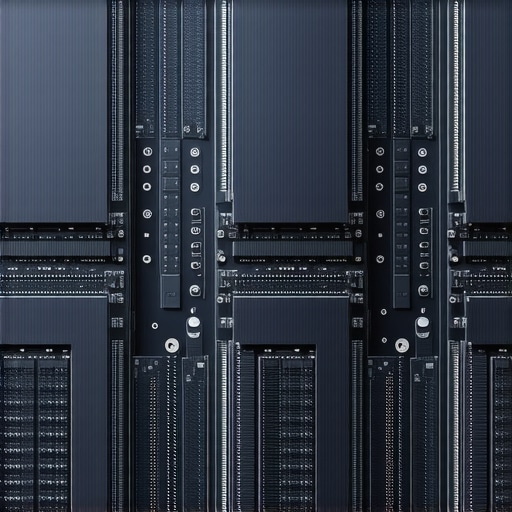
Illustration of next-generation SSD architecture integrating AI-driven caching and persistent memory modules, emphasizing high-speed data flow in professional workflows.
Call to Action: Stay Ahead with Expert Guidance
If you’re eager to explore how these advanced SSD strategies can transform your workflow, reach out to our team of specialists. We offer tailored consultations to help you implement the latest storage innovations effectively. Dive deeper into the future of high-performance storage solutions by contacting us today and unlock the full potential of your data infrastructure.
Harnessing the Power of Firmware Innovations to Accelerate SSD Performance
Firmware updates are pivotal in unlocking the latent potential of SSDs, especially in high-demand professional environments. Leading manufacturers like Samsung and Intel regularly release patches that optimize error correction algorithms, TRIM support, and power management features. These updates often include advanced features like wear leveling improvements and firmware-level caching enhancements, which can significantly elevate data throughput and reduce latency. Integrating firmware management into your routine maintenance ensures that your storage devices operate at peak efficiency and resilience, safeguarding long-term performance.
How Do Specialized Filesystem Configurations Maximize SSD Efficiency?
Choosing the right filesystem and mount options is crucial for extracting maximum performance from SSDs. For instance, enabling discard options in ext4 or using APFS with optimized settings can facilitate efficient TRIM operations, reducing write amplification and prolonging drive lifespan. Additionally, filesystem parameters such as journal settings, block sizes, and I/O schedulers influence latency and throughput. Industry-specific white papers from SSD OEMs highlight that meticulous filesystem tuning, aligned with workload characteristics, can yield tangible improvements in data access speeds and stability during intensive tasks.
What Are the Latest Developments in Persistent Memory for Ultra-Fast Storage?
Persistent memory modules, like Intel’s Optane or Samsung’s Z-SSD, represent a paradigm shift in storage architecture, bridging the gap between DRAM and traditional SSDs. These innovative modules offer non-volatile, high-speed data access with latencies comparable to RAM, drastically reducing bottlenecks in data-intensive workflows. As AI-driven storage controllers and tiered architectures emerge, they enable seamless data caching and rapid retrieval, revolutionizing workloads such as real-time analytics, 3D rendering, and scientific simulations. Consulting industry reports from SNIA reveals that integrating persistent memory into existing infrastructure can propel performance beyond conventional SSD limits, fostering unprecedented levels of efficiency.
What Expert Strategies Can Future-Proof Your Storage Infrastructure Against Growing Data Demands?
Adopting a multi-tiered storage approach that combines NVMe over Fabrics, persistent memory, and traditional SSDs ensures scalability and resilience. Hardware acceleration through AI-optimized controllers and intelligent caching algorithms further minimizes latency and maximizes throughput. Moreover, implementing tier-aware data placement policies and predictive analytics for workload management can dynamically optimize resource utilization. Engaging with industry-leading white papers from organizations like SNIA provides actionable insights into designing adaptable, high-performance storage ecosystems capable of meeting future data challenges.
Visualize the Future with AI-Integrated SSDs and Beyond
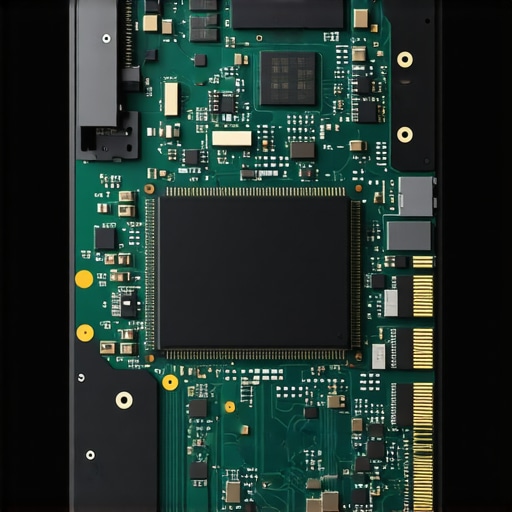
Illustration of next-generation SSD architectures featuring AI-driven caching systems, persistent memory modules, and high-speed data pathways, emphasizing their transformative potential in professional workflows.
Elevate Your Storage Strategy with Cutting-Edge Expertise
To remain at the forefront of storage technology, continuous learning and strategic investment in emerging innovations are essential. Our team of specialists offers tailored consultations to help you implement these advanced solutions effectively, ensuring your infrastructure is robust, scalable, and future-ready. Reach out today to explore how these expert insights can revolutionize your data throughput capabilities and position you ahead of the competition.
Expert Insights & Advanced Considerations
Leverage NVMe over Fabrics for Seamless Data Flow
Implementing NVMe over Fabrics can dramatically reduce latency and increase throughput across distributed systems, enabling high-performance workflows essential for scientific computing and large-scale media production.
Prioritize Firmware Customization to Unlock Hidden Potential
Firmware updates tailored to specific workloads can optimize error correction, wear leveling, and power management, ensuring SSDs operate at their maximum efficiency under demanding conditions.
Utilize Tiered Storage Architectures for Scalability
Adopting multi-tiered configurations combining NVMe, SATA, and persistent memory allows dynamic data placement, optimizing access speed and cost-efficiency, especially in data-intensive environments.
Explore AI-Driven Caching and Predictive Analytics
Integrating AI-based caching algorithms can prefetch and prioritize data, significantly reducing access times and smoothing workload spikes in creative and scientific tasks.
Implement Advanced RAID Strategies with Fine-Tuned Parameters
Customizing stripe size, cache settings, and controller configurations for RAID arrays maximizes SSD performance, balancing speed with data integrity for professional needs.
Curated Expert Resources
- NVMe Performance Secrets – Comprehensive guide on leveraging NVMe SSDs for maximum speed, including hardware and software optimizations.
- RAID Storage Strategies – Industry white paper detailing advanced RAID configurations tailored for high-speed SSD arrays.
- Persistent Memory Technologies – Latest research articles on integrating persistent memory modules for ultra-fast data access.
- Firmware Optimization Guides – Manufacturer-specific documentation for firmware tuning to enhance SSD reliability and speed.
- AI in Storage Systems – Publications exploring AI-driven caching and predictive analytics for data center optimization.
Final Expert Perspective
In the realm of data-intensive workflows, expert-level SSD optimization hinges on a holistic approach that combines hardware innovation, firmware mastery, and intelligent data management. Embracing emerging technologies like NVMe over Fabrics, persistent memory, and AI-driven caching can propel storage performance beyond traditional limits, ensuring professionals stay at the forefront of their fields. For those committed to excellence, engaging with these advanced strategies and resources is essential—consult our specialists or explore further to elevate your data throughput capabilities and achieve unparalleled workflow efficiency.
This article really underscores how critical firmware optimization is often overlooked when tuning SSD performance. I’ve found that even a simple firmware update from my SSD manufacturer can yield noticeable improvements in data throughput, especially when coupled with filesystem tweaks. I work with high-throughput scientific data, and leveraging persistent memory modules like Intel’s Optane has revolutionized my workflow, cutting down latency dramatically. One challenge I face is balancing the cost of such advanced hardware with the tangible performance gains, especially in smaller setups. Have any of you experimented with tiered storage architectures combining NVMe, SATA, and persistent memory? How do you manage workload prioritization across such diverse storage layers effectively? It would be great to hear real-world strategies for optimizing data flow and managing the complexity these configurations introduce.