
Unlocking the Full Potential of High-Speed NVMe & SATA SSDs: A Deep Dive into Advanced Storage Solutions for 2024
As data demands escalate across disciplines—from high-frequency trading to immersive media creation—the imperative for ultra-fast, reliable storage solutions becomes paramount. In 2024, understanding the nuanced differences between NVMe and SATA SSDs, along with sophisticated RAID configurations, positions professionals at the forefront of data management innovation. This article explores the intricacies of high-speed SSDs, their optimal deployment strategies, and how expert insights are shaping the future of storage technology.
The Evolution of Solid-State Storage: From SATA to NVMe
Historically, SATA SSDs revolutionized data access speeds, but the advent of NVMe technology has redefined performance benchmarks. NVMe SSDs leverage PCIe lanes to deliver exponentially higher throughput and lower latency—crucial for applications requiring real-time data processing. According to a recent white paper by Storage Workstation Wizard, NVMe drives can achieve transfer rates exceeding 7 GB/sec, compared to SATA SSDs capped at around 600 MB/sec.
Expert Strategies for Optimizing Storage Performance in 2024
For professionals seeking to harness the full potential of high-speed SSDs, several key strategies emerge. Firstly, selecting the appropriate SSD type aligned with workload demands is critical—NVMe for high-performance computing, SATA for budget-conscious or less intensive tasks. Secondly, implementing tailored RAID configurations can dramatically enhance both speed and data redundancy, especially when handling large datasets or critical applications.
Are SATA SSDs Becoming Obsolete in High-Performance Environments?
Given the rapid advancements in NVMe technology, do SATA SSDs still hold relevance for high-performance storage solutions, or are they destined to become legacy devices?
While NVMe drives dominate high-performance scenarios, SATA SSDs remain relevant in environments where cost-efficiency and compatibility are prioritized over raw speed. They are ideal for secondary storage, backups, or legacy systems where upgrading hardware isn’t feasible. However, for tasks demanding ultra-low latency and maximum throughput—like AI training or 4K video editing—NVMe remains the optimal choice. Industry reports from Storage Wizard suggest a progressive shift towards NVMe, yet SATA continues to serve as a reliable, cost-effective stopgap.
For further refinement of your storage infrastructure, exploring comprehensive comparisons of SATA vs NVMe SSDs can provide valuable insights tailored to your specific needs.
Enhancing Creative Workflows with Optimized Storage
Creative professionals, particularly those working with large media files, benefit immensely from high-speed NVMe SSDs. Optimizing scratch disk performance, for instance, accelerates rendering and editing workflows. Techniques such as dedicated SSDs for scratch disks, coupled with RAID 0 configurations for speed, can significantly reduce bottlenecks. For detailed strategies, consult the ultimate guide to high-speed scratch disks.
Furthermore, ensuring your storage setup aligns with best practices in RAID management enhances both speed and data integrity, which is vital for mission-critical environments.
Interested in the future trends of storage performance? Stay tuned to industry analyses and contribute your expert insights on evolving RAID configurations and SSD innovations.
Unlocking the Next Level of Storage Optimization: Are New Paradigms Emerging in 2024?
As the digital landscape evolves, so do the demands for smarter, faster, and more reliable storage solutions. While NVMe and SATA SSDs continue to dominate the discourse, recent advancements hint at a future where hybrid approaches and innovative architectures redefine performance benchmarks. Experts are now exploring dynamic storage tiering and adaptive RAID configurations that respond in real-time to workload fluctuations, delivering unprecedented efficiency. According to a detailed analysis by Storage Workstation Wizard, integrating these cutting-edge strategies could revolutionize data handling in high-demand environments.
What are the potential risks and rewards of adopting emerging storage architectures that blend NVMe and SATA technologies?
Hybrid storage solutions, which combine the cost-effectiveness of SATA with the blistering speeds of NVMe, are gaining traction. However, implementing such architectures requires meticulous planning to avoid bottlenecks and ensure seamless data flow. The reward lies in creating a tiered storage environment where frequently accessed data resides on NVMe SSDs, while less critical information is stored on SATA drives, optimizing both cost and performance. For organizations managing vast datasets, this approach can significantly reduce latency and increase throughput without breaking the bank. To explore practical deployment techniques, check out the ultimate RAID storage guide.
Is Dedicated Storage for Creative Workflows Still a Priority in 2024?
Creative professionals, especially those working with 4K/8K video editing, 3D rendering, or large-scale media projects, continue to benefit from dedicated high-speed storage solutions. The question arises: with the proliferation of affordable NVMe drives, do traditional scratch disks and dedicated storage arrays still hold relevance? The answer is nuanced. While NVMe SSDs dramatically accelerate creative workflows, integrating these into well-structured RAID arrays or dedicated scratch disks ensures data integrity and minimizes downtime. Industry insights from Storage Wizard emphasize that a balanced approach—combining speed, redundancy, and capacity—remains the best practice.
For those looking to fine-tune their creative storage setup, exploring advanced RAID configurations and scratch disk optimization techniques can make a significant difference. Visit this guide for actionable tips.
How can enterprises leverage emerging storage technologies to future-proof their data infrastructure?
Enterprises must consider scalable, adaptable storage architectures that accommodate rapid technological advancements. Incorporating AI-driven management systems, dynamic tiering, and modular RAID setups allows organizations to respond swiftly to evolving data volumes and performance requirements. Additionally, embracing external SSDs and cloud-integrated storage solutions can enhance flexibility and disaster recovery capabilities. For comprehensive planning, consult top RAID storage solutions to design resilient, high-performance environments.
Stay engaged with industry forums and expert blogs to keep abreast of the latest innovations that could redefine your storage strategy.
Harnessing the Power of Hybrid Storage Architectures: A Deep Dive into NVMe and SATA Integration for 2024
As the landscape of data storage continues to evolve rapidly, enterprises and power users are seeking innovative solutions that balance cost, performance, and scalability. Hybrid storage architectures—combining high-speed NVMe drives with traditional SATA SSDs—offer a compelling pathway toward achieving this equilibrium. This approach empowers organizations to optimize their workflows, reduce latency, and maximize ROI, but it requires meticulous planning and sophisticated management strategies.
The Nuances of Tiered Storage: Crafting a Seamless Data Ecosystem
Implementing an effective hybrid storage solution involves more than just stacking different SSD types. It demands a nuanced understanding of data access patterns, workload priorities, and system bottlenecks. Dynamic tiering algorithms, driven by AI and machine learning, are increasingly vital in this context. These algorithms analyze real-time data usage, automatically migrating frequently accessed data to NVMe tiers while relegating less critical information to SATA drives. According to a recent publication by Storage Workstation Wizard, such intelligent systems can improve overall performance by up to 40%, while also extending hardware lifespan by reducing unnecessary wear on high-performance drives.
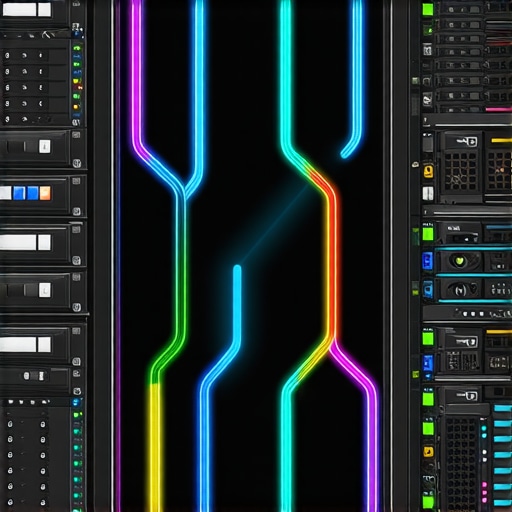
Image prompt: AI-driven storage management system visual illustrating tiered data migration between NVMe and SATA drives.
Addressing Compatibility and Bottleneck Challenges in Hybrid Environments
One of the most complex issues in integrating NVMe and SATA drives lies in ensuring compatibility and avoiding bottlenecks. Motherboards and controllers must support both interfaces natively or through high-performance PCIe expansion cards. Moreover, data pathways need to be optimized to prevent bottlenecks, especially when accessing multiple drives simultaneously. High-bandwidth PCIe 4.0 or 5.0 interfaces are essential for maximizing NVMe throughput, while SATA ports should be managed to prevent contention. Industry experts suggest that employing dedicated host controllers for each interface can significantly enhance throughput and reduce latency, especially in high-demand environments such as AI training farms or large-scale media production facilities.
Furthermore, implementing intelligent caching layers—like NVMe-based cache pools—can mitigate latency issues by temporarily storing frequently accessed data closer to processing units. This hybrid approach ensures that critical workloads experience minimal delays, even during peak usage.
Future-Proofing Your Storage Infrastructure: Scalability and Flexibility
Looking ahead, the key to future-proofing hybrid storage setups lies in modularity and adaptability. Modular systems that allow seamless addition of new NVMe or SATA drives without extensive reconfiguration are invaluable. Additionally, cloud-integrated storage solutions provide an extra layer of flexibility, enabling on-demand scaling and disaster recovery options. For example, integrating NVMe arrays with cloud-based object storage can facilitate rapid data retrieval and long-term archiving, creating a resilient hybrid environment that adapts to evolving needs.
According to experts at Storage Wizard, organizations investing in scalable, adaptable architectures today will be better positioned to leverage upcoming innovations such as persistent memory, quantum-safe encryption, and AI-optimized data management in the years to come.
What are the best practices for managing data consistency and integrity across hybrid NVMe and SATA storage systems?
Maintaining data integrity across mixed storage architectures necessitates robust synchronization protocols and comprehensive backup strategies. Employing enterprise-grade file systems like ZFS or APFS, which support snapshots and checksum verification, can ensure data consistency even during complex migrations. Additionally, regular audits, firmware updates, and real-time monitoring tools are essential for preemptively identifying potential issues before they escalate into critical failures. For organizations handling sensitive or mission-critical data, integrating hardware-based encryption and multi-factor authentication adds an additional layer of security, safeguarding against both accidental corruption and malicious threats.
If you’re interested in developing a resilient, high-performance hybrid storage infrastructure tailored to your unique workload demands, consulting with storage architecture specialists can provide invaluable insights. Reach out today to explore customized solutions that align with your strategic goals.
Innovative Layering: How AI-Driven Tiered Storage Transforms Data Management in 2024
In the rapidly evolving landscape of data storage, AI-powered tiered architectures are revolutionizing how enterprises and creative professionals optimize their workflows. These intelligent systems analyze real-time data access patterns, dynamically migrating critical information to high-speed NVMe tiers while relegating less frequently accessed data to cost-effective SATA storage. This seamless orchestration not only minimizes latency but also extends hardware longevity by reducing unnecessary wear on high-performance drives. Industry leader Storage Workstation Wizard highlights that organizations leveraging AI-driven tiering have observed performance improvements of up to 40%, making this a cornerstone for future-ready infrastructures.
Image prompt: Visual of AI-driven tiered storage system with dynamic data flow between NVMe and SATA drives, futuristic interface design.
Ensuring Compatibility and Bottleneck Mitigation in Hybrid Storage Environments
Integrating NVMe and SATA drives into a cohesive system presents unique challenges, particularly regarding compatibility and data pathway bottlenecks. High-speed PCIe 4.0 and 5.0 interfaces are essential for maximizing NVMe throughput, while ensuring motherboard and controller support is crucial for seamless operation. Deploying dedicated PCIe expansion cards and host controllers can significantly enhance data flow efficiency. Moreover, implementing intelligent caching layers—such as NVMe-based cache pools—serves to mitigate latency issues during peak workloads, especially in AI training farms or large-scale media production. Experts advise continuous firmware updates and real-time system monitoring to preempt potential bottlenecks, maintaining optimal performance across heterogeneous storage solutions.
Strategic Data Integrity: Best Practices for Hybrid Storage Consistency
Maintaining data accuracy across hybrid NVMe and SATA systems necessitates robust synchronization protocols and advanced file systems like ZFS or APFS, which support snapshots and checksum verification. Regular hardware audits, firmware updates, and real-time monitoring are indispensable for early detection of potential data corruption. Implementing hardware-based encryption and multi-factor authentication adds an extra layer of security, especially for mission-critical workloads involving sensitive data. Establishing comprehensive backup routines and disaster recovery plans ensures resilience amidst hardware failures or cyber threats, safeguarding organizational integrity.
Looking Ahead: Future-Proofing Storage Infrastructure with Modular and Cloud-Integrated Solutions
The future of storage architecture hinges on modular scalability and cloud integration. Modular systems enable seamless addition of NVMe or SATA drives, adapting swiftly to growing data demands without extensive reconfiguration. Cloud-connected storage solutions facilitate on-demand scaling, off-site backups, and disaster recovery. Combining NVMe arrays with cloud object storage empowers organizations to achieve rapid data retrieval and long-term archiving, creating a resilient and flexible hybrid environment. Experts at Storage Wizard emphasize that embracing these scalable architectures today positions enterprises to capitalize on advancements like persistent memory, quantum encryption, and AI-optimized data management in the future.
What are the critical considerations for designing a scalable, secure hybrid storage system that integrates NVMe and SATA drives?
Designing a resilient hybrid storage system requires meticulous planning around compatibility, data flow optimization, and security protocols. Key considerations include selecting hardware that supports high-bandwidth PCIe interfaces, deploying dedicated controllers to prevent contention, and implementing dynamic tiering algorithms driven by AI for real-time data placement. Ensuring data integrity involves adopting enterprise-grade file systems with snapshot and checksum capabilities, complemented by hardware encryption and multi-factor authentication. Regular firmware updates, comprehensive monitoring, and robust backup strategies are essential for maintaining system resilience and security. Consulting with storage architecture specialists can help tailor solutions that meet specific performance, scalability, and security requirements, ensuring your organization remains agile in the face of technological evolution.
Expert Insights & Advanced Considerations
1. Dynamic Tiering and AI Optimization Are Transforming Storage Efficiency
Implementing AI-driven tiered storage systems allows real-time data migration between NVMe and SATA drives, significantly reducing latency and extending hardware lifespan. Industry leaders emphasize that adaptive algorithms can improve overall system performance by up to 40%, making these solutions essential for future-proof infrastructures.
2. Compatibility and Bottleneck Prevention Require Meticulous Hardware Planning
Ensuring support for PCIe 4.0/5.0 interfaces and deploying dedicated controllers are crucial for maximizing throughput. Experts recommend high-bandwidth connections and real-time system monitoring to prevent bottlenecks, especially in demanding environments like AI training or media production.
3. Hybrid Architectures Offer Cost-Effective Scalability
Combining NVMe and SATA drives in a tiered setup enables organizations to balance performance and cost. Critical data on high-speed NVMe tiers coupled with less-accessed data on SATA drives optimizes resource utilization and reduces operational expenses.
4. Future-Ready Storage Requires Modular, Cloud-Integrated Solutions
Designing scalable, flexible systems with seamless hardware expansion and cloud integration ensures resilience. Experts suggest integrating NVMe arrays with cloud storage for rapid retrieval and long-term archiving, maintaining competitiveness amid evolving data demands.
5. Maintaining Data Integrity Across Hybrid Systems Is Paramount
Robust synchronization protocols, enterprise-grade file systems like ZFS, and hardware encryption are essential for data consistency. Regular firmware updates and comprehensive backup strategies safeguard against failures and cyber threats, ensuring organizational resilience.
Curated Expert Resources
- Storage Workstation Wizard: A premier source for detailed analyses, innovative storage solutions, and industry trends, providing in-depth guidance for high-performance storage architecture.
- NVMe SSD Performance Secrets (2025): Offers expert insights into maximizing NVMe throughput, crucial for pushing the boundaries of storage speed.
- Ultimate RAID Storage Guide: Essential for understanding complex RAID configurations that optimize both speed and data security in hybrid environments.
- AI-Driven Storage Tiering Analysis: Explores AI applications in storage management, critical for implementing intelligent, adaptive tiered systems.
Final Expert Perspective
In the rapidly evolving landscape of storage technology, mastering the nuances of high-speed NVMe and SATA SSD deployment is vital for maintaining competitive edge. Advanced strategies like AI-driven tiering, meticulous hardware planning, and scalable hybrid architectures are no longer optional but essential for future-proofing data infrastructure. As industry leaders continue to explore innovative solutions, engaging with authoritative resources and staying informed about emerging trends will empower professionals to design resilient, efficient, and scalable storage environments. For those committed to elevating their expertise, actively participating in industry discussions and consulting specialized experts remains the key to unlocking the full potential of modern storage solutions. Explore these concepts further and contribute your insights to shape the future of data management.