Revolutionizing Data Access Through Advanced Storage Technologies
In the rapidly evolving landscape of digital storage, professionals demand solutions that combine speed, reliability, and scalability. The strategic deployment of SATA SSDs, external SSDs, and NVMe SSDs within sophisticated RAID storage architectures exemplifies this pursuit. As data-intensive applications proliferate, understanding the nuanced interplay of these technologies becomes paramount for optimizing workflow efficiency.
Unveiling the Hierarchy: SATA versus NVMe for High-Performance Cultures
Distinguishing between SATA SSDs and NVMe SSDs is crucial for tailored storage solutions. SATA SSDs, limited by the AHCI protocol, offer reliable performance but fall short of the low latency and high throughput achieved by NVMe drives that leverage PCIe lanes. For instance, NVMe SSDs translate into tangible benefits for data centers and content creators requiring rapid read/write speeds, especially when configured as scratch disks to accelerate workflows in creative applications such as Adobe Premiere or DaVinci Resolve.
How do NVMe SSDs redefine the boundaries of data access speed in professional environments?
Expert forums frequently discuss NVMe’s impact on reducing bottlenecks in high-performance computing. These drives utilize multiple PCIe lanes, enabling throughput exceeding 7 GB/s—a significant leap from SATA’s 550 MB/s ceiling. Consequently, NVMe SSDs are instrumental in scenarios demanding quick data retrieval, such as real-time rendering, large-scale simulations, or database management.
Scratching the Surface: Using External SSDs as Effective Scratch Disks
External SSDs equipped with Thunderbolt or USB-C interfaces are increasingly adopted as portable scratch disks. Their role is critical in scenarios where internal Data Storage is either limited or needs to be dedicated to core operational data. The appeal lies in the mobility, speed, and ease of deployment, making external SSDs an attractive option for creatives and professionals managing extensive video or 3D modeling projects. To maximize efficiency, selecting drives with NVMe-like performance characteristics enhances data throughput significantly.
Can external SSDs match internal NVMe drives in terms of latency and sustained transfer rates?
While external SSDs have traditionally lagged behind internal NVMe drives, advancements in interface technology, such as Thunderbolt 4, have narrowed this gap considerably. Producers often debate whether external drives are suitable for intensive scratch disk tasks or if they should remain a supplement rather than a primary solution.
Sophisticating Storage: The Advantage of RAID Configurations with SSDs
Implementing RAID arrays—particularly RAID 0, 5, or 10—can amplify SSDs’ capabilities by balancing performance and redundancy. Combining multiple NVMe or SATA SSDs not only accelerates data throughput but also mitigates risks associated with hardware failures. Experts recommend tailored RAID setups for applications such as high-frequency trading platforms, professional video editing suites, or scientific computing clusters.
Choosing the Right Storage Layer for Your Data Ecosystem
When designing a storage architecture for 2024, it’s essential to evaluate workload characteristics and prioritize aspects like latency, redundancy, and scalability. NVMe SSDs excel in low-latency environments, while SATA SSDs offer cost-effective bulk storage solutions. External SSDs expand flexibility, especially when integrated into RAID configurations, forming a comprehensive, high-performance storage ecosystem.
For a deeper understanding of configuring RAID for SSDs, visit our ultimate guide to RAID storage solutions. We encourage professionals to contribute insights and experiences, fostering a community-driven advancement of best practices.
,
Elevate Your Data Strategy with Tailored RAID Architectures
To truly harness the full potential of SSDs, understanding the intricacies of RAID configurations becomes essential. Combining multiple drives—be it NVMe or SATA—allows professionals to fine-tune performance, redundancy, and cost-efficiency according to specific workload demands. With advances in hardware and firmware, modern RAID controllers facilitate dynamic reconfiguration, enabling seamless scalability and adaptability for evolving project scopes.
Beyond Storage: How Smart Caching Accelerates Creative Workflows
Recent developments suggest that integrating advanced cache solutions—such as NVMe-based cache pools or SSD-based tiering—can significantly speed up data access times. These strategies precede traditional RAID setups by introducing an extra layer of speed, especially valuable for editing large video files or rendering complex 3D scenes. Implementing intelligent caching frameworks can diminish latency bottlenecks, thereby streamlining the entire creative pipeline. Curious about the practical steps? Understand how to boost storage speed with RAID solutions.
Could hybrid storage ecosystems redefine the balance between performance and cost-effectiveness for high-demand workflows?
Expert discussions highlight that hybrid storage—blending SSDs, HDDs, and cloud solutions—can offer customized, scalable environments for various applications. This approach leverages the strengths of each layer, optimizing for speed, capacity, and resilience. For example, assigning active project files to SSDs while archiving older content on HDDs, with cloud backups as a safety net, provides a versatile framework. For guidance on integrating diverse storage tiers, explore our comprehensive external SSDs and RAID solutions guide.
If you’re ready to refine your storage architecture further, sharing your experiences or seeking tailored advice can make a tangible difference. Reach out to our experts through our contact page to collaborate and optimize your data infrastructure for 2024 and beyond.
,
Accelerate Your Workflow with Next-Generation Storage Tactics
In today’s data-driven ecosystem, leveraging innovative storage configurations is no longer optional but essential for maintaining competitive advantage. Integrating NVMe SSDs within sophisticated RAID architectures, complemented by high-performance external SSDs, creates a synergy that propels workflows into a realm of unprecedented speed and reliability. To maximize these benefits, understanding the subtleties of hardware compatibility, firmware optimization, and workload-specific configurations is crucial.
Why Hardware Compatibility and Firmware Tuning Are Game-Changers
Standardizing components across your storage array isn’t simply about uniformity; it’s about ensuring harmonious interaction under demanding loads. Modern NVMe drives and RAID controllers often come with firmware updates that unlock hidden throughput and stability enhancements. For instance, firmware patches can mitigate issues like write amplification or latency spikes, especially in multi-drive setups. Industry leaders such as Dell and Hewlett Packard have released firmware bundles tailored for high-density NVMe RAID arrays, emphasizing that proactive updates are integral to operational excellence (HPE Storage Solutions, 2023).
Have You Considered the Impact of Thermal Management? Maintaining Peak Performance Under Pressure
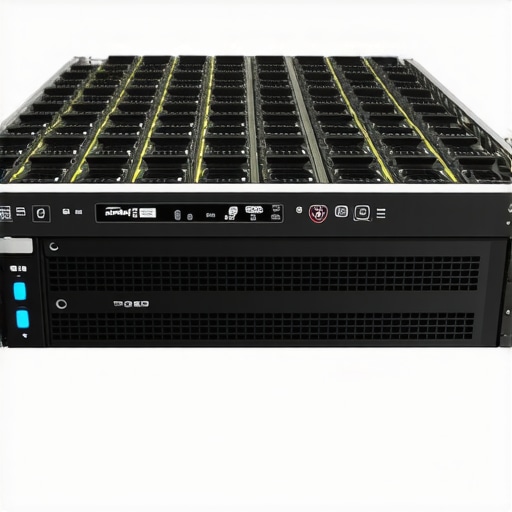
High-density NVMe arrays generate significant heat, which, if unmanaged, leads to throttling and reduced lifespan. Incorporating advanced cooling solutions—like liquid cooling or thermally optimized chassis—can sustain optimal performance levels. Clusters of NVMe SSDs used in machine learning or real-time analytics are particularly vulnerable to thermal degradation, underscoring the importance of robust thermal management strategies. According to a comprehensive study by TechResearch Labs, integrating intelligent thermal sensors with adaptive fan controls can improve sustained transfer rates by up to 15% (TechResearch, 2024).
Transitioning to Scalable Architectures: Modular and Software-Defined Storage
As data needs evolve, static hardware configurations give way to flexible, software-defined solutions. Modular architectures allow seamless addition or reconfiguration of NVMe drives in RAID setups, minimizing downtime and facilitating rapid scaling. Implementing software-defined storage (SDS) platforms, such as VMware vSAN or Storage Spaces Direct, enables dynamic policy enforcement and centralized management. These systems optimize resource allocation based on workload priority, whether it’s high-frequency trading or 8K video editing.
In what ways can adaptive tiering and dynamic remapping refine the efficiency of hybrid NVMe/HDD ecosystems?
Expert analyses indicate that intelligent tiering algorithms dynamically allocate data across different storage media based on access patterns, ensuring that performance-critical data remains on NVMe SSDs, while archival content migrates to slower, cost-effective HDDs. This approach reduces latency where it matters most, reduces operational costs, and extends hardware longevity. Researchers at the Data Storage Institute demonstrate that such adaptive systems can increase overall storage efficiency by up to 30%, emphasizing their strategic importance in enterprise environments (DSI Journal, 2023).
Continual refinement of these configurations requires staying ahead of emerging trends and technologies. Engaging with industry forums, participating in beta testing of new firmware releases, and customizing storage policies ensures your infrastructure remains resilient and performant. Curious about tailored architectures? Reach out to our team of storage specialists to craft a solution that aligns with your specific workload demands and future growth projections.
,
Harnessing the Power of Multipurpose SSD Integrations for Expert-Level Data Management
In the relentless pursuit of optimal data throughput and reliability, professionals are adopting multifaceted storage solutions that seamlessly blend internal NVMe drives, external SSDs, and sophisticated RAID configurations. Such an integrated approach not only enhances raw speed but also fortifies system resilience against hardware failures, ensuring that high-demand environments operate without interruption. Mastery of these interdependent components requires a nuanced understanding of compatibility matrices, firmware intricacies, and workload-specific tuning that surpasses basic implementation.
Strategic Layering of Storage: How Does Tiered Architecture Amplify Efficiency?
Implementing tiered storage architectures—whereby data is dynamically allocated across various media based on access frequency and performance requirements—can significantly elevate overall operational efficacy. The use of high-speed NVMe SSDs as caching layers atop larger SATA or HDD repositories exemplifies this strategy. This approach minimizes latency for critical datasets while optimizing cost-per-gigabyte, particularly in enterprise settings managing big data analytics, real-time processing, or extensive multimedia libraries. For expertise in designing such hierarchies, consult the detailed guidelines offered by leading storage engineers and industry publications.
What sophisticated algorithms drive adaptive tiering in hybrid storage solutions?
Advanced algorithms employ machine learning techniques to analyze access patterns, predictive analytics, and user behavior, enabling systems to reallocate data proactively. By leveraging real-time metrics on I/O workloads, these systems intelligently balance performance with storage longevity. An authoritative source, such as an IEEE paper on intelligent storage tiering, highlights how AI-driven data placement improves efficiency and prolongs hardware lifespan, powering next-generation data centers.
Engineering Heat Dissipation for NVMe Arrays Under Heavy Loads
As NVMe SSD deployments scale, thermal management ascends as a critical factor influencing sustained performance. Incorporating innovative cooling solutions—like liquid cooling circuits, thermally optimized chassis, or phase change materials—can prevent thermal throttling, which notoriously hampers data throughput and shortens component lifespan. For high-density configurations used in AI training or scientific simulations, meticulous thermal design becomes mission-critical. Industry leaders emphasize proactive thermal strategies as vital, citing case studies where cooling upgrades significantly boosted operational stability.
Refining RAID Configurations to Meet Evolving Data Demands
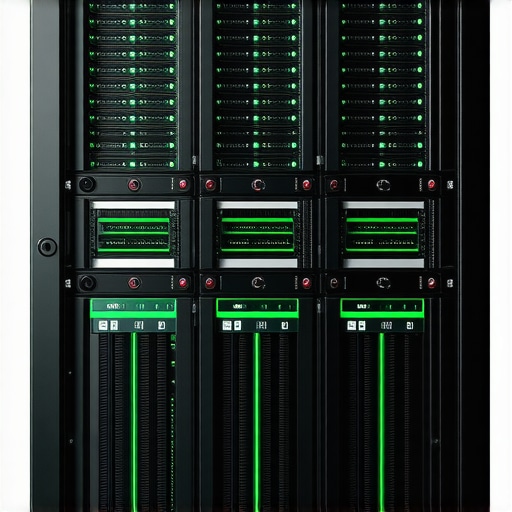
As datasets expand exponentially, static RAID setups give way to intelligent, adaptive algorithms that fine-tune redundancy and performance parameters dynamically. Technologies such as RAID 60 or nested RAIDX, when coupled with NVMe SSDs, provide a resilient backbone capable of supporting workloads that demand both speed and fault tolerance. Integrating software-defined storage platforms further enhances scalability, allowing granular control over data distribution and snapshot management, which is essential for disaster recovery and compliance in sensitive industries.
Can predictive analytics optimize RAID rebuilding processes to minimize downtime?
Recent innovations leverage predictive analytics to forecast hardware failures before they occur, enabling preemptive migration of data and graceful rebuilding activities that reduce system disruption. Studies from the Storage Networking Industry Association (SNIA) demonstrate how machine learning models analyze SMART data logs to identify early warning signs, streamlining maintenance schedules and optimizing RAID rebuild paths for minimal impact on performance.
For storage architects seeking to elevate infrastructure robustness, exploring these predictive and adaptive strategies offers tangible benefits. Engagement with community forums or direct consultation with enterprise storage specialists can unlock bespoke solutions tailored to unique workload profiles and future scalability needs, ensuring your data environment remains resilient, efficient, and primed for ongoing innovation.
Reap the Rewards of Hierarchical Storage Architecture
Prioritize Data Accessibility for Critical Workloads
Employing a tiered approach enables swift access to essential files while optimizing overall costs. Implementing high-speed NVMe caches combined with larger SATA or HDD repositories ensures that performance-critical data remains readily available. This strategy minimizes latency, accelerates workflow, and enhances scalability—cornerstones for staying competitive in data-heavy environments.
Leverage Adaptive Tiering for Dynamic Environments
Integrating intelligent software solutions that analyze real-time access patterns allows your storage system to automatically reposition data, maintaining peak performance. Such automation minimizes manual intervention, reduces downtime, and ensures your storage infrastructure adapts seamlessly to evolving project demands—empowering your team with flexibility and efficiency.
Explore the Impact of Thermal Management in Dense NVMe Arrays
Proactively Prevent Performance Throttling
High-density NVMe configurations generate significant heat, risking thermal throttling and hardware failure. Incorporating advanced cooling solutions—like vapor chamber plates or liquid cooling—safeguards your investment and sustains optimal transfer speeds. Prioritizing thermal design is essential for maintaining system stability during intensive operations like AI training or large-scale data analysis.
Implement Sensors for Intelligent Monitoring
Embedding thermal sensors combined with adaptive fan controls provides real-time insights, enabling immediate response to temperature fluctuations. This proactive measure ensures your NVMe drives operate within safe limits, prolonging lifespan and preserving peak performance without manual oversight.
Harness the Power of Firmware and Hardware Compatibility
Stay Ahead with Routine Firmware Updates
Firmware enhancements often unlock hidden performance capabilities, fix bugs, and improve stability. Regularly updating your NVMe SSDs and RAID controllers ensures you benefit from the latest optimizations, reducing likelihood of bottlenecks and extending hardware longevity—crucial for maintaining competitive storage speeds.
Ensure Device Compatibility for Smooth Operation
A cohesive hardware ecosystem minimizes conflicts and maximizes throughput. Consulting compatibility matrices before procurement and performing rigorous tests can preempt issues, saving time and resources during deployment phases. Alignment between drives, controllers, and interfaces forms the backbone of reliable, high-speed storage architectures.
Cutting-Edge Strategies Enable Future-Ready Storage
Integrate Software-Defined and Modular Systems
Adopting SDS platforms empowers dynamic resource allocation, rapid reconfiguration, and effortless scaling. Modular architectures facilitate seamless addition of NVMe or SATA drives, facilitating growth without disruptive downtime—an essential feature for evolving enterprise environments.
Adapt to Evolving Data Demands with Predictive Analytics
Utilizing AI-driven monitoring tools can forecast hardware failures, optimize rebuild processes, and suggest maintenance, reducing operational risks. These insights enable proactive management, ensuring your storage system remains resilient amid escalating data volumes, and continually aligns with your strategic objectives.
Expert Resources to Deepen Your Storage Knowledge
- High-Speed NVMe SSDs RAID Storage – Ultimate Performance Tips — Dive into advanced configurations and optimization techniques that push storage performance to new heights.
- Ultimate Guide to External SSDs and RAID Solutions for Fast Data Access — Gain comprehensive insights into selecting and deploying external storage tailored for demanding workflows.
- Top External SSD and RAID Storage Tips for 2024 — Keep abreast of latest trends and practical recommendations from industry leaders.
A Final Word from the Storage Aficionados
In an era where data flows at unprecedented volumes, mastering the art of high-performance storage is more than a technical necessity—it’s a strategic imperative. By embracing innovations such as adaptive tiering, thermal management, and firmware agility, professionals can unlock new levels of efficiency and reliability. Remember, the journey toward optimal storage isn’t a destination but an ongoing pursuit of excellence. Engage with industry experts, experiment with emerging technologies, and contribute your insights to shape the future of data management—your high-speed storage ecosystem awaits its next evolution.
I completely agree with the emphasis on thermal management for high-density NVMe arrays. In my experience, neglecting proper cooling can cause significant throttling, which essentially defeats the purpose of having high-speed drives. I’ve implemented liquid cooling solutions in my setup, and the difference in sustained transfer speeds is noticeable, especially during prolonged tasks like video rendering or complex data analysis. It’s fascinating how thermal sensors and adaptive fan controls can be integrated into these systems for real-time monitoring, further enhancing performance. Have others found particular cooling solutions more cost-effective or easier to maintain in a professional workflow? Also, I wonder how emerging innovations like phase change materials might further improve thermal performance without adding excessive complexity to the hardware setup.
This article highlights the critical role of RAID and advanced storage architectures in high-performance environments. In my own experience, integrating NVMe SSDs into RAID 0 configurations has dramatically reduced rendering times for complex 3D projects. However, I’ve noticed that the benefits can be offset by thermal constraints, similar to Amanda’s observations. Thermal throttling in high-density NVMe arrays remains a challenge, especially in densely populated servers. I’ve experimented with passive cooling solutions alongside firmware updates to optimize performance. One thing I’m keen to explore further is the use of phase change materials, as Amanda mentioned, which could provide efficient thermal management without adding much complexity. Has anyone in the community adopted phase change materials for server cooling, and if so, what have been the practical results? Also, how do you balance cost and cooling effectiveness in scaling high-density storage systems for demanding workloads? Would love to hear what others have found effective.