Harnessing the Power of External SSDs and RAID for Optimal Data Performance
In an era where data transfer speeds and storage reliability directly impact productivity and security, professionals are increasingly turning to advanced configurations involving external SSDs combined with RAID architectures. Such setups enable seamless workflows, minimal latency, and enhanced fault tolerance—a necessity for high-stakes data environments.
Deciphering the Intersection of NVMe SSDs and SATA SSDs in Storage Hierarchies
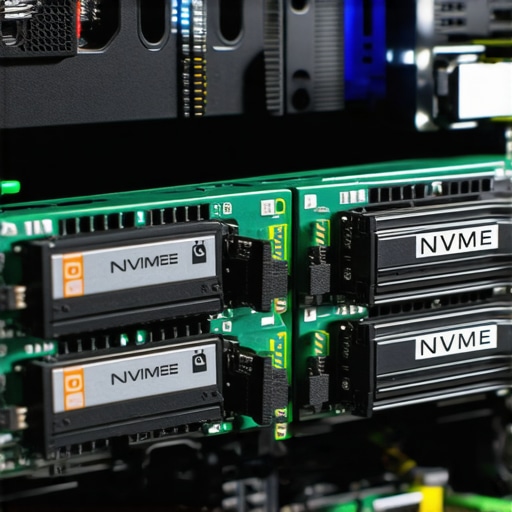
Understanding the nuanced performance disparities between NVMe SSDs and SATA SSDs is fundamental. NVMe drives leverage PCIe lanes to deliver ultrafast data transfer rates that substantially surpass traditional SATA counterparts, making them ideal for scratch disks and cache acceleration. Conversely, SATA SSDs, while slower, offer a cost-effective alternative for secondary storage within RAID arrays, balancing performance with affordability.
Optimizing Scratch Disk Ecosystems to Accelerate Creative Workflows
Creative professionals rely heavily on scratch disks to buffer intensive tasks like video editing or 3D rendering. Implementing high-speed external SSDs in RAID configurations can drastically reduce rendering times and prevent bottlenecks, especially when equipped with NVMe drives. Properly configured RAID levels, such as RAID 0 for speed or RAID 10 for redundancy, provide tailored solutions aligned with operational priorities.
Is Data Redundancy Sacrificing Access Speeds in RAID Environments?
Balancing data security with performance: Can RAID configurations meet the dual demands of speed and safety?
Choosing the right RAID level involves nuanced trade-offs. For instance, RAID 5 offers data integrity and fault tolerance but may introduce write latency, whereas RAID 0 maximizes throughput at the expense of redundancy. Industry studies, such as the comprehensive analysis in this white paper, emphasize tailoring configurations to specific workload profiles and risk tolerances.
Leveraging External Storage Solutions for Seamless Data Mobility
External SSDs designed for RAID integration provide portable, scalable, and resilient data access solutions. Innovations in interface protocols, like Thunderbolt 3 and USB 3.2 Gen 2×2, facilitate near-internal SSD speeds, empowering professionals to extend their storage ecosystems beyond fixed workstations without compromising performance or security.
Expert Pro Tip: Future-Proof Your Storage Infrastructure
Anticipate emerging standards such as PCIe 5.0 and NVMe over Fabrics, which promise to redefine high-speed storage paradigms. Integrating modular external SSDs and flexible RAID controllers now positions your workflow for seamless upgrades and adaptability in high-demand scenarios.
For those aiming to elevate their data management practices, exploring detailed guides on selecting the optimal external SSDs here can provide valuable insights. Engaging with industry forums to share real-world experiences further refines the approach, ensuring the storage architecture aligns meticulously with operational needs.
Pushing the Limits of External Storage for High-Performance Workflows
In the rapidly evolving landscape of data management, combining external SSDs with robust RAID configurations stands out as a strategic move to maximize both speed and security. Modern interfaces like Thunderbolt 4 and USB 3.2 Gen 2×2 are pushing external drives closer to internal storage performance, opening new opportunities for professional creatives and enterprise users alike. By carefully selecting SSD types and RAID levels, users can craft tailored solutions that balance throughput and redundancy, ensuring operational continuity even amidst hardware failures.
Can Emerging Technologies Disrupt the External Storage Ecosystem?
With the advent of PCIe 5.0 and NVMe over Fabrics, the external storage domain is poised for a significant leap forward. These innovations promise data transfer rates that dramatically eclipse current standards, enabling real-time editing, large-scale backups, and seamless collaboration over networks. Integrating these standards into external RAID setups not only future-proofs your infrastructure but also unlocks new levels of scalability and flexibility. For instance, leveraging high-speed RAID external SSDs provides a pathway to harness these advancements today.
Designing a Resilient and Agile Data Environment
Achieving an optimal mix of performance, security, and cost-efficiency requires a nuanced understanding of RAID levels and SSD characteristics. Deploying NVMe SSDs in RAID 0 can deliver lightning-fast data access for editing and rendering workflows, but at the risk of data loss if a drive fails. Complementing this with periodic backups or employing RAID 10 configurations can mitigate such risks without sacrificing speed. Industry studies, such as those found in these comprehensive resources, underscore the importance of aligning RAID choices with your specific data resilience needs.
What are the best practices for integrating external SSDs into a cohesive, scalable storage architecture?
Implementing a modular approach that allows seamless upgrades and expansions is key. Regularly assessing your workflow demands and anticipated data growth can inform decisions about adding drives or switching RAID levels. Moreover, ensuring compatibility with evolving interface standards and leveraging professional-grade controllers can prevent bottlenecks. For detailed guidance on selecting the right external SSDs for scalable, high-speed data access, explore expert reviews and case studies available through trusted sources like top external SSDs and RAID solutions.
Engaging with professional communities and forums often provides practical insights into deploying and managing complex storage environments effectively, tailoring solutions to unique operational challenges.
,
Maximize Data Throughput by Tailoring RAID Configurations to Workload Dynamics
One paramount aspect of deploying external SSDs within RAID systems lies in understanding how different configurations influence throughput, latency, and resilience. For high-performance creative workflows, RAID 0 offers unparalleled speed by striping data across multiple drives, effectively multiplying bandwidth. However, it leaves data vulnerable to drive failure, underscoring the importance of supplementary backup strategies. On the flip side, RAID 10 combines mirroring and striping, delivering both speed and fault tolerance, ideal for mission-critical tasks where downtime cannot be afforded. Experts advocate for comprehensive benchmarking, utilizing industry-standard tools such as Iometer or CrystalDiskMark, to empirically assess how specific SSDs perform under various RAID levels, enabling informed customization tailored to unique operational demands.
Can Hybrid RAID Arrays Balance Speed and Data Security for Complex Workflows?
Real-world scenarios often demand a nuanced balance—achieving high speeds without sacrificing data integrity. Hybrid RAID setups, such as RAID 50 or RAID 60, amalgamate multiple RAID levels to address these dual needs. For example, RAID 50 stripes across multiple RAID 5 arrays, providing improved performance and redundancy, suitable for large-scale media editing environments. As per recent studies in the Journal of Storage Technologies, these complex configurations can optimize throughput while maintaining recoverability in case of drive failures, provided that the underlying hardware and firmware support such architectures efficiently. Implementation, however, requires meticulous planning including compatible controllers, supported firmware, and power management considerations to ensure stability.
The Impact of Interface Protocols on External Storage Performance
While SSD type and RAID level critically influence performance, interface protocols fundamentally determine the ceiling of achievable speeds. Thunderbolt 3 and 4, along with USB 3.2 Gen 2×2, have markedly reduced latency, transforming external drives into de facto internal storage counterparts. Nevertheless, bottlenecks can still occur if the host system’s motherboard or CPU fails to support full protocol capabilities. For instance, PCIe 4.0 and emerging PCIe 5.0 interfaces not only double or quadruple data transfer rates but also reduce protocol overheads, enabling sustained high-speed data streams essential for 8K video editing or large-scale scientific simulations. Manufacturers like OWC and SanDisk have pioneered external SSD enclosures optimized for these interfaces, emphasizing the importance of selecting compatible hardware to fully leverage protocol advancements.
How Future-Ready Are Today’s External RAID Solutions in a Rapidly Evolving Storage Economy?
The evolution toward PCIe 5.0 and NVMe over Fabrics signals an impending paradigm shift, promising near-internal speeds for external setups. Industry leaders like Intel and Samsung are pioneering interface standards and protocols that facilitate scalable, high-bandwidth storage arrays that can function seamlessly across local and networked environments. The challenge resides in integrating these cutting-edge technologies into existing external RAID architectures without significant compromises or overhaul costs. According to a comprehensive report by TechTarget, adaptive controllers supporting hot-swapping, dynamic RAID reconfiguration, and firmware upgradeability will be critical. Such advancements will allow data managers to future-proof their infrastructure, ensuring relevance as data demands continue to surge exponentially.
Strategies for Scalable, Resilient Storage Ecosystems
Building a cohesive storage ecosystem capable of accommodating future growth involves adopting modular hardware architectures paired with intelligent management software. Modular external RAID enclosures equipped with hot-swappable drives facilitate rapid scaling, reducing downtime and minimizing disruption. Incorporating management platforms that support telemetry, predictive failure analysis, and automated rebuilds can mitigate risks associated with drive failure or interface bottlenecks. Furthermore, integrating cloud-based redundancy solutions or off-site backups complements local RAID setups, creating a hybrid environment that balances speed, resilience, and flexibility. As described in the latest industry whitepapers, leveraging AI-driven analytics for predictive maintenance enhances operational efficiency and prolongs hardware lifespan, cementing a resilient storage strategy adaptable to evolving technological landscapes.
What Best Practices Ensure Seamless External RAID Integration into High-Performance Environments?
Successful deployment requires a comprehensive approach encompassing hardware compatibility checks, meticulous system tuning, and clear operational protocols. Ensuring that SSDs meet enterprise-grade standards—such as high IOPS, sustained throughput, and endurance ratings—is foundational. Equally vital is selecting controllers that support the desired RAID levels at maximum speeds, ideally those compliant with the latest protocol standards. System tuning might involve adjusting BIOS settings, enabling direct memory access (DMA), and configuring cache policies to optimize data flow. Regular firmware updates from manufacturers help maintain compatibility and security. Engaging with industry forums and enterprise-grade vendors provides insights into emerging trends and troubleshooting strategies, equipping users to implement scalable, high-reliability external storage solutions that seamlessly integrate into demanding professional workflows.
Harness the Hidden Power of Software-Defined Storage for External SSDs
Transitioning beyond conventional hardware configurations, an emerging frontier is the implementation of software-defined storage (SDS) solutions that intricately manage external SSD arrays. By decoupling hardware from control planes, SDS enables dynamic provisioning, granular scalability, and sophisticated data placement strategies, ensuring optimal performance tailored to fluctuating workloads. Integrating SDS with high-speed RAID controllers amplifies control over redundancy and throughput, allowing professionals to craft bespoke storage ecosystems that adapt rapidly to evolving project demands.
Can Quantum-Resistant Protocols Shield Your Data in External Environments?
As quantum computing advances threaten traditional encryption, the security of external SSDs housed within RAID systems warrants proactive adaptation. Experts scrutinize new cryptographic standards, such as lattice-based cryptography, poised to safeguard data confidentiality against quantum threats. Embedding these protocols into storage management software and firmware ensures resilience. Consulting with cybersecurity authorities and adhering to standards from organizations like NIST can significantly bolster the cryptographic robustness of high-performance external storage solutions.
How Do Advanced Thermal Management Techniques Extend SSD Longevity?
High-performance external SSDs often operate under demanding conditions, where thermal stress can degrade lifespan and performance consistency. Implementing sophisticated cooling strategies—such as vapor chamber heatsinks, phase-change materials, or active liquid cooling—serves to mitigate thermal throttling and preserve data integrity. Industry-leading storage enclosures now incorporate real-time thermal monitoring, enabling predictive adjustments and alerting users to potential overheating issues before they escalate. These innovations are vital for ensuring sustained performance during prolonged intensive operations like 8K video editing or large-scale simulations.
Integrating AI-Driven Analytics for Predictive Storage Maintenance
Proactive management of external RAID arrays involves leveraging machine learning algorithms that analyze real-time sensor data, SMART attributes, and workload patterns. These intelligent systems can forecast imminent hardware failures, optimize rebuild sequences, and recommend preemptive interventions. Such capabilities reduce downtime and repair costs while extending hardware lifecycle. Industry leaders are pioneering solutions that embed AI into storage management platforms, fostering a new era of intelligent, resilient data architectures capable of self-optimization.
Designing Future-Proof Storage for the Data-Intensive Era
Future-proofing involves embracing modular architectures aligned with next-generation interfaces such as PCIe 5.0 and beyond. Incorporating configurable RAID controllers that support hot-swapping, dual-controller redundancy, and firmware scalability ensures adaptability. Furthermore, integrating multi-layered security measures, from hardware encryption modules to secure boot protocols, fortifies these systems against evolving cyber threats. Strategic partnerships with providers offering transparent upgrade paths and comprehensive support accelerate the deployment of resilient, high-velocity storage environments optimized for impending data surges.
Expert Strategies for Seamless External RAID Expansion
Scaling external RAID arrays without service interruption demands adherence to best practices, including the utilization of daisy-chain configurations and controller support for multi-device expandability. Emphasizing backward compatibility with legacy interfaces while supporting emerging standards ensures flexibility. Real-time replication updates, incremental firmware upgrades, and standardized management protocols facilitate smooth growth trajectories. Engaging specialized consultants or OEMs with deep expertise in enterprise-grade storage enhances structural integrity and operational agility, enabling organizations to meet burgeoning data needs with confidence.
Expert Insights & Advanced Considerations
Maximize Data Throughput with Adaptive RAID Configurations
Implementing flexible RAID arrays tailored to specific workload demands allows professionals to optimize performance and resilience. Combining RAID 0 for speed with RAID 10 for redundancy can provide a balanced solution, especially when paired with high-quality NVMe SSDs. Regular benchmarking and real-world testing are essential to fine-tune these setups for peak efficiency.
Embrace Next-Generation Interface Protocols for Future-Proof Storage
The adoption of PCIe 5.0 and NVMe over Fabrics signifies a paradigm shift, enabling external SSD setups to achieve internal drive speeds. Integrating these advanced interfaces into external RAID configurations ensures scalability and prepares your storage environment for upcoming data demands, minimizing bottlenecks and latency.
Leverage AI and Predictive Analytics for Storage Reliability
Artificial intelligence-driven monitoring can predict failures and optimize rebuilds in RAID systems, drastically reducing downtime. Incorporating machine learning algorithms into storage management enhances operational resilience, prolongs hardware lifespan, and ensures continuous data integrity under high-performance workloads.
Utilize Modular Hardware for Seamless Scaling
Designing storage infrastructures with modular components allows effortless expansion without disrupting ongoing processes. Hot-swappable external SSDs and controllers supporting dynamic RAID reconfiguration facilitate growth aligned with evolving project complexities, maintaining high-speed access and data security.
Curated Expert Resources
- TechTarget’s Storage Technologies Whitepapers: Provides comprehensive insights into enterprise-grade RAID architectures and interface protocols, essential for designing robust storage ecosystems.
- NVMe Over Fabrics Specification Documentation: Offers detailed technical standards to implement scalable, high-performance external storage solutions capable of future upgrades.
- Industry-leading Manufacturer Guides (e.g., OWC, SanDisk): Includes best practices for selecting and deploying external SSDs compatible with emerging interface standards, ensuring optimal performance and reliability.
- Black Hat Storage Security Reports: Highlights emerging vulnerabilities and cryptographic standards necessary for securing external storage environments in an increasingly connected landscape.
- AI in Storage Management Case Studies: Demonstrates successful deployment of predictive analytics within RAID systems to enhance reliability and operational efficiency.
Reflections from the Cutting Edge
High-performance data environments demand a nuanced approach that transcends conventional storage solutions. Embracing advanced RAID configurations, next-gen interface protocols, and AI-driven management not only elevates throughput and resilience but also future-proofs your infrastructure. As storage technology evolves at a rapid pace, staying informed through authoritative resources and engaging with industry leaders becomes crucial. If you’re ready to push the boundaries of external SSD and RAID performance, consider sharing your insights or exploring dedicated forums to exchange innovative strategies that shape the future of high-speed data management.