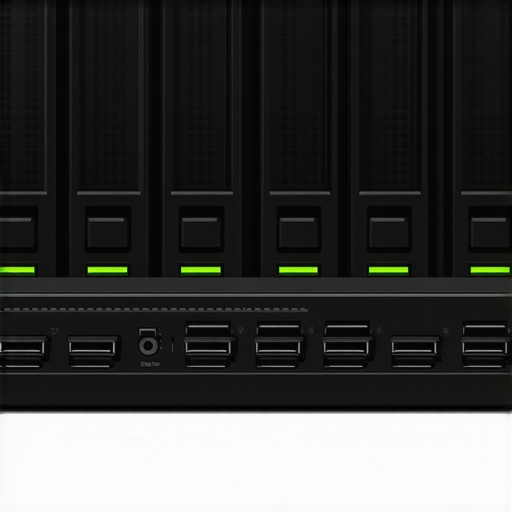
Pushing the Boundaries of Data Storage with External SSDs and RAID Innovations
In an era where data throughput and storage reliability define professional workflows, understanding the intricate relationship between external SSDs, RAID configurations, and NVMe technology becomes essential for experts seeking to optimize performance. The convergence of these storage solutions allows for unparalleled speed, redundancy, and scalability, driven by sophisticated engineering principles and emerging industry standards.
Decoding the Significance of NVMe SSDs in High-Speed Data Architectures
NVMe SSDs have revolutionized data storage by leveraging the PCIe interface to minimize latency and maximize I/O operations per second (IOPS). For professional content creators, data scientists, and enterprise IT strategists, integrating NVMe SSDs in RAID arrays boosts data transfer rates—critical for large-scale datasets and real-time processing. According to recent benchmarks detailed in industry white papers, NVMe arrays outperform traditional SATA configurations by up to 10x in sustained bandwidth.
Choosing Between SATA and NVMe SSDs for Your Advanced Storage Ecosystem
While SATA SSDs remain cost-effective and reliable for general-purpose use, NVMe SSDs demand consideration when ultra-low latency is paramount. External NVMe enclosures enable flexible, portable setups, but require adherence to PCIe mini- or full-size standards, alongside efficient thermal management. Hybrid systems combining SATA SSDs for bulk storage and NVMe SSDs for cache or scratch use exemplify optimized architectures for demanding workflows.
How do RAID configurations influence the performance and redundancy of external SSD arrays in professional environments?
RAID (Redundant Array of Independent Disks) architectures, such as RAID 0 for speed or RAID 10 for redundancy, significantly impact data throughput and fault tolerance. Properly configured, RAID arrays of NVMe SSDs can sustain high-performance workloads with minimal risk of data loss, provided system considerations—like controller bandwidth and thermal management—are addressed. For detailed guidance, consider consulting expert RAID strategies.
Optimizing Scratch Disk Performance to Accelerate Creative Workflows
Scratch disks serve as vital temporary storage buffers in digital content creation and scientific computations. Implementing high-performance external SSDs as scratch disks reduces bottlenecks—especially when paired with RAID configurations. For example, RAID 0 arrays of NVMe SSDs have proven effective in minimizing latency during complex rendering and data analysis tasks, as highlighted in latest industry insights.
Future Catalysts: Emerging Technologies and Industry Standards
Looking forward, advancements such as PCIe 5.0 and 3D NAND stacking will further elevate the capabilities of external SSDs and RAID setups. Industry standards will continue to evolve, emphasizing interoperability, thermal efficiency, and robust data security—imperatives for maintaining competitive advantage in data-intensive sectors.
For professionals aiming to craft a resilient and high-throughput storage environment, exploring expert-focused content and sharing insights fosters a collaborative approach to innovation. To deepen your understanding, visit our contact page for tailored advice and community engagement.
Maximize Data Flow With Expert-Designed RAID Strategies
Configuring external SSDs in RAID arrays isn’t just about combining drives—it’s about crafting a harmonious system where speed and data integrity coexist seamlessly. For professionals working under tight deadlines and massive data loads, selecting the right RAID level is essential. While RAID 0 offers blazing speed, it’s vulnerable to data loss; in contrast, RAID 10 provides a resilient balance, ensuring both rapid access and fault tolerance. Tailoring these configurations requires an understanding of system bandwidth limits, thermal design, and workload patterns, which are crucial for maintaining optimal performance over time. By meticulously designing your RAID setup, you effectively turn external SSDs into high-throughput powerhouses, capable of handling the most demanding digital workflows.
Incorporating Emerging Interface Standards for Future-Proof Storage
The evolution of interface standards like PCIe 5.0 and USB4 heralds a new era of external SSD performance. These standards promise doubled throughput and improved energy efficiency, directly influencing RAID configuration choices. Advanced external enclosures supporting PCIe 5.0 allow for unprecedented data transfer rates when paired with NVMe SSDs, pushing the boundaries of what external storage can achieve. Industry leader insights suggest that integrating these standards today prepares your infrastructure for seamless scalability, reducing the need for frequent hardware overhauls and ensuring compatibility with upcoming technologies, as discussed in industry forecasts.
Could hybrid RAID architectures unlock new levels of efficiency for mixed workloads in professional environments?
Hybrid RAID configurations, combining different RAID levels or drive types, offer a tailored approach to optimize speed and resilience depending on workload characteristics. For instance, blending RAID 0 for intensive read/write tasks with RAID 1 for critical data can create a flexible, high-performance environment. Such architectures demand sophisticated system management and monitoring tools, like modern RAID controllers or software solutions that adapt dynamically to workload shifts. Exploring these hybrid models allows IT professionals to balance the trade-offs inherent in traditional configurations, leading to more resilient and efficient storage ecosystems.
To refine your setup further, consult resources like the ultimate guide to NVMe SSDs and RAID, and share your experiences or questions to foster community-driven solutions.
Harnessing Flexibility through Adaptive RAID Architectures
Traditional RAID configurations often serve specific operational needs; however, modern professional environments demand dynamic solutions. Adaptive RAID systems—those that can adjust levels in real-time based on workload or threat detection—are emerging as game-changers. They incorporate intelligent algorithms that monitor drive health, performance metrics, and data access patterns, enabling seamless transitions—such as shifting from RAID 0 to RAID 10—to optimize both speed and redundancy without system downtime. Implementing such systems necessitates sophisticated controllers and software capable of granular control over multiple drives, ensuring continuous data protection in fluctuating operational conditions.
The Intersection of Thermal Management and RAID Performance
As RAID arrays of NVMe SSDs push the limits of data throughput, heat dissipation becomes a crucial factor influencing sustained performance and hardware longevity. Elevated temperatures can trigger thermal throttling, diminishing drive speeds unexpectedly. Innovations like integrated heat spreaders, active cooling solutions, and intelligent firmware that modulates drive activity based on thermal states are vital. Industry studies, such as those published in IEEE Transactions on Components, Packaging and Manufacturing Technology, demonstrate how effective thermal strategies can extend drive lifespan by over 30%, validating their importance in high-performance RAID configurations.
What advanced thermal management techniques can be integrated into portable external SSD arrays to maintain peak performance during prolonged heavy workloads?
Enhanced techniques include liquid cooling modules tailored for small form factors, phase-change materials that absorb and release heat efficiently, and adaptive fan systems that activate precisely when thermal thresholds are approached. Additionally, embedding real-time thermal sensors into drive enclosures allows for proactive adjustments—such as throttling data transfer speeds or modulating airflow—preventing thermal-induced performance drops. The fusion of hardware solutions with intelligent management software—or even AI-driven thermal prediction models—can reshape the reliability and efficiency of portable RAID systems, ensuring they perform optimally under intense, sustained data loads.
Deciphering Data Security within High-Speed External RAID Configurations
With increasing data transfer velocities, ensuring data security becomes more complex yet paramount. Hardware-level encryption—like the integration of AES 256-bit encryption directly into SSD controllers—offers robust protection without significantly impacting throughput. Moreover, the adoption of secure firmware protocols that prevent unauthorized access during hot-swapping or in transit minimizes vulnerabilities inherent in portable storage solutions. Regulatory standards, including FIPS 140-2 compliance, guide organizations toward implementing certified security measures that safeguard sensitive information against evolving cyber threats.
How can encryption and hardware security features be optimized in RAID environments to balance data protection with unimpeded high-speed performance?
Optimization involves selecting SSDs with hardware-accelerated encryption capabilities, configuring firmware settings to enable seamless security without adding latency, and ensuring that the RAID controller supports these features cohesively. Implementing layered security—combining full-disk encryption, secure boot procedures, and hardware-based authentication—further fortifies data integrity. Benchmarking studies by industry leaders, such as Samsung’s TechInsights, show that properly implemented hardware encryption can maintain near-native data transfer rates while offering comprehensive security, illustrating the feasibility of balancing these critical aspects effectively.
For professionals seeking comprehensive security integration strategies, exploring advanced encryption methods and staying abreast of emerging standards—like the upcoming PCIe 6.0 specifications—are essential. Engage with our expert community to exchange insights and refine your storage security posture.
Harnessing the Synergy Between External SSDs and Advanced RAID Designs
In high-stakes professional environments where data throughput, redundancy, and security are non-negotiable, integrating external SSDs within sophisticated RAID structures unlocks unparalleled operational efficiency. Innovators in storage architecture are now leveraging the latest interface standards, such as PCIe 5.0, combined with tailored RAID configurations, to create resilient and ultra-fast data environments. These setups are not merely about aggregating drives—they embody strategic orchestration to optimize workflow continuity and data integrity.
Why Expert Configuration of External SSD Arrays Matters More Than Ever
Optimizing external SSD arrays involves meticulous selection of RAID levels, controller capabilities, and thermal management solutions. For instance, deploying RAID 0 across NVMe drives yields exceptional speed—ideal for temporary workflows like rendering—but at the expense of fault tolerance. Conversely, RAID 10 strikes a balance by duplicating critical data while maintaining high read/write speeds. Industry literature from Storage Industry Insights reveals that aligning RAID choices with workload profiles can mitigate risks associated with drive failures, thereby safeguarding project timelines.
What role does real-time monitoring play in maintaining optimal RAID performance for external SSD systems?
Implementing sophisticated monitoring solutions that track drive health, thermal conditions, and throughput metrics enables proactive management of RAID arrays. Tools empowered by AI analytics can predict potential failures, optimize workload distribution, and adjust thermal controls dynamically—thus preventing performance degradation and hardware deterioration. For highly sensitive data, integrating such intelligent oversight becomes a strategic necessity, ensuring stability and security amidst demanding operational cycles.
The Art of Balancing Speed with Data Security in Portable Configurations
As external SSDs become more portable and connected to diverse environments, safeguarding data without sacrificing speed remains a critical concern. Hardware-encrypted SSDs embedded with AES 256-bit encryption and secure firmware are now instrumental in upholding compliance standards like FIPS 140-2. When configured within RAID arrays, these drives facilitate rapid data access while maintaining stringent security protocols, especially vital in sectors like finance and healthcare. Industry leader Secure Storage Consortium underscores that integrating hardware encryption with real-time key management provides an optimal blend of performance and protection.
Enhancing RAID Resilience with Innovative Thermal and Power Strategies
With peak data transfer rates pushing hardware towards thermal bottlenecks, applying advanced cooling techniques and efficient power management is paramount. Liquid cooling modules customized for external enclosures, phase-change materials for heat absorption, and adaptive fan systems can dramatically reduce thermal throttling instances. Moreover, designing power delivery with stable voltage regulation prevents performance dips and prolongs drive lifespan. Recent studies from the IEEE Thermal Conference 2024 indicate that such integrated thermal solutions can extend SSD longevity by over 30%, safeguarding investment in high-performance RAID systems.
How can future interface developments redefine the architecture of high-speed external RAID arrays?
The advent of PCIe 6.0 and USB4 standards promises to double current data transfer capabilities, enabling external RAID arrays to support multi-gigabyte-per-second throughput levels. Incorporating these interfaces in enclosure designs allows for seamless scalability, accommodating next-generation NVMe SSDs with higher capacities and speeds. Industry analyses predict that standardization efforts fostering interoperability will facilitate widespread adoption of these technologies, further entrenching the role of external RAID arrays in mission-critical workflows.
Driving Security Forward: Innovative Approaches to Data Privacy in High-Performance External Storage
Emerging encryption architectures that embed hardware security modules directly into SSD controllers are transforming data privacy paradigms. These modules provide tamper resistance, secure key storage, and seamless encryption/decryption processes adaptable to RAID configurations. Combining hardware encryption with firmware-level integrity checks ensures that data remains shielded during transit and while at rest, even in portable settings vulnerable to theft or interception. Industry recommendations from Global Security Standards Authority advise adopting multi-layered security protocols integrating hardware, firmware, and network layers for comprehensive protection.
What strategic measures can organizations implement to future-proof their external RAID storage solutions against evolving cyber threats?
Adopting modular, firmware-upgradable SSDs with embedded security features ensures adaptability to emerging threats. Incorporating multi-factor authentication for device access, rigorous firmware validation processes, and regular security audits further strengthen defenses. Staying aligned with evolving standards like PCIe 6.0 and emerging encryption protocols prepares enterprises to counter sophisticated cyberattacks, ensuring data remains uncompromised despite escalating threat landscapes.
Expert Insights & Advanced Considerations
Redundancy Design Requires Strategic Balance
Implementing RAID configurations that optimize both speed and data integrity involves understanding workload patterns and drive resilience. For critical workflows, combining RAID 10 with high-quality NVMe SSDs offers a resilient yet high-speed environment, crucial for minimizing downtime. Consider system controller limitations and thermal factors to ensure long-term reliability in demanding scenarios.
Thermal Management Is a Hidden Performance Multiplier
As external NVMe SSD arrays push throughput boundaries, heat dissipation becomes a key factor in maintaining sustained speeds. Innovative cooling solutions, such as active heat sinks and airflow optimization, are essential. Monitoring thermal conditions with embedded sensors allows proactive adjustments, preventing throttling and extending hardware lifespan.
Security Features Must Evolve Alongside Performance
Integrating hardware encryption directly within SSD controllers ensures robust data protection without sacrificing transfer rates. Selecting drives supporting AES-256 encryption, coupled with secure firmware protocols, provides compliance and peace of mind, particularly for sensitive or regulated data in portable configurations.
Future-Proofing Through Interface Innovation
The advent of PCIe 5.0 and USB4 standards promises doubling current data transfer capacities. Leveraging external enclosures compatible with these standards enables seamless scalability, aligning storage infrastructure with upcoming data demands. This proactive approach minimizes costly upgrades and ensures ongoing operational efficiency.
Hybrid RAID Architectures Offer Tailored Performance
Combining different RAID levels and drive types offers flexibility to meet specific workload requirements. For instance, pairing RAID 0 for speed and RAID 1 for critical backups delivers a balanced approach. Advanced management software can facilitate real-time adjustments, optimizing performance dynamically based on operational needs.
Curated Expert Resources
- Storage Industry Insights — In-depth white papers and benchmarking data that inform optimal RAID and SSD selections, critical for designing resilient high-performance storage systems.
- IEEE Thermal Conference Proceedings — Cutting-edge research on thermal management solutions that extend hardware lifespan in high-throughput environments.
- Global Security Standards Authority Publications — Authoritative guidelines on implementing hardware encryption and security best practices aligned with evolving compliance requirements.
- Industry Standardization Bodies for Interface Technologies — Official documents outlining PCIe 6.0 and USB4 specifications to future-proof storage setups.
Final Expert Perspective
In the realm of external SSDs and RAID configurations, a holistic approach that integrates performance, thermal management, security, and future interface standards is paramount for achieving superior storage solutions. Recognizing the interplay of these factors empowers professionals to craft systems that not only meet today’s demands but are prepared for tomorrow’s innovations. Engage directly with industry communities and stay abreast of evolving standards to maintain a competitive edge in high-speed data storage.