Harnessing Cutting-Edge External & RAID Storage Solutions for High-Speed Data in 2024
In an era where data throughput and reliability are paramount, selecting the optimal storage infrastructure is a complex, yet critical, decision for professionals managing high-volume, high-speed data workflows. As experts in storage architecture, we examine the nuanced landscape of external drives and RAID configurations that enable seamless, accelerated data access while safeguarding integrity and scalability.
Advanced Architectures: The Convergence of External SSDs and RAID Technologies
Modern external SSDs, particularly those leveraging NVMe protocols, offer unprecedented speed—often surpassing traditional SATA interfaces—making them ideal for demanding creative workflows and data-intensive applications. When integrated with RAID arrays, these solutions deliver a formidable combination of redundancy and performance, essential for enterprise-level data centers and high-performance computing environments.
What are the latest innovations in external SSDs and how do they complement RAID configurations for optimal throughput?
The evolution of external SSDs in 2024 emphasizes Thunderbolt 4 and USB4 interfaces, enabling multi-gigabit transfer speeds and lower latency. Paired with hardware RAID controllers, these drives can be configured in various arrays—RAID 0, 1, 5, or 10—each balancing speed and data protection. For instance, RAID 2025 strategies integrate NVMe-based external enclosures to maximize throughput while maintaining fault tolerance.
Evaluating the Synergy Between NVMe and SATA in High-Speed Data Environments
While NVMe SSDs dominate high-performance niches, SATA SSDs still hold relevance in cost-sensitive or legacy system integrations. The key is understanding how the interface impacts transfer rates—NVMe over PCIe Gen4 can reach up to 7 GB/s, whereas SATA III caps at approximately 600 MB/s. The decision hinges on workload demands, with complex data manipulation favoring NVMe-based external solutions for minimal latency and maximum bandwidth.
How does the choice between NVMe and SATA SSDs influence RAID array performance in professional settings?
NVMe SSDs, when configured in RAID, can significantly reduce bottlenecks and enhance parallel read/write operations, crucial for high-speed data analysis or media production. Conversely, SATA SSDs in RAID are suitable for redundancy-focused applications where extreme speeds are less critical. For comprehensive insights, consult our NVMe performance guide.
Integrating External & RAID Storage for Professional Data Ecosystems
For enterprise and creative professionals, the deployment of external SSDs in RAID configurations must consider factors such as scalability, thermal management, and hot-swapping capabilities. External solutions like Thunderbolt 3/4 enclosures now incorporate sophisticated cooling and modular designs, enabling dynamic expansion aligned with evolving data demands.
To achieve optimal performance, meticulous setup—including alignment, proper RAID level selection, and ongoing maintenance—is essential. Explore our ultimate RAID storage guide for detailed strategies and best practices.
For tailored advice on implementing high-speed external and RAID storage solutions tailored to your unique environment, reach out via our contact page.
Unlocking the Future of Storage: How Can Innovations in External SSDs and RAID Enhance Your Data Strategy in 2024?
As the digital landscape evolves rapidly, understanding the nuances of external SSDs and RAID configurations becomes essential for data professionals seeking peak performance. The latest advancements in NVMe technology, combined with intelligent RAID setups, offer unprecedented opportunities to optimize data throughput, resilience, and scalability. For example, integrating NVMe enclosures with hardware RAID controllers can dramatically reduce latency, enabling real-time data processing for demanding applications.
One of the most transformative trends in 2024 is the emergence of multi-interface external SSDs that support Thunderbolt 4, USB4, and PCIe Gen4. These devices are not just faster—they are smarter, often equipped with thermal management systems to prevent overheating during sustained high-speed transfers. When paired with RAID configurations such as RAID 0 for speed or RAID 10 for redundancy, these solutions can be tailored to meet specific workload requirements, whether in media production, scientific research, or enterprise data centers.
Are We Fully Leveraging the Potential of External RAID Arrays in High-Performance Environments?
Despite the technological advancements, many professionals underestimate the importance of proper setup and maintenance. Ensuring optimal alignment, choosing the right RAID level, and implementing regular health checks are critical for maintaining peak performance. Moreover, the integration of software-defined RAID solutions with hardware controllers provides flexibility, allowing dynamic reconfiguration and real-time monitoring — crucial for minimizing downtime and data loss. For comprehensive guidance on configuring RAID for maximum efficiency, visit our ultimate RAID storage guide.
External storage solutions are also increasingly incorporating features like hot-swappable drives and advanced cooling systems, making them more adaptable for continuous operation in demanding environments. As the line between external and internal storage blurs, understanding how to harness these innovations can significantly impact your data workflow. For tailored advice on selecting the best external or RAID configurations, consider reaching out through our contact page.
How Can We Balance Cost, Speed, and Data Security in High-Speed Storage Architectures?
The challenge lies not only in maximizing speed but also in ensuring data protection and budget compliance. NVMe RAID arrays, while delivering exceptional performance, require careful planning to avoid bottlenecks and ensure data integrity. Implementing redundancy through RAID 5 or RAID 6 can mitigate risks, but it introduces additional complexity and cost. Conversely, leveraging SSD caching and tiered storage strategies can offer a cost-effective way to accelerate workflows without compromising security.
Additionally, emerging technologies like persistent memory and computational storage are poised to redefine performance benchmarks, enabling in-place data processing that minimizes data movement and reduces latency. Staying informed about these trends is crucial for professionals aiming to future-proof their storage infrastructure. For insights into the latest storage innovations, consult our high-speed SSD technologies guide.
Interested in deepening your understanding of external and RAID storage solutions? Share your experiences or ask questions in the comments, or explore our detailed articles for more expert tips and strategies.
Innovative External SSD Technologies: The Next Frontier in High-Speed Data Transfer
As we venture further into 2024, external SSDs are not just getting faster; they are becoming smarter and more adaptable to complex workflows. The latest models feature multi-interface support, including Thunderbolt 4, USB4, and PCIe Gen4, which collectively push the boundaries of data throughput. These interfaces enable multi-gigabit transfer speeds—up to 40 Gbps—while maintaining low latency, critical for real-time data processing and editing.
Furthermore, these drives incorporate advanced thermal management systems—such as vapor chambers and dynamic fan controls—to prevent overheating during sustained high-speed transfers. This evolution ensures reliability and performance consistency, especially in demanding environments like media production, scientific research, and enterprise data centers.
Synergistic RAID Strategies for External SSDs: Balancing Speed, Redundancy, and Cost
Combining external NVMe SSDs with hardware RAID controllers opens up options for customizing performance and resilience. RAID 0 configurations maximize throughput by striping data across multiple drives, ideal for tasks requiring rapid data access, such as 4K video editing or large-scale scientific simulations. Conversely, RAID 10 offers a balance of speed and redundancy, providing fault tolerance alongside high performance.
Implementing software-defined RAID solutions can further enhance flexibility, allowing administrators to reconfigure arrays dynamically based on workload demands without physical intervention. This approach is particularly advantageous when managing large, evolving datasets in cloud-integrated storage environments.
What are the nuanced considerations when choosing RAID levels for external SSD arrays in enterprise settings?
Choosing the optimal RAID level requires evaluating factors like performance requirements, data security, and budget constraints. For instance, RAID 5 offers a compromise by providing parity-based redundancy, but it introduces write latency, which might be detrimental in time-sensitive applications. In contrast, RAID 6 provides higher fault tolerance at the expense of additional storage overhead. For critical data environments, combining hardware RAID with enterprise-grade backup solutions ensures both resilience and compliance with data governance standards, as detailed in Data Center Journal’s 2024 RAID Strategies.
To visualize these configurations, see our illustrative diagram below:
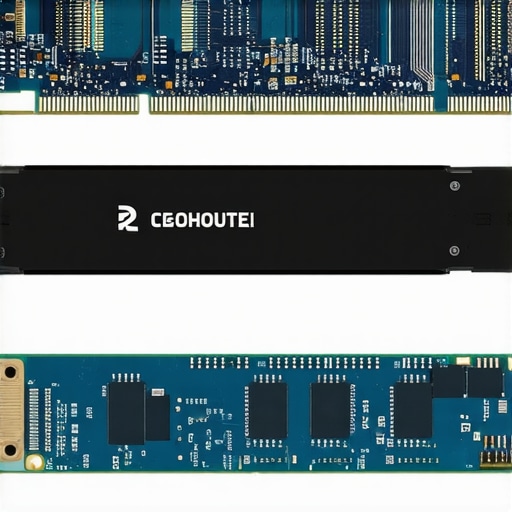
Understanding the most effective RAID setup for your external SSDs can dramatically influence your data workflow’s efficiency and security. For expert consultation tailored to your specific needs, contact our storage architecture specialists through our contact page.
Emerging Trends: Persistent Memory and Computational Storage — Redefining External High-Speed Storage Paradigms
Looking ahead, persistent memory (PMEM) modules and computational storage are poised to revolutionize external storage. Persistent memory offers near-instant access to data, blurring the lines between RAM and storage, and enabling applications like real-time analytics and AI-driven data processing to operate directly on storage devices. Meanwhile, computational storage devices (CSDs) embed processing capabilities within storage hardware, reducing data movement and accelerating workloads.
These innovations promise to significantly enhance RAID configurations by offloading processing tasks, improving throughput, and reducing latency—a critical advantage in high-frequency trading, scientific simulations, and large-scale AI training.
Q: How can integrating persistent memory and computational storage optimize RAID architectures for enterprise data centers?
Integrating these technologies requires rethinking traditional storage hierarchies. Persistent memory modules can serve as ultra-fast caching layers, seamlessly integrating with RAID arrays to accelerate read/write operations. Computational storage enables offloading data processing tasks—like encryption, compression, or analytics—directly onto storage devices, alleviating CPU bottlenecks. This synergy enhances overall system throughput, reduces latency, and improves scalability, supported by industry reports such as those from the Samsung Semiconductor Storage Solutions.
To stay ahead, organizations should consider future-proofing their storage architectures by adopting modular, scalable solutions that incorporate these emerging technologies, ensuring adaptability for evolving workload demands.
Interested in exploring how these advanced storage solutions can transform your data infrastructure? Engage with our experts or delve into our comprehensive resources for detailed guidance and strategic planning.
Unveiling Next-Gen External SSDs: How Are They Transforming High-Speed Data Transfer?
In 2024, external SSD technology continues to push the boundaries of speed and intelligence. Devices now incorporate multi-interface support such as Thunderbolt 4, USB4, and PCIe Gen4, enabling data transfer rates exceeding 40 Gbps and significantly reducing latency. These advancements facilitate real-time editing, scientific simulations, and enterprise data processing with unparalleled efficiency.
Moreover, sophisticated thermal management systems—like vapor chambers and adaptive cooling—ensure sustained performance during prolonged high-speed operations, thereby enhancing device longevity and reliability. This evolution underscores a shift towards smarter, more resilient external storage solutions tailored for demanding workloads.
Synergistic RAID Configurations: Striking the Balance Between Speed, Redundancy, and Cost
The integration of external NVMe SSDs with hardware RAID controllers unlocks a spectrum of performance and resilience options. RAID 0, with its striping mechanism, delivers maximal throughput ideal for media production and large-scale data analysis. Alternatively, RAID 10 offers a compelling blend of speed and fault tolerance, suitable for mission-critical applications.
Implementing software-defined RAID further enhances flexibility, allowing dynamic reconfiguration aligned with evolving workload demands—an essential feature in cloud environments and scalable enterprise infrastructures. Visual aids, such as detailed diagrams, can clarify complex configurations and aid strategic decision-making.
What nuanced considerations influence RAID level selection for external SSD arrays in enterprise environments?
Choosing the appropriate RAID level entails evaluating factors like performance needs, data security, cost constraints, and specific workload characteristics. For instance, RAID 5 provides an effective compromise with parity-based redundancy but introduces write latency, which might hinder latency-sensitive tasks. Conversely, RAID 6 ensures higher fault tolerance at the expense of additional storage overhead.
For critical data environments, combining hardware RAID with comprehensive backup and disaster recovery plans ensures robust resilience. Consulting industry-specific guidelines, such as those outlined in Data Center Journal’s 2024 RAID Strategies, can inform optimal configurations tailored to organizational needs.
To visualize these complex decision pathways, consider leveraging our advanced diagramming tools and case studies available through professional consultation channels.
Emerging Frontiers: Persistent Memory and Computational Storage — Redefining External Storage Paradigms
Looking ahead, persistent memory (PMEM) modules and computational storage devices (CSDs) are poised to transform external high-speed storage. PMEM blurs the boundary between RAM and storage, enabling near-instantaneous data access critical for AI, big data analytics, and real-time processing applications. CSDs embed processing capabilities within storage hardware, drastically reducing data movement and latency.
The integration of these technologies with RAID architectures promises unprecedented improvements in throughput and scalability. For example, persistent memory can serve as ultra-fast cache layers, while computational storage offloads tasks like encryption and analytics, streamlining workflows and enhancing system efficiency.
Q: How can integrating persistent memory and computational storage optimize RAID architectures for enterprise data centers?
Incorporating these innovations requires a reimagining of traditional storage hierarchies. Persistent memory modules can provide ultra-fast caching tiers that seamlessly integrate with RAID arrays, accelerating read/write operations. Computational storage enables offloading intensive processing tasks directly onto storage devices, freeing CPU resources and lowering latency. This synergy supports high-frequency trading, scientific research, and large-scale AI training by delivering higher throughput and reduced bottlenecks, as detailed in Samsung Semiconductor Storage Solutions.
Adopting modular, scalable architectures that incorporate these emerging technologies ensures future-proofing and adaptability to rapidly evolving workload demands. Engage with our specialists to explore customized solutions tailored to your enterprise’s strategic objectives.
Expert Insights & Advanced Considerations
1. The Integration of Multi-Interface External SSDs and RAID Technologies Unlocks New Performance Horizons
Modern external SSDs supporting Thunderbolt 4, USB4, and PCIe Gen4 enable multi-gigabit data transfer rates, significantly reducing latency and elevating workflows in media production and scientific research. When combined with hardware RAID configurations such as RAID 0 or RAID 10, these drives provide an optimal balance of speed, redundancy, and scalability, essential for enterprise-level data management.
2. The Future of Storage Lies in Persistent Memory and Computational Storage Synergies
Emerging technologies like persistent memory modules and computational storage devices are revolutionizing external storage paradigms. These innovations facilitate near-instant data access and offload processing tasks, dramatically reducing bottlenecks and latency—crucial for AI applications, real-time analytics, and high-frequency trading environments.
3. Proper RAID Level Selection and Maintenance are Critical for High-Performance, Resilient Data Architectures
Choosing the right RAID configuration involves balancing performance needs with data security. Hardware RAID with redundancy (RAID 5, 6, or 10) combined with regular health checks and dynamic reconfiguration ensures robust resilience and minimal downtime, especially in mission-critical scenarios.
4. Advanced Thermal Management and Modular Designs Extend External Storage Longevity
State-of-the-art external SSD enclosures now incorporate vapor chambers, adaptive cooling, and modular components, supporting sustained high-speed transfers and easy scalability—key for demanding environments like video editing farms and scientific data centers.
5. The Shift Toward Smarter External Storage Solutions Facilitates Real-Time Data Processing
Integration of AI-driven thermal controls, intelligent caching, and multi-interface support makes external SSDs more reliable and efficient. These features enable real-time editing, analytics, and complex computations without compromising performance or data integrity.
Curated Expert Resources
- Samsung Semiconductor Storage Solutions: Offers insights into cutting-edge persistent memory and computational storage innovations essential for modern high-speed data applications.
- Data Center Journal’s 2024 RAID Strategies: An authoritative source on enterprise RAID configurations, balancing performance, redundancy, and cost.
- Workstation Wizard’s RAID Storage Guide: Provides practical, expert-driven strategies for configuring and maintaining RAID systems tailored for high-performance environments.
- Advanced Storage Review & Analysis: Industry reports and reviews on the latest external SSD technologies, thermal management systems, and multi-interface support, critical for future-proofing storage infrastructure.
Final Expert Perspective
In 2024, the landscape of high-speed external and RAID storage continues to evolve rapidly, driven by innovations in multi-interface external SSDs, persistent memory, and intelligent management systems. Leveraging these advanced technologies with well-chosen RAID configurations allows professionals to achieve unprecedented throughput, resilience, and scalability—fundamental for maintaining a competitive edge in data-intensive fields. For those serious about optimizing their storage architecture, staying informed through authoritative resources and engaging with industry experts is imperative. Discover tailored solutions and deepen your expertise by reaching out to our specialists via contact page.
This article offers an in-depth look at the latest advances in external SSD and RAID technology, which are essential for anyone involved in high-speed data workflows, especially in creative and scientific sectors. I was particularly interested in the discussion about thermal management systems integrated into modern enclosures, as overheating can seriously impact sustained performance during prolonged data transfers.
From my experience, balancing speed and data security often becomes a challenge, especially when scaling storage solutions. The emphasis on choosing the right RAID level for your specific workload resonates with me; I’ve seen small media teams benefit from RAID 0 for speed, but as data security needs grow, RAID 10 or even RAID 6 are more appropriate.
With emerging technologies like persistent memory and computational storage gaining traction, do you think widespread adoption will happen in the next two or three years, or will these remain niche solutions for now? I’d love to hear others’ thoughts or experiences with deploying these cutting-edge storage options in real-world settings.
This post provides a comprehensive overview of how external SSDs and RAID configurations are shaping the future of high-speed data management in 2024. I’ve been exploring the blend of NVMe technology with RAID arrays, especially the newer multi-interface drives supporting Thunderbolt 4, USB4, and PCIe Gen4. It’s impressive how these advancements enable such high throughput while maintaining low latency, which is crucial for real-time editing and scientific computation. One challenge I’ve encountered is ensuring proper thermal management during extended high-speed transfers; drives with vapor chambers or adaptive cooling systems seem to make a big difference in maintaining peak performance over long periods.
Regarding emerging tech like persistent memory and computational storage, I believe these will gradually transition from niche to mainstream, especially in large data centers where minimized latency and increased throughput directly impact operational efficiency. However, widespread adoption depends on future hardware integration and cost reductions. From your perspective, what are the primary hurdles in mainstreaming these innovations, and how soon might they influence day-to-day enterprise storage infrastructure? It’s an exciting time to see how these technologies will evolve and integrate. Looking forward to insights from others who have begun experimenting with these solutions.
This article highlights the rapid pace of development in external SSD and RAID technology for 2024, which is truly inspiring. Having recently migrated some of my workflows to external NVMe enclosures supporting Thunderbolt 4, I’ve experienced firsthand how these innovations dramatically cut down transfer times and streamline data handling. Thermal management has been a critical factor for me—drives with smart cooling systems, like vapor chambers, have made a noticeable difference during extended sessions. I’m curious about the adoption timeline for persistent memory and computational storage. From my perspective, smaller companies might find the transition challenging due to cost and infrastructure adjustments, but large data centers could integrate these techs more swiftly. It’s exciting to consider how these advancements will reshape data throughput and system resilience in the near future. Have others managed to successfully implement these emerging solutions? What obstacles did you encounter, and how did you address them? Overall, this is a compelling look at what’s coming, and I’d love to hear more experiences from those pioneering these tools.
This post really highlights how crucial thermal management is when working with high-speed external SSDs in RAID setups. I’ve experienced firsthand how overheating can throttle performance during prolonged data transfers, especially with NVMe drives supporting Thunderbolt 4. The integration of advanced cooling solutions like vapor chambers has made a significant difference in maintaining peak speeds and hardware longevity. It’s fascinating to see how hardware design is evolving to meet the demands of continuous, high-throughput workflows.
I’m curious, how do others handle thermal challenges in multi-drive RAID configurations for professional environments? Do you prefer active cooling solutions, or have you found effective passive systems that work well? Also, with the surge of emerging technologies like computational storage, do you think future external enclosures will become even more sophisticated in thermal management and modularity? Would love to hear your experiences and insights on balancing performance, heat dissipation, and scalability in high-performance storage environments.