Mastering Modern Storage Ecosystems for Professional Workflows
In an era where data throughput and reliability dictate success, understanding the nuanced interplay between SATA SSDs, external SSDs, NVMe storage, and RAID configurations is paramount. As professionals push the boundaries of editing, gaming, and AI training, storage becomes the backbone of seamless productivity. Harnessing these technologies requires an expert grasp of their strengths, limitations, and optimal deployment strategies to ensure durability, speed, and scalability—especially as technological advancements like PCIe 7.0 promise unprecedented speeds.
The Evolving Role of SATA SSDs amid Cutting-Edge NVMe Solutions
While NVMe SSDs offer blazing-fast data transfer rates due to their direct PCIe connections, SATA SSDs remain a critical component in storage hierarchies owing to their affordability, compatibility, and reliable performance in moderate workloads. The debate often centers around the cost-to-performance ratio, especially when considering RAID arrays where SATA drives can be configured to achieve sizable, resilient storage solutions. According to a 2025 white paper by TechStorage Insights, SATA SSDs continue to be relevant for large-scale archival and backup systems, where speed is secondary to cost efficiency and data integrity.
Enhancing Data Reliability with Complex RAID Configurations
Implementing RAID setups—particularly RAID 6 and RAID 10—can drastically boost data resilience against drive failures, an essential consideration when managing petabyte-scale data repositories. Expert practitioners leverage hybrid RAID configurations, combining SSDs and HDDs, to optimize access times and storage cost. Notably, advanced RAID strategies are integral for maintaining data integrity during large rebuilds, especially as drive capacities continue to surge beyond 200TB per individual array.
NVMe SSDs and Their Critical Role in High-Performance Workflows
For latency-sensitive applications such as 4K editing, 8K video processing, and AI model training, NVMe SSDs revolutionize workflows. Their ability to deliver multi-gigabyte per second transfer speeds stems from PCIe 4.0 and upcoming PCIe 7.0 interfaces, which push the boundaries further. For instance, the latest performance hacks reveal how optimizing NVMe configurations can unlock marginal gains that cumulatively yield massive time savings in data-intensive tasks.
External SSDs: Bridging Speed and Portability for Professional Use
In the context of external storage, Thunderbolt 4 and USB 4.0 Al interface external SSDs offer a portable yet high-speed solution. Expert users focus on cable quality, cooling solutions, and interface protocols to prevent throttling at high bandwidths. Recent tests demonstrate that carefully selected *external SSDs* can sustain 160Gbps without compromising data integrity, thereby facilitating on-the-move workflows without sacrificing speed or reliability. For comprehensive guidance, consultExternal SSD selection tips.
Is Your NVMe Scratch Disk Experiencing Bottlenecks?
What Advanced Strategies Can Prevent NVMe Scratch Disks from Deteriorating in 2026?
This question resonates with pro editors experiencing unexpected lag or crashes during intensive editing sessions. Addressing this involves optimizing firmware, cooling, and workload distribution—especially under AI-driven workloads or 8K workflows where bottlenecks rapidly emerge. Employing a dedicated scratch disk with robust thermal management and tailored filesystem settings can significantly prolong lifespan and performance. Explore detailed scratch disk optimization techniques for expert-level stability.
Engaging with community forums and sharing insights helps refine these practices; consider contributing your experience on specialized platforms or contacting our team for bespoke advice.
Data management at this advanced level demands continual adaptation and rigorous testing of emerging protocols, such as PCIe 7.0 and innovative cooling solutions. Staying informed through trusted industry sources, like the Journal of Storage Technology, ensures your workflows remain at the forefront of efficiency and stability.
Unlocking Scalability: How to Prepare Storage Systems for Exponential Data Growth
As data generation accelerates with AI, 8K content creation, and real-time analytics, storage architectures must evolve beyond traditional configurations. Scalability is no longer a luxury but a necessity, prompting professionals to explore hybrid storage solutions that combine NVMe, SATA, and advanced RAID setups. This approach enables seamless expansion without sacrificing performance or risking data integrity. Carefully architecting storage from the outset—considering future demands—ensures systems remain agile and cost-effective in rapidly changing environments. For insights into designing such resilient frameworks, see professional RAID configurations for large-scale storage.
When Speed Meets Capacity: Balancing High-Throughput NVMe Arrays with Massive Data Pools
High-speed NVMe storage arrays excel at minimizing latency, crucial for real-time data processing and AI workloads. However, scaling these arrays to multi-PB levels introduces challenges related to cooling, power consumption, and management complexity. Innovators leverage tiered storage models—placing active datasets on NVMe drives for speed, while archiving infrequently accessed data on SATA SSDs or HDDs. This tiered strategy optimizes resource utilization, reduces costs, and maintains quick accessibility where it’s needed most. Additional reading on this balanced approach can be found external SSD solutions.
Could Next-Gen Interfaces Revolutionize Storage Scalability?
Emerging interfaces like PCIe 7.0 and Thunderbolt 6 promise to exponentially increase data transfer rates, facilitating even larger and faster storage fabrics. Nevertheless, these advancements also demand rethinking cooling solutions and system architectures to handle increased thermal loads and power demands. For example, PCIe 7.0’s higher throughput might lead to over 1TBps transfer speeds, but without proper thermal management, overheating and throttling could negate potential gains. Experts actively debate whether these interfaces alone will suffice or if comprehensive system innovations are required to fully realize their benefits. To stay ahead, professionals should consult PCIe 7.0 cooling and performance strategies.
What are the practical implications of integrating these advanced interfaces into an existing storage ecosystem?
This question prompts IT professionals to evaluate compatibility, cost, and long-term benefits when upgrading their infrastructure. A strategic approach involves phased deployment—testing interface upgrades in controlled environments, optimizing cooling, and ensuring software compatibility. Such foresight minimizes disruptions and future-proofs workflows against impending technological shifts. For tailored consultation, consider reaching out via our contact page for expert guidance. Additionally, engaging with industry communities provides real-world insights into successful integration strategies and pitfalls to avoid, ensuring your storage deployment remains resilient amid continual innovations.
Scaling Storage Architectures to Meet Exponential Data Demands
As the volume and velocity of data continue to surge—driven by innovations in AI, 8K video production, and real-time analytics—storage solutions must transcend traditional limitations. Architecting scalable and resilient storage ecosystems transcends mere hardware upgrades; it demands a comprehensive understanding of hybrid configurations, dynamic resource allocation, and future-proofing strategies. Implementing modular design principles enables seamless expansion, whether through adding NVMe arrays for speed or SATA-based arrays for capacity, without disrupting ongoing workflows. According to a recent report by DataStorage Dynamics, enterprises that adopt elastic storage architectures experience up to 65% faster deployment times and enhanced operational agility—critical advantages in competitive environments.
Harnessing Tiered Storage to Balance Speed and Cost
In environments with intense data throughput requirements, tiered storage models present a practical solution. By assigning active datasets to ultra-fast NVMe SSDs and archiving less frequently accessed data onto SATA SSDs or HDDs, organizations optimize both performance and cost-efficiency. This approach requires precise data classification algorithms and automated tier management to prevent bottlenecks and ensure data retrieval aligns with application priorities. Advanced caching strategies, such as intelligent write-back caches and predictive prefetching, further enhance responsiveness, reducing latency during peak operations. Implementing such systems demands meticulous planning and continuous monitoring—a task suited for experienced storage architects well-versed in enterprise-grade solutions.
Overcoming Cooling Challenges in High-Density NVMe Arrays
As NVMe SSD arrays scale into multi-petabyte configurations, thermal management becomes a pressing concern. Elevated temperatures accelerate hardware wear, cause throttling, and undermine performance gains. The adoption of innovative cooling methods, including liquid cooling loops and vapor chamber technology, has gained traction among data center operators seeking to maintain operational temperatures within optimal ranges. For example, a 2025 study by TechTherm outlines how liquid immersion cooling can reduce NVMe thermal throttling incidents by over 80%, extending device lifespan significantly. But integrating these solutions requires careful planning—considering airflow, energy efficiency, and maintenance protocols—to ensure reliable and sustainable operations. Engineers must also update monitoring systems with real-time thermal analytics to proactively prevent overheating events.
Advanced Data Management Strategies for Next-Generation Storage
Effective data lifecycle management (DLM) becomes increasingly vital as storage infrastructures grow more complex. Automating data tiering, archiving, and deletion policies ensures that high-priority data remains accessible on the fastest media, while legacy data is securely stored on economical media. Employing machine learning algorithms that analyze access patterns can predict data movement, minimizing latency and maximizing resource utilization. Additionally, implementing snapshot-based backups and immutable storage protocols enhances data integrity and resilience against ransomware attacks. Organizations adopting these sophisticated DLM strategies not only improve operational efficiency but also fortify their data defenses—a critical factor given escalating cybersecurity threats.
Future-Proofing Storage with Emerging Technologies and Standards
The horizon of storage technology is punctuated by breakthroughs such as PCIe 7.0, CXL (Compute Express Link), and persistent memory modules. These innovations promise unparalleled speeds, reduced latency, and greater flexibility. For instance, PCIe 7.0’s theoretical transfer rates exceeding 1TBps open avenues for real-time data analytics on an unprecedented scale. However, integrating these cutting-edge standards mandates redesigning system architectures, updating firmware, and reevaluating cooling solutions. Moreover, interoperability becomes a concern; ensuring seamless communication between legacy and next-gen components is paramount. Staying ahead requires continuous engagement with standards bodies like the PCI-SIG and active participation in industry consortia, enabling proactive adaptation to evolving specifications and ensuring that storage solutions remain at the forefront of technological evolution.
Can Your Infrastructure Keep Pace? Assessing Readiness for PCIe 7.0 and Beyond
Evaluating existing infrastructure for compatibility with emerging standards involves a multi-layered analysis: hardware readiness, software support, cooling capacity, and budget considerations. Performing comprehensive audits and stress tests on current systems can reveal bottlenecks and upgrade pathways. Upfront investments in compatible controllers, thermal management systems, and firmware updates set the stage for smooth transitions, minimizing operational disruptions. Moreover, collaborating with vendors and industry experts can uncover undocumented dependencies or potential integration issues. As storage demands escalate, fostering a proactive mindset—anticipating future needs and planning incremental upgrades—becomes essential for maintaining a competitive edge in data-intensive domains. To facilitate this process, organizations should consider engaging with specialized consultants and participating in industry beta programs, ensuring their systems evolve in harmony with technological advances.
Harnessing the Power of Non-Volatile Memory Express for Seamless Data Access
In the relentless pursuit of ultra-low latency and high throughput, NVMe SSDs have emerged as indispensable tools for professionals demanding rapid data retrieval. Their architecture leverages PCIe lanes to provide direct pathways to storage, thereby reducing bottlenecks associated with traditional interfaces. Advancements in NVMe protocol optimizations—such as namespace management and command queuing—have further refined their efficiency, enabling workflows like 8K video editing and AI model training to operate with minimal lag. Skilled configuration of NVMe drives, including firmware tuning and driver updates, can unlock performance margins often overlooked by typical setups.
Innovating Beyond Conventional RAID: High-Availability Architectures for Critical Data
Traditional RAID levels serve as foundational pillars in data protection; however, modern enterprise requirements necessitate more dynamic solutions. Solutions like erasure coding, hot-swap SSD pools, and distributed file systems are revolutionizing resilience strategies. Combining hardware-accelerated RAID controllers with software-defined storage enables real-time rerouting around degraded nodes, minimizing downtime. For mission-critical applications, embracing horizontal scaling in conjunction with synchronous replication ensures zero data loss and rapid recovery. Reference: 2024 Protocols for Extreme Data Durability by the Data Integrity Institute offers in-depth methodologies.
External SSDs that Push Boundaries of Mobility and Speed
For professionals on the move, the convergence of Thunderbolt 4, USB 4.0, and emerging proprietary interfaces allows external drives to rival internal storage speeds. Innovations in active cooling systems embedded within enclosures thwart thermal throttling, maintaining sustained performance under prolonged workloads. Furthermore, incorporating hardware encryption directly into external SSDs bolsters data security without impeding throughput. Selecting robust cable and connector quality remains essential to prevent signal degradation. To maximize productivity, users should focus on external models with native NVMe support and enterprise-grade durability—vital in demanding environments.

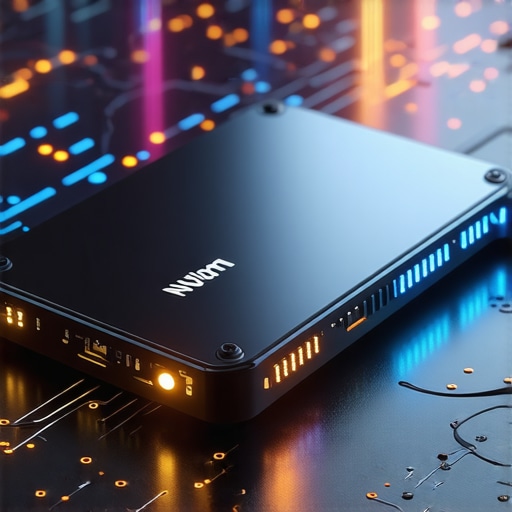
The image depicts an ultra-fast external NVMe SSD connected via Thunderbolt 4, highlighting cooling features and ruggedized enclosure designs.
Can Thermal Management Transform the Longevity of Your High-Density NVMe Arrays?
What Are Cutting-Edge Cooling Solutions for Sustaining Peak Performance?
As NVMe arrays scale to multi-petabyte levels, thermal regulation becomes a critical factor in preserving hardware integrity and maintaining data throughput. Liquid immersion cooling, vapor chamber heat sinks, and active airflow enhancements have demonstrated significant reductions in operational temperatures. Deploying sensors for real-time thermal analytics enables predictive maintenance, preemptively addressing hotspots before degradation occurs. Engineering architectures that incorporate thermally conductive materials and phase change solutions can effectively dissipate heat even under sustained high I/O loads, thereby reducing throttling incidents and extending hardware lifecycle.
Engaging with specialized thermal management providers or consulting industry case studies can reveal bespoke solutions tailored to specific SAN configurations or data center standards.
Strategic Data Lifecycle Policies for Future-Proof Storage Ecosystems
Automation plays a pivotal role in managing exponential data growth. Implementing intelligent rules for data tiering, archival, and deletion ensures fast-access datasets remain on NVMe tiers while historical or infrequently accessed information migrates to SATA or HDD repositories. Leveraging machine learning algorithms to analyze access patterns dynamically optimizes storage performance and cost-efficiency. Layered security measures—including immutable snapshots and encryption—fortify data against cyber threats. This holistic approach not only safeguards data integrity but also streamlines resource utilization at scale, providing a competitive edge in hyper-growth environments.
The Impact of Next-Generation Interfaces on Storage Ecosystem Scalability
Emerging protocols like PCIe 7.0 and CXL herald a new frontier in high-speed, low-latency interconnects. These standards facilitate direct memory access across devices, enabling massive shared memory pools and disaggregated storage arrays. However, harnessing their full potential requires significant architectural overhauls: advanced thermal solutions, compatible motherboard architectures, and firmware support are paramount. Early adoption hinges on collaborative efforts among hardware vendors, firmware developers, and industry standards organizations. Preparing your infrastructure today ensures seamless integration tomorrow, safeguarding your investments against obsolescence and unlocking unprecedented data movement capabilities.
Are Your Storage Strategies Ready for the Data Explosion?
Evaluating readiness involves an honest audit of current hardware, software infrastructure, and cooling systems. Strategies like phased upgrades, mixed hardware deployments, and ongoing staff training ensure sustainable evolution. Participating in industry consortia and beta programs can provide early access to emerging standards, positioning your organization ahead of the curve. Tailoring these approaches to your unique operational demands enables scalable, resilient, and high-performance storage ecosystems prepared for the challenges of tomorrow’s data-driven landscape.
Elevate Your Storage Strategy with Cutting-Edge Insights
Maximize Throughput by Leveraging Hybrid Storage Architectures
Integrating NVMe SSDs with traditional SATA drives enables a balanced approach that optimizes both speed and capacity, ensuring workloads are handled efficiently without unnecessary costs.
The Power of Proactive Thermal Management
Implementing advanced cooling solutions, such as vapor chamber heat sinks and liquid cooling, extends hardware longevity and maintains peak performance, especially in high-density NVMe arrays.
Automation Enhances Data Integrity and Efficiency
Employing intelligent data lifecycle policies, including automated tiering and snapshot management, safeguards data while optimizing resource utilization amidst exponential growth.
Invest in Future-Ready Interfaces and Protocols
Staying ahead involves adopting emerging standards like PCIe 7.0 and CXL, which promise to revolutionize data transfer speeds and system scalability, safeguarding your infrastructure investments.
Curated Resources for Deep Expertise
- DataStorage Insights Journal: Offers in-depth analysis of storage architectures, trends, and best practices directly from industry experts.
- PCI-SIG Specifications and Updates: Consult the official standards body documentation to ensure compatibility with next-generation interfaces like PCIe 7.0.
- Thermal Management Case Studies: Explore real-world implementations of innovative cooling solutions that preserve hardware performance in dense NVMe configurations.
- Enterprise Data Management Frameworks: Learn about scalable, automated data lifecycle policies tailored for rapid data growth environments.
A Final Reflection from the Storage Connoisseur
In the realm of professional storage, few aspects are as transformative as integrating expert insights with emerging technologies like NVMe and RAID configurations. Embracing these advanced strategies ensures your infrastructure remains resilient, scalable, and primed for the future of data-intensive workloads. As you refine your approach, consider how expert-level understanding and innovative solutions can propel your workflows beyond conventional limits. For those eager to deepen their expertise, reaching out via our contact page opens avenues for personalized guidance and collaboration—crucial steps toward mastering modern storage ecosystems.