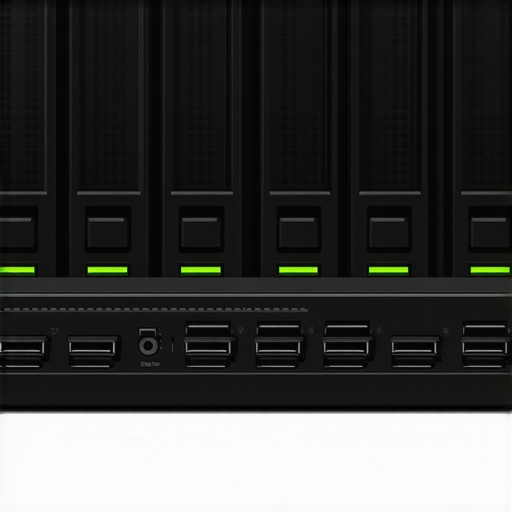

Revolutionizing Data Management Through Advanced External Storage Technologies
In an era where data volumes grow exponentially, achieving optimal storage efficiency has become a strategic necessity for professionals and enterprises alike. The convergence of high-speed external SSDs, NVMe technology, and RAID configurations offers unprecedented levels of performance, reliability, and scalability. Understanding how to leverage these innovations requires a nuanced appreciation of their underlying architectures and the specific operational demands they address.
The Intricacies of SATA SSD Versus NVMe SSD in External Environments
Distinguishing between SATA SSDs and NVMe SSDs is fundamental for optimizing data workflows. SATA SSDs, constrained by legacy interfaces, deliver solid performance suitable for general-purpose applications. Conversely, NVMe SSDs utilize PCIe lanes, providing significantly higher throughput and lower latency. For high-demand tasks such as real-time video editing or large-scale data analysis, integrating NVMe SSDs into external enclosures unlocks critical speed benefits, especially when coupled with Thunderbolt 3 or USB 4 interfaces. Reference this comparison guide for deeper insights.
RAID Storage Configurations: Beyond Redundancy to Performance
Implementing RAID with external SSDs elevates data management from mere redundancy to a finely tuned performance ecosystem. NVMe-based RAID arrays, especially configurations like RAID 0 and RAID 10, allow for parallel data processing and fault tolerance, critical for workloads that demand rapid read/write speeds. Advanced RAID controllers and software-defined solutions enable dynamic array management, balancing speed and data integrity. This approach is particularly beneficial for media production pipelines where continuous high-throughput access is essential. For detailed architecture strategies, consult the comprehensive RAID overview.
Emerging Trends and Challenges in External Storage Deployment
As the competition intensifies, emerging solutions such as PCIe 4.0 and the anticipated PCIe 5.0 standards promise even greater performance leaps. However, these advancements come with challenges—compatibility issues, thermal management, and cost considerations. Additionally, the integration of external SSDs within RAID configurations raises questions about latency overhead and synchronization fidelity, demanding rigorous testing and expert calibration. A critical analysis of these factors reveals that well-orchestrated hardware-software synergy is key to harnessing maximal storage throughput in 2024.
What Strategies Best Combine External SSDs for Ultra-Fast Scratch Disk Performance Without Compromising Data Security?
Achieving the perfect balance between speed and data integrity in external scratch disk setups involves not only choosing the right SSDs—preferably NVMe-based with high durability ratings—but also implementing dynamic RAID configurations tailored for creative workflows. Employing hardware-backed encryption alongside robust backup routines mitigates risks while maintaining the desired throughput. For expert advice or tailored solutions, contact our specialist team.
Continued innovation entails staying abreast of industry white papers and case studies. As noted by the IEEE Communications Society, integrating PCIe 4.0 SSDs in RAID arrays can slash data transfer bottlenecks, fostering new levels of efficiency in professional environments (IEEE white paper).
,
Mastering External Storage for Demanding Creative Workflows
As creative industries and data-intensive fields push the boundaries of speed and reliability, professionals need to harness cutting-edge storage solutions that seamlessly blend capacity, protection, and rapid access. External SSDs, particularly NVMe models, paired with sophisticated RAID configurations, form the backbone of this high-performance infrastructure, enabling artists, videographers, and analysts to operate without bottlenecks. To truly optimize your setup, you must understand not just the hardware choices but also the fine-tuned interactions between them.
High-Speed External SSDs That Elevate Productivity
Choosing the right external SSD can make or break your workflow. NVMe SSDs, with their PCIe 4.0 or emerging PCIe 5.0 support, deliver extraordinary transfer speeds—often exceeding 7,000 MB/s—suitable for handling large video files or complex datasets. Modern enclosures support Thunderbolt 4 and USB 4, ensuring compatibility and minimal latency. An insightful comparison of recent models reveals that prioritizing durability, thermal management, and interface compatibility is essential; explore this guide for current best options.
Practical RAID Configurations for External SSDs that Outperform
Implementing RAID with external NVMe SSDs unlocks a realm of tailored performance and redundancy. Configurations like RAID 0 significantly boost read/write speeds, while RAID 10 adds resilience against hardware failure. Hardware RAID controllers and software solutions such as Windows Storage Spaces or dedicated controllers provide flexibility in array management. Combining these with external enclosures that support daisy-chaining or multi-bay setups enables scalable and resilient storage arrays—perfect for studios and research labs. To craft the ideal architecture, refer to this detailed blueprint.
Navigating the Challenges of External RAID Deployment in High-Performance Environments
Despite the benefits, integrating RAID arrays externally comes with challenges—thermal regulation, synchronization issues, and interface limitations. PCIe 4.0 and future PCIe 5.0 standards promise increased bandwidth but demand compatible motherboards and controllers. Additionally, managing heat output from multiple NVMe modules requires strategic enclosure design, emphasizing airflow and heat sink integration. Experts recommend rigorous testing under real-world conditions, ensuring latency remains minimal and data integrity is uncompromised. Staying informed through white papers such as the IEEE’s latest on PCIe developments can keep you ahead of the curve (IEEE white paper).
How Can Advanced RAID Strategies Be Customized for Future-Proof External Storage Environments?
Designing modular, scalable RAID architectures involves not only selecting the optimal SSD models but also integrating adaptable software solutions and hardware controllers that support hot swapping and dynamic reconfiguration. Cloud-based management and monitoring tools further enable proactive maintenance and performance tuning. Incorporating encryption layers within RAID arrays ensures data security aligns with operational speed—an essential consideration for sensitive workflows. For tailored advice, connect with industry experts at our contact page.
Advancements in external storage reveal that ongoing research in PCIe technology and controller firmware—like the recent developments discussed in this white paper—are setting new performance standards. Strategic integration of hardware and software solutions continues to be pivotal for those aiming to push the boundaries of data accessibility and security in 2024 and beyond.
,
Harnessing Modular Architectures to Future-Proof Data Infrastructure
In rapidly evolving enterprise landscapes, flexibility and scalability in storage solutions are no longer optional—they are imperative. Modular external storage arrays empower organizations to dynamically adapt their infrastructure, seamlessly integrating new drives, interfaces, and technologies as demands shift. These systems are designed with a focus on modularity, enabling on-the-fly upgrades, maintenance without downtime, and tailored configurations aligned with specific operational needs.
How does modularity influence long-term data scalability and operational resilience?
Modularity ensures that organizations can incrementally expand their storage capacity, avoiding costly overhauls and minimizing disruption. By incorporating hot-swappable drive bays and standardized interfaces such as NVMe, SAS, or SATA, enterprises can tailor their storage arrays to match workload growth trajectories. Furthermore, modular architectures often facilitate redundant power supplies and cooling, enhancing resilience against hardware failures. According to a recent study by Gartner (Gartner Report on Modular Storage Solutions), organizations adopting modular systems experience 30-50% reduction in maintenance costs over a five-year period, alongside improved system uptime.
Innovative Approaches to Storage Integration: Combining SSDs and HDDs for Optimal Performance
Emerging hybrid storage architectures exemplify the principle of strategic tiering—placing high-performance SSDs in critical data paths while using traditional HDDs for archival storage. This hybrid approach leverages the rapid access times of SSDs and the cost-effectiveness of HDDs, delivering both speed and capacity. Advanced controllers and software-defined storage (SDS) solutions automate data placement, ensuring hot data resides on SSDs, whereas less frequently accessed information migrates to HDDs. This dynamic management minimizes latency bottlenecks and optimizes overall throughput, especially in environments with mixed workload profiles.
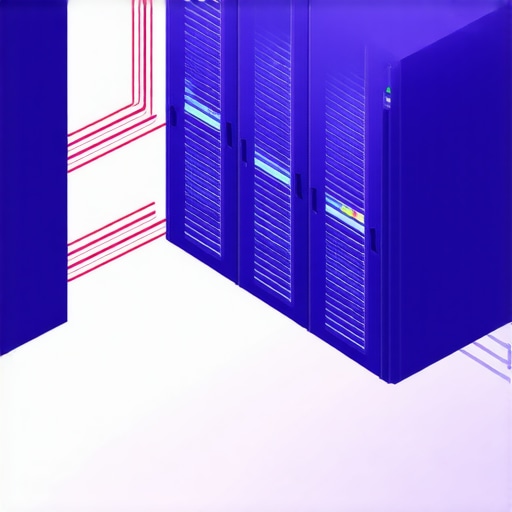
Visualize a hybrid storage architecture showcasing SSD and HDD tiers interconnected with intelligent data management layers.
What are the latest developments in SSD-HDD hybridization technologies, and how do they impact enterprise data strategies?
The integration of machine learning algorithms into data management platforms revolutionizes hybrid storage strategies. These intelligent systems analyze access patterns in real-time, predicting future data hot spots and proactively migrating data between tiers. As reported by IDC (IDC Research on Data Tiering), enterprises implementing AI-driven tiering experience up to 40% improvements in data retrieval times and significant reductions in storage costs. Additionally, the advent of NVMe over Fabrics (NoF) extends high-speed access across distributed environments, facilitating centralized management of hybrid arrays across geographically dispersed data centers.
Embedding Security within Modular Storage for Compliance and Risk Mitigation
As storage architectures grow in complexity and scale, embedding robust security measures becomes critical. Encryption—both at rest and in transit—must be integrated within modular systems without compromising performance. Hardware-based encryption modules, such as Self-Encrypting Drives (SEDs), and secure access protocols like NVMe over TCP with TLS, protect sensitive data against cyber threats. Moreover, firmware security and firmware validation tools ensure the integrity of storage controllers, preventing malicious infiltration or firmware tampering. According to NIST guidelines (NIST Special Publication 800-175B), embedding security controls from the hardware level up is essential for compliance in regulated industries.
How can next-generation encryption strategies be integrated into modular external storages without impairing operational efficiency?
Advanced encryption techniques like homomorphic encryption or hardware-accelerated encryption engines enable secure data processing and transfer at blazing speeds. Implementing Secure Enclaves within storage controllers isolates cryptographic operations from other system processes, reducing latency and ensuring high throughput. Additionally, aligning encryption key management with cloud-based Key Management Services (KMS) offers scalable, centralized control—crucial for enterprise environments with distributed teams. Industry leaders like IBM and Thales have pioneered integrated solutions that balance security with performance, setting standards for future storage architectures.
Embracing modularity and integrating sophisticated security protocols is driving a paradigm shift in enterprise data management. As these technologies mature, their synergy promises not just enhanced scalability but also fortified data governance, aligning with the increasing mandates for compliance and risk mitigation. For organizations eager to stay ahead, understanding and leveraging these innovations is vital, paving the way toward resilient and adaptable data ecosystems.
,
Reimagining Data Scalability with Adaptive Modular configurations
In the pursuit of ultimate flexibility, forward-thinking organizations are increasingly turning to modular external storage architectures that empower seamless scalability and effortless upgrades. Such systems facilitate dynamic expansion, enabling workload-driven adaptation without disruptive downtimes. Implementing hot-swappable drives within standardized enclosures fosters a resilient, resilient infrastructure capable of evolving alongside technological advancements.
What design principles lead to truly scalable and resilient external storage infrastructures?
Core principles include standardized interface protocols like NVMe over PCIe, backward compatibility, and intelligent management software that supports real-time reconfiguration. Incorporating redundant power supplies and cooling solutions enhances operational resilience, while modular enclosures with multi-bay support streamline capacity augmentation. As highlighted in the Gartner report (Gartner’s insights on modular storage), such architectures yield significant reductions in maintenance costs and improve overall system uptime.
Synergizing Storage Tiering with Intelligent Data Management
As data volume surges, hybrid tiered storage systems emerge as strategic solutions that blend SSD and HDD technologies for optimized performance and cost management. Leveraging sophisticated data classification algorithms, these systems dynamically migrate hot data to high-speed SSD tiers, while archiving less active data on HDDs, thereby maintaining swift access where it counts.
Recent developments in machine learning-driven data tiering, as documented by IDC (IDC’s research on intelligent data placement), demonstrate up to 40% increase in retrieval efficiency and a substantial decrease in storage expenditure. Integrating NVMe SSDs into the high-performance tiers futurizes this architecture for ever-escalating data demands.
Fortifying Data Security within Modular Architectures
In complex storage ecosystems, embedding advanced security measures is paramount to mitigate vulnerabilities and comply with regulatory frameworks. Hardware acceleration techniques such as Self-Encrypting Drives (SEDs), coupled with secure transport protocols like NVMe over TCP with TLS encryption, enhance data integrity without impairing transfer speeds. Firmware validation tools, aligned with NIST guidelines (NIST SP 800-175B), assure integrity at hardware levels.
What innovative encryption methods are revolutionizing security in high-speed external storage?
Emerging techniques include homomorphic encryption, enabling secure processing of data without decryption, and hardware-accelerated encryption engines that maintain high throughput. Secure Enclaves isolate cryptographic operations within storage controllers, further minimizing latency. Cloud-based key management solutions facilitate centralized control, aligning security with operational agility for enterprise-wide deployment.
Harnessing AI-Driven Automation for Storage Management
Automation is reshaping data management paradigms, with artificial intelligence leading the charge. AI algorithms continuously monitor workload patterns, predict storage bottlenecks, and automatically reallocate resources in real time. Such intelligent management reduces manual oversight, enhances performance stability, and ensures compliance. Leaders like IBM and Thales are pioneering AI-infused encryption and management platforms—fundamental for future-proof, large-scale storage deployments (See the latest research here).
Formulating a Roadmap for Next-Generation Storage Technologies
Staying ahead demands a strategic approach to adopting incoming innovations like PCIe 5.0, Storage Class Memory (SCM), and quantum-resistant encryption. Organizations must craft comprehensive roadmaps that evaluate compatibility, scalability, and security implications, integrating these advancements into their operational fabric proactively. Close tracking of white papers, industry consortiums, and standards bodies (e.g., NVM Express, PCI-SIG) will provide critical foresight for technology integration cycles.
How can enterprises develop proactive strategies to capitalize on emerging storage technologies while mitigating associated risks?
Strategic planning includes fostering cross-disciplinary teams of hardware architects, security specialists, and software developers to pilot new solutions in controlled environments. Engaging in industry forums and collaborative research accelerates knowledge transfer, while phased implementation ensures stability. Risk mitigation relies on comprehensive testing, compliance audits, and forging partnerships with technology providers committed to open standards and interoperability.
Expert Insights & Advanced Considerations
Emphasize Real-World Testing
By rigorously evaluating storage solutions under practical workloads, professionals can uncover performance bottlenecks and compatibility issues that theoretical specs might overlook. Live testing ensures configurations deliver expected throughput and reliability, especially when integrating NVMe SSDs with various RAID setups.
Prioritize Thermal Management
As external SSDs push higher speeds, managing heat becomes crucial to maintain optimal performance and hardware longevity. Incorporating efficient heat sinks, airflow design, and enclosure materials helps prevent thermal throttling, ensuring sustained data transfer rates during intensive tasks.
Balance Redundancy with Speed
Strategically deploying RAID levels like RAID 10 combines fault tolerance with high performance. Understanding the trade-offs allows for designing storage architectures that safeguard critical data without sacrificing the speed demanded by modern workflows.
Develop Custom Monitoring Protocols
Implementing tailored monitoring systems for external storage arrays enables proactive maintenance and quick identification of failing components. Tracking parameters such as temperature, throughput, and drive health supports operational resilience and minimizes unexpected downtime.
Stay Ahead with Industry Collaborations
Engaging with industry consortia and white paper publications keeps professionals informed about emerging standards like PCIe 5.0 and advanced encryption methods. Collaborations foster early adoption and influence future technology directions, translating into competitive advantages.