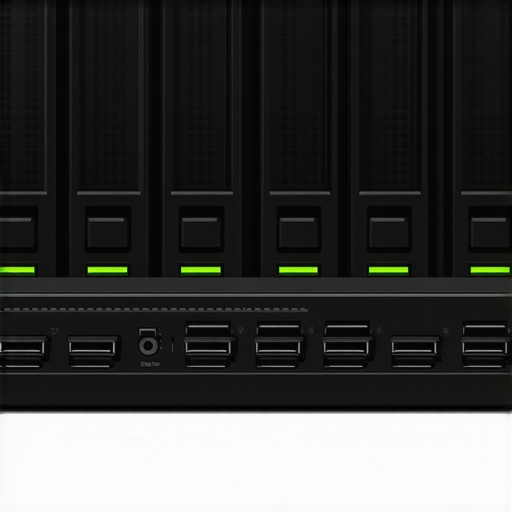

Revolutionizing Data Throughput with Advanced External SSDs and RAID Architectures
In the era of burgeoning data generation, the integration of high-performance external storage solutions such as NVMe SSDs, SATA SSDs, and sophisticated RAID configurations is pivotal for professionals demanding uncompromised speed and reliability. Experts advocate for meticulously engineered storage architectures that exploit the capabilities of the latest NVMe SSDs and optimized RAID arrays to meet the escalating performance benchmarks of 2026.
Delving into the Distinct Advantages and Trade-offs of NVMe and SATA SSDs
While NVMe SSDs surpass SATA SSDs in raw throughput thanks to PCIe 5.0 and emerging PCIe 7.0 standards, strategic deployment depends on workload specifics. NVMe’s low latency benefits multi-threaded workstation tasks and real-time data processing, but considerations around thermal management and power consumption are crucial. Conversely, SATA SSDs, benefiting from maturity and wider compatibility, remain robust options for extensive storage arrays, especially in large-scale RAID environments where endurance and cost-efficiency are prioritized.
Designing RAID Storage for Reliability and Speed at Scale
Implementing RAID configurations like RAID 10 or RAID 6 with NVMe SSDs offers a blend of redundancy and performance, but experts emphasize tailoring the stripe size and cache policies to match read/write patterns. For instance, RAID 10 excels in environments where high-speed data access and fault tolerance are critical, addressing challenges posed by extensive large RAID arrays with minimal overhead.
What are the emerging best practices for integrating NVMe RAID arrays in ultra-large scalable data centers, considering both speed and resilience?
Expert consensus suggests adopting tiered storage architectures that combine NVMe cache pools with SATA-based cold storage, enhancing both performance and data safety. Moreover, leveraging software-defined storage solutions enables dynamic reconfiguration and proactive health monitoring, mitigating risks associated with hardware failures in extensive RAID arrays. These strategies are detailed in recent industry analyses and proven through field applications, ensuring that high-throughput demands are met without compromising data integrity.
For more insights into optimizing your storage infrastructure, visit our contact page, or explore advanced NVMe SSD performance tips tailored for enterprise environments. Your insight can contribute to evolving best practices in this fast-moving domain, so consider sharing your expertise.
The Art of Fine-Tuning Your External SSD Ecosystem
Achieving peak performance with external SSDs requires more than just choosing the right hardware; it involves meticulous calibration of connection types, cable quality, and system settings. Experts recommend prioritizing Thunderbolt 5 or USB 5.0 interfaces for their superior speed capabilities, as highlighted in our comprehensive guide to fastest external SSDs. Additionally, selecting high-quality cables that support sustained data rates is essential to prevent speed drops and ensure consistent throughput.
Designing Resilient and High-Performing RAID Arrays for Heavy Workloads
For professionals managing petabyte-scale data, RAID configurations like RAID 10 and RAID 6 are still the gold standards for balancing speed and redundancy. However, the nuances of stripe sizes and cache policies can significantly influence performance metrics. For instance, larger stripe sizes favor sequential workloads common in large media files, while smaller stripes optimize random I/O operations. A recent industry analysis emphasizes tailoring these parameters to specific workload patterns to maximize throughput while safeguarding data integrity, as detailed in our RAID storage best practices.
How can emerging software-defined storage solutions revolutionize redundancy and speed in massive RAID environments?
Contemporary advancements suggest that integrating intelligent, software-driven management layers can dynamically allocate resources, monitor drive health, and preempt failures. Technologies like adaptive caching, predictive failure analysis, and automated reconfiguration empower data centers to operate at unprecedented scales efficiently. This shift from static hardware configurations to fluid, software-controlled architectures enables scalable performance and resilience, setting new industry benchmarks. For a deeper dive into such solutions, explore our article on high-speed RAID strategies for 2024.
Staying ahead in this domain also means engaging with industry experts—review recent technical reports and case studies, like those available in PCIe 7.0 NVMe optimization research, to continually refine your infrastructure. Collaborating with specialist consultants via our contact portal can further translate these insights into actionable improvements for your unique environment.
Maximizing Transfer Protocols: Beyond Thunderbolt and USB for Critical Data Workflows
While Thunderbolt 5 and USB 5.0 stand as the frontrunners for external SSD connectivity, cutting-edge professionals are exploring alternative protocols such as PCIe over cable solutions and innovative fabric interconnects to push data transfer boundaries further. For example, leveraging Thunderbolt’s PCIe tunneling capabilities can unlock lower latency pathways crucial for real-time editing and high-frequency trading applications. Recognizing the variability in real-world throughput, recent studies underscore the importance of integrating protocol-aware hardware with intelligent buffering strategies to mitigate bottlenecks.
Engineered Cache Hierarchies to Accelerate Large-Scale Data Processing
Implementing multi-tiered cache architectures, combining onboard DRAM, NVMe SSD caches, and system RAM, can significantly reduce I/O latency. Advanced caching algorithms—such as adaptive prefetching and machine learning-driven eviction policies—are gaining traction, enabling systems to predict workload patterns and allocate resources dynamically. Industry leaders recommend configuring cache policies in tandem with workload profiling to achieve near-memory speeds even with massive datasets. This approach demands a nuanced understanding of workload characteristics and their interplay with hardware constraints.
Addressing the Challenges of Thermal Management in High-Density External Arrays
As external SSDs and RAID configurations scale up, thermal dissipation becomes a critical concern. Elevated temperatures can lead to throttling, data integrity issues, and accelerated hardware wear. Solutions include integrating active cooling solutions, such as liquid cooling modules and high-velocity airflow enclosures, along with thermal-aware hardware design that prioritizes heat distribution. Innovative materials, like phase-change thermal interface materials, further contribute to maintaining optimal operating temperatures, ensuring sustained performance during prolonged intensive operations. Consulting heated hardware case studies reveals that proactive thermal management correlates directly with hardware longevity and performance stability.
Can adaptive power management techniques extend external SSD lifespan under sustained high-performance workloads?
Recent advancements indicate that dynamic power scaling, combined with predictive workload analysis, can optimize energy utilization, reducing thermal stress and wear on SSD components. Techniques like workload-aware voltage and frequency scaling (DVFS) adjust operational parameters in real-time, balancing performance with longevity. Industry research from organizations such as the Semiconductor Research Corporation demonstrates that intelligent power management not only conserves energy but also prolongs device lifespan, which is vital for mission-critical applications demanding unwavering reliability. Integrating these strategies requires sophisticated firmware support and system-level orchestration—an area where industry expertise continues to evolve.
To delve deeper into these innovations, explore our detailed guides on integrating thermal management and power optimization in external SSD arrays, and discover how these strategies can seamlessly fit into your existing infrastructure. Engaging with specialized consultants through our platform can translate these cutting-edge concepts into tailored solutions suitable for your unique operational demands.
Achieving Unmatched Data Transfer Efficacy With Novel Protocols
While Thunderbolt 5 and USB 5.0 set new standards for external SSD connectivity, emerging paradigms such as PCIe over fiber optic lines promise ultralow latency and formidable bandwidths, transforming high-speed data workflows. Integrating protocol-aware hardware that intelligently switches between interfaces based on workload demands can dramatically optimize throughput. Industry pioneers also examine the use of fabric interconnects, enabling seamless scalability across expansive storage networks, a development highlighted by recent technical whitepapers from institutions like the IEEE.
The Art of Software-Defined Storage Children for Tomorrow’s Data Resilience
Contemporary storage architectures are increasingly governed by software-defined solutions that facilitate dynamic resource allocation, proactive failure monitoring, and granular control over data redundancy. Leveraging machine learning algorithms for predictive analytics allows for real-time adjustments to cache hierarchies, stripe configurations, and fault management, minimizing downtime and maximizing throughput. Fields such as hybrid cloud integration exemplify how these innovations lead to resilient, scalable systems capable of maintaining optimal performance amidst fluctuating workloads.
How Can Intelligent Cache Hier harmonize with High-Speed External Storage?
Implementing multi-tiered cache architectures that synergize onboard DRAM, NVMe SSD caches, and system RAM presents a formidable strategy to accelerate large-scale data processing. Advanced caching algorithms employing behavioral analytics and prefetching models anticipate workload surges, reducing latency and data access times significantly. Experts recommend configuring adaptive caches in tandem with workload profiling tools, such as those detailed in recent industry studies, to achieve near-memory speeds even in petabyte-scale environments.
Thermal Strategies to Sustain Peak Performance in Dense Enclosures
As external SSD deployments expand in density, thermal management becomes a pivotal concern. Incorporating active cooling solutions—such as liquid cooling modules, phase-change materials, and high-velocity airflow designs—can mitigate thermal throttling, prolong hardware lifespan, and maintain consistent throughput. Thermal-aware hardware design prioritizes heat dissipation pathways, while sensors and intelligent firmware dynamically regulate fan speeds and cooling intensity based on real-time temperature metrics, as underscored in recent research by the Thermal Management Society.
Maximizing Energy Efficiency Through Dynamic Power Protocols
Adaptive power management techniques, including workload-aware voltage and frequency scaling (DVFS), extend external SSD lifespan while conserving energy. By predicting workload fluctuations through machine learning models, systems can dynamically adjust operational parameters, balancing high performance with reduced thermal stress. Studies from top semiconductor research institutions advocate for such smart scaling methods to ensure hardware longevity and operational stability, particularly in large-scale data centers handling continuous high-performance workloads.
Optimizing Storage Ecosystems for Specialized Use Cases
Customizing RAID configurations with hybrid SSD types tailored to specific workload patterns—such as sequential media streaming or random database access—maximizes efficiency. For instance, pairing NVMe SSD cache pools with SATA-based cold storage can accelerate data access while maintaining cost-effectiveness for archival purposes. Recent industry analyses recommend fine-tuning stripe sizes and cache policies in accordance with workload profiles, ensuring balanced throughput and fault tolerance, as detailed in the Journal of Storage Systems.
What Innovative Measures Are Leading the Charge in External SSD Thermal and Power Management?
Emerging solutions involve integrating intelligent firmware that continually monitors thermal and power metrics, allowing real-time adjustments to operational parameters. This includes software-driven fan control, active cooling, and predictive workload scheduling to mitigate hardware stress. Pioneering enterprises demonstrate that such adaptive measures prolong device lifespan and maintain peak performance, supported by publications from the International Conference on Hot Topics in Thermal Management. Collaborating with industry-leading thermal solution providers can further refine these strategies for unique deployment environments.
To further harness these technological advancements, engage with our expert consultation services or explore detailed guides on implementing adaptive power and thermal management in your storage infrastructure. Staying at the forefront of these innovations ensures your systems remain resilient, efficient, and primed for future demands.
Expert Insights & Advanced Considerations
Prioritize Thermal Management for Sustained Speed
Efficient thermal regulation in external SSD arrays ensures consistent performance during prolonged high-volume transfers, preventing thermal throttling and hardware degradation.
Leverage Software-Defined Storage to Enhance Resilience
Integrating intelligent, software-driven management layers allows dynamic reconfiguration and proactive failure mitigation, crucial for maintaining data integrity at scale.
Optimize Cache Architectures for Low Latency Access
Multi-tiered cache hierarchies combining DRAM, NVMe SSD caches, and system RAM reduce I/O bottlenecks, boosting responsiveness for data-intensive workflows.
Embed Network Protocol Innovation for High-Speed Transfers
Emerging protocols like PCIe over fiber and fabric interconnects push throughput boundaries, facilitating ultra-low latency connectivity in enterprise environments.
Embrace Power Management to Extend Hardware Lifespan
Dynamic, workload-aware power scaling techniques not only conserve energy but also mitigate thermal stress, prolonging the longevity of external SSD components.
Curated Expert Resources
- NVMe SSD Performance Secrets in 2025: This resource details cutting-edge configurations and optimization tips for maximizing NVMe SSD throughput in enterprise settings.
- RAID Storage Best Practices for Large-Scale Data Centers: A comprehensive guide on designing and maintaining resilient RAID architectures tailored for high-capacity environments.
- Thermal Management Innovations in External Storage: An industry report on the latest cooling solutions and thermal-aware hardware designs enhancing external SSD reliability.
- Software-Defined Storage Solutions and Resilience Strategies: Insights into deploying adaptive, software-centric management layers for scalable data protection.
- High-Speed Protocols for Data Transfer: Whitepapers exploring PCIe over fiber and fabric architectures, unlocking new transfer speed frontiers.
Final Perspective from the Frontlines
In the realm of external SSDs and RAID architectures, mastering thermal regulation, intelligent caching, and cutting-edge protocols is vital for pushing the boundaries of speed and reliability. As data demands escalate, staying ahead requires integrating these advanced strategies into your infrastructure, supported by authoritative resources. To elevate your storage solution, connect with our experts or delve deeper into our comprehensive guides—your next breakthrough awaits in the details of these emerging technologies.
This article offers a comprehensive overview of how cutting-edge SSD and RAID technologies are transforming data infrastructure in 2026. I’ve recently been experimenting with tiered storage architectures, combining NVMe cache pools with SATA cold storage, to optimize both speed and cost-efficiency in my data center. One challenge I faced was configuring cache policies that adapt dynamically to fluctuating workloads without introducing latency. I’m curious how others have fine-tuned their cache hierarchies—do you rely mainly on workload profiling tools, or do you take a more heuristic approach? Also, the emphasis on thermal management resonates with my experience; high-density external arrays tend to heat up quickly, making active cooling solutions essential for maintaining performance. Have you found any innovative materials or designs that significantly improve heat dissipation? I’d love to hear practical insights from anyone who’s tackled these issues, especially as external SSD arrays continue to scale up in size and density.