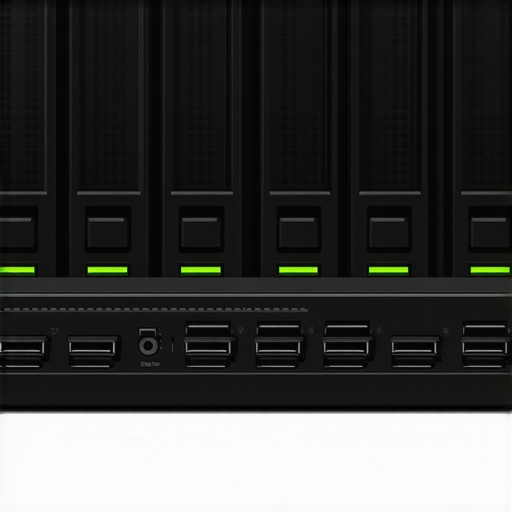

Redefining Data Storage Paradigms in 2026: An Expert Perspective on SSD Technologies
In an era where data throughput and reliability are paramount, selecting the appropriate storage solutions is not merely a matter of capacity but a complex interplay of performance, scalability, and longevity. As storage professionals, understanding the nuanced differences between SATA SSDs, NVMe SSDs, external SSDs, and RAID configurations facilitates optimized workflows and future-proof architectures. This article explores these sophisticated storage vectors, emphasizing their roles in high-performance environments and the emerging trends shaping data integrity and speed in 2026.
Deciphering the Hierarchical Complexity of SSD Interfaces and Their Strategic Deployment
How do SATA and NVMe SSDs synergize within advanced RAID systems to meet escalating data demands?
While SATA SSDs have historically served as reliable, cost-effective solutions, NVMe SSDs leverage the PCIe 4.0 and 5.0 interfaces to deliver unprecedented bandwidths, vital for intensive applications like 8K video editing and real-time analytics. Integrating these drives within RAID arrays—be it RAID 0 for speed or RAID 10 for balancing redundancy and performance—requires precise configuration to mitigate risks such as data loss or bottlenecks. Compare SATA and NVMe SSDs to understand the strategic implications of each interface in complex RAID environments.
Balancing External SSDs with Internal Storage: Enhancing Mobility Without Sacrificing Speed
The evolution of external SSDs, especially those interfacing via Thunderbolt 4, USB4, and emerging Thunderbolt 5, has shifted paradigms in mobile and collaborative workflows. High-speed external SSDs facilitate seamless data access, yet integrating them into RAID or scratch disk systems demands consideration of connection stability, thermal management, and cable infrastructure. Consequently, establishing a robust external storage strategy hinges on optimizing these variables to sustain performance levels comparable to internal drives.
The Role of Scratch Disks and NVMe in Creative and Data-Intensive Applications
For professionals engaging in high-resolution video editing or 3D rendering, scratch disks—particularly NVMe-based—are indispensable for maintaining smooth workflows. Properly configuring these drives ensures minimal latency and maximal throughput, crucial when handling data chunks exceeding 32K or 64K in size. Learn more about scratch disk optimization to prevent stuttering and lag, optimizing creative productivity.
Are Existing RAID Architectures Adequate for the Data Volumes of 2026?
The expanding scale of enterprise data necessitates re-evaluating traditional RAID strategies. While RAID 5 and RAID 6 have demonstrated robustness, their rebuild times can become prohibitive in multi-hundred-terabyte arrays. Newer configurations like RAID 10 or dynamically managed RAID 0+1, combined with Hot-Spare SSDs, offer a superior balance between performance and resilience, critical in safeguarding against data loss during rebuilds. Exploring these configurations through in-depth guides can elucidate their suitability for high-demand environments.
For detailed insights into maximizing SSD lifespan and ensuring data integrity, consulting authoritative sources such as the IEEE Transactions on Storage publishes cutting-edge research and technological advancements.
As storage technology accelerates towards PCIe 7.0 and beyond, the importance of thermal management, cooling solutions, and connection protocols becomes apparent, demanding an integrated approach to future-proof data environments. Whether considering high-speed external SSDs, NVMe over Fabrics, or advanced RAID strategies, staying ahead involves continuous learning and adaptation. Explore our comprehensive guides and share your insights to foster a community of storage experts navigating the complexities of 2026.
Challenging the Limits: Are Today’s Storage Architectures Ready for 8K and Beyond?
As data demands skyrocket with emerging technologies like 8K video editing, immersive VR, and real-time AI processing, existing storage solutions often struggle to keep pace. High-performance NVMe SSDs, especially when integrated into sophisticated RAID configurations, are pivotal in meeting these challenges. However, simply upgrading hardware isn’t enough; optimizing data flow and understanding bottlenecks is essential for future-proofing workflows. Experts recommend leveraging advanced RAID strategies to balance speed with resilience, ensuring seamless handling of massive data streams.
Emerging Roles of AI-Driven Storage Management and Predictive Analytics
The rise of artificial intelligence introduces a transformative approach to managing storage environments. AI-driven tools analyze access patterns and predict failure points, enabling proactive maintenance and dynamic resource allocation. For instance, predictive analytics can preempt SSD wear-out, optimizing performance longevity and reducing costly downtime. Integrating such systems into your storage architecture accelerates data throughput while safeguarding integrity. For insights into deploying AI in storage management, consult industry leaders publishing in IEEE Transactions on Storage.
How can ‘Intelligent Storage Systems’ revolutionize high-speed data workflows in the next decade?
Modern workflows require a synchronization of hardware capabilities and software intelligence. Implementing intelligent storage systems—combining high-speed NVMe SSDs with real-time analytics—can dynamically adapt to workload demands, optimize cache hierarchies, and extend device lifespan. These systems embody a shift from static configurations to adaptive infrastructures, allowing professionals to achieve unprecedented efficiency. To explore how AI-enhanced storage is shaping the future, visit our comprehensive guide.
If you’re keen to refine your setup and stay ahead in the data-intensive landscape of 2026, sharing your experiences and challenges can foster community growth. Comment below or reach out through our contact page.
Exploring the Synergy Between AI and SSD Strategy Optimization
In the rapidly evolving landscape of storage solutions, integrating artificial intelligence into management frameworks is no longer a future ideal but an immediate necessity. AI-driven analytics empower system architects to dynamically optimize SSD performance, predict wear,and prevent failures before they occur. For example, adaptive algorithms analyze real-time read/write patterns across NVMe drives, adjusting workloads to balance longevity and throughput more effectively than traditional static setups. This proactive approach minimizes downtime and enhances overall system resilience, especially critical as data throughput requirements escalate with emerging applications like distributed AI training clusters and high-fidelity streaming.
The Impact of PCIe 5.0 and PCIe 6.0 on Storage Architecture Practices
The leap from PCIe 4.0 to PCIe 5.0, and preparations for PCIe 6.0, marks a quantum leap in data transfer capabilities. With bandwidths reaching up to 32 GT/s and beyond, these interfaces enable SSDs to operate at speeds previously confined to theoretical performance. Consequently, storage architects must rethink existing bus architectures, thermal management, and power delivery to fully leverage these advancements. Efficient utilization of PCIe Gen 5 and 6 SSDs involves meticulous planning of signal integrity, lane allocation, and cooling solutions — topics explored extensively in the latest IEEE symposium on high-speed interconnects (IEEE 2025 interconnect standards) and technical specifications publications.
What Strategies Can Ensure Data Integrity Amidst Accelerating Transmission Speeds?
As transfer speeds escalate, maintaining data integrity becomes increasingly complex, necessitating robust error correction and verification mechanisms. Error Detection and Correction (EDAC) algorithms, like LDPC codes, have become integral for safeguarding against bit flips and signal degradation at high bandwidths. Moreover, employing end-to-end encryption coupled with hardware-level validation protocols ensures that data remains uncorrupted during transit and storage. Implementing multi-layered integrity checks, along with regular firmware updates and hardware calibration, constitutes a comprehensive approach to preserving data fidelity in demanding environments.
Enhancing External Storage Resilience Through Innovative Connectivity
As external SSDs evolve with interfaces like Thunderbolt 5 and USB4 Gen 3×2, they unlock new possibilities for high-bandwidth, portable data solutions. To counteract potential issues related to cable attenuation, electromagnetic interference, or connection instability, integrating advanced signal boosting and ferrite filtering technologies is vital. Additionally, establishing standards for hot-swappable drives with built-in health monitoring capabilities—such as SMART-compatible external SSDs—can dramatically reduce data loss risks during frequent mobility scenarios. Embracing these innovations guarantees external storage remains reliable and performant, supporting demanding workflows across industries.
Mastering Performance-Oriented RAID Configurations for 2026 Demands
Traditional RAID levels face limitations when scaling to multi-petabyte environments essential for real-time data processing tasks. Enter hyper-converged RAID implementations that combine hardware and software solutions, offering dynamic reconfiguration, automated rebuilds, and predictive failure analytics. For instance, employing NVMe-over-Fabrics (NoF) in conjunction with SSD-based RAID arrays facilitates extremely low-latency data access, vital for AI inference workloads and intensive simulations. Furthermore, innovative algorithms like erasure coding complement RAID, providing high availability without the performance penalties typical of legacy systems. Researchers and enterprise architects should consult the latest comprehensive studies, such as those published in the IEEE Transactions on Cloud Computing, to adopt cutting-edge storage resilience strategies.
The Future of Data Storage: Navigating the Convergence of Speed, Reliability, and Intelligence
As data needs continue their exponential ascent, the integration of high-speed SSD architectures with predictive and self-healing technologies signifies a paradigm shift. The advent of NVMe over Fabrics coupled with AI-optimized management will not only streamline workflows but also redefine the limits of real-time data analysis, AI training, and immersive media creation. An understanding of the interconnectedness of these technologies—supported by ongoing research and industry standards—is critical for future-proofing your storage ecosystem. Staying informed through authoritative publications such as the IEEE Spectrum and subscribing to leading industry conferences will ensure your strategies remain at the frontier of innovation. Engage with expert communities, share insights, and contribute to the evolution of data management practices that will shape the digital world of 2026 and beyond.
Beyond the Basics: Tailoring Storage Architectures for Specialized High-Performance Workloads
While mainstream SSD deployment often emphasizes capacity and raw speed, niche applications such as quantum computing simulations, astronomical data analysis, and real-time AI training demand hyper-optimized configurations. Engineers are now integrating custom firmware that leverages machine learning algorithms to dynamically adjust cache hierarchies and manage thermal throttling, ensuring uninterrupted high throughput. For instance, adopting multi-tiered storage with layered SSDs—combining enterprise-grade NVMe drives with buffer caches—can significantly diminish latency. This nuanced approach, grounded in cutting-edge firmware innovations, unlocks unprecedented performance benchmarks.
How does emerging Non-Volatile Memory Express (NVMe) over Fabrics reshape enterprise storage networks?
NVMe-over-Fabrics (NoF) extends the principles of PCIe NVMe SSDs into networked environments, facilitating low-latency, high-bandwidth access across distributed systems. This ability to virtually emulate local storage over a network presents a paradigm shift for cloud-native applications, large-scale databases, and AI clusters. Implementing NoF necessitates a redefinition of data center topology, emphasizing fabric-aware topology design and intelligent I/O routing. Critical to this transition is understanding the interplay between fabric protocols like RDMA over Converged Ethernet (RoCE) and the underlying hardware accelerators. As detailed in IEEE standards documentation, mastering these protocols elevates data flow efficiency and resilience.
Can AI-driven protocols dynamically optimize SSD placement within hybrid storage pools?
Advanced AI algorithms are now orchestrating the distribution of data across hybrid pools—combining volatile RAM, fast NVMe SSDs, and traditional HDDs—to balance access speed with cost efficiency. These intelligent systems analyze real-time workload patterns, predicting future access trends to reposition data proactively—a process analogous to urban traffic routing but on a micro-scale. Deploying such AI-driven management minimizes latency hotspots and prolongs SSD lifespan by reducing unnecessary write cycles. Integrating these intelligent protocols into existing infrastructure demands a strategic approach, combining software updates with hardware compatibility assessment.
Why Thermal Management Becomes Critical in PCIe 6.0 SSD Ecosystems
The leap to PCIe 6.0 doubles bandwidth capacity over its predecessor, amplifying the challenges around heat dissipation. Efficient thermal strategies are no longer optional but essential; failure to implement innovative cooling solutions risks throttling performance or hardware failure. Techniques such as embedded liquid cooling, heat pipe integration, and advanced thermal interface materials are now being standardized within high-end server chassis. Understanding the thermal conductivity properties of emerging packaging materials allows system architects to design SSD environments that sustain peak speeds without compromising device longevity. For authoritative strategies, consult the latest IEEE cooling standards publications and industry whitepapers.
The Rise of AI in Preemptive Storage Failure Detection
AI models trained on vast datasets spanning years of SSD telemetry now predict imminent hardware failures with remarkable accuracy, enabling preemptive replacements and data migrations. This shift from reactive to predictive maintenance transforms enterprise storage management, drastically reducing unscheduled downtime. Deep learning algorithms analyze subtle changes in power consumption, error rates, and temperature fluctuations—signaling potential wear-out before catastrophic failure. Implementing these AI systems involves integrating sensor data streams with centralized analysis platforms, demanding a sophisticated understanding of hardware telemetry protocols and machine learning pipelines. Industry reports, such as those from the IEEE Transactions on Cloud Computing, outline architectures enabling such predictive analytics at scale.
Can External SSDs Become the Strategic Linchpins of Portable Data Centers?
High-speed external SSDs, fortified with robust connection protocols like Thunderbolt 5 and USB4 Gen 3×2, are poised to redefine mobile data handling by offering enterprise-level performance outside traditional data centers. The inclusion of embedded error correction, autonomous health monitoring, and redundancy features enhances their resilience, transforming them from mere storage devices into portable data hubs. Such advancements empower field engineers, researchers, and media professionals to operate in remote or challenging environments without sacrificing speed or data security. To realize this vision, manufacturers are integrating hardware encryption, multi-path connectivity, and advanced thermal management into next-generation external SSDs—paving the way for truly resilient portable storage solutions.
Expert Insights & Advanced Considerations
Leverage AI-Powered Predictive Maintenance to Minimize Data Loss
Integrating artificial intelligence for real-time monitoring of SSD health enables preemptive interventions, reducing downtime and safeguarding critical data assets. This proactive approach involves analyzing telemetry and workload patterns to anticipate failures before they occur.
Optimize Thermal Strategies for PCIe 6.0 SSDs to Sustain Peak Performance
As bandwidths soar, effective cooling solutions become indispensable. Employing liquid cooling systems and advanced thermal interface materials ensures SSDs operate within safe temperature thresholds, preserving reliability and speed.
Adopt Dynamic RAID Configurations Aligned with Workload Variability
Moving beyond static array setups, adaptive RAID systems that respond to workload changes can enhance performance and resilience. Incorporating erasure coding and hot spares further fortifies data integrity amidst high-speed operations.
Harness NVMe over Fabrics to Scale Low-Latency Storage Networks
This technology extends PCIe NVMe advantages across networked environments, facilitating distributed high-performance storage. Its implementation demands careful topology design and protocol optimization to maximize throughput and minimize latency.
Employ Hybrid Storage Management to Balance Speed and Cost
Combining edge NVMe caches with larger, slower drives through intelligent tiering maximizes accessibility while controlling expenses. Machine learning algorithms can dynamically adjust data placement for optimal efficiency.
Curated Expert Resources
- IEEE Transactions on Storage — Premier publication featuring cutting-edge research on storage hardware and protocols, essential for industry practitioners aiming to stay ahead.
- Official PCIe Specifications — Fundamental standards documentation detailing data transfer protocols critical for designing next-generation SSD architectures.
- Industry Whitepapers by SSD Manufacturers — In-depth technical insights into cooling solutions, firmware innovations, and reliability engineering for high-performance storage devices.
- Storage Networking Industry Association (SNIA) — Leading resource providing frameworks and best practices for NVMe over Fabrics deployment and management.
Final Perspective: The Art of Staying Ahead in Data Storage
In the evolving landscape of storage solutions, mastering the interplay between speed, reliability, and intelligence defines the success of future-proof architectures. By embracing AI-driven predictive analytics, innovative thermal management, and adaptable RAID strategies, experts can craft resilient systems capable of handling the data demands of 2026 and beyond. Deep engagement with authoritative resources ensures continuous learning and strategic agility. Your next step involves sharing insights with peers or exploring technical guides that push the boundaries of what’s possible in high-speed data storage. How are you reimagining your storage approach to meet the escalating challenges of the digital frontier?
,