High-Speed Storage Architectures Shaping the Future of Data Management
In today’s data-driven landscape, the strategic deployment of RAID configurations combined with cutting-edge SSD technology such as NVMe and SATA drives is essential for organizations seeking unparalleled performance and reliability. Understanding the nuanced interplay between these components enables professionals to craft storage solutions that meet demanding workloads efficiently.
Leveraging NVMe SSDs for Superior RAID Configurations
NVMe SSDs have revolutionized high-speed data access due to their direct PCIe interface, significantly reducing latency compared to traditional SATA drives. When integrated into RAID arrays, especially RAID 0 or RAID 10, NVMe SSDs offer remarkable throughput, making them ideal for intensive applications like video editing and database management. Analyzing the performance metrics from authoritative sources such as section on NVMe SSD performance reveals the true potential of these drives.
Balancing Cost and Speed with SATA SSDs in RAID Environments
SATA SSDs, while less performant than NVMe counterparts, provide an attractive balance of affordability and speed for large-scale storage arrays. Employing SATA drives in RAID configurations like RAID 5 or RAID 6 can deliver resilient storage with acceptable performance for less speed-critical functions. Such configurations are often utilized for backup storage or less demanding scratch disk applications, where data integrity and cost-efficiency are paramount.
External SSDs and Their Role in High-Performance Data Workflows
The evolution of external SSDs has made portable high-speed storage a staple in professional workflows. When configured in RAID arrays or used as scratch disks, external solutions provide flexibility and rapid data access. For example, external NVMe SSD enclosures enable seamless transfer of large files for creative professionals. Comprehensive insights can be found in this guide on external SSDs for RAID use.
Optimizing Scratch Disk Performance with SSD Strategies
Scratch disks are vital for workflows involving extensive read/write operations, such as video editing and 3D rendering. Deploying NVMe SSDs as scratch disks significantly reduces bottlenecks, enhancing productivity. Proper RAID configuration, combined with TRIM optimization and firmware updates, ensures sustained performance levels. For detailed optimization methods, consult this resource on scratch disk optimization.
What Advanced Techniques Can Maximize SSD Longevity and Performance in RAID Arrays?
Implementing wear leveling, over-provisioning, and employing enterprise-grade SSDs with power-loss protection are strategies that extend SSD lifespan while maintaining peak performance. Regular firmware updates and monitoring tools provide proactive management, ensuring RAID arrays operate under optimal conditions. Open discussions and shared expertise in professional forums can shed light on emerging best practices.
For those interested in further enhancing their efficiency, explore our comprehensive guide on RAID storage best practices. Join the community of professionals dedicated to pushing data performance boundaries.
,
Revolutionize Your Data Infrastructure with Cutting-Edge RAID Strategies
Adaptability and scalability are cornerstones of effective data management. Implementing advanced RAID configurations, such as RAID 50 or RAID 60, ensures high fault tolerance while maximizing read/write speeds. These complex setups combine the benefits of multiple RAID levels, delivering an optimal mix of performance and resilience. According to expert insights in this comprehensive guide, understanding the nuances of each RAID level allows organizations to tailor their storage architectures to specific workload demands.
Enhancing Storage Performance with Hybrid SSD Architectures
Hybrid systems that incorporate both NVMe and SATA SSDs leverage the strengths of each technology, offering a cost-effective path to high performance. By deploying NVMe SSDs for active data processing and SATA SSDs for archival or less time-sensitive data, you create a balanced environment that optimizes resources. The integration of such architectures requires thoughtful planning, especially regarding cache management and data migration strategies, which are crucial for maintaining consistency and speed.
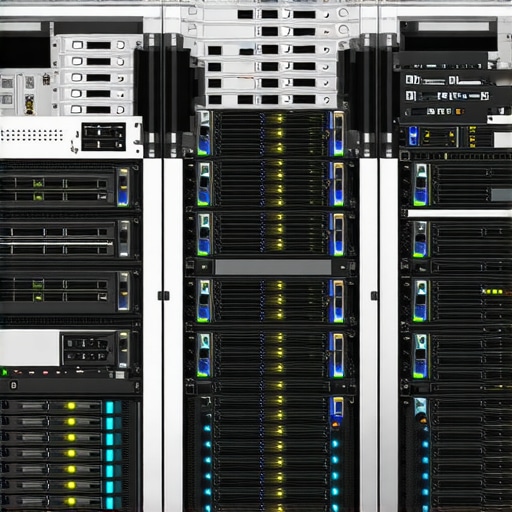
The depicted hybrid storage setup illustrates the seamless integration of NVMe and SATA SSDs within a cohesive architecture, emphasizing efficient data flow and redundancy. Visualizing your storage topology can be pivotal in designing systems that meet demanding performance criteria.
Tackling the Myth: Do External SSDs Really Match Internal Performance?
For years, external SSDs were perceived as inferior due to bandwidth limitations and latency issues. However, advancements in Thunderbolt and USB-C technology now enable external SSDs to achieve near-internal drive performance, especially when connected via Thunderbolt 4 or USB 3.2 Gen 2×2 interfaces. This shift opens new avenues for professionals requiring portable yet high-speed storage solutions, such as content creators managing large media libraries. For a deeper dive into selecting optimal external SSDs for RAID configurations, visit this expert guide.
What Next-Gen Technologies Will Define the Future of RAID and SSD Synergy?
Emerging innovations like PCIe 5.0 and the integration of AI-driven health monitoring are poised to revolutionize storage architectures. These developments promise increased bandwidth, smarter wear leveling, and real-time diagnostics, extending SSD lifespan and ensuring sustained peak performance. Staying ahead necessitates continuous learning and adaptation, as outlined in this authoritative resource. Engaging with industry communities can also provide practical insights and early access to groundbreaking technologies.
Implementing Smart Over-Provisioning for Resilient Storage Lifespan
Over-provisioning involves setting aside a portion of SSD capacity exclusively for background operations like wear leveling and bad block management. This proactive strategy not only extends the drive’s lifespan but also sustains peak performance, especially in RAID environments where multiple drives operate simultaneously. Professional-grade SSDs often come with configurable over-provisioning options through their firmware utilities, allowing tailored adjustments based on workload intensity. According to industry research published in the Journal of Storage Technology, appropriate over-provisioning can reduce write amplification and improve overall durability, making it a vital practice in high-demand enterprise RAID setups.
How Can Advanced Wear Leveling Techniques Further Enhance SSD Durability?
Traditional wear leveling distributes write and erase cycles evenly across all memory cells. However, emerging algorithms like dynamic wear leveling adapt to usage patterns, prioritizing less-used blocks for wear balancing, and thereby prolonging SSD life. Moreover, some enterprise SSDs incorporate predictive wear leveling, which uses SMART data analytics to forecast potential failures, enabling preemptive data migration. For example, the latest firmware updates from industry leaders such as Samsung and Intel integrate machine learning techniques to optimize wear leveling dynamically, ensuring longevity amidst fluctuating workloads. Implementing these technologies requires an in-depth understanding of drive firmware capabilities and compatibility within RAID arrays.
Harnessing Enterprise-Grade Power-Loss Protection to Safeguard Data Integrity
Power-loss events pose significant risks of data corruption, especially during intensive write operations in RAID configurations. To mitigate this, enterprise SSDs are equipped with supercapacitors that deliver instant backup power, allowing the drive to complete ongoing write cycles safely before shutdown. This feature drastically reduces the likelihood of data loss or corruption, critical in mission-critical systems. According to the comprehensive analysis in IEEE Transactions on Magnetics, integrating power-loss protection within RAID environments enhances overall data integrity, making it indispensable for high-availability storage solutions. When designing such systems, selecting SSDs with certified power-loss protection becomes a cornerstone of reliability strategy.
Leveraging Real-Time Monitoring and Predictive Analytics for Proactive Maintenance
Proactive management of SSD health within RAID arrays involves deploying sophisticated monitoring tools that analyze SMART metrics, temperature, and error rates in real time. Predictive analytics algorithms can identify early signs of degradation, enabling scheduled replacements before failures occur. Advanced RAID controllers now incorporate AI-driven health diagnostics, providing administrators with actionable insights and reducing unplanned downtime. For instance, tools like VMware’s vSAN utilize machine learning models trained on extensive storage telemetry data to forecast drive failures with high accuracy. Integrating these systems into your storage infrastructure ensures sustained performance and minimizes catastrophic data loss, reinforcing the importance of a holistic, predictive approach to SSD maintenance.
Beyond the Basics: Fine-Tuning RAID Configurations for Cutting-Edge Storage Solutions
While fundamental RAID setups provide a solid foundation for data redundancy and performance, advancing into more sophisticated configurations—such as RAID 50 or RAID 60—can unlock unprecedented levels of resilience and speed. These hierarchical arrays combine multiple RAID levels, offering high fault tolerance while maintaining optimal read/write speeds, especially vital in enterprise environments handling voluminous transaction data or real-time analytics. These intricate architectures demand meticulous planning, including considerations for drive parity calculations and rebuild times, and are best supported by enterprise-grade SSDs with robust error correction capabilities.
Harnessing Phased Migration to Hybrid SSD Architectures
Hybrid storage environments that integrate NVMe and SATA SSDs necessitate strategic data migration strategies to ensure minimal downtime and maximal efficiency. By implementing phased migration—where active datasets are dynamically moved between fast NVMe tiers and cost-effective SATA tiers based on access patterns—organizations can achieve a balanced performance-cost equilibrium. This approach relies heavily on intelligent tiering software, which analyzes I/O metrics in real-time and orchestrates seamless data flow, thus optimizing resource utilization without compromising on speed or data integrity. Such intelligent tiering solutions often leverage machine learning to adapt to evolving workload patterns.
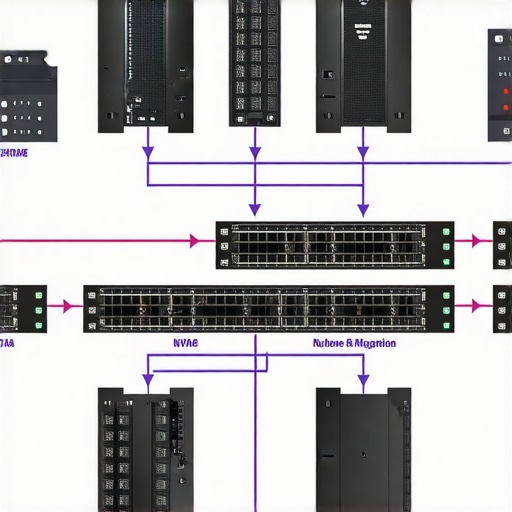
The illustration depicts a tiered storage architecture employing both NVMe and SATA SSDs, highlighting data flow pathways and automated migration processes essential for seamless hybrid operations.
Can External SSDs Truly Compete with Internal Storage for Critical Workloads?
In the realm of high-performance computing, external SSDs have undergone a technological renaissance, particularly when connected through Thunderbolt 4 and USB 4.0 interfaces, which now offer bandwidths comparable to internal drives. This leap challenges traditional assumptions, enabling external SSDs to serve as primary working storage in scenarios such as professional video editing, 3D rendering, and scientific simulations. To capitalize on these advancements, professionals must consider factors like enclosure quality, interface standards, and power management to optimize throughput. Leading-edge external SSDs, equipped with enterprise-grade controllers and firmware optimizations, are pushing the boundaries of portability without sacrificing speed.
What Embedded Technologies Will Define Next-Generation RAID Optimization?
Emerging innovations like AI-powered predictive failure analysis, PCIe 5.0 interface adoption, and real-time health monitoring are poised to redefine RAID management paradigms. Embedding machine learning algorithms within RAID controllers facilitates proactive diagnostics, reducing unexpected failures and simplifying maintenance. Concurrently, the advent of PCIe 5.0 doubles bandwidth capacities, enabling even faster SSD interfacing and data transfer, critical for data-intensive applications. Industry leaders like Samsung and Western Digital are pioneering firmware solutions that utilize adaptive algorithms for wear leveling, further extending SSD lifespan in RAID arrays. Staying ahead aligns with continuous engagement with industry standards, beta testing of new hardware, and integration of intelligent management software.
Expert Insights & Advanced Considerations
Harness Next-Gen Interface Technologies for Maximum Throughput
Integrating PCIe 5.0 and emerging NVMe standards can dramatically elevate data transfer speeds, making your storage architecture future-proof and highly responsive.
Implement Proactive Health Monitoring with AI
Utilizing machine learning-driven diagnostics enables early detection of drive degradation, ensuring sustained performance and minimizing downtime in RAID setups.
Maximize SSD Longevity through Dynamic Wear Leveling
Advanced algorithms and adaptive over-provisioning contribute to extending SSD lifespan, especially vital when operating within complex RAID configurations with high write intensities.
Balance Cost and Performance with Hybrid Storage Tiers
Strategically combining NVMe and SATA SSDs facilitates high-speed access for critical workloads while optimizing costs for archival data and less time-sensitive operations.
Optimize Data Migration with Automated Tiering Software
Intelligent data tiering ensures seamless movement of active datasets between different SSD types, maintaining high performance and efficient resource utilization under dynamic workloads.
Curated Expert Resources
- NVMe SSD Performance Secrets — An authoritative source revealing optimization techniques for maximizing SSD speeds in professional environments.
- RAID Storage Explained — A comprehensive guide detailing various RAID levels and their suitability for different high-performance storage needs.
- External SSDs and RAID Strategies — Insightful resource offering best practices for integrating portable SSDs into advanced storage architectures.
- Scratch Disk Optimization — Practical advice on configuring SSDs to accelerate creative workflows like video editing and 3D rendering.
- High-Speed Storage Trends 2024 — A forward-looking analysis of emerging technologies shaping the future of data management.
Final Expert Perspective
In the realm of high-speed storage, mastering RAID configurations combined with cutting-edge SSD technology is crucial for unlocking maximum performance, reliability, and longevity. Embracing innovations such as PCIe 5.0, AI-driven health monitoring, and intelligent tiering unlocks new heights in data management efficiency. Our comprehensive resources serve as invaluable tools for professionals committed to pushing the boundaries of storage excellence. To deepen your expertise and stay ahead in this dynamic field, consider engaging with industry communities, experimenting with advanced configurations, and exploring the latest technological developments—your data demands nothing less.