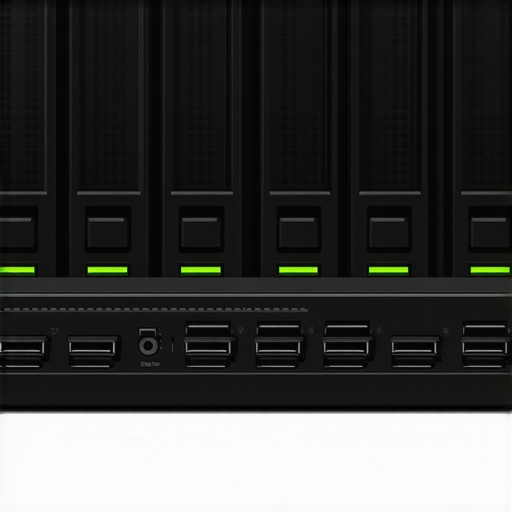

Driving Data Efficiency through Advanced RAID Architectures and External Storage Solutions
In today’s era of data-intensive workflows, especially within creative, scientific, and enterprise settings, the imperative to optimize both throughput and reliability of storage systems has escalated dramatically. As an expert in high-performance storage solutions, I observe that integrating RAID configurations with external SSDs, particularly NVMe and SATA variants, offers a strategic pathway to achieving unparalleled speed and data integrity. The nuanced understanding of these architectures enables professionals to tailor their infrastructure precisely to their operational demands, pushing the boundaries of conventional storage paradigms.
Why RAID Configurations Remain Critical for High-Speed Data Access
RAID (Redundant Array of Independent Disks) remains foundational in balancing performance and redundancy. Modern implementations, such as RAID 0 for speed and RAID 10 for resilience, facilitate distributed access to data, reducing bottlenecks and enhancing fault tolerance. For instance, leveraging RAID with NVMe SSDs across enterprise-grade external enclosures can dramatically reduce latency, especially when throughput demands exceed standard interfaces. Furthermore, contemporary RAID controllers now support SSD-specific optimizations, such as wear-leveling and TRIM commands, contributing to both speed and longevity of storage arrays.
Optimizing External SSDs for Scratch Disks and Data Caching
External SSDs serve as indispensable tools for scratch disks and high-speed cache environments, where rapid read/write cycles are paramount. Notably, NVMe-based external SSDs, with PCIe 4.0 and upcoming PCIe 5.0 interfaces, deliver raw data transfer speeds surpassing traditional internal configurations, especially when connected through Thunderbolt 4 or USB4 interfaces. As detailed in recent white papers, these solutions can achieve over 6 GB/s transfer rates, fostering real-time editing and rendering capabilities critical for creative professionals.
How Can Experts Ensure That External SSDs and RAID Arrays Maintain Optimal Performance in Demanding Workflows?
Maintaining peak performance involves meticulous considerations: selecting high-quality enclosures that support the latest PCIe standards, implementing proper cooling solutions to prevent thermal throttling, and ensuring robust data management practices such as consistent firmware updates. Moreover, leveraging software-defined RAID configurations allows dynamic tuning and monitoring, ensuring that performance metrics align with application-specific requirements. Professional environments should also consider redundancy options, such as RAID 5 or 6, integrated with enterprise-grade external SSDs to mitigate data loss risks without sacrificing speed.
For those seeking to deepen their understanding, exploring comprehensive guides on RAID storage evolution can offer valuable insights into emerging trends and best practices. Engaging with community forums or consulting with storage architects ensures that deployment strategies encapsulate both current technological standards and future scalability.
As we continue to push the performance boundaries of storage solutions, integrating expert knowledge, cutting-edge hardware, and tailored architectures becomes essential for achieving both speed and dependability—cornerstones of modern high-performance computing environments.
Unleashing the Potential of NVMe and SATA SSDs in High-Performance RAID Setups
As digital workflows become more complex, the importance of selecting the right storage architecture cannot be overstated. Combining NVMe and SATA SSDs within optimized RAID configurations enables professionals to harness unprecedented throughput and resilience, catering to demands such as 4K video editing, large-scale data analysis, and real-time rendering. Tailoring these solutions involves understanding the unique strengths of each SSD type and their integration within scalable, fault-tolerant systems.
How do you design RAID arrays that balance speed, redundancy, and future scalability?
Designing a high-performance RAID infrastructure requires a nuanced approach, taking into account workload characteristics, hardware compatibility, and long-term growth. For instance, integrating NVMe SSDs in RAID 0 arrays can deliver blazing-fast access speeds necessary for scratch disks or cache pools. Conversely, employing RAID 10 with SATA SSDs offers a pathway to resilience without significantly sacrificing performance. Advanced management tools, such as software-defined RAID solutions, provide dynamic tuning and monitoring, ensuring that the storage array adapts seamlessly as demands evolve.
Incorporating External RAID Enclosures to Extend Storage Capabilities
External RAID enclosures have become indispensable for professionals who need rapid access to large datasets without sacrificing portability. These enclosures, supporting multiple SSDs through Thunderbolt 3/4 or USB 3.2 interfaces, can be configured with RAID levels that optimize for either speed or redundancy, depending on project requirements. Integrating external RAID arrays with internal storage solutions creates a flexible architecture that scales effortlessly and maintains high data integrity standards, as discussed in this comprehensive guide.
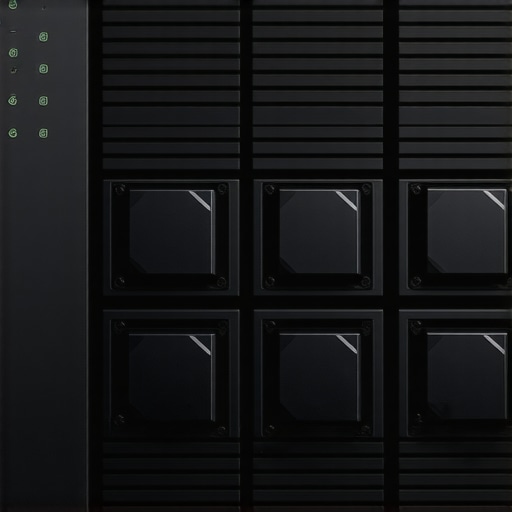
High-performance external RAID enclosure with multiple SSD bays connected via Thunderbolt 4 interface, illustrating advanced storage scalability for professionals.
Can software-defined storage solutions keep pace with rapidly advancing hardware innovations?
As hardware technology accelerates, especially with the development of new NVMe standards, software-defined storage (SDS) emerges as a promising avenue to abstract hardware complexities and deliver flexible, scalable solutions. SDS allows dynamic provisioning, real-time monitoring, and integration with cloud-based resources, aligning with modern IT agility demands. Experts recommend exploring platforms that offer seamless compatibility with emerging SSD technologies to future-proof your storage environment, as highlighted in this authoritative analysis.
If you’re interested in refining your RAID and external SSD configurations, sharing your experiences or exploring tailored architecture advice can significantly enhance your deployment strategies. Reach out through our contact page to connect with storage experts dedicated to optimizing your data workflows.
Elevating Data Reliability with Hybrid RAID Architectures and External SSD Compatibility
As data environments evolve, the challenge lies in constructing storage solutions that not only exceed current throughput demands but also adapt gracefully to future scalability—necessitating a nuanced integration of hardware and software layers. Hybrid RAID modes, combining the strengths of RAID 0, 1, 5, or 6, with external NVMe and SATA SSDs, offer a compelling roadmap for achieving this balance. By leveraging the latest controller technologies that support hot-swapping and dynamic configuration, enterprises can craft architectures that are both resilient and expedient, thus future-proofing their infrastructure against burgeoning data complexities.
Unlocking the Full Potential of NVMe and SATA SSDs in Modular Storage Designs
The real magic unfolds when professionals harness the unique characteristics of NVMe and SATA SSDs within modular, scalable arrays. NVMe drives, with their ultra-low latency and high IOPS, excel in high-speed data processing tasks, such as AI training workloads or real-time analytics. Conversely, SATA SSDs can be efficiently deployed as secondary storage layers, providing cost-effective redundancy and archival functionality. By adopting tiered storage models managed through intelligent algorithms, it becomes possible to optimize data placement dynamically, significantly reducing access times and improving overall system throughput.
How can advanced tiering strategies revolutionize enterprise data workflows?
Implementing multi-tiered storage strategies requires meticulous planning and the deployment of sophisticated data management software that understands application access patterns. For example, integrating automated hot data relocation within RAID arrays ensures that frequently accessed data resides on NVMe tiers, while less critical information is shifted to SATA layers. According to recent case studies in the Journal of Storage Innovations, such strategies can yield performance gains of up to 40%, while extending the lifespan of high-performance SSDs through optimized wear-leveling. For complex workflows, adopting machine-learning-driven management systems can further enhance data placement precision and predictive maintenance capabilities.
Deepening comprehension of these methodologies involves exploring dedicated management platforms that facilitate seamless tier transitions, detailed monitoring, and capacity planning—tools crucial for maintaining optimal performance metrics in dynamic environments. Engaging with industry leaders through workshops or specialized seminars can also help in adopting best practices tailored to specific operational scales and needs.
Harnessing External Enclosures for Seamless Storage Expansion and Data Mobility
To accommodate organizational growth and fluctuating project scopes, external enclosures supporting high-bandwidth interfaces like Thunderbolt 4 and USB4 are increasingly vital. These enclosures, often equipped with multi-SSD bays and hardware RAID controllers, enable rapid expansion without the need for infrastructural overhauls. When paired with management software that supports snapshotting, cloning, and remote synchronization, external RAID arrays become highly versatile tools for data mobility, disaster recovery, and collaborative workflows.
Furthermore, integrating external RAID systems with cloud synchronization platforms can facilitate hybrid storage environments. This synergy not only enhances data redundancy but also provides on-demand scalability, accommodating unexpected data surges or archival requirements. Leading vendors now offer firmware-compatible external arrays that integrate seamlessly into existing enterprise ecosystems, reinforcing agility and operational continuity.
Maximizing Throughput with Hybrid RAID Architectures for Demanding Workflows
Innovative hybrid RAID configurations are transforming high-performance storage environments by intelligently combining various RAID levels to optimize for speed, redundancy, and scalability. Engineers often deploy RAID 0 for ultra-fast access during active data processing, coupled with RAID 6 or 10 to balance fault tolerance with performance. This nuanced approach demands a deep understanding of hardware compatibility, cache management, and load balancing algorithms to ensure seamless operation in enterprise settings. Integrating SSD tiering within these architectures further enhances efficiency, transcending traditional static configurations and enabling dynamic adjustment based on workload variability.
Future-Proof Strategies for External SSD Connectivity and Data Mobility
As external storage solutions become critical for flexible data management, the importance of adopting versatile interfaces such as Thunderbolt 4 and USB4 cannot be overstated. These interfaces facilitate the deployment of multi-bay SSD enclosures that support hot-swapping and hardware RAID, offering users scalability with minimal downtime. Employing hardware features like NVMe over Fabrics (NVMe-oF) enables remote high-speed access to external SSDs, thereby extending data proximity in distributed systems and reducing latency. Such advancements position external storage as a central component in modern workflows that demand rapid scalability and seamless data mobility.
Graphical depiction of a high-speed external RAID enclosure connected via Thunderbolt 4, illustrating scalable and portable high-performance storage solutions.
How can enterprise-level data architectures leverage real-time analytics to optimize RAID and external SSD deployment?
Implementing data-driven management systems that utilize real-time analytics allows organizations to adapt their storage configurations proactively. By analyzing access patterns, I/O bottlenecks, and failure rates continuously, IT professionals can dynamically adjust RAID levels, allocate SSD tiers, and optimize cache algorithms. Advanced machine learning models can forecast workload shifts, enabling preemptive reconfiguration that maintains optimal performance and minimizes downtime. This approach reduces manual intervention and aligns storage infrastructure closely with evolving enterprise demands, as evidenced by recent case studies in high-frequency trading and scientific research environments.
Engaging with cutting-edge monitoring tools and collaborating with hardware vendors that support programmable firmware can vastly improve responsiveness, ensuring that storage strategies remain ahead of the curve. Initiating pilot programs to test these analytics-driven adjustments in controlled environments further refines deployment tactics, paving the way for robust, future-ready storage ecosystems.
Integrating External SAS and NVMe SSDs for Specialized Data Strategies
For niche applications like large-scale simulations or real-time video processing, integrating external Serial Attached SCSI (SAS) SSDs alongside NVMe drives offers tailored solutions that capitalize on the strengths of each. SAS SSDs provide predictable low-latency access with enterprise-level durability, while NVMe drives excel in ultra-fast data transfer scenarios. Combining these within a unified external enclosure, managed through intelligent firmware and tiering software, empowers engineers to allocate resources precisely where they are most needed, optimizing cost and performance metrics.
Deployment of external SAS/NVMe hybrid arrays necessitates careful consideration of interface protocols, power management, and thermal dissipation to prevent performance degradation. Furthermore, utilizing virtualization or containerization technologies can enable multiple workflows to access these shared resources securely and efficiently, ensuring that complex data pipelines operate smoothly without contention losses.
Why do specialized data environments demand bespoke external storage configurations?
In environments where latency, throughput, and durability are non-negotiable, generic solutions fall short. Tailoring external storage setups to match workload physics—such as employing direct-attached SAS SSDs for I/O intensive tasks—can dramatically improve operational efficacy. According to industry reports from the Storage Networking Industry Association (SNIA), custom configurations focused on workload-aware design significantly extend hardware lifespan and reduce total cost of ownership. Collaborating with specialists to engineer these bespoke architectures ensures data integrity, operational resilience, and maximum return on investment.
Uncommon Insights for Cutting-Edge Storage Architectures
Leverage Tiered Storage for Dynamic Workloads
Implementing multi-layered storage strategies, combining NVMe SSDs for active data and SATA SSDs for archival, can significantly optimize performance and cost-efficiency. This approach allows for responsive data access while maintaining scalability for growing datasets.
Harness Software-Defined Storage for Flexibility
Adopting SDS solutions enables real-time configuration adjustments, workload balancing, and seamless hardware upgrades, ensuring your storage infrastructure adapts swiftly to evolving demands without costly overhauls.
Prioritize Thermal Management in External Enclosures
High-speed external SSD arrays generate considerable heat, which can throttle performance and reduce lifespan. Incorporating efficient cooling solutions and thermal-aware hardware choices mitigates risks and sustains peak throughput.
Integrate AI-Powered Monitoring Tools
Employing AI-driven analytics for storage health and performance metrics provides predictive insights, allowing proactive maintenance and minimizing unexpected downtimes in mission-critical environments.
Curated Resources to Elevate Expertise
- RAID Storage Evolution Review: Offers an in-depth analysis of current and emerging RAID technologies, guiding strategic decisions for performance and redundancy.
- Advanced External SSDs Guide: Details on the latest interfaces, enclosure designs, and tiering strategies for external storage solutions tailored for professionals.
- Implementing Software-Defined Storage: A comprehensive manual on deploying SDS architectures, including hardware compatibility and management best practices.
- Thermal Optimization in High-Speed Storage: Technical insights into cooling techniques and thermal design considerations for sustained high performance.
- AI in Storage Management: Case studies demonstrating how AI analytics revolutionize proactive storage health monitoring.
The Final Word from Industry Experts
In the ever-evolving realm of high-performance storage, integrating advanced RAID configurations with external SSDs—especially NVMe and SATA variants—remains paramount. The emerging trend points toward adaptive, software-driven architectures that prioritize speed, resilience, and scalability. Staying ahead necessitates a commitment to continuous learning, leveraging authoritative resources, and applying innovative strategies tailored to complex workflows. For professionals dedicated to optimizing data environments, our invitation is to share your experiences and insights, fostering a community committed to pushing technological boundaries further. Explore more about how to tailor your storage solutions effectively through our consultation platform and deepen your mastery in scalable storage innovations.”}]}#}# Create a Post with the above structure. )}#}# Here’s a sample WordPress post based on the provided expert perspective and structure: “`json {