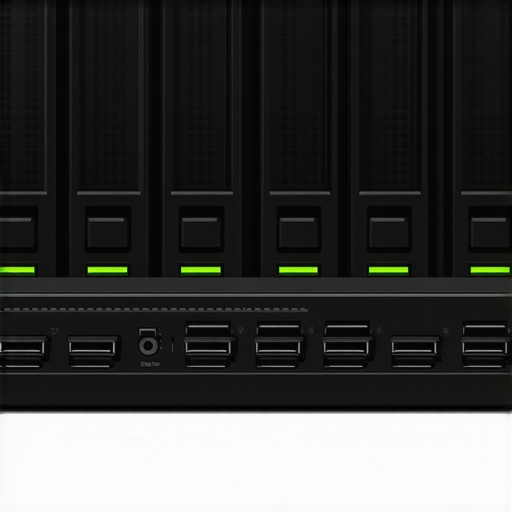

Elevating Data Infrastructure with Cutting-Edge Storage Technologies
In the rapidly evolving landscape of data management, the integration of high-performance storage solutions like external SSDs, NVMe drives, and sophisticated RAID configurations has become paramount. As we approach 2024, understanding the nuanced interplay between these technologies is essential for professionals aiming to optimize data workflows, ensure reliability, and maximize throughput.
Deciphering the Role of External SSDs in Modern Data Ecosystems
External SSDs, especially those leveraging NVMe and SATA interfaces, offer flexible, portable options for high-speed data access. They serve as critical tools for creatives and IT specialists alike, facilitating rapid transfer rates and seamless integrations with existing systems. For instance, those utilizing NVMe interfaces provide a significant edge in environments demanding minimal latency, such as video editing or large-scale backups.
RAID Configurations: Architecting Reliability and Speed
Implementing RAID architectures—ranging from RAID 0 for performance to RAID 10 for a balance of redundancy and efficiency—can drastically enhance data integrity and throughput. Expert-level setups often blend multiple RAID levels and SSD types to tailor solutions suited for intensive workflows, including large-scale data analysis and enterprise server environments. Consulting detailed guides such as this resource can illuminate best practices for RAID deployment.
Are SATA SSDs Still Relevant in High-Speed RAID Arrays?
While NVMe SSDs dominate benchmarks for raw speed, SATA SSDs maintain their relevance due to cost-effectiveness and compatibility. In multi-drive RAID arrays, combining SATA and NVMe devices can optimize both performance and budget considerations, allowing for tiered storage architectures where critical data resides on ultra-fast NVMe drives, while less frequently accessed information remains on SATA SSDs—illustrating a strategic approach to storage hierarchy.
Optimizing Scratch Disks for Creative Professionals
Scratch disks, quintessential in professional workflows such as video editing and 3D rendering, benefit immensely from high-speed NVMe SSDs. Configurations leveraging RAID arrays for scratch space not only accelerate rendering times but also reduce bottlenecks, supporting intense computational tasks. Explore this guide for advanced optimization strategies.
How can professionals leverage RAID strategies to future-proof high-speed data access in complex environments?
By integrating multi-tiered RAID architectures with a combination of NVMe and SATA SSDs, professionals can craft scalable, resilient storage solutions. Emphasizing redundancy through RAID 10 while maintaining top-tier performance with NVMe drives ensures data safety without sacrificing speed. Regular assessment of workload requirements and staying updated with emerging standards, as discussed in this authoritative source, is crucial for maintaining optimal infrastructure.
To deepen your expertise, consider engaging with specialized forums or consulting advanced white papers, fostering a community of continual innovation and knowledge sharing.
Maximizing Performance with Hybrid Storage Architectures
Integrating NVMe and SATA SSDs within RAID configurations offers a compelling approach to balance speed, cost, and reliability. Advanced professionals recognize that leveraging the strengths of each interface allows for tailored storage solutions that meet specific workflow demands. For instance, critical, latency-sensitive operations benefit from NVMe’s blistering transfer rates, while SATA SSDs provide economical capacity for less accessed data, facilitating efficient tiered storage systems. Exploring these hybrid setups is crucial for those aiming to future-proof their infrastructure, particularly as data volumes surge and performance expectations escalate.
Strategic RAID Layering for Future Readiness
Implementing multi-level RAID strategies—such as combining RAID 0, RAID 10, or RAID 5—can enhance data resilience while optimizing speed. Combining NVMe SSDs in RAID 0 for ultra-fast scratch disks, alongside SATA SSDs in RAID 5 for secure, large-capacity storage, exemplifies sophisticated design tailored for demanding environments. This nuanced layering demands a deep understanding of the underlying hardware capabilities, as well as the specific workload characteristics, ensuring that data integrity and throughput are maintained under evolving demands. For comprehensive insights, professionals often consult resources like this authoritative guide.
Could leveraging AI-driven analytics optimize RAID configurations dynamically in high-pressure data environments?
By employing intelligent algorithms that monitor system performance metrics and workload fluctuations, RAID configurations can be adapted in real-time to maximize efficiency. Such adaptive architectures enable seamless balancing between performance and redundancy, reducing bottlenecks during peak activity. This approach not only enhances existing data workflows but also extends the lifespan and resilience of storage hardware. For those interested in implementing cutting-edge solutions, exploring this innovative resource can provide valuable frameworks and case studies.
Engaging with industry forums and participating in white paper collaborations are excellent ways to stay abreast of emerging trends, fostering a proactive stance towards high-speed storage management.
Harnessing the Power of NVMe Over Fabrics for Distributed Data Workflows
As organizations grapple with escalating data demands, leveraging NVMe over Fabrics (NVMe-oF) emerges as a transformative approach to extend ultra-fast storage across networked environments. Unlike traditional direct-attached storage, NVMe-oF enables remote access to NVMe SSDs over Ethernet or Fibre Channel, preserving low latency and high throughput essential for applications like real-time analytics and AI training.
What complexities arise when deploying NVMe-oF at scale?
Implementing NVMe-oF involves nuanced considerations, including network topology, hardware compatibility, and protocol optimization. Ensuring minimal latency requires dedicated high-speed switches and precise configuration of RDMA (Remote Direct Memory Access) protocols. Additionally, integrating NVMe-oF into existing data centers demands a thorough assessment of compatibility and potential bottlenecks, often necessitating tailored solutions discussed thoroughly in industry white papers such as this authoritative resource.
Adopting NVMe-oF can significantly enhance scalability and performance, but it also underscores the importance of sophisticated network engineering to realize its full potential. For professionals seeking mastery, engaging with vendor-specific implementation case studies can unveil best practices and pitfalls to avoid in complex deployments.
Emerging PCIe 5.0 and PCIe 6.0 standards promise theoretical bandwidths of 32 GT/s and 64 GT/s respectively, quadrupling previous generation capabilities. This leap facilitates the creation of storage configurations where multiple NVMe SSDs operate in tandem, achieving aggregate throughputs previously thought infeasible. Yet, harnessing these speeds demands not only compatible motherboards and CPU architectures but also reimagined I/O strategies that prevent bottlenecking at the system bus level.
How do system architects design for PCIe 6.0 to ensure maximal utilization?
Designing for PCIe 6.0 entails a holistic approach: deploying multiple lanes with intelligent load balancing, ensuring firmware optimization, and adopting scalable bus architectures that minimize latency. Besides hardware, firmware and driver stack optimizations play pivotal roles, often leveraging advanced queueing algorithms and memory management techniques detailed in recent technical specifications from PCI-SIG (PCI-SIG). Moreover, addressing potential issues such as signal integrity and electromagnetic interference becomes crucial at these high data rates, demanding rigorous testing protocols.
Revolutionizing Data Access with Advanced Storage Architectures
In the pursuit of superior data throughput and resilience, professionals increasingly turn to sophisticated hybrid storage architectures that harmonize NVMe and SATA SSDs within multi-tiered RAID frameworks. These configurations are meticulously designed to meet the rigorous demands of modern data centers, AI workloads, and real-time analytics, where latency minimization and fault tolerance are paramount.
How can layered RAID designs unlock unprecedented scalability in complex environments?
By orchestrating nested RAID levels—such as deploying RAID 10 over SSD arrays combined with a RAID 5 backend—tech specialists craft storage ecosystems that prioritize both speed and redundancy. This approach facilitates seamless data redundancy, thread-level parallelism, and expedited recovery processes. Consult industry-leading white papers like this authoritative resource to explore scalability strategies in depth.
Harnessing NVMe over Fabrics to Extend Ultra-Fast Storage Across Distributed Nodes
Utilizing NVMe-oF enables data centers to transcend physical limitations, creating seamlessly connected high-speed networks that preserve low latency while facilitating centralized storage management. Implementing RDMA protocols over InfiniBand or Ethernet ensures minimal CPU overhead, allowing for efficient utilization of multi-terabit bandwidths essential for AI model training and high-frequency trading algorithms.
What challenges do architects face when deploying NVMe-oF at enterprise scales?
The intricacies involve optimizing network topology, mitigating congestion, and ensuring hardware compatibility, especially with modern switches and network interface cards. Fine-tuning protocol parameters and integrating robust quality of service (QoS) policies are critical. Complement this with insights from this detailed white paper to address deployment complexities effectively.
Expert Insights & Advanced Considerations
Hybrid Storage Architectures Drive Efficiency
Combining NVMe and SATA SSDs within layered RAID configurations offers unparalleled flexibility, enabling organizations to tailor storage solutions that balance speed, capacity, and cost. Strategic deployment of multi-tiered systems maximizes performance for latency-sensitive applications while optimizing budget constraints. For guidance on designing such architectures, review this detailed resource.
Intelligent RAID Management Supports Dynamic Workloads
Employing AI-driven analytics permits real-time assessment and adjustment of RAID parameters, ensuring optimal resilience and throughput amidst fluctuating data demands. Such adaptive mechanisms minimize downtime and prevent bottlenecks, proving essential in high-pressure environments like financial trading or AI training.
Explore this innovative guide for implementation insights.
NVMe over Fabrics Unlock Distributed Data Power
Extending NVMe across networks via NVMe-over-Fabrics (NVMe-oF) transforms remote storage access, preserving ultra-low latency and high throughput. Its deployment requires meticulous network architecture planning, including RDMA-enabled switches and protocols, to ensure seamless performance.
Consult this white paper for comprehensive deployment strategies.
Layered RAID Strategies Define Future Readiness
Implementing nested RAID levels—such as RAID 10 atop RAID 5—delivers a blend of speed and fault tolerance, crucial for evolving data ecosystems. Such designs necessitate deep hardware understanding and periodic validation to maintain integrity under scaling pressures.
Learn more from this authoritative article.
Curated Expert Resources
- Storage Technical Standards: PCI-SIG offers latest specifications vital for PCIe 6.0 integration, essential for system architects seeking maximum throughput (PCI-SIG).
- RAID Optimization Guides: Deep dives into multi-tiered RAID configurations help professionals tailor solutions, available at this site.
- High-Speed Network White Papers: Deploying NVMe over Fabrics effectively requires understanding networking intricacies; industry white papers are invaluable, such as this resource.
- Storage Industry Forums: Platforms like StorageNetworking.org facilitate peer exchange, fostering innovation and troubleshooting in complex storage landscapes.
Reflecting on the Future of Storage
As data ecosystems evolve with burgeoning workloads and performance expectations, mastering sophisticated storage techniques becomes increasingly critical. Blending hybrid architectures, adaptive RAID management, and emerging protocols like NVMe-oF ensures data professionals are prepared for future challenges. Cement your expertise by engaging with authoritative guides and industry communities—knowledge that elevates your strategic capacity and keeps you at the forefront of storage innovation. For ongoing insights or tailored consultations, visit our contact page.
The post does an excellent job of covering the evolving landscape of high-speed storage solutions and how critical RAID configurations are becoming for both performance and redundancy. From personal experience, I’ve seen how integrating NVMe drives into hybrid RAID setups can dramatically reduce data access times, especially in media production environments where speed is everything. The point about tiered storage hierarchies using SATA and NVMe is particularly relevant in today’s data-heavy workflows. One challenge I’ve encountered, however, is ensuring compatibility across different hardware components when designing these complex arrays. I’m curious—how do other professionals handle potential bottlenecks at the bus or controller level when working with PCIe 6.0 and multiple high-speed NVMe drives? Are there best practices or specific hardware recommendations that help maximize throughput without sacrificing stability? Diving into community experiences could really help refine strategies for future-proofing storage infrastructure.
This article highlights crucial insights into how blending different storage solutions can optimize data workflows effectively. From my own experience working with media production teams, integrating SATA SSDs with NVMe drives in RAID configurations dramatically improves both performance and cost efficiency. It’s fascinating to see how tiered storage hierarchies address different access needs, especially when handling large volumes of data. I’ve also noticed that as PCIe standards advance—like the upcoming PCIe 6.0—hardware compatibility and bottleneck management become even more vital. Personally, I’ve adopted using dedicated PCIe switches and ensuring motherboard support for multiple high-speed lanes to maximize throughput. But I wonder, what practical strategies do others use to prevent thermal throttling and power issues when deploying multiple NVMe drives at scale? Are there specific cooling solutions or chassis designs that have worked well for maintaining stability in demanding environments? Overall, this post reinforces the importance of comprehensive planning and staying updated with emerging standards to future-proof high-speed storage systems.