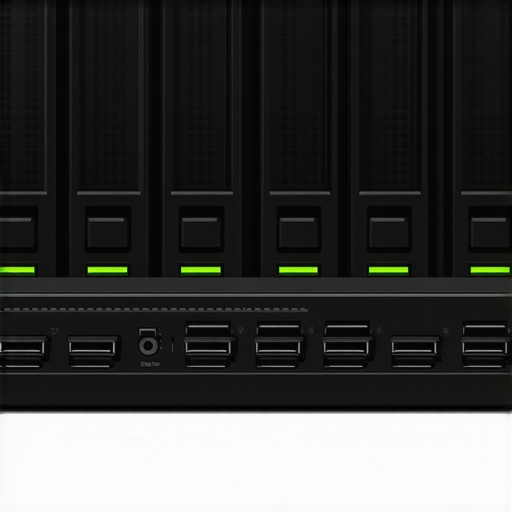

Elevating Data Storage Efficiency in 2024 Through Advanced RAID Configurations and NVMe SSD Technologies
In the rapidly evolving landscape of data management, integrating high-speed RAID storage solutions with cutting-edge NVMe SSDs stands as a cornerstone for achieving unparalleled performance and reliability. As enterprises and power users grapple with burgeoning data volumes and the demand for real-time access, understanding the nuanced interplay between RAID architectures and NVMe SSDs becomes essential for optimizing storage infrastructure.
Why NVMe SSDs Are Transforming High-Speed Storage Paradigms
Non-Volatile Memory Express (NVMe) SSDs have revolutionized storage technology by significantly reducing latency and increasing throughput compared to traditional SATA SSDs. Their direct connection to the PCIe bus enables data transfer rates that surpass 7 GB/s in certain models, fundamentally reshaping expectations for high-performance storage in 2024. This leap in speed is particularly advantageous for RAID configurations, where the bottleneck often shifts from disk speed to interface limitations.
Strategic RAID Architectures for Harnessing NVMe SSD Capabilities
Implementing RAID arrays with NVMe SSDs requires a sophisticated understanding of various architectures—RAID 0 for maximum speed, RAID 5 for balanced performance and redundancy, or RAID 10 for high availability combined with speed. Each configuration offers distinct benefits and trade-offs, but the overarching goal remains: reducing latency, enhancing I/O operations, and ensuring data integrity. Experts suggest leveraging RAID 0 for intensive data processing tasks and RAID 10 when balancing speed with fault tolerance in mission-critical applications.
How to Maximize Performance with RAID and NVMe SSDs
Optimizing throughput involves not only selecting the right RAID level but also ensuring that your hardware supports the high bandwidth of NVMe SSDs. Modern motherboards with multiple PCIe 4.0 or 5.0 slots, combined with enterprise-grade RAID controllers, enable maximum utilization of NVMe capabilities. Additionally, employing software-defined storage solutions can offer dynamic management and scaling, further boosting data access speeds in enterprise environments.
What are the limitations and challenges of deploying NVMe RAID arrays in high-demand settings?
While NVMe SSDs and RAID configurations offer extraordinary speed, they also introduce challenges such as increased heat generation, power consumption, and the need for sophisticated cooling solutions. Moreover, data corruption risks escalate if RAID configurations are not meticulously managed, necessitating robust monitoring and maintenance protocols. The cost factor also remains significant, as enterprise-grade NVMe SSDs and RAID controllers are premium investments. A comprehensive risk assessment and performance benchmarking are essential steps before deployment.
For professionals seeking deeper insights into maximizing storage performance, exploring [the ultimate guide to RAID storage solutions](https://storage.workstationwizard.com/ultimate-guide-to-raid-storage-external-ssds-for-high-speed-data) is highly recommended. This resource offers strategic advice and technical details necessary for designing resilient, high-speed data architectures.
In conclusion, the convergence of high-speed RAID storage and NVMe SSD technologies in 2024 signifies a pivotal evolution in data management. By understanding the complex dynamics and optimizing hardware and software configurations, organizations can unlock unprecedented levels of efficiency and reliability, setting new standards in high-performance computing.
Overcoming Bottlenecks in High-Speed Storage with Innovative RAID Tactics
As NVMe SSDs continue to push the boundaries of data transfer speeds, the importance of pairing them with the right RAID configurations becomes even more critical. Traditional RAID levels like RAID 0 and RAID 5 serve well in many scenarios, but emerging demands for ultra-low latency and high availability call for more sophisticated approaches. For example, combining NVMe SSDs in nested RAID setups, such as RAID 10 over RAID 0, can unlock both speed and redundancy, offering a resilient solution for demanding enterprise workloads. Exploring hybrid architectures tailored specifically to NVMe’s capabilities can significantly enhance overall system throughput and fault tolerance.
The Role of Firmware and Software Optimization in Maximizing Storage Efficiency
Beyond hardware, firmware and software layers play a pivotal role in extracting peak performance from NVMe SSDs and RAID arrays. Firmware updates often contain critical improvements in error correction, power management, and drive longevity, which directly impact stability and speed. On the software front, advanced storage management tools enable dynamic tiering, real-time monitoring, and predictive analytics—features that help preempt performance degradation and data loss. For instance, leveraging enterprise-grade RAID controllers with integrated cache management can reduce latency and improve write speeds, especially when handling large data sets in professional environments. For more insights into optimizing RAID configurations, visit this comprehensive RAID storage guide.
How can organizations balance cost, performance, and data security when deploying NVMe RAID solutions?
Achieving an optimal balance requires a nuanced understanding of workload profiles, hardware capabilities, and budget constraints. Investing in enterprise-grade NVMe SSDs and high-performance RAID controllers can be costly, but the gains in productivity and data integrity often justify the expenditure. Implementing multi-layered security measures, such as hardware encryption and regular integrity checks, further safeguards data in high-speed environments. Additionally, considering external solutions like robust backup and disaster recovery strategies ensures resilience without compromising speed. For tailored advice on selecting external SSDs and RAID configurations, explore this ultimate guide to external SSDs for business.
Interested in practical tools to enhance your RAID setup? Don’t forget to check out tips for scratch disk optimization that can further boost performance in demanding creative workflows.
Mastering Data Integrity in High-Speed NVMe RAID Implementations
While NVMe SSDs coupled with RAID configurations dramatically elevate data transfer speeds, they also necessitate meticulous attention to data integrity protocols. Implementing advanced checksum algorithms like CRC32C or SHA-256 within RAID controllers can significantly reduce silent data corruption, a challenge amplified by the sheer speed of NVMe drives. Moreover, integrating hardware-based error correction features directly into NVMe drives, such as end-to-end data protection, ensures that data remains pristine during rapid read/write cycles. According to a study by the Storage Networking Industry Association (SNIA), employing layered data integrity measures is vital for mission-critical applications where corruption can be catastrophic.
What sophisticated methods exist for proactive monitoring of NVMe RAID health?
Proactive health monitoring in NVMe RAID arrays leverages tools like SMART (Self-Monitoring, Analysis, and Reporting Technology) alongside vendor-specific diagnostics that track parameters such as flash wear, power cycles, and temperature fluctuations. For enterprise environments, deploying AI-powered analytics platforms can predict potential failures before they occur, enabling preemptive maintenance. For instance, Dell EMC’s OpenManage Enterprise integrates predictive analytics with RAID health monitoring, providing administrators with real-time alerts and recommended actions. This approach minimizes downtime and preserves data integrity amidst accelerating data throughput demands.

This article offers a comprehensive overview of how NVMe SSDs are truly transforming high-speed storage in 2024. Having recently upgraded our server infrastructure with NVMe drives and organized nested RAID configurations, I can attest to the performance gains and the importance of robust cooling strategies. One challenge we faced was managing thermal dissipation during prolonged heavy workloads. We implemented vapor chamber cooling, which significantly minimized throttling and maintained consistent performance. When it comes to monitoring RAID health, tools like predictive analytics and AI-driven diagnostics seem promising in preempting failures before they happen, which saves both time and data integrity. I’m curious, for those who have integrated NVMe over Fabrics, how do you handle latency and bandwidth balancing across distributed environments? It seems like the future of high-performance storage is complex yet exciting, especially with protocols like PCIe 5.0 enabling even faster interconnects. Would love to hear others’ experiences with optimizing these emerging technologies.
The post provides an insightful look into how NVMe SSDs are catalyzing a new era of high-speed storage solutions in 2024. Having experimented with NVMe arrays in our data center, I’ve noticed that thermal management becomes increasingly critical as we push for higher speeds and densities. Implementing vapor chamber cooling and custom firmware updates has significantly improved stability and performance. One aspect I find particularly intriguing is the use of AI-driven monitoring tools for early failure detection; combining predictive analytics with intelligent hardware management seems to be the way forward to minimize downtime and data loss. An ongoing challenge in my experience has been balancing cost versus performance, especially when deploying nested RAID configurations like RAID 10 over RAID 0 for maximum redundancy and speed. What approaches or best practices have others found effective in optimizing cooling and monitoring without breaking the bank? I’d love to hear insights on how you are managing these aspects practically in high-demand environments.
This article really underscored how crucial proper thermal management and firmware optimization are for extracting maximum performance from NVMe SSDs in RAID arrays. Having recently overseen a deployment involving nested RAID configurations with high-density NVMe drives, the heat issue was a significant hurdle. We incorporated custom liquid cooling solutions and a robust monitoring system using AI analytics, which dramatically reduced thermal throttling issues. What I found interesting was the mention of emerging NVMe over Fabrics protocols and PCIe 5.0, which could open avenues for even faster distributed storage networks. Has anyone gained hands-on experience with these protocols? How do they affect latency and scalability in real-world environments? The future definitely looks bright, but balancing performance with cost and infrastructure complexity remains a challenge.