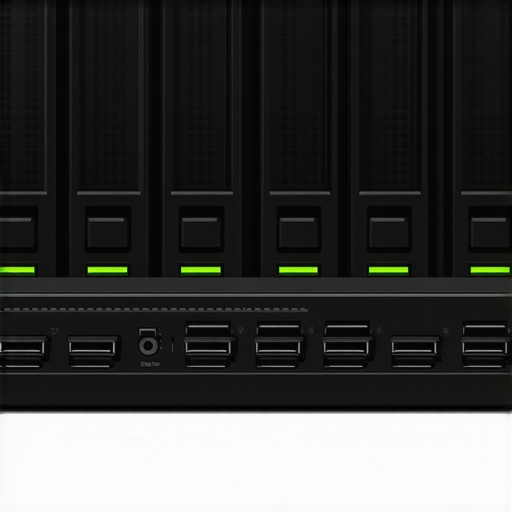

In the rapidly evolving landscape of digital data management, professionals across industries recognize that storage solutions are no longer mere repositories but strategic tools for enhancing productivity, safeguarding critical information, and optimizing operational efficiency. Advanced storage configurations such as external SSDs, SATA SSDs, and NVMe SSDs, coupled with RAID architectures, unlock unprecedented performance levels while ensuring data integrity. This discourse delves into the nuanced mechanics of these technologies, providing expert insights into their optimal deployment for high-demand environments.
Harnessing External SSDs for Seamless Data Accessibility
External SSDs have transcended their traditional roles as portable storage devices, now serving as vital components in high-performance workflows. When integrated effectively, external Sata SSDs offer rapid data transfer rates conducive to creative workflows and real-time data analysis. The advent of NVMe-based external SSDs elevates this paradigm, leveraging PCIe Gen3 and Gen4 interfaces for ultra-low latency and high throughput, essential for tasks such as 4K video editing or large dataset processing. This guide details the selection criteria pivotal for maximizing external SSD capabilities, emphasizing considerations like connector standards, thermal management, and durability in professional contexts.
Implementing RAID Storage for Data Redundancy and Speed
RAID configurations represent a cornerstone for data resilience and accelerated access. Among the various implementations, RAID 0 provides a linear performance boost by striping data across multiple drives, whereas RAID 5 and RAID 10 balance speed with fault tolerance, crucial for enterprise data centers and media production environments. Expert analyses suggest that the synergy of NVMe SSDs within RAID arrays offers substantial gains over traditional HDD-based systems, especially in sequential read/write operations vital for demanding applications. For in-depth insights on how RAID architectures can be tailored for specific workloads, consult this comprehensive resource.
Evaluating Storage Mediums for Scratch Disk Optimization
Scratch disks serve as dedicated high-speed buffers to streamline intensive workflows such as 3D rendering or complex simulations. Utilizing NVMe SSDs as dedicated scratch disks markedly reduces latency, ensures rapid data turnaround, and enhances overall system stability. A comparative analysis between SATA and NVMe SSDs for scratch disk applications reveals that NVMe’s superior bandwidth and IOPS translate into tangible productivity improvements. Moreover, advanced configurations integrating RAID for scratch disks contribute further to throughput robustness, enabling professionals to handle larger projects with minimal bottlenecks. To refine your setup, explore specialized optimization techniques outlined here.
What are the considerations for selecting between multiple NVMe SSDs in a RAID setup to maximize throughput without compromising data integrity?
Choosing the optimal NVMe SSD configuration for RAID involves weighing factors such as controller compatibility, thermal management, write endurance, and the specific performance demands of your workload. RAID levels like 0 and 10 are popular for speed, but they differ in resilience, thus influencing selection based on the criticality of data and the necessity for redundancy. Implementing enterprise-grade NVMe SSDs with advanced thermal throttling and wear leveling technologies ensures sustained performance and longevity. For tailored advice, consult performance secrets of NVMe SSDs tailored for high-speed RAID configurations.
Exploring these storage paradigms requires a nuanced understanding of industry-specific requirements and future scalability. For example, integrating external SSDs within enterprise-grade RAID arrays can drastically improve disaster recovery capabilities while maintaining blazing-fast data access speeds. To deepen your technical proficiency, consider engaging with professional communities and contributing experiential insights on platforms like our contact page.
Optimizing Storage Architectures for Peak Performance
Designing an efficient storage architecture requires a nuanced understanding of the interplay between SSD types, RAID levels, and workload demands. High-performance environments often leverage NVMe SSDs within RAID arrays to push the boundaries of speed, but improper configuration may lead to bottlenecks or data vulnerability. A strategic approach involves assessing your specific use case—be it video editing, database management, or scientific simulations—and tailoring your setup accordingly.
Layering NVMe SSDs for Enhanced Resilience and Speed
Combining multiple NVMe SSDs in RAID configurations, such as RAID 0 for maximum throughput or RAID 5 for balanced speed and redundancy, demands careful consideration of several parameters. Controller compatibility is paramount; enterprise-grade RAID controllers often offer advanced features like cache management and thermal monitoring, which sustain sustained write speeds and prevent overheating. Additionally, employing heat sinks and proper airflow mitigates thermal throttling, preserving consistent performance over extended periods. Experts recommend testing different RAID levels in staging environments to identify the most suitable balance for your operational needs. Learn more about fine-tuning RAID setups for superior reliability here.
Is your current setup truly optimized for the demanding workloads of today’s digital landscape?
Effective assessment involves analyzing read/write benchmarks under real-world conditions, considering factors like IOPS and latency. Tools such as CrystalDiskMark or ATTO Disk Benchmark can provide actionable insights into your storage performance. Moreover, integrating hardware-level NVMe drives with software-defined storage solutions enables dynamic allocation of resources, offering scalability and resilience. Exploring configurations like JBOD versus RAID can unveil hidden bottlenecks; consulting industry reports from leading analysts helps in making informed decisions tailored to your enterprise scale.
Furthermore, staying abreast of emerging NVMe standards, such as PCIe 5.0 and beyond, will be critical as data throughput demands escalate. Investing in adaptable architecture now lays the groundwork for future scalability. For personalized guidance, reach out to our technical team through our contact page.
Elevate Your Storage Strategy by Integrating SSDs with Traditional HDDs
In sectors such as media production, scientific research, and enterprise computing, relying solely on SSDs can be financially impractical while traditional HDDs, although large-capacity, lag in speed and resilience. An advanced approach involves hybrid storage architectures that intelligently combine SSDs’ performance with HDDs’ capacity and affordability. This integration allows organizations to prioritize critical workloads on high-speed SSD caches, optimizing throughput without sacrificing storage volume. By deploying tiered storage solutions managed through software-defined orchestration, businesses can dynamically move data between tiers based on access patterns, thus achieving a delicate balance of speed, cost-efficiency, and data durability. Experts such as those at Dell EMC recommend implementing automated tiering systems to ensure seamless data mobility and reduce manual management overhead, as detailed in their operational best practices.
Implementing Tiered Storage: Best Practices for Ensuring Data Reliability
Designing tiered solutions requires meticulous planning, particularly concerning data placement algorithms and redundancy strategies. For instance, frequently accessed data (hot data) should be prioritized on NVMe SSDs within the high-performance tier, while cold data remains on larger HDDs. To preserve data integrity, especially during system failures or power outages, deploying persistent cache solutions with non-volatile memory components (NVDIMM or NVMe flash modules) can safeguard in-flight data. Additionally, combining RAID configurations with tiered storage enhances resilience—RAID 10 for critical hot data ensures rapid rebuilds upon drive failure, complemented by backup systems to cover entire failure scenarios. Archival data stored on HDDs can also incorporate WORM (Write Once Read Many) protocols to prevent accidental modifications, aligning with retention policies.
How can organizations effectively monitor and adapt their hybrid storage landscapes to evolving workload demands?
Continuous assessment of storage performance and capacity utilization is crucial. Implementing real-time monitoring tools—such as Cisco Unisphere or Dell EMC PowerProtect—provides visibility into throughput, latency, and fault events, enabling proactive adjustments. Predictive analytics powered by machine learning can forecast capacity needs and alert administrators to potential bottlenecks. Moreover, integrating automation scripts, like those built with Ansible or PowerShell, can facilitate dynamic tier adjustments based on predefined policies, ensuring optimal data placement amid changing workloads. For in-depth guidance, industry standards outlined by the Storage Networking Industry Association (SNIA) serve as authoritative references for best practices in hybrid storage environments.
Aligning these complex systems with broader data governance frameworks—such as compliance, security, and disaster recovery—further enhances organizational resilience. As data landscapes become increasingly intricate, partnering with experienced storage solution architects, and leveraging vendor-specific tools tailored to your architecture, can lead to substantial operational benefits and future-proofing your infrastructure.
Advancing Storage Efficiency Through Intelligent Caching and Data Prefetching
Beyond physical hardware, optimizing storage architecture hinges on software strategies that predict and adapt to user behavior. Techniques such as intelligent caching utilize AI/ML algorithms to analyze access patterns, preloading frequently accessed data into high-speed SSD caches, thus reducing latency and avoiding bottlenecks. Data prefetching strategies, when calibrated correctly, anticipate subsequent data requests, ensuring seamless continuity during intensive tasks like video rendering or database transactions. Integrating these methods with hyper-converged infrastructure (HCI) solutions promotes a unified environment where compute and storage resources collaborate efficiently. Vendors such as Nutanix offer platforms that enable such advanced functionalities, streamlining management while increasing overall system agility.
What role do emerging technologies like NVMe over Fabrics play in scaling high-performance storage across distributed environments?
NVMe over Fabrics (NVMe-oF) represents a transformative step toward ultra-low latency, high-throughput storage architectures, especially in data centers and metropolitan-area networks. By extending the benefits of NVMe SSDs over network fabrics—such as Ethernet, InfiniBand, or Fibre Channel—NVMe-oF facilitates remote access with near-direct-attached drive performance. This enables distributed compute nodes to access shared high-speed storage pools without bottlenecking bandwidth or increasing latency significantly. Industry leaders like Intel and Broadcom drive innovation in this domain, promoting standards that ensure interoperability and scalability. Implementing NVMe-oF requires advanced network infrastructure, including RDMA-capable switches and dedicated storage networks, but the payoff in scaling performance across edge, core, and cloud environments is substantial. For organizations aiming to future-proof their storage solutions, investing in NVMe-oF-compatible hardware and network upgrades can unlock unprecedented levels of data movement efficiency.
To explore how NVMe-oF can be integrated into your existing ecosystem, consulting with storage architects who specialize in fabric-based architectures is highly recommended. With the rapid evolution of storage standards, staying informed through industry consortium publications such as the SNIA Technical Council is essential for maintaining cutting-edge infrastructure.
Unlocking the Potential of Hybrid Storage Models for Data-Intensive Workloads
Combining the strengths of SSDs and HDDs within meticulously engineered tiered storage solutions enables organizations to harness high performance without incurring prohibitive costs. Implementing automated data movement algorithms, such as those employed in software-defined storage systems, ensures that frequently accessed data resides on ultra-fast SSD tiers, while archival or infrequently used information remains on cost-effective HDD storage. This dynamic orchestration minimizes latency and optimizes resource utilization, providing a scalable foundation for burgeoning data demands. Industry leaders like Hewlett-Packard Enterprise advocate for policy-driven hybrid architectures that adapt seamlessly to evolving workloads, ensuring sustained efficiency.
Advanced Considerations for Multi-Node NVMe over Fabrics Deployments
The evolution of NVMe over Fabrics (NVMe-oF) has redefined multi-node storage access, dramatically reducing latency in distributed architectures. Proper configuration demands a nuanced understanding of network fabrics, including RDMA-capable Ethernet switches and Fibre Channel adapters, to facilitate scalable, high-speed communication. When deploying NVMe-oF in multi-node environments, addressing issues such as queue depth optimization, namespace management, and fault isolation becomes paramount. Strategic network segmentation and redundancy underpin system resilience, while emerging standards in NVMe-over-TCP promise cost-effective scalability. Consulting detailed frameworks from the SNIA Technical Council can streamline the design process for sophisticated, high-throughput ecosystems.
Expert Insights for Pushing Storage Boundaries
Prioritize Data Resilience in High-Speed Environments
In demanding workflows, maintaining data integrity alongside performance is paramount. Implementing robust RAID configurations such as RAID 10 ensures that speed doesn’t come at the expense of fault tolerance, safeguarding critical assets amidst hardware failures.
Leverage Software-Defined Storage for Flexibility
Adopting software-defined solutions facilitates dynamic management of hybrid architectures, allowing seamless data tiering between NVMe SSDs and traditional HDDs. This flexibility maximizes throughput while optimizing costs.
Optimize Thermal Management for Sustained Performance
High-performance SSDs and RAID arrays generate significant heat. Incorporating effective cooling strategies—heat sinks, airflow design—preserves consistent speeds and extends hardware lifespan in data centers and professional setups.
Integrate Intelligent Caching to Accelerate Workflows
Utilizing AI-driven caching algorithms preemptively loads frequently accessed data into NVMe caches, drastically reducing latency. This approach is particularly advantageous for real-time data processing and creative professional tasks.
Plan for Future Scalability with Emerging Standards
Staying ahead requires investment in evolving standards such as PCIe 5.0 and NVMe over Fabrics, which enable scalable, low-latency access across distributed storage environments. Early adoption ensures infrastructure longevity and readiness for escalating data demands.
Vetted Resources to Deepen Your Expertise
- Ultimate Guide to External SSD Selection: A comprehensive resource for selecting external storage tailored to high-performance needs.
- RAID Technologies Explained: Delve into advanced RAID configurations that balance speed and resilience for enterprise environments.
- NVMe SSD Performance Secrets: Expert insights into maximizing NVMe SSD capabilities for demanding workloads.
Synthesis from the Front Lines of Storage Innovation
To truly harness the power of modern storage architectures, professionals must blend advanced hardware choices—like NVMe SSDs and robust RAID setups—with strategic management practices. This integrated approach enhances productivity, safeguards invaluable data, and future-proofs infrastructure against the relentless growth of digital demands. Engage with industry thought leaders, stay updated on emerging standards, and continuously refine your deployment strategies to remain at the forefront of storage excellence. Your next leap in efficiency begins with a deliberate, informed approach—embrace these insights and drive your storage systems to new heights.