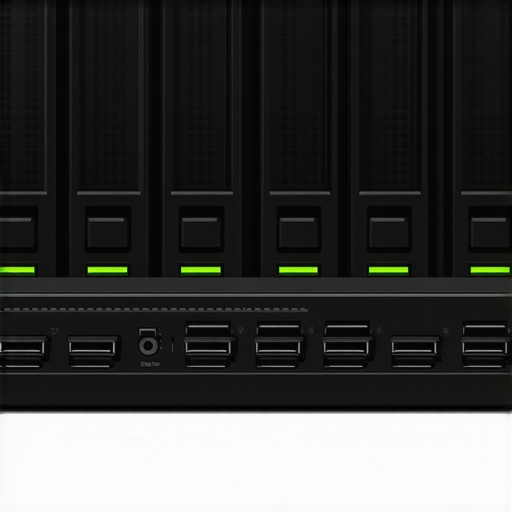

Unlocking the Future of Data Storage: An Expert Perspective on High-Speed Data Access Technologies
In an era where data throughput and storage efficiency dictate competitive advantage, understanding the nuanced interplay between NVMe SSDs, SATA SSDs, external SSDs, and RAID configurations becomes paramount. As data-driven workflows become more complex, professionals must leverage cutting-edge storage solutions to optimize performance, reliability, and scalability. This article explores the critical advancements and strategic considerations shaping high-speed data access in 2024, grounded in real-world applications and expert insights.
Why NVMe SSDs Outperform Traditional SATA Storage in High-Performance Environments
NVMe SSDs revolutionize data access by utilizing the PCIe interface, dramatically reducing latency and increasing throughput. Unlike SATA SSDs, which are limited by older SATA III bandwidth (~600MB/s), NVMe drives can exceed several GBs per second, making them indispensable for demanding tasks such as 4K video editing, 3D rendering, and large-scale data analysis. The architectural design of NVMe—optimized for parallelism—enables superior I/O operations, essential for modern enterprise and creative workflows.
Strategic Deployment of External SSDs for Seamless Data Mobility
External SSDs have evolved from simple portable storage to high-speed, durable solutions that integrate seamlessly into professional environments. Leveraging Thunderbolt 4 or USB 3.2 Gen 2×2 interfaces, high-performance external SSDs can match internal storage speeds, facilitating rapid data transfer and collaboration across geographically dispersed teams. For industries such as media production and scientific research, external SSDs provide the flexibility needed for on-the-go workflows without compromising speed or security.
RAID Storage: The Nexus of Redundancy and Performance
Implementing RAID configurations—particularly RAID 0, 5, and 10—allows organizations to balance redundancy, data integrity, and performance. Modern RAID solutions harness NVMe and SATA SSDs to achieve unprecedented speeds, crucial for real-time data processing and high-availability systems. As noted in recent white papers, the choice of RAID level and hardware significantly impacts throughput, fault tolerance, and recovery time, demanding careful architecture planning.
Can RAID configurations keep pace with the demands of AI and big data processing in 2024?
Indeed, with advancements in NVMe-based RAID controllers and software-defined storage, RAID arrays are now capable of supporting AI workloads and massive datasets with minimal latency. Innovations such as NVMe over Fabrics further extend RAID benefits across networked environments, ensuring scalability and resilience in enterprise data centers. This progressive synergy between hardware and software extends the lifespan and utility of high-speed storage architectures.
To deepen your understanding of these topics, explore our detailed Ultimate Guide to RAID Storage and External SSDs for Fast Data Access. For expert insights and community discussions, visit our Contact Page. As the landscape evolves, staying informed through authoritative sources such as IEEE Xplore ensures your strategies remain on the cutting edge.
Revolutionize Your Data Infrastructure with Cutting-Edge Storage Solutions
As data demands escalate in 2024, professionals must adopt innovative storage architectures that maximize speed, reliability, and scalability. The evolution of NVMe SSDs, external RAID configurations, and intelligent deployment strategies empowers organizations to stay ahead in competitive landscapes. This article delves into advanced deployment tactics and emerging technologies that shape high-speed data access today.
Why NVMe SSDs Are the Backbone of Modern Data Workflows
NVMe SSDs leverage the PCIe interface, offering unparalleled throughput and ultra-low latency, making them essential for intensive applications like AI training, 3D modeling, and real-time analytics. Unlike SATA SSDs, which are constrained by older interface limits (~600MB/s), NVMe drives routinely surpass several GBs per second. Their architecture, designed for parallelism, enables efficient I/O operations, vital for high-performance enterprise environments. For strategic insights on choosing the right NVMe solutions, see our Ultimate Guide to External SSDs.
External RAID Arrays: Powering Seamless Data Mobility and Redundancy
Modern external RAID configurations, especially those utilizing NVMe and SATA SSDs, provide a compelling blend of speed, protection, and flexibility. With interfaces like Thunderbolt 4 and USB 3.2 Gen 2×2, external RAID enclosures now match or exceed internal storage speeds, enabling rapid data transfers across dispersed teams. Industries such as media production and scientific research benefit from these solutions, which facilitate mobile high-speed workflows without compromising data integrity. To explore optimal external RAID setups, visit our External SSD RAID Storage Guide.
Optimizing RAID for Data Security and Performance in 2024
Implementing RAID levels like 0, 5, and 10 enables organizations to tailor data protection and speed according to specific needs. Recent advancements in RAID controllers, especially those supporting NVMe drives, have significantly reduced latency and enhanced throughput. Software-defined storage solutions further allow dynamic management of RAID arrays, adapting to workload fluctuations. As highlighted by industry white papers, selecting the appropriate RAID level and hardware architecture is critical for achieving optimal balance between redundancy and speed. For deeper technical insights, review our Effective RAID Storage Strategies.
Can emerging technologies like NVMe over Fabrics future-proof RAID performance against exponential data growth?
Absolutely. NVMe over Fabrics (NVMe-oF) extends the benefits of NVMe across networked environments, enabling scalable, low-latency storage access over Ethernet or InfiniBand. This innovation allows RAID arrays to support AI workloads, big data analytics, and cloud-native applications with minimal performance bottlenecks. As the demand for rapid data processing accelerates, integrating NVMe-oF with sophisticated RAID architectures offers a resilient, future-ready solution. For insights into high-speed RAID configurations, visit our High-Speed RAID Storage Resources.
Stay informed about the latest in storage innovation by consulting authoritative sources like IEEE Xplore, which publishes cutting-edge research on data storage and transfer technologies. Engaging with these resources helps refine your strategies and adopt best practices for high-speed data management.
Maximizing Data Throughput with Cutting-Edge SSD Architectures
As data demands accelerate, the pursuit of ultra-fast storage solutions pushes the boundaries of current technology. NVMe SSDs, leveraging PCIe 4.0 and 5.0 interfaces, deliver unprecedented throughput—reaching beyond 7 GB/s—making them indispensable for AI training, real-time analytics, and high-frequency trading systems. These drives utilize advanced controller architectures, such as DRAM-less designs and multi-channel NAND, to optimize performance while reducing latency. Experts recommend integrating these drives into tiered storage strategies to balance cost and speed effectively.
The Role of Software-Defined Storage in Enhancing Storage Scalability
Modern enterprises increasingly adopt software-defined storage (SDS) solutions to achieve flexible, scalable, and resilient data infrastructures. SDS abstracts hardware complexities, enabling dynamic provisioning and management of storage resources across heterogeneous environments. When combined with high-speed NVMe over Fabrics (NVMe-oF), SDS platforms facilitate seamless scaling of storage clusters, maintaining low latency even as data volumes grow exponentially. According to recent industry analyses, this convergence supports AI workloads and large-scale data lakes efficiently, reducing total cost of ownership and operational overhead.
How Does Automated Data Tiering Optimize High-Performance Storage?
Automated data tiering intelligently classifies and moves data between different storage tiers—such as NVMe SSDs, SATA SSDs, and traditional HDDs—based on access patterns. This process ensures that frequently accessed data resides on the fastest media, reducing latency and improving overall system responsiveness. Implementations leveraging machine learning algorithms can predict data usage trends, preemptively migrating data and optimizing resource utilization. For instance, enterprise storage solutions like Dell EMC PowerScale and NetApp ONTAP exemplify how tiering enhances performance without sacrificing capacity or increasing costs.
What Are the Challenges of Implementing NVMe over Fabrics in Large-Scale Data Centers?
Despite its advantages, deploying NVMe-over-Fabrics (NVMe-oF) at scale presents several technical challenges. Network infrastructure must support ultra-low latency and high bandwidth, often requiring InfiniBand or 25/100 Gb Ethernet networks. Additionally, ensuring data integrity and security across distributed storage nodes necessitates sophisticated protocols and encryption mechanisms. Compatibility issues between different hardware vendors and the need for advanced management tools also complicate deployment. Industry leaders recommend rigorous testing, phased rollouts, and ongoing training to address these complexities effectively.
How can organizations leverage emerging standards like Zoned Namespaces (ZNS) to improve storage efficiency?
Zoned Namespaces (ZNS) redefine SSD architecture by organizing data into zones, reducing write amplification and enhancing lifespan. ZNS allows for more predictable performance, especially in write-intensive environments, by offloading management tasks to the host system. This standard is particularly beneficial for large-scale data centers handling archival data or high-throughput workloads, offering improved endurance and reduced power consumption. As ZNS adoption grows, integrating hardware with intelligent firmware and host-side software becomes critical—an area where collaboration between industry consortia like the Open-ZNS project is accelerating innovation.
To deepen your expertise, explore detailed technical papers from IEEE Xplore on NVMe innovations and storage architectures. Implementing these advanced solutions requires strategic planning—consider consulting with storage architects or participating in industry forums dedicated to high-speed data infrastructure.
Revolutionize Data Center Efficiency with Next-Gen SSD Architectures
As enterprises confront the relentless growth of data volumes, innovative SSD architectures such as 3D XPoint and emerging PCIe 5.0 NVMe drives are setting new benchmarks in throughput and latency reduction. These cutting-edge solutions enable data centers to handle AI training models, real-time analytics, and large-scale simulations with unprecedented speed. Integrating these architectures requires sophisticated firmware management and hardware compatibility analysis, emphasizing the importance of a future-proof storage roadmap.
How Can Automated Data Management Elevate Storage Performance?
Advanced data management strategies, such as intelligent tiering and predictive caching driven by machine learning algorithms, optimize storage utilization by dynamically allocating workloads to the most suitable media. Implementing these strategies reduces bottlenecks, enhances I/O efficiency, and extends hardware lifespan. Leading enterprise solutions like NetApp and Dell EMC incorporate such capabilities, offering a competitive edge for data-intensive workflows.
What Role Does Software-Defined Storage Play in Scalability?
Software-Defined Storage (SDS) decouples storage management from hardware, allowing organizations to scale resources flexibly while maintaining high performance. When combined with NVMe over Fabrics, SDS enables seamless expansion of storage clusters across geographically dispersed data centers, fostering resilience and agility. This synergy supports AI workloads and big data analytics, ensuring minimal latency and maximum throughput across distributed environments, as detailed in recent industry white papers.

Can Emerging Protocols Like Zoned Namespaces Transform SSD Longevity?
Zoned Namespaces (ZNS) are revolutionizing SSD endurance by organizing data into zones, reducing write amplification, and enabling more predictable performance. This standard is especially advantageous for archival and high-throughput workloads, where maintaining device health is critical. Adoption of ZNS demands specialized host-side software and firmware integration, which industry consortia like Open-ZNS are actively developing to accelerate deployment.
Why Embrace NVMe over Fabrics for Hyper-Scale Storage?
NVMe over Fabrics (NVMe-oF) extends the benefits of NVMe across networked environments, supporting scalable, low-latency storage solutions over Ethernet and InfiniBand. This protocol facilitates the deployment of hyper-converged infrastructure, reducing data transfer bottlenecks and enabling high-performance applications to operate at scale. Overcoming implementation challenges involves rigorous network infrastructure upgrades and security enhancements, as highlighted by IEEE research publications.
How Do Future Storage Technologies Address Data Sovereignty Concerns?
Emerging storage solutions incorporate encryption, geolocation-aware policies, and modular hardware architectures to comply with data sovereignty regulations. Technologies such as secure enclaves and blockchain-based audit trails ensure data integrity and compliance across jurisdictions, a critical consideration for multinational organizations. Engaging with standards from bodies like ISO and IEEE ensures these implementations meet international legal and security frameworks.
To deepen your understanding of these innovations, explore detailed technical resources from IEEE Xplore and industry-leading conferences. Strategic planning and expert consultation are essential to harnessing the full potential of next-generation storage architectures.
Elevate Your Data Infrastructure with Cutting-Edge Storage Techniques
In today’s rapidly evolving digital landscape, leveraging the latest in NVMe SSDs, external RAID configurations, and advanced data management strategies is essential for staying competitive. Experts recommend adopting tiered storage solutions that combine speed and reliability, ensuring your data access remains seamless and scalable in 2024.
Harness the Power of NVMe SSDs for Maximum Throughput
NVMe SSDs utilize PCIe interfaces to deliver unparalleled speed, facilitating real-time analytics, AI workloads, and high-frequency trading. Integrating these drives into your infrastructure can drastically reduce latency and boost overall system performance, making them indispensable in modern data centers.
Optimize External Storage with RAID Configurations
External RAID arrays, especially those supporting NVMe and SATA SSDs, provide a flexible solution for mobile high-speed workflows. Employing RAID levels like 0, 5, or 10 allows balancing performance with redundancy, safeguarding your data against hardware failures while maintaining rapid access.
Implement Intelligent Data Tiering for Efficiency
Automated data tiering intelligently moves frequently accessed data to the fastest media, such as NVMe SSDs, while archiving less critical information on slower drives. This approach maximizes storage efficiency and accelerates data retrieval processes, aligning with enterprise needs in 2024.
Stay Ahead with Emerging Protocols and Standards
Protocols like NVMe over Fabrics and standards such as Zoned Namespaces (ZNS) are transforming storage scalability and endurance. By adopting these innovations, organizations can future-proof their infrastructure against exponential data growth and evolving security requirements.
Curated Resources for Deep Learning
- IEEE Xplore: Cutting-edge research articles on NVMe innovations and storage architectures.
- Storage Industry White Papers: In-depth technical analyses from leading vendors on RAID and SSD technologies.
- Vendor Documentation: Manufacturer guides for implementing NVMe over Fabrics and ZNS in enterprise environments.
Reflecting on the Future of Data Storage
Expert insights highlight that mastering NVMe SSD deployment, optimizing RAID configurations, and embracing emerging standards are pivotal for high-performance data management in 2024. As storage demands escalate, continuous innovation and strategic planning will define success. Engage with industry forums, consult technical resources, and share your insights to shape the future of data infrastructure—your expertise can drive the next wave of storage excellence.
This comprehensive overview of high-speed storage solutions for 2024 truly highlights the rapid advancements in NVMe SSDs, RAID configurations, and emerging protocols like NVMe over Fabrics and ZNS. From my personal experience managing large data centers, I can attest that integrating NVMe drives into RAID arrays has significantly improved throughput and reduced latency, especially for AI and analytics workloads. The mention of automated data tiering resonates with our approach to optimize storage costs while maintaining performance. However, I’ve faced challenges with implementing NVMe-oF across diverse network environments due to latency and compatibility issues. Have others found effective ways to streamline NVMe over Fabrics deployment in complex data center setups? It seems that building the right infrastructure and choosing compatible hardware is crucial to fully leverage these technologies.
Reading through this detailed guide really highlights how rapidly high-speed storage technology is advancing, especially with the integration of NVMe SSDs and RAID systems. I’ve been experimenting with external NVMe RAID enclosures for collaborative projects, and it’s impressive how close their performance is to internal drives, thanks to Thunderbolt 4 interfaces. One aspect I find particularly interesting is how these technologies can be scaled with NVMe over Fabrics, although deploying them in large data centers still presents some hurdles, especially regarding network infrastructure and latency. Has anyone here successfully integrated NVMe-oF in such environments without significant bottlenecks? I believe that choosing the right networking hardware and protocols is key, but sometimes the practical challenges can be overlooked in these discussions. It’s exciting to see how these innovations can support AI and big data workloads, but the real challenge is aligning hardware, software, and network architecture to maximize their potential. Would love to hear some practical tips from those who have navigated these deployment complexities.