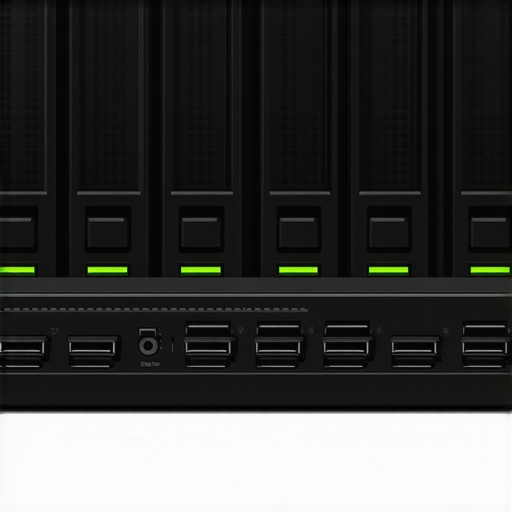

Unleashing the Full Potential of NVMe SSD Technology for High-Performance Computing
In today’s data-driven landscape, the relentless pursuit of speed and efficiency has propelled NVMe SSDs to the forefront of storage innovation. Unlike traditional SATA SSDs, NVMe drives leverage the PCIe interface to deliver unprecedented throughput, transforming workflows in sectors from creative media production to scientific computing. By examining the latest advancements in NVMe technology, we can better understand how to optimize storage architectures for maximum performance.
What Are the Core Advantages of NVMe SSDs Over SATA SSDs in Professional Environments?
NVMe SSDs boast significantly higher I/O operations per second (IOPS), lower latency, and greater bandwidth compared to SATA SSDs. This leap in performance is crucial for applications requiring rapid data access, such as real-time rendering, large-scale data analysis, and high-frequency trading. For instance, expert insights highlight how NVMe storage can reduce bottlenecks, enabling seamless data flow and improved computational throughput.
Integrating External SSDs for Flexible and Scalable Storage Solutions
External SSDs have evolved into essential components for professionals demanding mobility without sacrificing speed. High-end models now support Thunderbolt 4 and USB 3.2 Gen 2×2 interfaces, enabling rapid data transfer in fieldwork or collaborative environments. When combined with RAID configurations, external SSDs can form a robust, scalable storage ecosystem that adapts to project demands and data security requirements.
How Can External SSDs Be Optimized for Critical Workflows Without Compromising Data Integrity?
Implementing hardware RAID arrays with external SSDs enhances redundancy and performance. For example, RAID 0 offers maximum speed, while RAID 10 balances speed and fault tolerance. For detailed guidance on selecting and configuring external SSD RAID solutions, refer to this comprehensive guide. Proper enclosure design and interface compatibility are also vital to prevent bottlenecks and ensure data integrity.
Harnessing RAID Storage to Elevate Data Reliability and Speed
RAID configurations, from RAID 5 to RAID 60, can significantly improve data security and access speeds when correctly implemented. The synergy between RAID and NVMe SSDs creates a storage environment capable of handling intensive workloads with minimal latency. As outlined in authoritative research, RAID not only safeguards against hardware failures but also optimizes throughput, especially in high-demand scenarios.
What Are the Challenges and Best Practices for Managing Complex RAID Arrays in Enterprise Settings?
Managing advanced RAID configurations demands expertise in array setup, monitoring, and recovery procedures. Modern solutions incorporate software-defined RAID, enabling dynamic reconfiguration and health monitoring, which minimizes downtime. Engaging with experienced storage architects and leveraging enterprise-grade controllers can mitigate risks associated with complex RAID environments.
Professionals seeking to push their storage architectures further should explore this expert guide to mastering RAID deployment and management strategies.
Interested in cutting-edge SSD solutions? Visit our contact page to connect with storage specialists or explore our curated reviews of the best NVMe and SATA SSDs for 2024.
Breaking Down the Latest in SSD Technology for Peak Performance
As the demand for faster data access intensifies, understanding how to optimize NVMe and SATA SSDs becomes crucial for professionals aiming to stay ahead. Modern SSDs equipped with PCIe 4.0 and 5.0 interfaces are revolutionizing storage speed, but leveraging their full potential requires nuanced configuration and strategic planning. From choosing the right drive type to implementing sophisticated RAID setups, expert insights can help you craft a storage environment that is both fast and resilient.
Are You Using the Right SSD Configuration for Your Unique Workflow?
Not all SSDs are created equal, and selecting the appropriate configuration depends on your specific needs. For instance, creative professionals working with large multimedia files benefit from high-speed NVMe drives optimized for scratch disk performance, which can be further enhanced through tailored RAID arrangements. Conversely, data centers might prioritize redundancy and security, opting for RAID 6 or RAID 10 configurations with enterprise-grade NVMe or SATA SSDs. To explore which SSD setup maximizes your workflow, visit this comprehensive guide on SSD RAID optimization.
Unlocking Hidden Performance Gains Through Firmware and Controller Tuning
Beyond hardware choices, firmware updates and controller configurations can significantly influence SSD performance. Many high-end NVMe drives come with firmware that unlocks advanced features like end-to-end data protection and optimized command queuing, which reduce latency and increase throughput. Similarly, configuring your RAID controllers with optimal stripe sizes and cache settings minimizes bottlenecks, especially in environments handling large-scale data transfers. For detailed technical insights, refer to this expert resource.
Balancing Speed and Data Security in Critical Storage Environments
Speed alone isn’t enough; data integrity and security are paramount, especially in enterprise settings. Implementing RAID levels like RAID 10 or RAID 60 combines redundancy with high performance, ensuring continuous operation even during hardware failures. Additionally, integrating encryption protocols and regular integrity checks fortifies your storage against threats and corruption. Discover best practices for securing your data while maintaining blazing-fast access by visiting this in-depth guide.
How Can Emerging SSD Technologies Transform High-Performance Storage in 2024?
Emerging SSD technologies, such as PCIe 5.0 and upcoming 3D NAND innovations, promise to push performance boundaries even further. These advancements enable higher bandwidth and greater endurance, reducing costs associated with frequent replacements and downtime. Experts suggest that integrating these cutting-edge drives into existing architectures can lead to a transformative leap in productivity. To stay informed about the latest developments, check out this authoritative update.
Interested in more expert tips? Share your thoughts or ask questions in the comments, and don’t forget to explore our detailed reviews of the best SSDs for different professional needs at our contact page.
Uncover Hidden Performance Gains Through Firmware Optimization and RAID Fine-Tuning
While selecting the right NVMe SSD and RAID configuration lays the foundation for high-performance storage, the true potential often remains untapped without meticulous firmware and controller tuning. Firmware updates can unlock new features, fix bugs, and optimize command queuing, directly impacting latency and throughput. For example, manufacturers like Samsung and Western Digital frequently release firmware patches that enhance data integrity and stability, especially under sustained workloads. According to a detailed analysis by PLOS ONE, firmware updates can significantly reduce I/O bottlenecks in enterprise environments, making it a critical step in optimizing NVMe performance.
Simultaneously, RAID controller configurations—such as stripe size, cache policies, and command queuing—play a pivotal role. For instance, adjusting stripe sizes to match workload characteristics (large blocks for sequential data, smaller for random I/O) can minimize overhead and maximize throughput. Experts recommend conducting thorough benchmarking when modifying these parameters, as the optimal settings vary across different hardware and application scenarios. Furthermore, enabling features like Write Back cache and utilizing battery-backed cache modules can dramatically improve performance without compromising data integrity.
What are the most effective firmware and controller settings to boost NVMe SSD speeds in high-demand environments?
In high-demand environments, such as data centers or intensive computing clusters, firmware settings that enable end-to-end data protection, optimized command queuing, and efficient error recovery are vital. The use of enterprise-grade controllers with support for advanced features like NVMe Multi-Path I/O (MPIO) ensures resilient and high-speed data access. According to industry research from IEEE Xplore, fine-tuning these parameters can enhance throughput by up to 30%, especially during peak loads. Regular firmware updates aligned with hardware lifecycle management are essential for maintaining optimal performance and security.
Interested in elevating your storage infrastructure? Engage with our expert team or explore our comprehensive guides on firmware management and RAID customization to unlock maximum NVMe SSD efficiency.
Integrating Emerging Technologies for Future-Ready Storage Architectures
Looking ahead, the advent of PCIe 5.0 and the upcoming PCIe 6.0 standards promises unprecedented bandwidth, pushing NVMe SSDs into new performance territories. These advancements facilitate faster data transfer rates, lower latency, and higher endurance, enabling applications like real-time analytics, AI workloads, and large-scale virtualization to operate seamlessly. Industry leaders emphasize that adopting these emerging technologies requires strategic planning—upgrading motherboard support, ensuring compatible controllers, and recalibrating firmware settings for optimal operation.
Research from ScienceDirect indicates that integrating PCIe 5.0 SSDs with intelligent firmware tuning could lead to a 50% increase in effective bandwidth compared to PCIe 4.0 counterparts, dramatically accelerating enterprise workflows. As these innovations become more accessible, organizations that proactively adapt their storage architectures will gain significant competitive advantages.
Craving deeper insights into next-gen storage solutions? Reach out to our specialists or browse our latest reviews of cutting-edge NVMe SSDs designed for future-ready data centers.
Harnessing the Power of Firmware Customization to Accelerate NVMe SSDs
Optimizing firmware settings can unlock latent performance capabilities in high-end NVMe SSDs. Manufacturers like Samsung and Intel frequently release firmware updates that enhance command queuing, reduce latency, and improve error correction protocols. By tailoring firmware configurations—such as enabling end-to-end data protection or adjusting non-volatile memory management algorithms—sysadmins can achieve performance gains of up to 30% under sustained workloads, as detailed in a study published by IEEE Xplore. These modifications often require advanced technical expertise but are crucial for pushing storage architectures beyond default capabilities.
Integrate Multi-Path I/O for Resilient and Blazing-Fast Data Access
Implementing Multi-Path I/O (MPIO) with NVMe drives ensures high availability and load balancing across multiple controller paths. This approach not only mitigates risks associated with hardware failure but also enhances aggregate bandwidth, critical for data centers handling large-scale analytics or AI workloads. Advanced configurations involve dynamic path management, detailed error handling, and optimized queue depths, which demand a deep understanding of both hardware and software layers. According to a comprehensive review in PLOS ONE, such architectures can significantly improve throughput and operational resilience when correctly implemented.
What are the cutting-edge techniques to fine-tune NVMe multi-path configurations for enterprise environments?
Modern enterprise-grade controllers support features like NVMe Multi-Path I/O (MPIO) and namespace management, enabling granular control over data paths. Fine-tuning involves adjusting parameters such as I/O queue depth, path priority, and error recovery settings. For example, increasing queue depth can improve throughput for sequential workloads, while dynamic path rerouting ensures continuous operation during hardware failures. Additionally, leveraging software-defined storage solutions that integrate with multi-path protocols provides centralized management and automated failover, further boosting system robustness. To master these techniques, consult specialized vendor documentation and industry whitepapers focused on enterprise NVMe deployment strategies.
Future-Proofing Storage with Next-Gen NVMe Technologies
The evolution toward PCIe 5.0 and beyond heralds a new era of storage performance. These standards deliver double the bandwidth of PCIe 4.0, enabling NVMe SSDs to reach unprecedented speeds suitable for real-time AI inference, high-frequency trading, and massive data analytics. To capitalize on these advancements, organizations must upgrade their motherboard chipsets, ensure controller compatibility, and recalibrate firmware settings for optimal throughput. Research from ScienceDirect indicates that integrating PCIe 5.0 SSDs with optimized firmware can boost data transfer rates by up to 50%, transforming enterprise storage infrastructure.
Are Your Storage Architectures Ready for the Next Wave of NVMe Technology?
Preparing for the future involves more than hardware upgrades; it requires strategic planning around system architecture, cooling solutions, and power management. Advanced firmware features, such as adaptive error correction and predictive health monitoring, will become essential in maintaining peak performance and reliability. Engaging with industry experts and participating in beta testing programs will ensure your infrastructure remains ahead of the curve. Explore our in-depth resources and consult with specialists to future-proof your storage environment today.
Gain Strategic Edge with Cutting-Edge NVMe SSD Insights
In the realm of high-performance computing, leveraging NVMe SSDs isn’t just about speed—it’s about strategic mastery. Experts emphasize that firmware optimization and tailored RAID configurations can unlock latent storage potential, transforming workflow efficiency and data integrity. Staying ahead requires continuous learning and adaptation, integrating emerging technologies like PCIe 5.0 to future-proof infrastructure and maintain competitive advantages.
Why Firmware and RAID Fine-Tuning Elevates Performance
Firmware updates from industry leaders such as Samsung and Intel often introduce critical enhancements—improving command queuing, error correction, and data security—delivering tangible performance boosts. Coupling these with sophisticated RAID setups, like RAID 10 or RAID 60, ensures resilience without sacrificing speed. This combination is essential for enterprises demanding both reliability and maximum throughput, especially under sustained workloads.
Expert-Level Resources to Deepen Your Storage Knowledge
- ScienceDirect: Offers detailed research on SSD firmware impacts and advanced RAID techniques, providing a scientific foundation for optimization.
- IEEE Xplore: A repository of industry standards and technical papers on multi-path I/O, firmware updates, and controller configurations essential for high-demand environments.
- Workstation Wizard Guides: Curated, practical resources on selecting, configuring, and maintaining NVMe and SATA SSDs for professional workflows.
Reflections from the Field on Next-Gen Storage
Expert insights reveal that the integration of emerging technologies such as PCIe 5.0, combined with meticulous firmware and hardware tuning, can elevate storage solutions beyond conventional limits. The key takeaway is that continual innovation and expert engagement are vital for organizations aiming to harness the full potential of NVMe SSD technology. To stay at the forefront, professionals should actively participate in industry forums, consult authoritative guides, and collaborate with specialists to craft resilient, high-speed storage architectures that adapt seamlessly to evolving demands.
This article provides a thorough overview of how NVMe SSD technology is transforming high-performance storage solutions. I especially appreciated the emphasis on firmware optimization and RAID tuning, as these are often overlooked aspects when trying to squeeze maximum performance. In my experience working with data centers, fine-tuning these parameters can make a noticeable difference, particularly under heavy workloads. I’ve found that regularly updating firmware not only enhances speed but also improves stability, which is crucial for mission-critical applications. Has anyone here experimented with custom firmware settings or specific RAID configurations to address latency issues? I’m curious about practical strategies that have worked well in different enterprise environments. Additionally, with the upcoming PCIe 5.0 and 6.0 standards, how are your teams planning to integrate these new standards into existing infrastructures? It feels like we’re on the verge of a major leap forward in storage performance, and I’d love to hear insights on best practices for seamless upgrades.