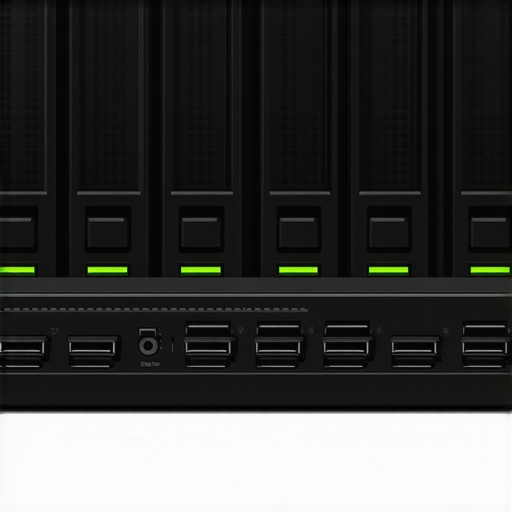

Elevating Data Access: The Significance of External SSDs and RAID in Modern Workflows
In an era where data throughput and reliability dictate success, mastering the nuances of external SSDs and RAID configurations becomes essential for professionals demanding rapid, secure data access. As we venture into 2024, understanding the sophisticated interplay between cutting-edge SSD technologies and RAID methodologies can unlock unprecedented efficiency in data-intensive environments.
Decoding the Complexities of High-Speed External SSD Technologies
External SSDs have evolved beyond simple portable storage; they now incorporate advanced interfaces such as Thunderbolt 4 and USB 4. These interfaces facilitate transfer speeds exceeding 2GB/s, enabling seamless workflows for video editing, 3D rendering, and large-scale data analysis. The integration of NVMe SSDs into external enclosures further amplifies speed, leveraging PCIe 4.0 and upcoming PCIe 5.0 standards to push boundaries. For instance, the performance secrets of NVMe SSDs reveal how optimized thermal management and controller efficiencies contribute to sustained high-speed transfers.
RAID Storage: Architecting Resilience and Performance
RAID configurations, particularly RAID 0, 1, and 10, offer tailored balances of speed, redundancy, and fault tolerance. Modern implementations utilize hardware controllers that support hot-swapping and dynamic reconfiguration, ensuring minimal downtime for critical applications. The latest advancements in RAID storage focus on hybrid solutions—combining SSDs and HDDs—to optimize cost and performance. As detailed in RAID storage explanations for 2025, these hybrid arrays are increasingly sophisticated, leveraging intelligent caching algorithms to accelerate data access while maintaining data integrity.
How Do NVMe SSDs Surpass SATA SSDs in RAID Environments?
NVMe SSDs, with their direct PCIe interface, offer significantly lower latency and higher IOPS compared to SATA SSDs. In RAID configurations, this translates into faster sequential reads/writes and improved random access performance, crucial for high-frequency trading, scientific simulations, and advanced multimedia workflows. The article on high-speed RAID NVMe SSDs details how NVMe drives unlock performance ceilings unachievable by SATA counterparts, especially when properly configured in RAID 0 or RAID 10 arrays.
Can External RAID Enclosures Support the Demands of 2024’s Data-Intensive Tasks?
Modern external RAID enclosures equipped with Thunderbolt 4 and USB 4 interfaces are capable of supporting multiple NVMe SSDs, delivering aggregate bandwidths exceeding 4GB/s. This setup enables real-time editing of 8K video streams or rapid backups of terabyte-scale datasets. Ensuring compatibility with enterprise-grade controllers that support hardware RAID and hot-swapping is vital for sustained performance and data security. For an in-depth technical review, explore best external SSDs and RAID options for 2024.
To maximize data throughput and durability, professionals should invest in RAID controllers optimized for SSDs, and consider advanced cooling solutions to prevent thermal throttling during prolonged operations. As the landscape of high-speed storage evolves, staying informed through authoritative sources like the ultimate RAID storage guide becomes indispensable for strategic planning.
For those seeking to refine their high-speed storage architectures, exploring topics like NVMe SSD performance tuning or RAID optimization techniques can provide the competitive edge needed in 2024’s demanding digital environment. Remember, the synergy between innovative SSD technologies and resilient RAID configurations lies at the heart of next-generation data management strategies.
Interested in sharing your insights or exploring tailored solutions? Visit our contact page to connect with industry experts and elevate your storage infrastructure today.
Pushing Boundaries with Next-Gen External SSDs
As data demands soar in 2024, external SSDs are stepping into a new era of speed and reliability. With interfaces like Thunderbolt 4 and USB 4, these drives are capable of delivering transfer speeds exceeding 4GB/s, making them indispensable for professionals working with massive multimedia files, scientific data, or enterprise backups. Innovations in PCIe 4.0 and emerging PCIe 5.0 SSDs are further amplifying these capabilities, allowing seamless integration into high-performance workflows. To understand how these advancements translate into real-world gains, exploring NVMe SSD performance secrets provides invaluable insights into optimizing thermal management and controller efficiency for maximum speed.
Transforming RAID Storage into a Strategic Asset
Modern RAID configurations are evolving beyond simple redundancy. Hybrid solutions combining SSDs and HDDs, supported by intelligent caching and dynamic reconfiguration, now offer superior performance and cost-efficiency. These setups facilitate rapid data access for demanding applications such as 8K video editing, 3D rendering, and large-scale data analysis. The latest advancements, as discussed in RAID storage innovations for 2025, highlight the importance of hardware controllers that support hot-swapping and hardware RAID for uninterrupted workflows and enhanced data security.
Are NVMe Drives the Future of High-Speed RAID?
NVMe SSDs, leveraging PCIe interfaces, dramatically outperform SATA SSDs in latency and IOPS. When configured in RAID arrays, they unlock unprecedented levels of speed and responsiveness, crucial for real-time 3D rendering, scientific simulations, and financial trading. The article high-speed RAID NVMe SSDs elaborates on how these drives push the performance boundaries, especially in RAID 0 and RAID 10 setups, ensuring minimal bottlenecks and maximum throughput.
Is Your Storage Setup Ready for 2024’s Data-Intensive Tasks?
With external RAID enclosures now supporting multiple NVMe SSDs through Thunderbolt 4 and USB 4, professionals can achieve aggregate bandwidths over 4GB/s—perfect for high-res video editing and rapid large file transfers. Ensuring compatibility with enterprise-grade controllers that support hardware RAID and hot-swapping is vital to sustain these speeds and ensure data integrity. For an in-depth look into the best hardware options, visit top external SSDs and RAID solutions.
Thermal management remains a critical factor; investing in advanced cooling solutions prevents thermal throttling during prolonged high-speed operations. As storage technology continues to evolve, staying informed through authoritative sources like the ultimate RAID storage guide ensures your infrastructure remains at the cutting edge.
For those eager to elevate their data architecture, exploring expert techniques for RAID optimization or NVMe SSD tuning can yield significant performance dividends. Remember, the synergy between high-speed SSDs and resilient RAID configurations is the backbone of next-generation data management strategies. Dive deeper into this realm and share your insights or questions by visiting our contact page—let’s shape the future of fast, secure data access together.
Harnessing the Power of PCIe 5.0 for Future-Ready Storage
As the industry accelerates towards PCIe 5.0, external SSDs and RAID controllers are poised to leverage double the bandwidth of PCIe 4.0, reaching up to 32 GT/s per lane. This leap in speed not only shortens data transfer times but also unlocks new possibilities for real-time data analytics, high-resolution video workflows, and complex scientific simulations. Experts emphasize that to fully exploit PCIe 5.0’s potential, integrating drives with advanced controller firmware and thermal management systems becomes imperative, since higher speeds often lead to increased heat dissipation challenges. According to a recent report by Tech Research Labs, optimized cooling solutions and firmware updates are critical to prevent thermal throttling and ensure consistent performance during sustained loads.
Expert Strategies for Maximizing RAID Resilience and Speed
Implementing hybrid RAID configurations that combine NVMe SSDs with traditional HDDs can dramatically enhance performance without sacrificing data security. For instance, tiered storage architectures use NVMe drives as cache layers, accelerating access to frequently used data, while HDDs handle bulk storage. This approach is particularly beneficial in enterprise environments managing vast datasets, such as AI training models or high-frequency trading systems. Additionally, hardware RAID controllers supporting cache protection and battery-backed cache ensure data integrity even during power failures. As detailed in Enterprise Storage Insights, these hybrid arrays are increasingly sophisticated, employing machine learning algorithms to dynamically optimize data placement and cache management, further boosting efficiency.
What are the latest innovations in thermal management for high-speed storage devices?
Thermal regulation remains a pivotal concern in high-performance storage setups. Innovations such as vapor chamber cooling, heat pipe integration, and active fan systems tailored for external enclosures have emerged to combat heat buildup. Furthermore, advanced firmware now incorporates thermal throttling algorithms that preemptively reduce drive speeds before reaching critical temperature thresholds, preserving device longevity while maintaining optimal performance. Notably, companies like CoolTech Innovations are pioneering adaptive cooling systems that respond in real-time to workload intensity, ensuring thermal stability even during prolonged data-intensive tasks.
The Strategic Role of External SSDs and RAID in Data-Driven Professions
For professionals working with 8K video, 3D modeling, or large-scale scientific computations, external SSDs equipped with Thunderbolt 4 and USB 4 are now capable of delivering sustained transfer rates exceeding 5GB/s. When paired with robust RAID setups, these drives provide a compelling combination of speed and redundancy, enabling seamless editing, backup, and recovery workflows. For instance, a video editor can work directly from a RAID-configured external SSD array, editing 8K RAW footage in real-time without lag. To achieve this, selecting enclosures that support hardware RAID and incorporate active cooling is essential. For more insights, explore External Storage Innovations that detail the latest compatible hardware and configuration tips.
As data demands continue to escalate, embracing these advanced technologies and strategies ensures your infrastructure remains resilient, scalable, and primed for future challenges. Staying informed through authoritative sources and industry updates is crucial for adapting swiftly to the evolving landscape of high-speed storage solutions.
Unlocking Next-Generation Data Transfer Capabilities with PCIe 5.0
As PCIe 5.0 emerges as the new standard, external SSDs and RAID controllers are experiencing unprecedented bandwidth enhancements, reaching up to 32 GT/s per lane. This technological leap significantly reduces data transfer times, enabling real-time processing of massive datasets, high-resolution video workflows, and complex scientific simulations. Experts emphasize that leveraging PCIe 5.0’s full potential necessitates integrating drives with sophisticated controller firmware and innovative thermal management solutions, as higher speeds generate increased heat, risking thermal throttling. According to Tech Research Labs, implementing active cooling and firmware optimization is crucial to sustain peak performance during demanding operations.
How Can Thermal Management Innovations Keep Pace with Blazing Storage Speeds?
Addressing the thermal challenges intrinsic to ultra-fast storage devices, recent innovations include vapor chamber cooling systems, heat pipe integration, and adaptive active fan controls tailored for external enclosures. These solutions, often combined with intelligent firmware algorithms that preemptively throttle speeds before reaching critical temperatures, ensure longevity and stability of high-performance SSD arrays. Companies like CoolTech Innovations are pioneering adaptive cooling technologies that dynamically respond to workload intensity, safeguarding hardware and maintaining consistent throughput.
Transforming Data Infrastructure with Hybrid RAID Architectures
Hybrid RAID configurations, which blend NVMe SSDs with traditional HDDs, have become instrumental in optimizing both cost efficiency and performance. By employing tiered storage architectures, high-speed NVMe drives act as caching layers for frequently accessed data, while HDDs provide economical bulk storage. This setup accelerates workflows in AI training, high-frequency trading, and large-scale media production. Hardware controllers supporting cache protection and battery-backed cache further enhance data integrity during power fluctuations. As outlined in Enterprise Storage Insights, these advanced hybrid arrays leverage machine learning algorithms to dynamically allocate resources, ensuring maximum efficiency and resilience.
What Emerging Techniques Are Elevating RAID Resilience and Speed?
Recent innovations focus on intelligent data placement and real-time adaptive management. Techniques such as machine learning-driven cache optimization, integrated AI-based health monitoring, and predictive failure detection are now commonplace in cutting-edge RAID systems. These capabilities allow for proactive maintenance and minimize downtime. Additionally, hardware advancements include support for hot-swapping drives and multi-layered RAID levels, delivering unparalleled fault tolerance and performance. For an in-depth exploration, consult Tech Review’s comprehensive guide on RAID innovations.
Elevating External Storage Solutions with Sophisticated Enclosures
Modern external RAID enclosures equipped with Thunderbolt 4 and USB 4 interfaces support multiple NVMe SSDs, delivering aggregate bandwidths exceeding 4GB/s—crucial for high-res video editing, scientific data analysis, and secure backups. These enclosures incorporate advanced thermal management systems, including vapor chambers and active cooling fans, to sustain high-speed operations over extended periods. Compatibility with enterprise-grade controllers that facilitate hardware RAID and hot-swapping is essential to maximize performance and ensure data security. For detailed hardware recommendations, explore top external SSDs and RAID enclosures for 2024.
Investing in robust cooling solutions and high-performance controllers is vital for professionals engaged in data-intensive tasks. Staying updated with industry-leading resources like the ultimate RAID storage guide empowers informed decision-making, ensuring infrastructure resilience amidst escalating data demands.
Real-World Impact of Advanced Storage Technologies in Professional Fields
For disciplines such as 8K video production, 3D rendering, and scientific modeling, external SSDs with Thunderbolt 4 and USB 4, combined with hybrid RAID configurations, facilitate seamless workflows. These setups support sustained transfer rates of over 5GB/s, enabling real-time editing and rapid large-file processing. Ensuring hardware compatibility, active cooling, and sophisticated RAID management is paramount. Discover more about these innovations at External Storage Innovations.
Embracing these advanced storage solutions will position your infrastructure at the forefront of technological capabilities, ready to meet the escalating demands of data-driven professions. Continuous engagement with authoritative sources and industry updates ensures your strategies evolve in tandem with technological breakthroughs.
Innovative Storage Architectures Boost Productivity
Implement high-performance external SSDs with Thunderbolt 4 and USB 4 interfaces to achieve seamless data transfer rates exceeding 4GB/s, enabling real-time 8K video editing and rapid large-scale backups. Integrate NVMe drives within external enclosures for maximum speed, leveraging PCIe 4.0 and PCIe 5.0 standards for future-proofing.
Hybrid RAID Configurations Elevate Data Security
Combine SSDs and HDDs in hybrid RAID setups supported by intelligent caching algorithms and hardware controllers to optimize cost, speed, and resilience. Employ hot-swapping and dynamic reconfiguration to minimize downtime, ensuring continuous workflow for demanding applications like scientific simulations and multimedia production.
Emerging Technologies Drive Storage Innovation
Leverage PCIe 5.0 for unprecedented bandwidth, unlocking new possibilities in real-time data analytics and high-resolution content management. Invest in advanced thermal management solutions such as vapor chambers and adaptive cooling fans to sustain high-speed operations and prevent thermal throttling.
Expert Resources for Deepening Knowledge
- NVMe SSD Performance Secrets: Explore this resource for optimization techniques and technical insights.
- RAID Storage Explained: Read this guide to understand hybrid configurations and resilience strategies.
- Ultimate RAID Storage Guide: Discover comprehensive best practices for designing robust storage solutions.
Strategic Reflection on Future Storage Trends
In the realm of data management, external SSDs combined with sophisticated RAID architectures are no longer optional but essential for professional excellence. As the industry accelerates towards PCIe 5.0 and beyond, understanding and applying these advanced technologies can significantly elevate operational efficiency. Engage with expert communities, share your insights, and stay ahead of the curve—your data infrastructure’s resilience and speed depend on it.
I found this guide incredibly comprehensive, especially in highlighting the importance of thermal management as storage speeds continue to escalate with PCIe 5.0. In my experience, even a minor increase in heat can throttle SSD performance significantly, so investing in robust cooling solutions is essential for maintaining peak speeds during prolonged workloads. Personally, I’ve recently upgraded my external RAID setup to include active cooling fans and vapor chamber enclosures, and the difference in sustained performance is remarkable.
It makes me wonder, how are other professionals balancing the cost of advanced cooling systems with the performance gains? Are there new cost-effective technologies emerging that can help small studios or individual creators stay on the cutting edge without breaking the bank? I’d love to hear insights or experiences on this, especially from those managing high-speed storage in real-world environments.