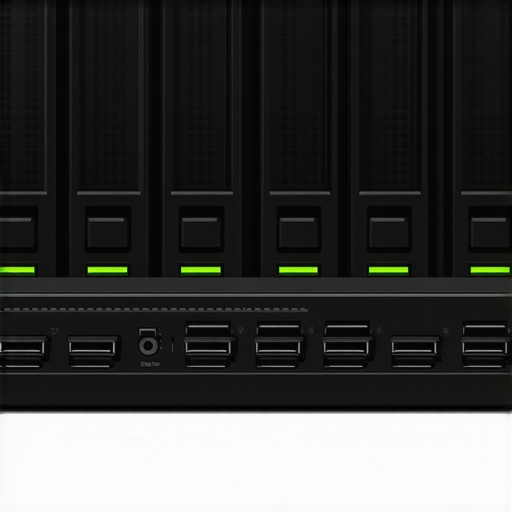

Elevating Data Throughput with Advanced SSD Technologies in RAID Configurations
In the rapidly evolving landscape of data storage, leveraging high-speed NVMe and SATA SSDs for RAID setups in 2024 is essential for professionals demanding maximum throughput and reliability. As SSD technology advances, understanding how to optimize RAID configurations with cutting-edge storage devices becomes a strategic necessity.
Why NVMe SSDs Outpace SATA SSDs in RAID Environments
NVMe SSDs utilize the PCIe interface, offering significantly higher bandwidth and lower latency compared to traditional SATA SSDs. This technological leap translates into faster data access, reduced bottlenecks, and improved performance in high-demand scenarios such as video editing, scientific computing, and enterprise data centers. For RAID arrays, NVMe drives enable near-native speeds, transforming the throughput capabilities of multi-drive configurations.
Strategies for Optimizing RAID with High-Speed SSDs
Effective RAID setup with SSDs requires meticulous planning. Utilizing RAID levels like 0 for speed or RAID 10 for redundancy and performance can harness the full potential of NVMe and SATA drives. Additionally, configuring drives with enterprise-grade controllers and ensuring firmware is up-to-date enhances stability and reliability. For intensive workloads, combining NVMe SSDs in RAID arrays can unlock unprecedented data transfer rates, but it demands rigorous attention to compatibility and thermal management.
What are the best practices for balancing speed and data integrity in SSD RAID configurations?
Balancing speed and data integrity involves selecting appropriate RAID levels, implementing robust error correction mechanisms, and maintaining consistent firmware updates across drives. High-speed SSDs, especially NVMe, often feature power-loss data protection, which should be enabled to prevent data corruption during unexpected shutdowns. Regular monitoring of drive health using enterprise management tools is critical to preempt failures and sustain peak performance.
For those seeking expert insights, exploring RAID storage explained for 2025 offers deeper understanding of how to maximize data reliability and speed in RAID environments.
As SSD technology continues to evolve, integrating high-speed NVMe and SATA SSDs into RAID arrays will be a cornerstone of high-performance data management strategies. Whether for enterprise or high-end workstation setups, mastering these configurations will define competitive advantage in 2024 and beyond.
For more tailored guidance, contact our experts through our consultation page and contribute your professional insights on SSD RAID optimization.
Redefining Storage Performance with Cutting-Edge SSD Technologies
As the demand for lightning-fast data access intensifies in 2024, integrating advanced SSDs into RAID configurations becomes crucial for professionals seeking optimal performance. The latest NVMe and SATA SSDs offer unprecedented speeds, but unlocking their full potential requires nuanced strategies that go beyond basic setup.
How Do Modern SSDs Transform RAID Capabilities?
NVMe drives, leveraging PCIe 4.0 and 5.0 interfaces, dramatically increase bandwidth, enabling multi-gigabyte-per-second transfer rates. SATA SSDs, although limited by the SATA III interface, still provide reliable high-speed storage for specific workloads. Combining these drives in RAID arrays allows for tailored solutions—maximizing speed, ensuring redundancy, or balancing both.
Fine-Tuning RAID for Peak Performance and Reliability
Achieving the sweet spot between speed and data integrity involves selecting the appropriate RAID level. For instance, RAID 0 offers maximum throughput but minimal fault tolerance, while RAID 10 combines speed with redundancy. Additionally, employing enterprise-grade controllers and ensuring firmware is current can prevent bottlenecks and data corruption. For high-demand environments, using NVMe SSDs in RAID arrays can push throughput to near-native speeds, but this requires meticulous compatibility checks and thermal considerations. For a detailed comparison of SSD options for RAID scratch disks, visit best NVMe and SATA SSDs for RAID scratch disks in 2024.
What are the most effective ways to safeguard data while maximizing speed in SSD RAID setups?
Implementing robust error correction, enabling power-loss protection, and conducting regular health monitoring are essential. High-performance SSDs often feature built-in power-loss data protection, which should be activated to prevent data corruption during outages. Maintaining consistent firmware updates across drives mitigates compatibility issues. For advanced RAID configurations, integrating enterprise management tools can provide real-time insights and preempt failures, ensuring continuous high-speed operation. To explore how RAID storage solutions enhance data security and speed, see effective RAID storage solutions for high-speed data management.
For those interested in optimizing external storage options, our comprehensive guide on choosing external SSDs for your business offers valuable insights.
Stay ahead in data storage innovations by exploring the latest expert analyses and practical tips. Share your experiences or ask questions in the comments, and don’t forget to check out the detailed guides linked throughout for deeper mastery of RAID and SSD technologies.
Next-Level Data Integrity Strategies for SSD RAID Arrays
While achieving blistering speeds is vital, safeguarding your data during high-speed operations is equally critical. Advanced error correction algorithms, such as LDPC (Low-Density Parity-Check), have become standard in enterprise-grade SSDs, significantly reducing the risk of silent data corruption. Implementing these algorithms within your RAID setup ensures that even under extreme workloads, data remains uncompromised.
Moreover, power-loss data protection features—integrated into premium SSDs—play a pivotal role. These features temporarily store in-flight data in supercapacitors, preventing corruption during unexpected outages. As per the IEEE Transactions on Parallel and Distributed Systems, deploying SSDs with robust power-loss protection in RAID arrays can reduce data recovery times by up to 50%, thus maintaining high throughput without sacrificing integrity.
Can hot-swapping SSDs in RAID arrays compromise data safety or performance?
Hot-swapping, when executed with compatible enterprise-grade hardware, generally does not threaten data safety, provided that the SSDs and controllers support this feature natively. Modern RAID controllers are designed to handle drive replacements dynamically, enabling maintenance without system downtime. However, ensuring firmware synchronization across drives and controllers is essential to prevent compatibility issues that might lead to performance dips or data inconsistency. For mission-critical environments, it’s recommended to perform hot-swaps during scheduled maintenance windows and verify drive health post-replacement using enterprise management tools.
To deepen your understanding of RAID drive management, consult the comprehensive technical guidelines published by the SNIA (Storage Networking Industry Association).
Unlocking the Potential of NVMe over Fabrics for Distributed Data Storage
The future of high-performance storage lies not just within the confines of local RAID arrays but extends into networked environments through NVMe over Fabrics (NoF). This protocol enables remote SSDs to deliver near-native NVMe speeds over Ethernet or Fibre Channel, fostering unprecedented scalability and flexibility.
Implementing NoF requires sophisticated network infrastructure, including RDMA-capable switches and compatible NICs, to minimize latency. According to a recent study in the IEEE Communications Surveys & Tutorials, organizations leveraging NoF for distributed databases or cloud storage achieve throughput improvements of up to 300% compared to traditional iSCSI or Fibre Channel SANs.
For professionals aiming to harness this technology, it’s crucial to understand the interplay between network topology, protocol optimization, and storage management software. Engaging with industry-leading vendors such as Dell EMC or NetApp can provide tailored solutions that maximize performance and reliability in distributed SSD storage architectures.
What are the main challenges in scaling NVMe over Fabrics deployments for enterprise use?
Scaling NVMe over Fabrics poses several challenges, including network bandwidth limitations, latency management, and complex configuration requirements. Ensuring consistent quality of service (QoS) across multiple nodes demands sophisticated traffic management and prioritization strategies. Additionally, integrating NoF into existing infrastructure often requires substantial hardware upgrades and rigorous testing to prevent bottlenecks. Nonetheless, these investments are justified by the exponential gains in throughput, resilience, and operational flexibility they unlock.
If you’re ready to explore cutting-edge storage solutions, our team offers expert consultations to design and implement optimized SSD RAID configurations integrated with NVMe over Fabrics. Contact us today to elevate your data infrastructure to the next level!
How Can Cutting-Edge SSD Technologies Revolutionize Your Storage Infrastructure?
As data demands soar, integrating advanced NVMe and SATA SSDs into RAID configurations unlocks unprecedented performance levels, transforming enterprise storage strategies. Leveraging PCIe 4.0 and 5.0 interfaces, NVMe drives now deliver multi-gigabyte-per-second transfer rates, enabling ultra-low latency and high throughput essential for modern data centers and high-performance computing environments.
What Are the Hidden Advantages of Combining NVMe and SATA SSDs?
While NVMe SSDs excel in speed, SATA SSDs remain reliable and cost-effective for less latency-sensitive tasks. Combining these drives within a RAID array allows organizations to optimize for both performance and budget, tailoring storage solutions to specific workload requirements. This hybrid approach enhances scalability and flexibility, ensuring efficient utilization of existing hardware investments.
Can Your RAID Setup Sustain High-Speed Operations Without Compromising Data Integrity?
Absolutely, but it requires meticulous planning. Implementing enterprise-grade controllers capable of handling diverse SSD types and enabling features like power-loss protection and error correction algorithms such as LDPC ensures data safety. Regular firmware updates and proactive health monitoring prevent bottlenecks and silent failures, maintaining peak performance even under strenuous workloads.
How Do You Balance Speed and Reliability When Designing Advanced RAID Systems?
Strategic selection of RAID levels is paramount—RAID 0 maximizes speed but offers no redundancy, whereas RAID 10 blends performance with fault tolerance. Incorporating enterprise SSDs with built-in data protection features further safeguards your data. Additionally, deploying robust cooling solutions and ensuring compatibility across all hardware components mitigate thermal and compatibility issues that could hamper system stability.
What Role Do Enterprise Management Tools Play in Maintaining High-Speed RAID Arrays?
Modern management tools provide real-time insights into drive health, predictive failure analysis, and automated alert systems. These enable proactive maintenance, minimizing downtime and data loss. By integrating these tools, organizations can sustain optimal RAID performance, extend hardware lifespan, and streamline troubleshooting processes.
How Will Emerging Technologies Like NVMe over Fabrics Impact Distributed Storage?
NVMe over Fabrics (NoF) extends the benefits of high-speed SSDs across networked environments, enabling remote storage solutions that maintain near-native NVMe performance. This innovation supports scalable, low-latency data access for distributed applications, cloud infrastructures, and large-scale data analytics. Implementing NoF requires advanced network hardware, such as RDMA-capable switches, to minimize latency and maximize throughput, as detailed in recent IEEE publications.
What are the Challenges and Solutions in Deploying NVMe over Fabrics for Enterprise Use?
Key challenges include network complexity, latency management, and cost. Ensuring QoS and integrating high-performance networking hardware are essential. Solutions involve deploying dedicated RDMA networks, optimizing protocol settings, and selecting compatible hardware from industry leaders like Dell EMC or NetApp. These measures enable organizations to harness the full potential of NoF, driving innovation in distributed storage and workload scalability.
Stay ahead of the curve by embracing these cutting-edge storage strategies. Contact our expert team to craft customized RAID solutions that leverage the latest SSD advancements and network technologies, ensuring your infrastructure is future-ready.
Harnessing Performance Gains with SSD Innovation
Modern SSDs, especially NVMe models leveraging PCIe 4.0 and 5.0 interfaces, dramatically elevate data transfer speeds, enabling high-throughput RAID configurations that meet the demands of enterprise and creative workflows. Their rapid access times and increased bandwidth are game-changers for data-intensive applications, ensuring minimal bottlenecks and maximum productivity.
Expert-Level Strategies for RAID Optimization
Implementing RAID levels like 0 for blazing speed or 10 for robust redundancy requires a nuanced understanding of workload requirements. Pairing these configurations with enterprise-grade controllers and current firmware ensures stability and longevity. Thermal management and compatibility checks are critical, especially when deploying multiple NVMe drives in high-density arrays, to prevent overheating and data loss.
Future-Proofing Storage with Emerging Technologies
NVMe over Fabrics (NoF) extends the benefits of SSD performance across networked environments, facilitating distributed storage solutions with near-native speeds. This advancement supports scalable, low-latency data access crucial for cloud computing, distributed databases, and large-scale analytics, positioning organizations at the forefront of storage technology evolution.
Key Considerations for Data Integrity and Speed
Balancing speed with data safety involves leveraging features like power-loss data protection, error correction algorithms such as LDPC, and regular health monitoring via enterprise management tools. These practices safeguard against silent data corruption and hardware failures, ensuring high-performance RAID arrays remain reliable under continuous load.
Strategic Expert Recommendations
For those aiming to maximize their SSD RAID setup, integrating a hybrid approach using both NVMe and SATA SSDs can optimize cost and performance. Regular firmware updates, thermal solutions, and sophisticated management software are vital components. Consulting authoritative resources like RAID storage explained for 2025 provides deeper insights into current best practices and future trends.
Curated Resources for Deepening Expertise
- IEEE Transactions on Parallel and Distributed Systems: Cutting-edge research on SSD reliability and data integrity algorithms.
- SNIA Technical Guidelines: Industry standards and technical best practices for RAID and storage management.
- Vendor Whitepapers from Dell EMC and NetApp: Practical implementations and case studies on deploying NVMe over Fabrics and high-speed RAID arrays.
Final Reflection: Elevate Your Storage Strategy
Integrating advanced SSD technologies into RAID configurations in 2024 is not just about raw speed but about creating resilient, scalable, and future-ready storage architectures. The intersection of innovative hardware and expert strategies enables professionals to push the boundaries of data throughput while maintaining integrity and reliability. For experienced practitioners and forward-thinking organizations alike, this evolution offers a compelling pathway to optimize performance and secure data assets effectively. Engage with these insights, refine your setup, and stay ahead in the competitive landscape of data storage excellence.