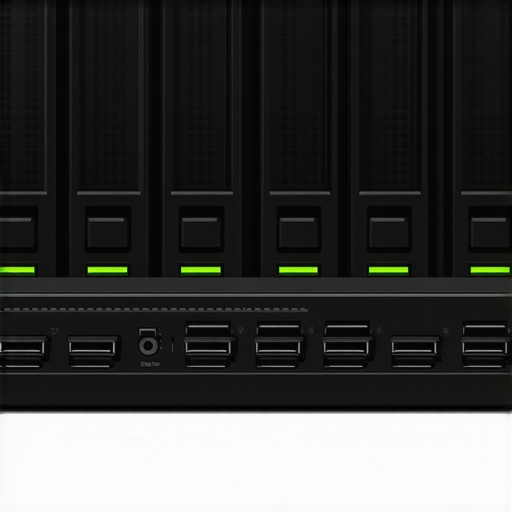
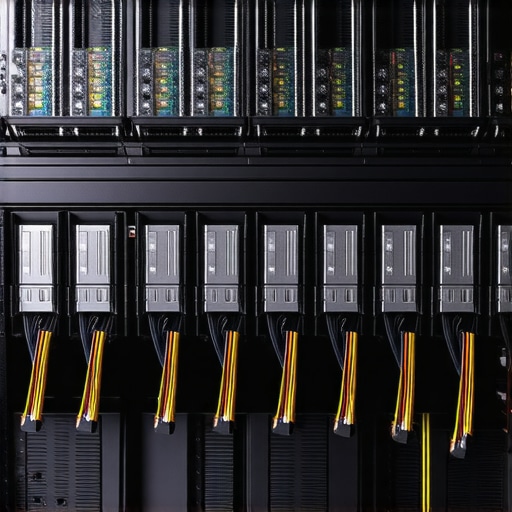
Reassessing Storage Architectures: The Unexpected Resilience of SATA SSDs in High-Capacity RAID Configurations
As data storage demands escalate exponentially, especially in enterprise environments managing petabyte-scale archives, the debate between NVMe SSDs and SATA SSDs persists. Despite technological leaps towards PCIe 6.0 and burgeoning NVMe innovations, SATA SSDs maintain a crucial foothold, particularly within 500TB RAID arrays in 2026. This enduring relevance stems from a complex interplay of cost-efficiency, thermal management, and ecosystem maturity that influences optimal storage deployment strategies.
The Economics of Mass Storage: Cost-Performance Equilibrium in Large RAID Arrays
Data centers and creative professionals alike prioritize balancing performance with budget constraints. SATA SSDs continue to offer a compelling cost per gigabyte advantage over NVMe counterparts, especially when scaled to hundreds of terabytes. The lower per-unit cost, combined with reliable durability profiles and established supply chains, enables effective large-scale deployments without prohibitive expenses. For instance, recent analyses suggest that for a 500TB RAID setup, SATA SSDs can be significantly more economical while providing adequate throughput for many workloads.
Thermal Management and Power Efficiency: Why Older Protocols Still Lead
High-speed NVMe SSDs, while boasting superior raw data transfer rates, generate substantial heat and consume more power—factors that complicate extensive RAID implementations. SATA SSDs, operating over mature, thermally stable interfaces, lend themselves to environmental stability critical in multi-drive arrays. Innovations like high-density 3D NAND and improved controller firmware extend the longevity of SATA SSDs, mitigating concerns over endurance in prolonged, intensive workloads.
Compatibility, Reliability, and Ecosystem Maturity: The Hidden Forces Behind SATA SSD Persistence
The extensive ecosystem of SATA SSDs ensures seamless integration with existing hardware—including motherboard support and RAID controllers—minimizing the complexity of large-scale upgrade or expansion efforts. Additionally, SATA interfaces exhibit less susceptibility to the thermal throttling affecting certain NVMe configurations, further reinforcing their suitability for long-term archival storage. As authoritative sources like IEEE publications highlight, proven reliability diminishes the total cost of ownership in enterprise-scale deployments.
Are We Overlooking the Benefits of Hybrid Approaches in RAID Storage for Massive Data Sets?
Combining high-performance NVMe SSDs for active data caches with SATA SSDs for archival backup exploits the strengths of both technologies, optimizing for latency and cost-efficiency. This hybrid strategy could become the standard for managing 500TB RAID arrays effectively in 2026. To explore this further, consider consulting our comprehensive guide to RAID storage.
For a deeper dive into optimizing external storage solutions, refer to expert analyses on external SSD architectures that align with enterprise needs. Embracing mature SATA technology, paired with evolving NVMe solutions, ensures scalable, reliable, and cost-effective data management in the year 2026 and beyond.
In today’s fast-paced digital environment, creators and professionals demand rapid, reliable data transfer solutions that keep up with their workflow. External SSDs have emerged as a game-changer, especially when integrated with high-speed interfaces like Thunderbolt 4 and USB 4. Their capability to deliver near-internal SSD performance significantly reduces downtime during large file transfers, rendering them essential tools in modern multimedia production. Meanwhile, advancements in external storage, including the adoption of PCIe 4.0 and upcoming PCIe 5.0 interfaces, are pushing these devices closer to the internal SSD performance frontier. To ensure seamless integration, understanding the compatibility nuances and performance benchmarks of external SSDs becomes crucial—especially in high-demand environments where latency can make or break a project.
When selecting external SSDs for creative tasks, considerations extend beyond raw speed. Factors like durability, thermal management, and enclosure design influence sustained performance and device longevity. For instance, ruggedized external SSDs equipped with heat-dissipating heatsinks and shock resistance are invaluable for fieldwork or mobile editing setups. Moreover, latency and sustained write/read speeds are vital parameters, especially during multi-layer video editing or 3D rendering. External SSDs optimized for RAID configurations—via Thunderbolt 3 or 4—can unlock even greater throughput, making complex workflows more manageable. An understanding of the different protocol efficiencies, such as NVMe over external enclosures, helps professionals choose devices aligned with their workload intensities.
Could External SSDs Outperform Internal Drives in Creative Environments?
While internal SSDs have traditionally been the go-to choice for speed, the rapid evolution of external SSD technology suggests a potential paradigm shift. External solutions now offer comparable, and sometimes superior, performance with added flexibility—allowing professionals to expand storage without opening their systems. This is particularly advantageous for workflows requiring frequent hardware upgrades or multi-location access. For comprehensive guidance on optimizing external SSDs for creative workloads, see our ultimate guide to external SSDs. Additionally, considering the thermal and power efficiency of external devices is critical to sustain performance over prolonged sessions. As data transfer protocols continue to evolve, external SSDs are poised to become the primary choice for fast, flexible, and scalable storage—empowering creators to push the boundaries of their projects.
For expert insights into how external SSDs fit into modern storage strategies, consult databases and studies on high-speed external storage architectures published by IEEE and other leading authorities. Leveraging such knowledge helps ensure that investments in external SSD solutions deliver maximum value and performance longevity in demanding professional environments.
,
Why Tiered Storage Layers Revolutionize Data Management
In expansive RAID configurations handling petabytes of data, a nuanced approach to storage architecture becomes essential. Deploying tiered storage layers—combining SSDs of varying performance tiers alongside slower, high-capacity HDDs—maximizes cost-efficiency while ensuring rapid access for critical data. By segregating data based on access frequency and durability needs, organizations can optimize workload performance, reduce energy consumption, and extend equipment lifespan. This layered approach requires advanced data management algorithms capable of dynamic data migration, metadata tagging, and intelligent load balancing, reinforcing the importance of sophisticated software solutions like automated tiering systems integrated within enterprise storage arrays.
Emerging Technologies Set to Disrupt Large-Scale Storage Paradigms
Accelerating advancements in storage hardware and protocols are poised to refine RAID efficiency further. Non-Volatile Memory Express over Fabrics (NVMe-oF), for instance, enables remote high-speed access to NVMe SSDs over network fabrics, effectively decentralizing storage and alleviating internal bottlenecks. Quantum-dot-based memory chips, though still in nascent stages, promise unprecedented density and endurance, potentially transforming the hardware landscape for massive RAID systems. Concurrently, AI-powered predictive analytics optimize data placement and anticipate hardware failures, minimizing downtime and maintaining data integrity. For those managing multi-petabyte environments, integrating these cutting-edge solutions ensures scalability and resilience in the face of rapid data growth.
How do software-defined storage solutions influence RAID scalability and flexibility?
Software-defined storage (SDS) abstracts storage hardware from its management layer, enabling dynamic, policy-driven provisioning of resources across diverse hardware types. In massive RAID environments, SDS facilitates seamless expansion, redistribution, and failover management without significant manual intervention. By leveraging virtualization techniques, SDS allows for granular control over data placement, quality of service, and redundancy strategies—making it invaluable for organizations needing agile responses to unpredictable workload demands. Moreover, the integration of SDS with cloud-native architectures offers hybrid solutions that blend on-premises and cloud resources, augmenting the traditional RAID paradigm. This convergence fosters unprecedented scalability, cost-efficiency, and adaptability, positioning SDS as a cornerstone of next-generation storage architectures.
Prioritizing Data Security within High-Capacity RAID Arrays
As storage capacities swell, so do the risks and complexities associated with data security. Implementing encryption at multiple layers—physical device encryption, in-flight data encryption, and application-level encryption—is critical to safeguard sensitive information. Hardware-based encryption modules embedded within SSD controllers streamline this process, providing minimal performance overhead. Simultaneously, rigorous integrity checks, such as RAID scrubbing and checksum validation, preempt corruption before it propagates across the array. Access controls, authentication protocols, and audit logs further fortify the security perimeter, ensuring compliance with industry standards like GDPR and HIPAA. Organizations operating extensive RAID systems must adopt a proactive security posture that anticipates evolving threats without compromising performance, often leveraging integrated security solutions tailored specifically for enterprise-scale storage environments.
What are the best practices for maintaining and upgrading massive RAID systems without downtime?
Achieving continuous availability in high-capacity RAID environments hinges on meticulous planning and adherence to best practices. Techniques such as hot-swapping drives, incremental rebuilding, and redundancy verification algorithms enable hardware maintenance without disrupting active workloads. Employing dual-controller setups and asynchronous replication strategies further enhances fault tolerance. Regular firmware and software updates—timed to minimize impact—ensure hardware compatibility and security patches are current. Advanced monitoring tools utilizing machine learning models can predict component failures, guiding preemptive replacements. By establishing comprehensive maintenance protocols and leveraging automation, organizations can sustain system robustness and performance, even as hardware evolves or expands—keeping vital data accessible, secure, and resilient against unforeseen disruptions.
Implementing Smart Tiered Storage to Balance Speed and Cost in Enterprise Data Architectures
As enterprises grapple with exponentially growing data volumes, strategic deployment of tiered storage systems emerges as a pivotal solution. By intelligently categorizing data based on access frequency, organizations can place frequently accessed, latency-sensitive information on ultra-fast SSD tiers—particularly NVMe or high-performance SATA SSDs—while relegating archival or infrequently accessed data to cost-efficient HDD layers. This layered architecture facilitates optimal resource utilization, reduces operational costs, and ensures that critical workloads enjoy minimal latency. Advanced software algorithms like machine learning-driven data migration and real-time analytics are integral to dynamically managing these tiers, adapting to evolving data patterns with minimal manual oversight.
Mitigating Bottlenecks: The Evolution of Storage Protocols in Large-Scale RAID Environments
Recent breakthroughs in storage connectivity protocols promise to alleviate traditional bottlenecks, especially in vast RAID arrays handling petabytes of data. Non-Volatile Memory Express over Fabrics (NVMe-oF) enables remote high-speed access to NVMe SSDs distributed across datacenter networks, effectively decentralizing storage and reducing I/O contention. Concurrently, the adoption of PCIe 5.0 and upcoming PCIe 6.0 standards substantially increases bandwidth, enabling multi-terabit throughput per node. These developments necessitate rethinking storage topology: integrating fabric-based protocols within tiered architectures allows for scalable, high-performance, and resilient infrastructure conducive to AI-driven analytics and real-time data processing. For organizations aiming to future-proof their storage, embracing these emerging technologies is crucial—allowing seamless scalability without compromising data integrity or access speeds.
How can data redundancy strategies evolve alongside these protocol advancements to enhance fault tolerance?
Leveraging advanced redundancy models such as erasure coding and predictive failure analytics becomes essential within high-speed storage frameworks. By combining hardware redundancy, like hot-swappable drives and dual-controller architectures, with intelligent software-based error correction, enterprises can substantially reduce downtime risk. The integration of AI-powered monitoring tools anticipates potential disk failures or thermal anomalies, prompting preemptive replacements or load redistribution. Moreover, implementing software-defined storage solutions that support dynamic redundancy policies ensures flexibility to adapt to shifting workload demands and hardware capabilities, especially as protocols evolve. This synergy of hardware resilience, innovative redundancy, and predictive analytics fosters a fault-tolerant environment essential for maintaining uninterrupted operations at scale.
Expert Insights & Advanced Considerations
Embrace Hybrid Storage Strategies to Maximize Efficiency
Combining NVMe SSDs for high-speed access with SATA SSDs for bulk storage creates a balanced environment that leverages the strengths of both technologies, optimizing performance and cost. This approach ensures critical data is accessible rapidly while maintaining economical scalability.
Prioritize Data Security with Layered Encryption Technologies
Implementing multi-tier encryption measures, from hardware-based solutions to application-level safeguards, fortifies data integrity across large RAID arrays, addressing the increasing threat landscape while maintaining system performance.
Leverage Predictive Analytics for Proactive Maintenance
Integrating AI-driven monitoring tools allows for early detection of drive failures and thermal issues, minimizing downtime and extending hardware lifespan, especially crucial in extensive, high-capacity storage systems.
Adopt Software-Defined Storage to Enhance Agility
Utilizing SDS frameworks enables flexible management of diverse hardware, facilitates seamless scalability, and reduces dependence on specific vendors—aligning storage architecture with evolving organizational needs.
Innovate with Quantum and Optical Storage Frontiers
Staying informed about emerging technologies like quantum storage and optical data transfer offers pathways to revolutionary enhancements in capacity, speed, and durability, promising a new era for large-scale RAID systems.
Curated Expert Resources
- IEEE Transactions on Cloud Computing – Offers cutting-edge research on scalable and secure storage architectures used by industry leaders.
- EMC’s Storage Technologies Whitepapers – Provides practical insights into implementing next-generation storage solutions with emphasis on security and efficiency.
- Gartner Reports on Enterprise Storage Trends – Analyzes emerging technologies and strategic recommendations for large-scale data management.
- The Storage Networking Industry Association (SNIA) – A hub for standards, best practices, and innovative solutions in enterprise storage.
The Power of Intelligent Storage Solutions in Modern Enterprises
As organizations grapple with colossal data volumes, integrating expert insights—ranging from hybrid architectures to predictive analytics—becomes vital. Prioritizing security and agility through software-defined frameworks ensures resilience and scalability. Staying ahead requires not only leveraging current technologies but actively monitoring groundbreaking innovations like quantum storage, which promise to redefine capacity paradigms. Engage with these resources and consult with industry specialists to craft a storage landscape tailored for the demands of 2026 and beyond, ensuring your infrastructure remains competitive and future-proof in the realm of RAID systems.
Reading through the post, I find the emphasis on the mature ecosystem and cost benefits of SATA SSDs quite compelling, especially for large-scale RAID implementations. I’ve worked on data centers where keeping heat output low and minimizing power consumption was crucial, reinforcing the point about thermal management advantages of SATA drives. Although NVMe drives are undeniably speedy, their thermal and power characteristics can become a limiting factor in extensive arrays.
One aspect I’m curious about is how hybrid architectures—combining NVMe cache with SATA bulk storage—perform in real-world scenarios. Has anyone experienced significant latency reductions or cost savings when implementing such solutions? Additionally, with the ongoing development of intelligent tiering algorithms, it seems there’s a lot of promise for optimizing these mixed storage tiers even further. Would love to hear from others who have experimented with hybrid storage models and how they tailored their solutions for specific workload demands.