
Advancing NVMe SSDs Amid PCIe 6.0 Thermal Challenges
As the storage landscape accelerates into PCIe 6.0’s lightning-fast data transfer realm, engineers and enthusiasts grapple with thermal management hurdles that threaten to throttle performance. The leap from PCIe 5.0 to PCIe 6.0 introduces a bandwidth boost up to 64 GT/s, promising unprecedented speeds for NVMe SSDs. However, with increased data throughput comes a surge in heat generation, often leading to thermal throttling—a critical impediment in maintaining optimal performance in high-end storage solutions.
Emergence of High-Efficiency NVMe Heatsinks for 2026
To counteract PCIe 6.0’s heat dilemma, innovative heatsink designs are emerging as essential components in SSD architecture. These heatsinks are not mere passive cooling aids but are evolving into sophisticated thermal interfaces that incorporate advanced materials, such as graphene-infused composites and vapor chamber technologies, to dissipate heat more effectively. Companies like Noctua and Corsair are pushing the boundaries by integrating these materials into compact, efficient heatsink solutions tailored for high-performance NVMe drives.
Designing Heatsinks That Keep Pace with Data-Intensive Workloads
High-speed data operations—such as 8K video editing, 3D rendering, and large-scale data analysis—demand continuous, uninhibited SSD performance. Heatsink technologies for NVMe SSDs are shifting toward integrated cooling solutions featuring liquid metal cooling paths and phase change materials that actively manage thermal loads. These innovations aim to prevent thermal throttling, thus ensuring sustained peak throughput even during prolonged, intense workloads.
Why Are Heatsinks Critical in RAID Storage Environments
RAID configurations, especially those involving multiple NVMe drives, exponentially increase heat density. Effective heatsink solutions are vital to maintaining data integrity and system reliability. In high-capacity storage arrays, inadequate thermal management can lead to drive failure and compromised data safety. Therefore, designing heatsinks that accommodate dense arrays without sacrificing airflow or increasing system size is becoming a focal point for enterprise storage solutions.
Are We Entering a Phase of Self-Cooling Storage Devices?
What innovative materials or cooling architectures are poised to revolutionize NVMe SSD thermal management in 2026?
Looking ahead, self-cooling SSDs that leverage phase change materials or thermoelectric cooling elements are gaining attention. These devices aim to dissipate heat within the drive itself, eliminating the need for external heatsinks and facilitating denser, quieter, and more energy-efficient storage systems. Researchers are exploring the integration of microfluidic cooling channels directly into SSDs, promising a new era where thermal constraints no longer limit performance.
For a comprehensive understanding of RAID storage advancements and thermal management strategies, consult the detailed analysis at RAID Storage Explained.
If you’re interested in exploring cutting-edge heatsink designs or contributing your industry insights, reach out via our contact page.
Unlocking New Materials for Effective Heat Dissipation in SSDs
As the quest for higher speeds presses forward, developers are delving into groundbreaking materials like graphene and diamond-like carbon coatings to revolutionize SSD cooling. These materials boast exceptional thermal conductivity, enabling rapid heat transfer away from critical components and reducing the reliance on bulky heatsinks. The integration of such materials into SSD architectures promises not only enhanced performance but also compact, lightweight designs suited for modern data centers and high-end workstations.
Can Adaptive Cooling Architectures Transform Storage Ecosystems?
Beyond static heatsinks, the future lies in adaptive cooling systems that intelligently respond to workload fluctuations. These systems utilize real-time thermal sensors and AI-driven controls to modulate cooling intensity, balancing energy consumption with maximal performance. Phase change materials, in particular, facilitate dynamic thermal buffers that absorb excess heat during peak operations and release it during lulls. Implementing these architectures could dramatically improve the longevity and stability of NVMe SSDs, especially within dense RAID configurations.
Why Do Thermal Challenges Require Holistic System Design Approaches
Effective thermal management isn’t solely about the drives themselves but involves comprehensive system-level strategies. Proper airflow design, placement of SSDs within chassis, and integration with overall cooling solutions are critical factors. For enterprise environments handling massive data workloads, adopting a systemic perspective ensures that individual components synergize to prevent hotspots and maintain optimal operating conditions. This holistic approach also encompasses power management, as reducing energy draw diminishes heat generation, raising the importance of efficient power supplies and comprehensive thermal-aware system architecture.
Considering the Future of Self-Regulating Storage Devices
Research into self-cooling SSDs centers on embedding microfluidic channels and phase change materials directly into the device package. These innovations could enable drives virtually self-regulate their temperature, transforming storage design paradigms. With thermoelectric modules and advanced thermal interfaces, future SSDs might operate at peak speeds indefinitely without external cooling aids, even under sustained, demanding workloads.
For insights into how RAID storage strategies are evolving alongside these thermal innovations, refer to RAID Storage Explained. Understanding these dynamics helps in designing resilient, high-performance systems capable of meeting the data demands of 2026 and beyond.
If you wish to explore bespoke cooling solutions or contribute to the next wave of SSD innovation, visit our contact page for expert discussions and collaboration opportunities.
Embracing the Future of Dynamic Thermal Management in SSDs
As SSD technology advances toward unprecedented speeds, static cooling solutions are rapidly becoming obsolete. The advent of adaptive thermal management systems—integrating AI algorithms with real-time sensor data—promises a transformative shift, enabling SSDs to self-regulate their temperature profiles. These systems assess workload intensity, ambient conditions, and internal thermal states, dynamically adjusting cooling efforts to sustain peak performance without manual intervention. This approach not only preserves hardware integrity but also optimizes energy efficiency, aligning with the broader goals of sustainable data center operations. Consider the potential of microfluidic cooling channels embedded within SSD modules that actively respond to thermal fluctuations, offering a fine-grained control unmatched by traditional heatsinks.
Next-Level Materials: Graphene, Diamond, and Beyond
Research into advanced thermal conductors is propelling SSD cooling into a new era. Graphene, renowned for its exceptional conductivity—approximately 200–500 W/m·K—outperforms conventional metals like copper and aluminum, enabling rapid heat dissipation. Recent developments involve integrating graphene layers directly into thermal interface materials (TIMs), significantly reducing thermal resistance at critical junctions. Similarly, diamond-like carbon coatings possess thermal conductivities reaching up to 2000 W/m·K, providing unparalleled heat transfer capabilities. These materials not only improve cooling efficiency but also facilitate miniaturization of heatsinks, decreasing SSD size and weight without compromising thermal performance. Imagine a future where SSDs incorporate multilayer graphene-enhanced TIMs or diamond-coatings to self-manage heat, supporting sustained high throughput in compact form factors.
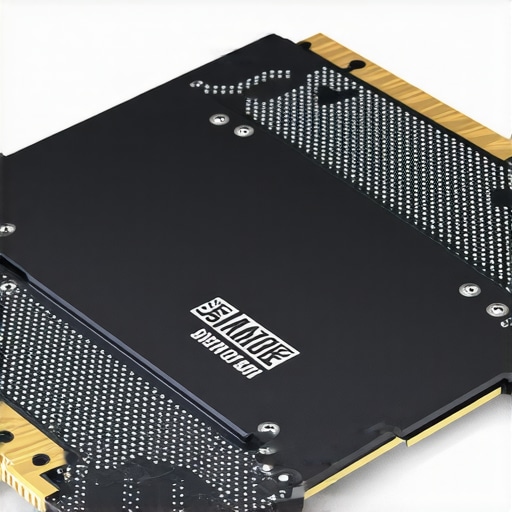
Advancements in nanomaterials for SSD cooling—graphene sheets, diamond coatings, and composite thermal interfaces—are set to revolutionize storage hardware design.
Integrating Phase Change Materials in Storage Devices
Phase change materials (PCMs) represent a promising avenue for buffering thermal loads during intensive data operations. When the temperature exceeds a certain threshold, PCMs absorb excess heat, melting into a fluid state that isolates the SSD’s internal components from thermal stress. As workloads diminish, they solidify, releasing stored heat gradually. Embedding PCM layers within the SSD architecture allows for an intrinsic, passive thermal regulation system—eliminating the need for external heatsinks in many applications. This technology is particularly advantageous for high-density RAID configurations where cumulative heat can compromise system stability. By tailoring the melting point and thermal capacity of PCMs, manufacturers can design storage devices optimized to maintain ideal operating temperatures across diverse workloads.
The Rise of Thermoelectric Cooling and Its Role in High-Performance Storage
Thermoelectric generators (TEGs) and coolers (TECs) have long been used in niche applications, but their integration into SSDs signals a significant technological leap. These devices leverage the Peltier effect to transfer heat away from storage chips actively, enabling precise thermal control. When combined with real-time monitoring and AI-based modulation, thermoelectric cooling becomes a smart, energy-conscious solution capable of maintaining optimal temperatures even during bursty workloads. The challenge lies in managing the power consumption of TECs; however, advancements in low-voltage, high-efficiency TEGs are mitigating these concerns. As the technology matures, expect to see SSDs utilizing thermoelectric modules not only as cooling aids but as components in hybrid systems that generate electricity from heat, further enhancing energy efficiency.
Driving Systemic Changes: From Component to Data Center Design
Thermal innovation in SSDs cannot be isolated from holistic system engineering. Effective data center design now incorporates sophisticated airflow management, strategic component placement, and advanced cooling infrastructure to accommodate emerging high-performance storage devices. For example, airflow channeling and liquid cooling loops tailored for dense SSD arrays minimize hotspots and maximize heat extraction. Moreover, server chassis are evolving to embed localized cooling modules that work synergistically with the drives’ internal thermal management systems. This integrated approach reduces reliance on massive, energy-consuming cooling setups while ensuring sustained hardware reliability. Manufacturers are also exploring modular architectures that facilitate incremental upgrades to thermal management hardware, enabling data centers to adapt swiftly to escalating cooling demands as storage speeds increase.
Is Self-Cooling Technology the Key to Sustainable Storage Solutions?
What breakthroughs are needed in materials and design to make autonomous cooling a widespread reality?
The aspiration of fully self-cooling SSDs hinges on multidisciplinary research converging around materials science, thermal engineering, and AI control systems. Innovations such as thermally conductive composites, embedded microfluidic channels, and energy-harvesting thermoelectric components are central to this future. Achieving scalable, affordable, and reliable self-cooling devices will require overcoming significant hurdles in manufacturing precision, material durability, and integration complexity. Industry leaders are investing heavily in research collaborations—like those between academic institutions and semiconductor manufacturers—to accelerate these breakthroughs. The deployment of such intelligent, self-regulating storage solutions could redefine data infrastructure by dramatically reducing operational costs and environmental impact while supporting relentless performance growth.
Engaging with ongoing research efforts and industry developments is crucial for stakeholders aiming to stay ahead in high-speed storage innovation. For comprehensive insights, follow the latest publications from the National Research Council of Canada‘s advanced materials division.
,
Deciphering the Nuances of Thermally Adaptive SSD Architectures
As NVMe SSDs push the boundaries of speed, the engineering community faces a critical question: how can thermal management evolve in tandem with escalating performance demands? The answer lies in the development of thermally adaptive architectures that dynamically respond to workload fluctuations. These systems incorporate high-density sensor arrays and sophisticated AI algorithms, enabling real-time modulation of cooling mechanisms. By intelligently allocating cooling resources, such designs diminish thermal throttling risks, ensuring sustained high throughput even during peak usage periods. Such adaptive solutions signify a paradigm shift from static cooling methods to intelligent, energy-efficient thermal regulation, unlocking the full potential of next-generation storage devices.
Piecing Together the Future with Next-Generation Materials
Innovation in material science remains pivotal to overcoming thermal limitations. Recent breakthroughs involve the integration of graphene-enhanced thermal interface materials (TIMs), which dramatically lower thermal resistance. Additionally, diamond-like carbon coatings exhibit unprecedented thermal conductivities, facilitating rapid heat evacuation without bulky heatsinks. These materials are not only transforming heat dissipation efficiency but also enabling the miniaturization of SSD modules, vital for dense data centers and high-performance laptops. Companies investing in this frontier are pioneering composite layers that marry electrical insulation with superior thermal conduction—heralding a new age where SSDs are capable of self-regulating heat without external aids.
High-conductivity graphene and diamond-like coatings at the forefront of SSD thermal innovations, promising compact, high-performing solutions.
Harnessing Microfluidic Cooling for Extreme Workloads
Bridging the gap between passive and active cooling, microfluidic channels embedded within SSD packaging represent an exciting frontier. These microscopic conduits facilitate direct liquid cooling, achieving unparalleled heat transfer rates. When paired with smart sensors and AI controls, microfluidic systems can precisely target hotspots and adapt flow rates, resulting in optimal thermal conditions under relentless data-intensive workloads. Although engineering challenges such as fluid containment and device durability persist, ongoing research signals a future where microfluidic cooling becomes standard for high-end storage solutions, especially in enterprise environments demanding relentless performance stability.
The Symbiosis of Power Efficiency and Thermal Regulation in Data Centers
In large-scale deployments, the intertwined relationship between power consumption and heat generation necessitates a holistic design philosophy. Incorporating power-efficient components alongside innovative cooling architectures reduces overall thermal output, thereby decreasing the burden on HVAC systems. Modular cooling units that integrate heat recovery mechanisms can convert dissipated heat into usable energy, exemplifying sustainable practices. Furthermore, the deployment of AI-driven thermal management within server racks ensures balanced airflow and energy allocation, avoiding hotspots. This synergy between power management and thermal regulation not only extends hardware lifespan but also aligns with the burgeoning need for energy-conscious data infrastructure.
Could Self-Regulating Storage Devices Shape the Future of Data Infrastructure?
What role will emerging materials and AI-driven controls play in realizing autonomous thermal management?
The convergence of cutting-edge materials like phase change compounds and thermoelectric modules with AI-powered systems heralds a future where storage devices autonomously maintain optimal temperatures. These self-regulating units utilize embedded sensors and machine learning algorithms to predict thermal trends and activate cooling or heating elements proactively. This proactive approach minimizes hardware stress, mitigates performance degradation, and significantly reduces energy consumption. As research progresses, the integration of microelectromechanical systems (MEMS) to enable localized thermal adjustments will become commonplace, forging a path toward truly intelligent, self-sustaining storage ecosystems capable of enduring the escalating demands of future data centers.
Expert Insights & Advanced Considerations
The Rise of Smart Thermal Management Systems
Integrating AI-driven sensors with real-time thermal data enables SSDs to dynamically adjust their cooling mechanisms, drastically reducing thermal throttling and enhancing sustained performance under demanding workloads.
Material Innovation Will Lead the Next Cooling Breakthrough
Developments in high thermal conductivity materials such as graphene composites and diamond-like carbon coatings promise miniaturized, highly efficient heatsinks capable of handling the thermal demands at PCIe 7.0 speeds, setting new industry standards in SSD cooling.
Holistic System Design Is the Future
Effective thermal solutions require system-wide optimization—advanced airflow management, modular cooling architectures, and power efficiency—culminating in a cohesive environment that naturally supports high-speed storage devices without overheating issues.
Microfluidic and Phase Change Technologies Are Game Changers
Embedding microchannels for liquid cooling and utilizing phase change materials directly within SSD packages could revolutionize thermal regulation, enabling drives to operate at peak performance independently of external cooling solutions.
Anticipate a Shift Towards Autonomous Cooling Solutions
By harnessing novel materials and AI controls, future SSDs might self-regulate their temperature, eliminating the need for bulky external heatsinks and facilitating ultra-dense storage arrays with reliable thermal performance.
Curated Expert Resources
- Advanced Materials for Thermal Management—Discover breakthroughs in graphene and diamond coatings from scientific journals and industry whitepapers, essential for understanding cutting-edge cooling solutions.
- Thermal System Design Principles—Explore comprehensive guides and case studies on holistic cooling architectures tailored for high-performance storage systems.
- Microfluidic Cooling Developments—Follow recent research articles and patents detailing the integration of microchannels within electronic packages for effective heat dissipation.
- AI-Enhanced Thermal Regulation—Stay updated with industry reports on AI applications in smart cooling systems, shaping the future of self-regulating SSDs.
Final Expert Perspective
The continual evolution of NVMe SSDs, especially as PCIe standards push beyond 6.0, necessitates a paradigm shift in thermal management. Embracing intelligent, material-driven, and system-level solutions will not only prevent overheating but will also unlock new levels of performance and density. Staying at the forefront of these advancements demands engagement with authoritative resources and a proactive approach to integrating emerging thermal technologies. For industry professionals seeking to lead this charge, collaboration, insight sharing, and ongoing education remain key. Dive deeper into the intricacies of advanced thermal strategies and position your systems at the cutting edge of storage innovation by exploring our recommended resources and contributing your expertise—after all, shaping the future of SSD cooling is a collective endeavor.