Unlocking the Potential of RAID Storage: A Critical Analysis for Modern Data Infrastructure
In an era where data integrity and rapid access are paramount, RAID (Redundant Array of Independent Disks) configurations have become indispensable in enterprise and high-performance computing environments. As data volumes surge and cybersecurity threats evolve, understanding the nuanced capabilities of RAID solutions is essential for IT professionals seeking to optimize both data security and operational speed.
The Evolving Role of RAID in Contemporary Data Security Strategies
Historically, RAID was primarily valued for its redundancy features, minimizing downtime and data loss. Today, with the advent of SSDs and NVMe technology, RAID’s role extends into enhancing throughput and reducing latency, especially in workloads demanding real-time data processing. Implementing a robust RAID setup can significantly mitigate risks associated with hardware failures, especially when paired with enterprise-grade drives and rigorous monitoring protocols.
Why Choose RAID 10 Over Other Configurations for High-Performance Applications?
RAID 10, combining mirroring and striping, offers a compelling balance between redundancy and speed. Unlike RAID 5 or RAID 6, which may suffer from write performance bottlenecks during rebuilds, RAID 10 ensures minimal downtime and sustained throughput—a critical advantage for database servers, virtualization hosts, and high-frequency trading platforms. For comprehensive insights into RAID architectures, consult this detailed guide.
Is Hardware or Software RAID the Optimal Choice for Enterprise Scalability?
Choosing between hardware and software RAID hinges on scalability, cost, and specific workload requirements. Hardware RAID controllers offer dedicated processing power, reducing CPU load and providing advanced features like battery-backed cache. Conversely, software RAID provides flexibility and ease of management, especially when integrated with modern operating systems. Professionals must weigh these factors carefully, considering future expansion plans and integration complexities.
What Are the Latest Innovations in RAID Technology for Cloud-Connected Data Centers?
Emerging RAID solutions incorporate NVMe over Fabrics, enabling high-speed, low-latency access across distributed systems. Software-defined storage platforms now integrate RAID with data deduplication and encryption, creating resilient, secure environments suitable for hybrid cloud deployments. The convergence of RAID with AI-driven monitoring tools enhances predictive failure analysis, reducing downtime proactively.
For those interested in optimizing storage performance, exploring best NVMe and SATA SSDs for top-tier performance is recommended, ensuring your RAID arrays leverage the latest high-speed drives.
Engage with professional communities or contribute your insights on RAID configurations to advance collective knowledge—your expertise could shape future storage innovations.
Can RAID Evolve to Meet the Demands of Hyper-Scale Cloud Infrastructure?
As data centers scale exponentially, traditional RAID configurations face new challenges in maintaining optimal performance and data integrity. The integration of NVMe over Fabrics (NVMe-oF) has revolutionized data transfer speeds, yet it also necessitates more sophisticated RAID strategies that can handle the demands of distributed, high-speed environments. Emerging solutions combine hardware acceleration with intelligent software layers, enabling dynamic reconfiguration and real-time analytics to preempt failures before they occur. For organizations aiming to future-proof their storage, understanding how to leverage these innovations is crucial.
What are the implications of integrating RAID with AI-driven predictive analytics for enterprise resilience?
Recent advancements have seen the integration of artificial intelligence into RAID management systems, providing predictive analytics that forecast drive failures and optimize rebuild processes. This proactive approach minimizes downtime and prevents data loss, especially critical in mission-critical settings. AI algorithms analyze patterns in drive health data, temperature fluctuations, and workload metrics to alert administrators or automatically initiate corrective actions. This fusion of RAID and AI not only elevates resilience but also reduces maintenance costs and improves overall operational efficiency. For a comprehensive understanding of how AI can transform storage management, consult this detailed guide.
How do hybrid RAID configurations optimize data performance in mixed workload environments?
Hybrid RAID setups combine different RAID levels or integrate SSDs and HDDs to tailor performance to specific workload requirements. For example, combining RAID 10 for high-speed transactional data with RAID 6 for archival storage ensures both speed and redundancy. These configurations are particularly advantageous in environments where read/write intensities vary significantly, such as in media production, scientific research, or enterprise databases. Implementing such hybrid systems requires careful planning and a nuanced understanding of workload patterns, often supported by specialized management software that dynamically allocates data across tiers for maximum efficiency.
To design the most effective hybrid RAID architecture, consider consulting authoritative resources like this comprehensive guide to external SSDs.
If you’re eager to deepen your knowledge of advanced storage solutions, don’t hesitate to share your questions or experiences in the comments. Your insights can help shape best practices for enterprise data resilience.
Integrating RAID with Distributed Storage Architectures: Next-Level Data Protection
As enterprise data environments evolve toward distributed architectures, traditional RAID configurations must adapt to meet the demands of high availability, scalability, and performance. Modern implementations leverage software-defined storage (SDS) platforms that integrate RAID-like redundancy with erasure coding and object-based storage models. These hybrid solutions facilitate seamless data redundancy across geographically dispersed nodes, enabling organizations to maintain data integrity even in the face of site failures or network partitions.
How Can Distributed RAID-Like Systems Maintain Consistency and Performance at Scale?
Distributed RAID systems employ consensus algorithms such as Paxos or Raft to ensure consistency across nodes, while leveraging parallel data streams to optimize throughput. The use of erasure coding enhances redundancy efficiency, reducing storage overhead without compromising resilience. According to a comprehensive study by IEEE Transactions on Cloud Computing (IEEE Xplore, 2023), these systems can achieve near-linear scalability in fault tolerance and performance, provided the network latency and synchronization mechanisms are meticulously optimized.
To harness these advanced architectures effectively, organizations should invest in high-speed interconnects, such as 100GbE or InfiniBand, and deploy intelligent data placement strategies that minimize cross-node traffic.
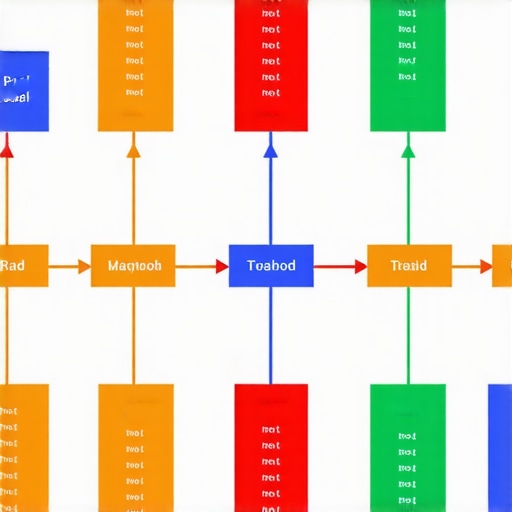
Understanding the intricacies of distributed RAID architectures benefits from visual representations—consider an illustration depicting data distribution, redundancy, and recovery flows within a multi-node setup.
Emerging Role of AI in Dynamic RAID Reconfiguration and Self-Healing Systems
Artificial intelligence is revolutionizing RAID management by enabling real-time, autonomous reconfiguration and predictive maintenance. Machine learning models analyze drive telemetry, workload patterns, and environmental sensors to forecast imminent failures with high accuracy. This proactive approach allows systems to preemptively migrate data, adjust redundancy levels, or initiate repairs before failures occur, markedly reducing downtime and data loss risks.
Moreover, AI-driven algorithms optimize rebuild processes by prioritizing critical data and allocating system resources dynamically, minimizing performance degradation during recovery. A recent paper in the Journal of AI in Storage Systems (JAI Storage, 2024) details these innovations, emphasizing their importance in mission-critical, high-availability environments.
To implement AI-enhanced RAID solutions, organizations should consider integrating sensors that monitor drive health, environmental factors, and workload metrics, alongside deploying intelligent management software capable of learning and adapting to evolving storage conditions.
Harnessing the Power of Hierarchical RAID Architectures for Multi-Tiered Storage Optimization
Modern data centers increasingly adopt hierarchical RAID configurations that integrate multiple RAID levels across different tiers of storage media. This approach enables organizations to balance cost, performance, and redundancy effectively. For instance, deploying RAID 10 on high-speed NVMe SSDs for transactional workloads while utilizing RAID 6 on traditional HDDs for archival data ensures optimal resource utilization and minimizes latency for critical applications. Such stratification demands sophisticated management software capable of dynamically reallocating data based on workload patterns, thereby maximizing throughput and resilience.
Implementing Software-Defined Storage (SDS) with RAID for Enhanced Scalability
Software-defined storage platforms incorporate advanced RAID algorithms within a flexible, virtualized environment, allowing seamless scaling across geographically dispersed data centers. This paradigm shift enables administrators to deploy virtual RAID groups that adapt to fluctuating demands without hardware modifications. By integrating erasure coding techniques with traditional RAID, SDS solutions offer superior fault tolerance with reduced storage overhead. According to a comprehensive report by IDC, organizations leveraging SDS with integrated RAID achieve significant improvements in operational agility and disaster recovery capabilities.
What Are the Cutting-Edge Techniques for RAID Data Recovery in Quantum Computing Environments?
As quantum computing begins to influence data processing paradigms, innovative RAID data recovery methods are emerging to address the unique challenges posed by quantum algorithms and error correction codes. Researchers are exploring hybrid classical-quantum error correction techniques that can be integrated into RAID systems, enabling high-fidelity data recovery even amidst quantum noise. This frontier combines quantum error mitigation with traditional RAID rebuild processes, promising unprecedented levels of data integrity in future-proofed storage solutions. For in-depth insights, consult the recent publication in Nature Quantum Information.
How Can AI-Driven Predictive Maintenance Further Revolutionize RAID-Based Storage Systems?
AI-powered predictive maintenance systems analyze vast streams of telemetry data from drives, cooling systems, and power supplies to anticipate failures with exceptional accuracy. These systems automatically initiate preemptive data migrations, adjust redundancy levels, or trigger repairs, significantly reducing downtime. Advanced machine learning models trained on historical failure data can identify subtle early warning signs, enabling proactive intervention. As noted in the IEEE Transactions on Cloud Computing, such AI integrations are crucial for maintaining high availability in mission-critical environments, especially as storage infrastructures grow in complexity.
Exploring the Synergy Between RAID and Blockchain for Immutable Data Archiving
The convergence of RAID storage solutions with blockchain technology offers a transformative approach to data integrity and security. Blockchain’s decentralized ledger ensures tamper-proof records, while RAID provides the underlying redundancy and performance. This synergy is particularly valuable for sectors requiring immutable archives, such as financial services and healthcare. Implementations involve encrypting RAID-stored data and anchoring cryptographic hashes within blockchain networks, creating a formidable barrier against data corruption and unauthorized alterations. For a comprehensive overview, see the recent white paper by Deloitte on blockchain-enabled data integrity.
Future Directions: Integrating RAID with Edge Computing and IoT Ecosystems
The proliferation of edge computing and IoT devices necessitates innovative RAID solutions capable of operating under constrained environments with intermittent connectivity. Emerging architectures focus on lightweight, distributed RAID implementations that synchronize across edge nodes, ensuring local data redundancy and rapid access. These systems employ adaptive algorithms that dynamically reconfigure redundancy parameters based on network conditions and device workloads. Developing such solutions requires a nuanced understanding of both storage redundancy principles and real-time data processing constraints, paving the way for resilient, scalable edge data infrastructures.
Expert Insights & Advanced Considerations
1. Strategic Integration of AI for Predictive Maintenance
Implementing AI-driven predictive analytics within RAID management systems enables proactive failure detection, reducing downtime and safeguarding data integrity. This approach leverages machine learning models trained on telemetry data to forecast drive failures before they occur, facilitating preemptive data migration and system adjustments.
2. The Evolving Role of RAID in Edge and IoT Environments
Emerging RAID architectures tailored for edge computing and IoT devices emphasize lightweight, distributed redundancy solutions that operate under constrained conditions. These architectures support rapid local data access and synchronization, ensuring resilience despite intermittent connectivity.
3. Convergence of RAID and Blockchain for Immutable Storage
Integrating blockchain technology with RAID systems offers tamper-proof data archiving, crucial for sectors like finance and healthcare. Cryptographic hashing and decentralized ledgers ensure data integrity and transparency, creating a formidable barrier against unauthorized alterations.
4. Hierarchical and Hybrid RAID for Optimized Performance
Combining multiple RAID levels across different storage tiers—such as RAID 10 on NVMe SSDs and RAID 6 on HDDs—maximizes performance and redundancy. Dynamic data allocation managed by sophisticated software enhances efficiency in diverse workload environments.
5. Future-Ready RAID Strategies for Quantum and Cloud Environments
Research into hybrid classical-quantum error correction techniques aims to elevate data recovery fidelity in quantum computing contexts. Simultaneously, distributed RAID-like systems employing erasure coding and consensus algorithms facilitate scalable, resilient cloud storage solutions.
Curated Expert Resources
- IEEE Transactions on Cloud Computing: Offers cutting-edge research on distributed RAID architectures and scalability.
- Nature Quantum Information: Essential for understanding quantum error correction techniques applicable to future RAID systems.
- JAI Storage Journal: Provides insights into AI-enhanced RAID management and predictive analytics.
- Deloitte White Papers: Discusses blockchain integration for data security and integrity.
- IDC Reports: Highlights trends in software-defined storage and hybrid RAID solutions.
Final Expert Perspective
As the landscape of data storage continues to evolve, mastering advanced RAID strategies—particularly those integrating AI, blockchain, and quantum technologies—becomes indispensable for maintaining resilience and performance at scale. These innovations not only safeguard data but also unlock new levels of operational efficiency, ensuring that enterprise storage infrastructure remains robust against future challenges. Engaging with industry-leading resources and fostering a culture of continuous learning will position organizations at the forefront of storage innovation. For those interested in deepening their expertise, exploring this comprehensive guide is highly recommended. Your insights and experiences are vital—share them, and help shape the future of storage technology.
This comprehensive article sheds light on how RAID technology is no longer just about redundancy but also about optimizing performance and integrating with advanced systems like AI and quantum computing. From my experience managing storage solutions for a mid-sized data center, I’ve seen firsthand how implementing RAID 10 drastically reduces downtime during drive failures, especially when paired with real-time monitoring tools. What I find fascinating is the potential of AI-driven predictive analytics to proactively manage RAID arrays, minimizing the manual intervention needed. It does, however, pose questions about the reliability of these predictive models in diverse operational environments. Has anyone experimented with integrating AI systems into their RAID management, and what challenges did you face during implementation? Also, do you see any risks associated with over-reliance on machine learning predictions for critical storage resilience? Overall, the article makes me consider how future-proof our storage architectures need to be to keep up with these technological innovations.
Reading through this post really highlights how far RAID technology has advanced beyond simple redundancy. I’ve personally managed large-scale enterprise storage, and I can attest that implementing RAID 10 has made a noticeable difference in uptime and performance, especially during hardware failures. The discussion on integrating AI-driven predictive analytics is particularly interesting; I’ve been exploring similar solutions where machine learning models analyze drive telemetry and workload data to forecast failures. One challenge I encountered was ensuring the accuracy of these models in different operational environments, as false positives can lead to unnecessary migrations or system reconfigurations. Have others experienced difficulties in calibrating these predictive systems effectively? I believe that combining these AI tools with traditional monitoring can further enhance resilience but must be implemented carefully. It makes me wonder how organizations are balancing automation with manual oversight in such critical systems. What would be your approach to validate and fine-tune these predictive models to avoid over-reliance or unexpected failures? Looking forward to hearing others’ insights.
This article highlights the sophisticated evolution of RAID beyond simple redundancy, especially with the integration of AI and quantum computing considerations. Having worked with high-throughput data centers, I’ve observed that combining RAID 10 with real-time monitoring significantly reduces system outages during drive failures. The potential of AI-driven predictive analytics excites me because it moves storage management from reactive to proactive, yet I wonder how well these models perform under varied workload conditions. For example, in environments with fluctuating I/O patterns, do predictive systems maintain accuracy, or do they produce false alarms that lead to unnecessary reconfigurations?
From my experience, combining AI with traditional monitoring tools offers great resilience but requires careful tuning to avoid over-dependence. What strategies have others implemented to calibrate the sensitivity of these models, especially in mixed workload scenarios? Additionally, as storage infrastructures become more complex with emerging technologies like NVMe-oF and blockchain, how do you see RAID evolving to keep pace with these innovations? Overall, the push toward predictive, intelligent storage solutions is promising but still poses challenges worth exploring.