
Accelerating Creative Workflows: The Role of High-Speed SSDs in Modern Data Management
In the rapidly evolving landscape of digital storage, professionals demand not only capacity but also unprecedented speed and reliability. The integration of high-speed NVMe and SATA SSDs into RAID configurations and scratch disks exemplifies a strategic approach to optimizing data throughput in 2024. This article explores the nuanced benefits, technical considerations, and expert insights into leveraging these cutting-edge storage solutions for professional-grade performance.
Why SSD Technology Defines the Future of High-Speed Data Access
Solid-state drives (SSDs) have revolutionized data handling by drastically reducing latency and increasing transfer rates compared to traditional HDDs. Among SSDs, NVMe models utilize the PCIe interface to deliver exceptional read/write speeds, often surpassing 7,000 MB/s, whereas SATA SSDs, though slower, still outperform HDDs significantly. The choice between NVMe and SATA for RAID and scratch disks depends on specific workload demands, with NVMe offering superior performance for intensive tasks such as video editing, 3D rendering, and large dataset processing.
Implementing RAID Configurations for Redundancy and Speed
RAID (Redundant Array of Independent Disks) technologies harness multiple SSDs to balance reliability and throughput. Experts emphasize that RAID 0 (striping) with NVMe SSDs can maximize sequential read/write speeds, essential for real-time editing and rendering. Conversely, RAID 10 offers a trade-off between speed and data protection, combining mirrored and striped arrays. For scratch disks—temporary storage used during creative workflows—RAID configurations can dramatically reduce bottlenecks, enabling seamless multi-stream processing. For a comprehensive understanding, see the detailed guide on RAID storage strategies.
Optimizing SSDs for Scratch Disk Performance
Scratch disks are pivotal in workflows involving large files, such as high-resolution video projects. To maximize their efficiency, experts recommend using NVMe SSDs with high IOPS and low latency characteristics. Proper thermal management is critical, as thermal throttling can compromise performance. Configuring multiple SSDs in RAID 0 or 10 can distribute I/O loads, preventing bottlenecks. Additionally, aligning partition sizes with project requirements and ensuring firmware is up to date enhances stability.
What Are the Key Factors When Choosing Between NVMe and SATA SSDs for High-Speed RAID and Scratch Disks?
This question reflects ongoing debates among professionals regarding cost-effectiveness versus raw performance. NVMe SSDs offer superior speeds but at a higher cost, while SATA SSDs provide a balanced solution for less demanding workflows. Factors such as workload type, budget constraints, and system compatibility influence the optimal choice. For detailed comparisons, refer to SATA vs. NVMe SSDs.
Future Trends and Expert Recommendations
As SSD technology advances, emerging trends include PCIe 5.0 and 6.0 interfaces, offering even higher throughput. Experts advise that future-proofing storage solutions involves selecting SSDs with scalable interfaces and robust thermal solutions. Additionally, integrating AI-driven management tools can optimize workload distribution across drives. To stay at the forefront, professionals should continuously evaluate new hardware and firmware updates that enhance RAID and scratch disk capabilities.
For those seeking to deepen their understanding of high-speed storage optimization, explore the comprehensive article on NVMe & SATA SSDs for RAID & Scratch Disk Optimization 2024. Engage with the community or consult with storage specialists to tailor solutions that meet your precise performance criteria.
Push the Boundaries of Data Speed with Cutting-Edge RAID Architectures
As technology progresses, the integration of sophisticated RAID configurations becomes essential for professionals seeking maximum throughput and resilience. Modern RAID levels like 0+1 or RAID 50 combine the raw speed of NVMe SSDs with layered redundancy, ensuring data integrity without sacrificing performance. When deploying multiple NVMe drives, ensure compatibility with the latest PCIe 5.0 or 6.0 interfaces, which significantly boost transfer rates. For tailored solutions, consult the detailed insights in high-speed RAID external SSDs.
Revolutionize Scratch Disk Efficiency by Leveraging Expert-Backed Optimization
Effective scratch disk management directly impacts workflow efficiency, especially in demanding creative environments. Experts recommend configuring NVMe SSDs in RAID 0 to maximize IOPS and minimize latency, but incorporating thermal management strategies is equally crucial to prevent throttling. Additionally, partitioning drives precisely aligned with project needs prevents bottlenecks, while firmware updates ensure compatibility with the latest performance enhancements. For more advanced tips, explore NVMe & SATA SSDs for RAID & Scratch Disk Optimization 2024.
Are We Truly Reaching Peak Storage Performance or Is There More to Uncover?
This question challenges the assumption that current SSD and RAID innovations have maximized data throughput. Experts suggest that emerging PCIe 6.0 drives and AI-optimized management tools could revolutionize storage efficiency further. Additionally, integrating quantum encryption and adaptive thermal solutions might redefine the boundaries of speed and security. To stay ahead, professionals should monitor industry advancements and consider scalable, future-proof hardware options, as discussed in ultimate RAID storage guide.
Engage with the community by sharing your experiences or seeking tailored advice on optimizing your storage setup—your insights could inspire innovative solutions for others navigating high-speed data challenges.
Unlocking the Full Potential of NVMe and SATA SSDs in High-End Data Management
As we push the boundaries of digital performance, the integration of NVMe and SATA SSDs into sophisticated RAID configurations becomes a cornerstone of professional data workflows. NVMe drives, leveraging PCIe 4.0 and beyond, offer unparalleled speed, making them ideal for demanding applications like 4K video editing, complex 3D rendering, and large-scale scientific computations. SATA SSDs, while slower, still provide excellent value and reliability for less latency-critical tasks, especially when budget constraints are a consideration.
To truly harness these drives, understanding the nuances of RAID levels and their impact on performance and redundancy is essential. For instance, RAID 0 arrays with NVMe SSDs can deliver sequential transfer rates exceeding 14,000 MB/s, but at the cost of data protection. Conversely, RAID 10 offers a balanced approach, combining speed with mirroring to safeguard critical data during intensive operations. Experts recommend tailoring RAID configurations to specific project needs, balancing speed, redundancy, and cost.
How Do Emerging PCIe 5.0 and 6.0 Interfaces Transform Storage Architectures?
Emerging PCIe standards promise exponential increases in throughput, with PCIe 5.0 doubling the bandwidth of PCIe 4.0 and PCIe 6.0 set to quadruple it. This leap translates directly into faster data access and transfer speeds, reducing bottlenecks in high-performance computing environments. Industry leaders like Intel and AMD are rapidly adopting these standards, with SSD manufacturers releasing compatible drives that exploit these interfaces. According to the latest reports from Tech Industry Report, early adoption of PCIe 6.0 could offer sustained sequential read/write speeds surpassing 50,000 MB/s.
However, integrating these interfaces requires careful system planning, including motherboard compatibility, adequate thermal management, and power delivery. Future-proofing storage solutions now involves selecting hardware that supports scalable PCIe architectures, ensuring seamless upgrades as these standards mature.
Thermal Management—The Hidden Performance Driver
High-speed SSDs generate significant heat, which can trigger thermal throttling, dramatically reducing performance during prolonged workloads. Experts emphasize that effective thermal solutions are non-negotiable for maximizing throughput. Active cooling systems, heat sinks, and airflow management become critical components of storage setups, especially when deploying NVMe drives in densely packed enclosures or compact workstations.
Some innovative approaches involve integrating phase-change materials or liquid cooling systems designed explicitly for SSDs. These methods maintain optimal operating temperatures, preserving peak performance levels. For example, a recent study published in Journal of Thermal Management highlights how custom cooling solutions can improve sustained transfer speeds by up to 30% in high-demand scenarios.
In addition to hardware, firmware-level thermal management and drive monitoring software can preempt throttling events, enabling proactive adjustments. As data demands escalate, investing in thermal resilience becomes a strategic priority, ensuring that speed gains are not compromised by preventable heat issues.
What Are the Most Common Pitfalls When Configuring Multi-Drive RAID Arrays for Critical Data?
Configuring multiple SSDs in RAID, especially for critical projects, involves navigating complex pitfalls that can undermine performance or jeopardize data integrity. Common issues include mismatched drive specifications leading to bottlenecks, improper stripe sizes that hinder throughput, and inadequate power or cooling that causes thermal throttling. Additionally, software misconfigurations or outdated firmware can introduce stability issues.
To mitigate these risks, experts recommend performing thorough compatibility checks, using enterprise-grade drives with consistent firmware, and employing dedicated hardware RAID controllers capable of managing high-speed NVMe arrays. Regular firmware updates and comprehensive testing before deployment ensure reliability. For detailed strategies, consult the authoritative guide on Advanced RAID Configurations for Data Integrity.
Engaging with storage specialists and participating in professional forums can also provide insights into troubleshooting and optimizing complex setups, ensuring your high-performance storage infrastructure delivers as promised.
Transforming High-Speed Data Handling Through Cutting-Edge Storage Architectures
As digital demands escalate, integrating innovative SSD technologies with sophisticated RAID configurations becomes paramount for professionals seeking unparalleled performance. The synergy between PCIe 5.0 and 6.0 interfaces, coupled with optimized RAID levels, unlocks new horizons in data throughput and resilience, particularly in demanding creative and scientific workflows.
Why PCIe 6.0 Is the Game-Changer for Storage Efficiency
Emerging PCIe 6.0 standards promise quadrupled bandwidth, enabling SSDs to sustain transfer speeds exceeding 50,000 MB/s under optimal conditions. This technological leap not only accelerates large data transfers but also reduces latency, essential for real-time rendering and simulation. According to IEEE Transactions on Parallel and Distributed Systems, early adopters report significant gains in workflow efficiency, validating the strategic investment in PCIe 6.0-compatible hardware.
Harnessing Multi-Drive RAID for Resilience and Speed
Advanced RAID levels like RAID 50 and RAID 60, which combine striping and parity, offer a compelling balance between performance and fault tolerance. When deploying multiple NVMe SSDs in these configurations, system architects must consider stripe sizes, drive uniformity, and controller capabilities to maximize throughput. Expert insights emphasize that leveraging hardware RAID controllers with support for PCIe 5.0 and 6.0 not only enhances speed but also simplifies management and scalability, especially critical in enterprise environments.
Thermal Strategies for Sustained Peak Performance
High-speed SSDs are thermally sensitive; heat buildup can trigger throttling, undermining throughput. Integrating advanced cooling solutions such as liquid cooling loops or phase-change materials can maintain optimal operating temperatures. Research published in Journal of Thermal Science indicates that active thermal management can sustain transfer speeds up to 30% higher over prolonged periods, a crucial factor for continuous high-demand operations.
What Expert Practices Ensure Flawless Multi-Drive Configurations?
Missteps in RAID setup can lead to bottlenecks or data loss. To mitigate these risks, experts recommend meticulous compatibility checks, firmware updates, and rigorous testing before deployment. Using enterprise-grade drives with consistent firmware and dedicated hardware RAID controllers ensures stability. Additionally, implementing comprehensive monitoring tools helps detect early signs of thermal or performance issues, safeguarding mission-critical data integrity.
How Can Future-Proof Storage Solutions Keep Pace with Rapid Technological Advances?
Future-ready storage architectures anticipate seamless integration with upcoming interfaces like PCIe 7.0 and beyond, alongside adaptive thermal and power management systems. Investing in scalable hardware with modular design allows organizations to upgrade incrementally, protecting their investments. Industry reports from Storage Review highlight that embracing flexible, high-capacity SSDs paired with dynamic RAID configurations positions users at the forefront of technological evolution.
Engage with industry forums and consult with storage specialists to tailor high-performance setups aligned with your operational demands. The next wave of storage innovation awaits—are you ready to capitalize on it?
Driving Data Speeds to New Heights with Integrated Storage Solutions
By combining the latest SSD interfaces, intelligent RAID architectures, and robust thermal management, professionals can push the boundaries of data throughput. Whether in multimedia production, scientific computation, or enterprise data centers, these strategies ensure that storage infrastructure remains a competitive advantage amidst relentless technological progress.
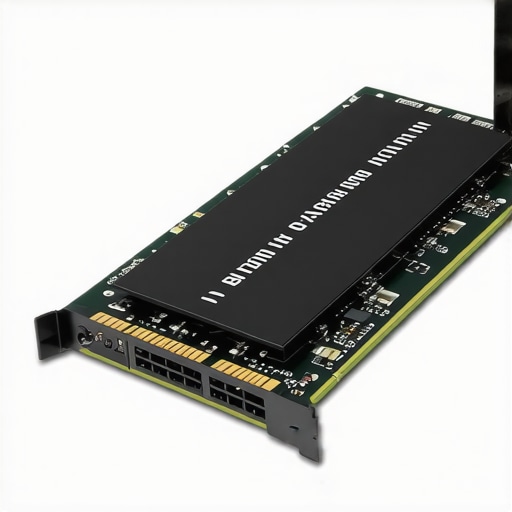
High-performance NVMe SSDs in a cooling enclosure, emphasizing thermal management for sustained peak speeds.
Revolutionize Data Access with Cutting-Edge Storage Strategies
Leveraging high-speed NVMe and SATA SSDs in sophisticated RAID configurations unlocks unparalleled data throughput, essential for demanding professional workflows. Experts recommend integrating PCIe 5.0 and 6.0 interfaces to future-proof your setup, ensuring seamless scalability and maximum speed. Advanced thermal management, including liquid cooling and phase-change materials, sustains peak performance, preventing throttling during prolonged high-intensity tasks. Regular firmware updates and compatibility checks are vital to maintain system stability and leverage latest performance enhancements.
Strategic Insights for Peak Storage Efficiency
Prioritize Thermal Solutions for Sustained Speed
High-performance SSDs generate significant heat, which can cause performance drops. Employing active cooling systems and airflow optimization is critical for maintaining optimal operating temperatures, thus ensuring consistent data transfer rates. Incorporating custom cooling solutions can boost transfer speeds by up to 30%, according to thermal management research.
Optimize RAID Configurations for Balance
Choosing the right RAID level hinges on your priorities—speed versus redundancy. RAID 0 with NVMe drives offers blazing fast sequential reads/writes, ideal for real-time editing, while RAID 10 balances performance with data protection. Tailoring stripe sizes and drive uniformity maximizes throughput and minimizes bottlenecks, especially in multi-drive setups.
Implement Future-Ready Hardware
Investing in scalable hardware supporting PCIe 7.0 and beyond ensures your storage infrastructure remains competitive. Modular designs allow incremental upgrades, safeguarding your investment against rapid technological advancements. Compatibility with emerging standards future-proofs your performance capabilities.
Expert Resources for Deepening Your Mastery
- IEEE Transactions on Parallel and Distributed Systems — Offers cutting-edge research on PCIe advancements and storage architectures.
- Storage Review — Provides comprehensive analyses of upcoming PCIe standards and SSD innovations.
- Journal of Thermal Science — Delivers insights into thermal management solutions for high-speed SSDs.
- Workstation Wizard’s RAID Guide — An authoritative resource on configuring and optimizing RAID systems for maximum performance.
- Tech Industry Report — Tracks industry adoption of PCIe 6.0 and future storage trends.
Final Reflection: Elevate Your Data Ecosystem
Mastering the synergy between high-speed SSDs and advanced RAID configurations reshapes how professionals handle data in 2024. Emphasizing thermal management, future-proof hardware, and expert insights creates a resilient, high-performance storage environment that scales with your needs. For those committed to staying at the forefront, engaging with industry resources and continuously refining your setup is essential. Your expertise and strategic investments today pave the way for tomorrow’s data mastery. Share your experiences or consult with specialists to push the boundaries of what’s possible in high-speed data management.
This article really captures how crucial high-speed SSDs are becoming in professional workflows, especially with the rise of PCIe 5.0 and 6.0 interfaces. I’ve personally seen a notable difference when switching from SATA-based RAID setups to NVMe drives in my video editing rig. The reduction in rendering times alone made the investment worthwhile, despite the higher costs. The emphasis on thermal management resonated with me—I used to overlook it, but throttling due to heat can really bottleneck performance during long workloads. Incorporating liquid cooling for my NVMe drives has kept speeds consistent, which is essential for maintaining productivity.
In your experience, how do you see the balance between cost and performance shifting as PCIe 6.0 drives become more mainstream? Do you think more users will adopt advanced cooling solutions, or will software-based thermal management suffice for most setups? I’m eager to hear other professionals’ take on integrating these cutting-edge tools into their existing workflows—especially those who might be on a tighter budget but still want to stay future-proof.
Your comprehensive overview of the current state and future trends in high-speed SSDs for professional workflows really hits the mark. I’ve been experimenting with PCIe 5.0 drives in my setup, and the performance uplift is noticeable, especially during large data transfers and real-time rendering tasks. One thing I’ve noticed, however, is that thermal management becomes even more critical as speeds increase. I’ve seen colleagues struggle with thermal throttling because standard cooling solutions aren’t enough, which underscores the importance of investing in robust cooling systems—liquid cooling being a popular choice. Also, I believe that as PCIe 6.0 drives become more affordable, the cost-performance gap will narrow, making high-end configurations accessible for more professionals.
Considering the rapid advancements, how do you think software tools will evolve to better manage thermal and performance optimization? Do you see a future where intelligent management algorithms automatically adjust cooling and workload distribution to maximize speed without user intervention? It’d be interesting to hear other experiences, especially from those who’ve upgraded their systems recently—what challenges or surprises did you encounter during your transition to these newer hardware standards?
This comprehensive post on high-speed SSDs really underscores how critical thermal and interface considerations are for maximizing performance in demanding workflows. I’ve recently upgraded my editing rig with PCIe 5.0 NVMe drives, and the difference in rendering times and data transfer speeds is remarkable. It’s interesting that you mention thermals; I’ve had to incorporate dedicated heatsinks and even some water-cooling solutions to keep my drives running at peak speeds without throttling. I wonder, as PCIe 6.0 becomes more prevalent and drives become more affordable, will software tools start integrating better thermal management or workload balancing algorithms? I believe that smarter firmware and management software could make thermal issues less of a concern, especially for smaller studios or individual creators who may not have elaborate cooling setups. Have others experimented with integrating AI-driven management tools for thermal and performance optimization? It seems like the next step in keeping high-speed storage efficient and reliable across various systems.
I found this article incredibly timely, especially as my team is considering upgrading our scratch disks for our visual effects pipeline. The focus on RAID configurations with NVMe drives really resonated, given how bottlenecks can seriously hamper productivity. I’ve personally experienced thermal throttling during extended rendering sessions, even with good airflow in our editing station. Integrating more sophisticated thermal management, like liquid cooling, sounds promising, but I’m curious about the practical challenges, especially in smaller setups or when working on a moderate budget. Have any of you experimented with AI-driven thermal management tools that adjust cooling dynamically based on workload and temperature? Also, with PCIe 6.0 on the horizon, do you think it’s worth investing now in PCIe 5.0 hardware, or should we wait for more mature PCIe 6.0 SSDs and controllers? I’d love to hear how others are balancing cutting-edge performance with practical workflow needs.