Deciphering the Hidden Weaknesses of RAID 5 with Massive Hard Drives
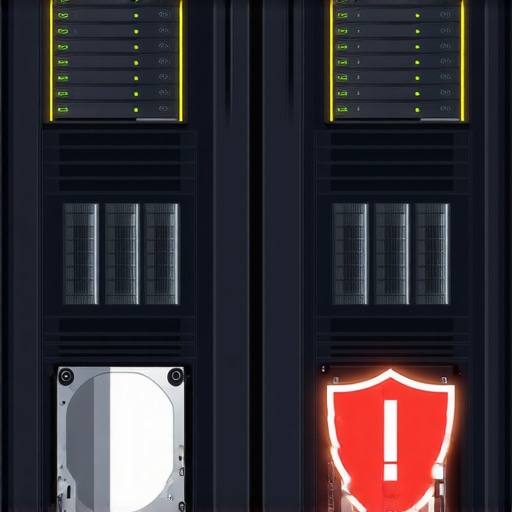
In the realm of professional data storage, RAID 5 has historically been a favored configuration due to its balance of redundancy and performance. However, as storage capacities escalate into the 20TB range, the inherent vulnerabilities of RAID 5 become starkly evident. The parity mechanism underpinning RAID 5 relies on striping data and parity across multiple disks, which introduces stress points that amplify with larger drives.
Why Larger Drives Expose RAID 5’s Fragility
With 20TB drives, the reallocation of parity data during rebuilds extends over longer periods, increasing the window for potential failures. Mechanical and firmware issues become more probable, especially considering that data rebuilds can take days, during which a single second of drive mishap could cause catastrophic data loss. Furthermore, the notorious ‘write penalty’ escalates non-linearly as drive sizes grow, hampering reliable performance.
The Impact of Rebuild Times on Data Integrity
Extended rebuild durations for large drives significantly elevate the risk of data corruption due to multiple failure points. As highlighted in recent studies published by the IEEE Transactions on Magnetics, the probability of data loss in RAID 5 environments with drives exceeding 16TB surges, primarily because of the increased likelihood of encountering multiple concurrent disk failures during lengthy rebuilds.
Transitioning to More Resilient Storage Architectures in 2026
Recognizing the vulnerabilities of RAID 5 at high capacities, Nimble Storage’s 2026 recommendations favor more robust configurations such as RAID 6, which tolerates two disk failures, or the adoption of RAID 10 for critical high-speed workloads. For enterprise environments prioritizing data safety, implementing distributed storage systems combined with NVMe SSD caches offers superior speed and fault tolerance, especially when integrated with hardware acceleration technologies.
Are Software-Defined Storage Solutions the Future?
Indeed, software-defined storage (SDS) platforms enable dynamic management of parallel redundancy strategies that adapt to evolving drive capacities. These solutions leverage erasure coding techniques and intelligent data placement algorithms, significantly reducing rebuild times and mitigating the risk factors inherent in traditional RAID configurations.
What mechanisms can effectively eliminate RAID 5’s vulnerabilities on large drives?
Adopting parity algorithms with staggered rebuild strategies, utilizing erasure coding, and integrating scale-out architectures are promising avenues to bolster data reliability. Engaging with expert communities and consulting updated standards like IEEE standards for data storage integrity can illuminate best practices tailored for high-capacity environments.
For professionals seeking to optimize storage solutions while minimizing risk, exploring external SSDs for redundancy or as scratch disks can complement these architectures. Discover more at our comprehensive guide to external SSDs.
Understanding the limitations of traditional RAID configurations like RAID 5 is essential in designing resilient data infrastructures that adapt to exponential storage growth. As the landscape advances, integrating innovative, expert-endorsed strategies ensures ongoing data integrity and operational continuity.
Embracing Scale-Out Storage for Larger Workloads
As data ecosystems expand exponentially, reliance on fixed RAID configurations increasingly reveals limitations, especially when managing multi-terabyte drives. Scale-out storage solutions, which distribute data across multiple nodes, offer a dynamic alternative that provides not only redundancy but also high scalability and fault tolerance. Technologies like object storage and software-defined storage platforms enable organizations to architect resilient systems that adapt seamlessly to evolving data demands.
Implementing Erasure Coding to Minimize Rebuild Risks
Unlike traditional parity-based RAID, erasure coding employs advanced algorithms that divide data into fragments, allowing for reconstruction even when multiple nodes fail. This method reduces the stress on individual drives and significantly shortens rebuild times, thereby mitigating the window during which system vulnerabilities are at their peak. For detailed insights into integrating erasure coding strategies, consult the standards discussed in the IEEE guidelines for storage resilience.
Could Hybrid Architectures Strike the Balance Between Speed and Reliability?
Hybrid storage architectures, combining SSD caches with traditional HDDs or large-capacity drives, enable a tailored approach to data redundancy and performance. By intelligently caching frequently accessed data on NVMe SSDs, these systems reduce latency and accelerate rebuild processes while maintaining cost-effective durability through HDDs or large SATA drives. Exploring this hybrid model allows professionals to optimize their environment, especially when paired with external SSD solutions for critical operations. Learn more about integrating external SSDs with hybrid setups in our ultimate guide to external SSDs.
How can emerging technologies like persistent memory and non-volatile RAM redefine data durability strategies in 2026? Engaging with community forums and staying updated on research like the recent IEEE publications can provide valuable foresight into future-proofing storage architectures.
For organizations aiming to optimize data resilience without compromising speed, considering advanced configurations such as RAID 6, Raid 10, or software-defined solutions can significantly elevate system robustness. Explore additional external SSD options designed for high-speed redundancy and rapid recovery at our comprehensive guide to external SSDs.
Continuously advancing storage technologies urge professionals to assess their infrastructures critically and adopt innovative strategies. Integrating modern data protection mechanisms ensures operational continuity amid the relentless growth of data volumes and complexity.
Transitioning from Legacy RAID to Adaptive Data Protection Protocols
While traditional RAID configurations like RAID 6 and RAID 10 have provided foundational redundancy, emerging storage demands necessitate more sophisticated approaches. The deployment of adaptive data protection protocols—integrating real-time analytics, predictive failure modeling, and automated failover—can significantly improve resilience in environments utilizing multi-terabyte drives. These systems dynamically adjust redundancy levels based on drive health metrics, workload intensity, and rebuild priorities, effectively mitigating the risks associated with large-scale disk failures.
Can predictive analytics preemptively address drive failures?
Absolutely. By leveraging machine learning algorithms trained on extensive drive telemetry data—such as SMART parameters, temperature fluctuations, and read/write error patterns—organizations can forecast imminent failures. This proactive stance enables preemptive data migrations and targeted rebuilds, reducing system downtime and data loss potential. For instance, enterprise storage vendors like Dell EMC have integrated predictive analytics into their storage management suites, exemplifying industry movement toward intelligent failure prevention.
Implementing these advanced protocols requires a concerted effort in data collection, model training, and real-time monitoring—areas where collaboration with data science experts proves invaluable. To stay ahead, professionals must also familiarize themselves with emerging industry standards and best practices, such as the ongoing development within the Storage Networking Industry Association (SNIA), which is leading efforts toward standardized predictive maintenance frameworks.
Innovations in Error Correction and Data Integrity Verification
Beyond hardware redundancy, the evolution of error correction codes (ECC) has opened doors to more resilient storage systems. Techniques like Low-Density Parity-Check (LDPC) codes and Polar codes offer robust error correction capabilities that surpass traditional parity bits, especially critical when dealing with the inherent noise and error propensity in large-capacity drives. Integrating hardware with advanced ECC algorithms ensures data integrity even during prolonged rebuilds or in environments with high electromagnetic interference.
Researchers from the IEEE Transactions on Information Theory have demonstrated how these sophisticated codes can reduce uncorrectable error rates, prolonging drive lifespan and fortifying data protection strategies. Moreover, embedding checksum verification and real-time consistency checks within storage controllers further enhances integrity, allowing for immediate detection and correction of discrepancies before they escalate into data corruption.
What Innovations Are Paving the Way for Future-Ready Storage Architectures?
Emerging frontiers such as non-volatile memory express (NVMe) over Fabrics, persistent memory modules, and quantum-resistant cryptography are shaping the next generation of storage architectures. NVMe over Fabrics facilitates high-speed access to distributed storage pools, enabling seamless scaling across data centers, while persistent memory offers a non-volatile, byte-addressable medium that drastically reduces latency and rebuild times.
Meanwhile, the integration of quantum-resistant algorithms ensures that data remains secure against future cryptographic threats—a vital aspect as we consider data longevity and compliance. Organizations investing in these technologies position themselves to not only safeguard current workloads but also to adapt effortlessly to future data paradigms, integrating external SSDs and other rapid-access devices into cohesive, intelligent systems.
For professionals eager to explore these innovative towers, participating in industry conferences like the Flash Memory Summit or engaging with research communities focused on storage resilience can provide invaluable insights. As data volumes continue to explode, adopting these forward-thinking strategies becomes essential to sustain performance, ensure fault tolerance, and maintain competitive advantage.
How Can Adaptive Data Protection Transform Large Drive Ecosystems
In the face of burgeoning data demands, traditional RAID architectures often fall short in delivering the agility and resilience required by modern enterprises. The implementation of adaptive data protection protocols—integrating real-time analytics, predictive failure modeling, and dynamic redundancy adjustment—paves the way for a seismic shift in safeguarding massive storage arrays. These systems proactively reconfigure redundancy levels based on drive health metrics, workload fluctuations, and failure risk forecasts, thereby minimizing downtime and preserving data integrity amidst the complexities of high-capacity environments.
Can predictive failure analytics preempt catastrophic data loss in multi-terabyte drives?
Certainly. Machine learning algorithms trained on extensive telemetry—such as SMART attributes, temperature variances, and error rates—enable preemptive identification of failing components. By forecasting imminent failures, organizations can orchestrate timely migrations and targeted rebuilds, drastically reducing vulnerability windows. Leading vendors like Dell EMC employ such predictive frameworks within their storage management ecosystems, exemplifying the practical integration of analytics-driven resilience.
Harnessing Error Correction Innovations for Ultimate Data Integrity
Traditional error correction methods like parity bits are increasingly supplemented by sophisticated codes such as Low-Density Parity-Check (LDPC) and Polar codes. These advanced algorithms exhibit superior error detection and correction capabilities, particularly in environments plagued by high noise levels or prolonged rebuild cycles inherent in large drives. Embedding hardware-accelerated ECC modules with LDPC improves the system’s ability to preserve data fidelity, even during intensive rebuilds or in electromagnetic interference-rich settings. For example, the latest enterprise SSDs incorporate these technologies to extend lifespan and reliability.
What role do hybrid storage architectures play in reinforcing data resilience?
Hybrid models combining SSD caches with traditional HDDs or large-capacity drives feature prominently in contexts demanding swift recovery and high throughput. By caching frequently accessed data on NVMe SSDs, these systems minimize latency and facilitate rapid rebuilds, while maintaining cost efficiency through bulk storage drives. Strategic deployment of external SSDs as supplemental performance buffers further enhances system robustness, especially during maintenance or failure scenarios. For comprehensive insights, consult our full guide on leveraging external SSDs.
Emerging Technologies Charting the Future of Data Durability
The advent of persistent memory modules and non-volatile RAM (NVRAM) promises to revolutionize storage paradigms by offering near-instantaneous data persistence and rapid recovery capabilities. These innovations facilitate ultra-fast rebuilds and reduce risks associated with power failures or drive failures. Moreover, quantum-resistant cryptographic algorithms are beginning to influence storage security architectures, ensuring long-term data confidentiality even against future quantum threats. Participation in forums like the Flash Memory Summit can provide early access to these technological advancements.
Are resilient storage networks the backbone of future enterprise data?
Absolutely. Technologies such as NVMe over Fabrics and software-defined storage frameworks enable scalable, high-speed access across distributed environments. When integrated with predictive analytics and error correction advancements, these networks form a resilient, adaptive infrastructure capable of withstanding the extremes of large-scale storage demands. External SSDs designed for enterprise acceleration and redundancy further complement this ecosystem, ensuring operational continuity amid data deluge.
Engage with industry leaders and research initiatives to stay at the forefront of this evolution, and consider investing in training to master these cutting-edge solutions that are redefining what’s possible in data resilience.
Expert Insights & Advanced Considerations
Optimize Data Integrity with Dynamic Redundancy
Implementing adaptive redundancy strategies that respond to real-time drive health metrics can significantly mitigate risks associated with large-capacity drives, ensuring continuous data protection amidst evolving storage demands.
Leverage Predictive Analytics for Proactive Failures
Employing machine learning models trained on telemetry data like SMART parameters enables preemptive failure detection, facilitating timely maintenance actions and reducing unforeseen data losses in RAID configurations with high-capacity disks.
Prioritize Error Correction Advancements
Integrating advanced error correction codes such as LDPC enhances data fidelity, particularly during extended rebuilds in sizable drives, thereby strengthening overall system resilience.
Embrace Hybrid Storage Architectures
Combining SSD caches with traditional HDDs or large drives offers a performance boost and quick recovery capabilities, making hybrid setups a compelling choice for demanding storage environments.
Adopt Scale-Out Solutions to Expand Flexibility
Moving towards distributed, scale-out storage architectures enables seamless scalability and fault tolerance, effectively addressing the limitations posed by monolithic RAID systems in high-capacity scenarios.
Curated Expert Resources
- IEEE Transactions on Magnetics: Delivers cutting-edge research on drive failure probabilities and data integrity techniques critical for high-capacity drives.
- SNIA (Storage Networking Industry Association): Offers industry standards and best practices for predictive failure modeling and resilient storage systems.
- Research on Error Correction Codes (ECC): Academic papers and technical reports detailing LDPC and Polar codes vital for data error mitigation in large-scale storage solutions.
- Enterprise Storage Vendors’ Whitepapers: Provide insights into deploying predictive analytics and hybrid architectures within real-world environments.
Final Expert Perspective
As the storage landscape escalates into the 20TB and beyond realm, recognizing the intricate vulnerabilities of traditional RAID 5 setups becomes crucial. Harnessing expert-recommended strategies like adaptive redundancy, predictive analytics, and error correction innovations empowers organizations to forge resilient, future-proof storage architectures. Embedding these advanced practices not only safeguards invaluable data assets but also ensures optimal performance amid rapid capacity growth. Engage with industry leaders, participate in cutting-edge research, and proactively refine your storage infrastructure—these are the pathways to mastering data integrity in the era of massive drives. For comprehensive support tailored to your needs, consider reaching out through our contact page and discover how to revolutionize your storage resilience today.