Empowering Data Management Through External SSDs and RAID Technologies in 2024
In the rapidly evolving landscape of digital storage, professionals and enthusiasts alike seek innovative solutions to optimize data accessibility, security, and speed. External SSDs combined with sophisticated RAID configurations have emerged as pivotal tools for maximizing storage potential, especially as data volumes exponentially grow. This article delves into the strategic integration of these technologies, emphasizing expert insights to elevate your data management practices in 2024.
Harnessing External SSDs for High-Speed Data Access: A Strategic Perspective
External SSDs, particularly those leveraging NVMe technology, are revolutionizing portable storage by offering unprecedented read/write speeds. According to recent benchmarks, top-tier external NVMe SSDs outperform traditional SATA counterparts by up to 4x, significantly reducing latency for creative professionals and data scientists. When selecting external SSDs, factors such as interface compatibility, durability, and thermal management are critical. For instance, high-performance models with robust heatsinks ensure sustained throughput during intensive workflows, thus maintaining optimal productivity.
Designing RAID Arrays to Amplify Storage and Reliability
RAID configurations serve to augment both data redundancy and access speed. In 2024, hybrid RAID setups incorporating NVMe SSDs and SATA drives are gaining prominence, offering a balance between cost-efficiency and performance. Strategies such as RAID 0 maximize speed but lack redundancy, whereas RAID 10 provides fault tolerance with minimal compromise on performance. Advanced users often employ RAID 5 or RAID 6 for larger arrays, leveraging parity to safeguard against disk failure—an essential consideration for mission-critical data environments.
What Are the Challenges of Combining External SSDs with RAID in Professional Settings?
While external SSDs and RAID configurations collectively boost performance, they introduce complexity in setup and maintenance. Compatibility issues may arise, especially when integrating different SSD protocols or connecting via diverse interfaces. Moreover, managing multiple external drives demands rigorous data backup protocols and monitoring tools to prevent data loss. Experts recommend utilizing dedicated RAID controllers and compatibility-tested external enclosures to mitigate these risks, ensuring stability in high-demand scenarios.
In what ways can professionals optimize RAID configurations for creative workflows in 2024?
Optimizing RAID for creative workflows involves a nuanced understanding of workload characteristics and storage demands. Professionals should assess whether their priority is speed, redundancy, or a combination. For instance, video editors working with 4K or 8K footage benefit from RAID 0 or RAID 10 configurations, ensuring rapid data access. Additionally, leveraging SSD caching and tiered storage solutions can further accelerate workflows. Continuous monitoring and periodic array integrity checks are vital to sustain peak performance and data safety.
For more detailed guidance on configuring RAID for high-speed data access, explore our ultimate RAID storage guide.
To stay ahead in data management, consult authoritative sources such as the IEEE Transactions on Computers, which regularly publish peer-reviewed research on storage innovations, including RAID and SSD advancements.
Interested in expert discussions? Join our community forum and share your insights or ask questions about optimizing external SSDs and RAID setups for 2024.
Unlocking the Full Potential of External SSDs in Professional Workflows
As data demands escalate, professionals are turning to external SSDs equipped with NVMe technology to achieve unparalleled speeds. But the true power emerges when these drives are integrated into optimized RAID arrays. Combining external NVMe SSDs with advanced RAID configurations can dramatically boost data throughput and reliability, essential for high-stakes projects in media production, scientific research, and enterprise environments.
For instance, tiered storage solutions that leverage external SSDs in RAID 0 or RAID 10 setups can deliver near-instantaneous data access, enabling seamless editing of 8K video footage or real-time data analysis. This approach not only accelerates workflows but also minimizes downtime caused by hardware failures. To ensure compatibility and performance, selecting external enclosures with dedicated RAID controllers and thermal management features is critical. Resources like our comprehensive guide can help you navigate these choices effectively.
Advanced RAID Strategies for Data Security and Speed
Beyond basic configurations, experts are exploring hybrid RAID setups that combine NVMe and SATA drives, tailoring solutions to specific workload profiles. For example, RAID 5 or RAID 6 configurations provide a balance between speed and fault tolerance, safeguarding critical data against disk failure. These complex arrays demand meticulous planning, including the use of enterprise-grade external enclosures that support hot-swapping and hardware monitoring.
Furthermore, emerging technologies like SSD caching and tiered storage are transforming data management. By caching frequently accessed files on faster NVMe drives while archiving bulk data on larger SATA drives, professionals can achieve a level of performance previously reserved for high-end data centers. For insights into optimizing these setups, consult our detailed RAID storage guide.
Are we truly pushing the limits of external SSDs and RAID technology, or is there still room for breakthrough innovations in 2024?
Experts believe that while current technologies are impressive, ongoing advancements in controller firmware, NAND flash quality, and interface standards like Thunderbolt 4 and USB4 promise even higher speeds and reliability. Innovations such as persistent memory and AI-driven data management could redefine external storage paradigms in the coming years. Staying informed through authoritative research, such as publications by the IEEE, can keep you ahead of the curve.
If you found this deep dive helpful, consider sharing your thoughts or suggesting topics for further exploration. Your feedback helps us craft content that meets your advanced data storage needs.
Redefining Storage Security with Next-Gen RAID Architectures
As data security becomes increasingly paramount in 2024, integrating advanced RAID configurations with external SSDs offers a compelling solution. Modern RAID levels like RAID 50 and RAID 60 combine the speed of striping with the fault tolerance of mirroring and parity, providing resilient yet high-performance storage arrays. Deploying these complex architectures demands meticulous planning, especially when using external enclosures that support hardware RAID controllers with enterprise-grade features such as hot-swap bays and real-time monitoring.
According to the IEEE Transactions on Computers, emerging innovations in RAID firmware algorithms are significantly reducing rebuild times after disk failures, thereby minimizing downtime and data vulnerability. These technological strides allow professionals to design storage solutions that are both robust against hardware failures and optimized for demanding workloads such as 8K video editing or large-scale scientific simulations.
Enhancing Data Throughput with AI-Driven Storage Optimization
Artificial Intelligence is transforming how storage arrays are managed. AI algorithms can predict drive failures before they occur, automatically initiate data migration to healthier drives, and optimize cache allocations dynamically. This proactive approach not only prolongs the lifespan of external SSDs but also maintains peak performance levels, especially when managing hybrid RAID setups involving NVMe and SATA drives.
For example, AI-powered Tiered Storage Systems analyze access patterns in real-time, ensuring frequently accessed data resides on the fastest NVMe SSDs while archival data is stored on larger, slower drives. This intelligent data management reduces latency and maximizes throughput, crucial for data-intensive tasks like real-time rendering or high-frequency trading.
What are the most promising interface standards shaping external SSD and RAID integration in 2024?
Standards such as Thunderbolt 4, USB4, and upcoming PCIe 5.0 are pivotal in unlocking unprecedented data transfer rates. Thunderbolt 4, with its 40Gbps bandwidth, enables seamless connection of multi-drive RAID arrays with minimal latency. Meanwhile, PCIe 5.0’s doubled throughput capacity is anticipated to further elevate external SSD performance, pushing the boundaries of what’s feasible outside traditional data centers. External enclosures equipped with these interfaces are rapidly becoming essential tools for professionals seeking to harness maximum speed and reliability.
According to industry reports from TechInsights, embracing these standards now is critical to future-proof storage setups, ensuring compatibility with upcoming hardware advancements and software innovations.
Join the Vanguard of External Storage Innovation
As the landscape of data management continues to evolve, staying informed about cutting-edge developments is essential. Engaging with expert communities, reading peer-reviewed research, and testing new configurations will empower you to craft bespoke storage solutions tailored to your unique needs. Whether you’re a media professional, researcher, or enterprise IT specialist, integrating the latest RAID architectures and external SSD technologies can revolutionize your workflow.
If you’re eager to explore these advancements further, subscribe to our newsletter or join our dedicated forum for real-time discussions and expert insights. Your next breakthrough in data management might just be a click away.
Breaking Through Storage Limitations with Cutting-Edge External SSDs
As data volumes continue to surge, leveraging the latest external SSDs equipped with PCIe 4.0 and Thunderbolt 4 interfaces is essential for professionals demanding ultra-fast access. These drives, often featuring NVMe technology, deliver transfer speeds exceeding 7GBps, transforming workflows in media production, scientific computing, and enterprise data centers. The integration of thermal management solutions such as vapor chambers and dynamic throttling mechanisms ensures sustained performance during prolonged operations, minimizing bottlenecks and downtime.
What Are the Secrets to Achieving Flawless RAID Integration in External Enclosures?
Creating a seamless RAID setup with external SSDs requires meticulous attention to hardware compatibility and controller capabilities. High-end external enclosures with dedicated hardware RAID controllers supporting RAID 0, 1, 5, and 10 are crucial. These controllers, often embedded with intelligent caching algorithms, optimize throughput while safeguarding data integrity. Ensuring enclosures support hot-swapping and real-time monitoring via enterprise-grade interfaces guarantees reliability in critical workflows.
How Can Experts Tailor RAID Configurations to Meet Diverse Data Demands?
Expert-level optimization involves aligning RAID levels with workload priorities. For instance, video editors handling 8K workflows benefit from RAID 10, combining speed with redundancy, while scientific researchers may prefer RAID 6 for maximum fault tolerance. Implementing tiered storage with SSD caching accelerates access to frequently used datasets, reducing latency dramatically. Continuous health monitoring and proactive rebuild strategies, supported by enterprise management software, maintain system resilience over time.
Explore our comprehensive RAID configuration guide to refine your setup.
For in-depth insights, consult authoritative sources like the IEEE Transactions on Computers, which publish peer-reviewed research on storage innovations and fault-tolerance methodologies, ensuring your strategies are grounded in verified expertise.
Engage with our community forum to exchange advanced techniques, troubleshoot configurations, and stay informed about emerging standards shaping external storage solutions in 2024.
Harnessing AI and Interface Innovations to Push Storage Boundaries
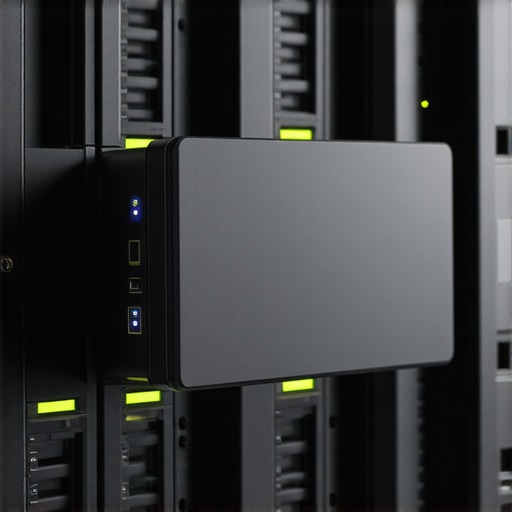
Emerging interface standards such as PCIe 5.0 and USB4 are set to revolutionize external SSD performance, offering potential speeds up to 16GBps. When combined with AI-driven storage management—predicting drive failures, intelligently allocating cache, and optimizing data pathways—these technologies enable unparalleled efficiency. AI algorithms analyze real-time access patterns, dynamically adjusting RAID configurations to sustain optimal throughput while preemptively mitigating hardware risks.
< >
>
By adopting these advancements, professionals can future-proof their storage architectures, ensuring scalability and resilience in the face of escalating data demands.
Are we nearing a new era where external SSDs and RAID configurations become virtually limitless?
Industry experts posit that ongoing innovations in NAND flash memory, controller firmware, and interface standards will soon enable external storage solutions to surpass current throughput and reliability benchmarks. Persistent memory technologies and AI-enhanced management systems promise to redefine what is achievable outside traditional data center environments. Staying abreast of these trends, supported by reputable sources such as TechInsights and IEEE publications, positions you at the forefront of storage evolution.
Leverage Cutting-Edge Storage Architectures for Data Supremacy
In the realm of high-performance data management, integrating external NVMe SSDs with advanced RAID configurations stands as the gold standard. Experts emphasize that choosing the right RAID level, such as RAID 10 or RAID 50, can dramatically enhance both speed and fault tolerance, ensuring mission-critical workflows remain uninterrupted. Staying ahead requires not only hardware precision but also strategic configuration aligned with workload demands.
Harness the Power of Industry-Leading Resources
- IEEE Transactions on Computers: Offers peer-reviewed research on storage innovations, ideal for deep technical insights.
- TechInsights Reports: Provides industry analysis on interface standards like Thunderbolt 4 and PCIe 5.0, critical for future-proofing setups.
- WorkstationWizard Guides: Comprehensive tutorials on RAID configuration, external SSD selection, and performance optimization tailored for professionals.
- Scientific Journals on Data Security: Critical for understanding RAID architectures that maximize data integrity and resilience.
Reflections from the Storage Vanguard
In the fast-evolving landscape of data storage, the integration of external SSDs with sophisticated RAID strategies is not just advantageous but essential. Mastery of these technologies enables professionals to achieve unprecedented throughput while safeguarding vital information. As interface standards like Thunderbolt 4 and PCIe 5.0 advance, the potential for external storage solutions to rival internal drives becomes a tangible reality. Engaging with authoritative resources and staying abreast of technological breakthroughs empowers you to craft resilient, high-speed storage environments that meet the demands of tomorrow. Dive deeper into these topics by exploring our comprehensive guide to RAID storage and contribute your insights to the professional community for ongoing innovation.
This article offers a comprehensive overview of how external SSDs and RAID configurations can truly revolutionize data management in 2024. I’ve recently upgraded my workflow by using external NVMe drives in a RAID 0 setup for video editing, and the speed improvements are undeniable, especially when working with 4K and 8K footage. One challenge I’ve faced is ensuring compatibility between different RAID controllers and external enclosures; it can get complicated choosing the right hardware to prevent bottlenecks or stability issues. I’m curious—what are some of the most reliable external RAID enclosures on the market right now, especially those optimized for high-speed workloads? It seems like striking a balance between performance, durability, and ease of maintenance is key for long-term success in high-demand environments. I’d love to hear from others about their experiences or recommendations, especially for setups that need to handle large-scale scientific data or media projects.
This post really highlights the importance of choosing the right storage setup in 2024, especially as data demands keep rising. I’ve been experimenting with external NVMe SSDs in RAID configurations for my media projects, and the speed gains are impressive—particularly when working with 4K content. One thing I’ve noticed is that the enclosures and controllers I use play a big role in ensuring stability and performance; I’ve had some heat-related throttling issues before, so investing in good thermal management has been a game changer. Julia’s point about compatibility is so true—finding reliable, high-speed external RAID enclosures can be a challenge. In your experience, which brands or models have you found to be the most dependable for demanding workflows? Also, do you think software RAID solutions are sufficient, or is hardware RAID with dedicated controllers still the best way to go for professional environments? Looking forward to hearing everyone’s insights on this!
This is a fascinating discussion on the future of external SSDs combined with RAID setups in 2024. Having recently moved to a similar high-speed storage environment for professional video editing, I found that investing in enclosures with excellent thermal management and dedicated PCIe RAID controllers made a huge difference in maintaining sustained performance. One aspect I’ve been exploring is the impact of interface standards like Thunderbolt 4 and USB4 on compatibility and data transfer speeds, especially as newer standards like PCIe 5.0 become more prevalent. I wonder, with these rapid advancements, how much of a difference will emerging persistent memory technologies make in external storage solutions? Are there practical options already available that combine these high-performance interfaces with next-gen memory? Also, from your experience, which external enclosures or RAID controllers have proven most reliable under continuous, heavy workloads? I’d love to hear insights on balancing cost, performance, and longevity in selecting the right hardware for demanding workflows.